Despite a tumultuous year, Monte Cook Games seems more stable than ever
Is Cypher’s crowdfunding success the cipher to crack their secret?

“2025 was a pretty challenging year,” said Charles Ryan, chief operating officer of Monte Cook Games (MCG), in an interview with Rascal. “There's an awful lot going on in the world and in the world of game production… and in the lives of the people who spend money on games. Definitely not like any previous year in our 13 years in business.” That said, the company finds itself as steady as it's ever been, if not doing better than ever. The secret seems to be investing in their full-time staff, synergy between their licensed games and existing lines, and, of course, crowdfunding.
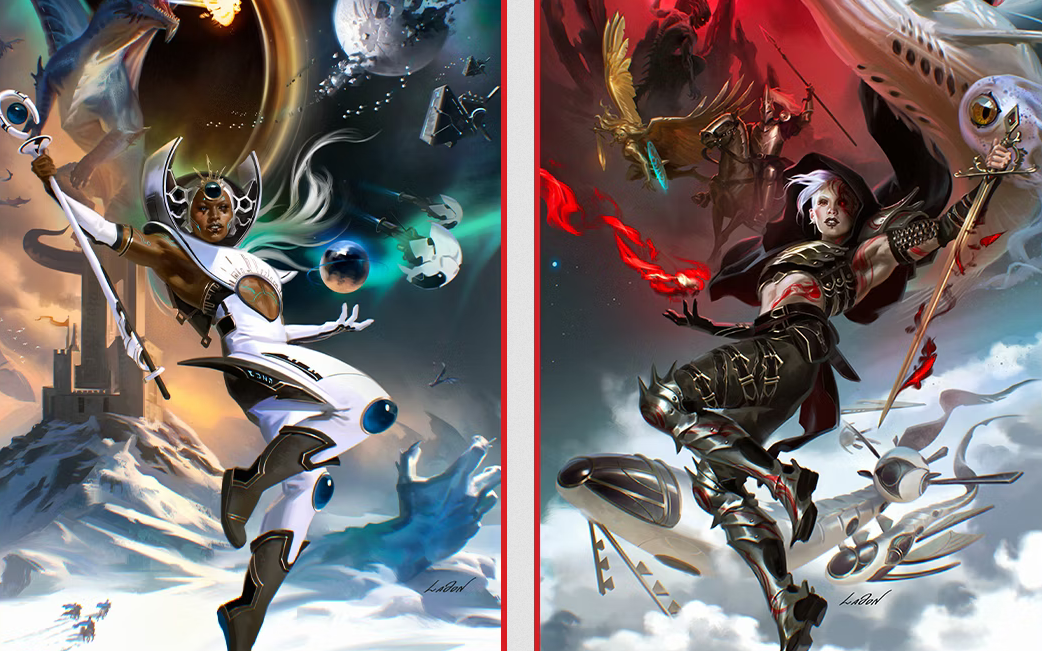
In September of last year, they raised over a million dollars for the new edition of the Cypher system. Going into 2026, they’ve got a new edition of Numenera on the cards as well as Jewel in the Sky, a floating megadungeon that will launch as a part of Backerkit’s megadungeon month. Looking at just those three projects, it might seem like MCG hasn't changed at all. When the company was founded in 2012 by the eponymous Monte Cook and Shanna Germain, Numenera was their first creation. The campaign page is a time capsule, with the text written in the first person as Cook describes what could be just his latest personal project. But the excitement for it took everyone by surprise. The campaign ended up raising more than $500,000, which set them on the course that they follow to this day.
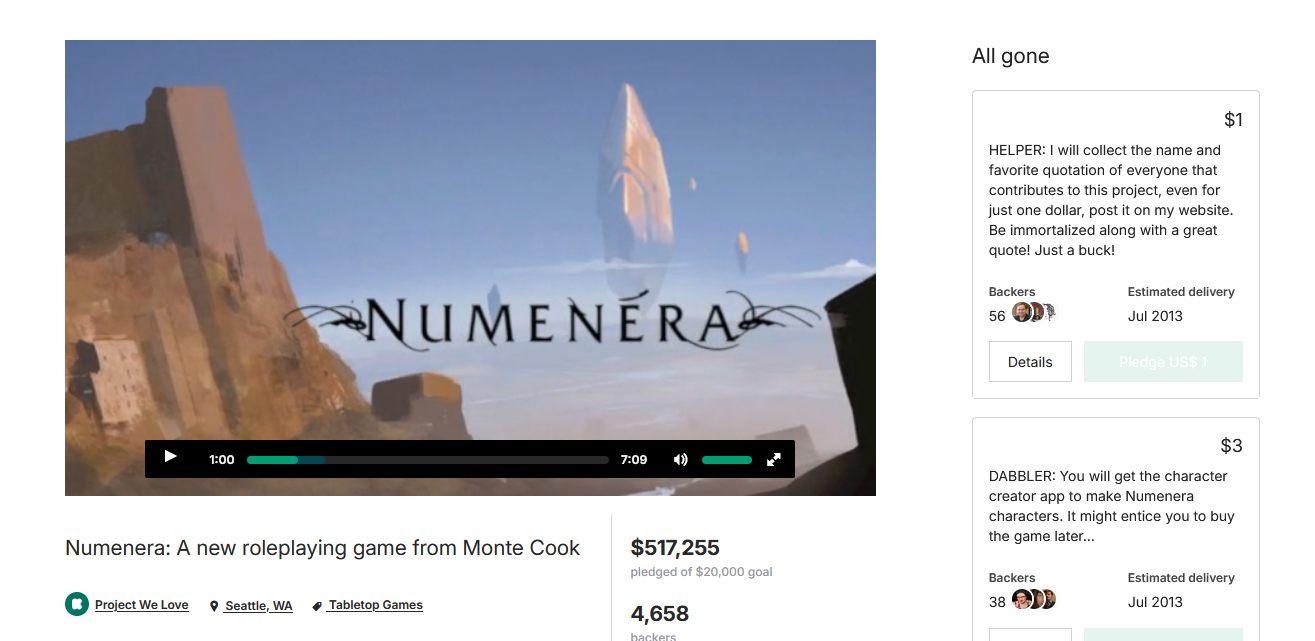
“It was a massive record,” said Ryan. “There had been very few, or maybe even zero, six-figure crowdfunding campaigns for RPGs... It was also relatively early in the crowdfunding era, right? So for something to break out like that was its own big news and it drew in people.” But the Cypher campaign felt different. It didn’t feel driven by hype, according to Ryan, but rather a genuine demand for the system’s promise of a flexible, multi-genre system for adventure stories.
“[Cypher] was one of the very, very few campaigns that isn't a licensed campaign or a follow-up from a licensed campaign that broke a million dollars among RPGs. That's really, really fantastic. But it's not news… like that doesn't get out on Reddit and cause people to say, oh, I've got to go check out this campaign because it's a million dollars the way that the original Numenera campaign did,” said Ryan. “The people that backed Cypher were there because of Cypher. Either they were existing fans, or they were people [who] heard about it before, and had heard good things, and they wanted to check it out, or maybe it was new to them. But they came to it, and they really pursued it on its merits.”
While crowdfunding is MCG’s single biggest revenue channel, Ryan is hesitant to say that they’re reliant on it. “‘Reliant’ is a word that carries some color to it, so I don't exactly use that,” said Ryan. “In the most technical sense, if crowdfunding went away, would we struggle for how MCG could stay the company that it is? Of course, so I guess in that regard, we're reliant on it. I would probably state it more as it is super important for us.” The company has gone as far as investing in Backerkit through their WeFunder campaign last year, as per their gold badge on the site.
Ryan is a 30-year veteran of the industry, working everywhere from Wizards of the Coast to independent presses, doing everything from production to distribution. He’s grateful that, unlike the wild and loose times of the ‘90s when RPG publication houses routinely disappeared overnight, MCG has been able to rely on the positive cash flow that crowdfunding has allowed. It’s strange to talk about the stability afforded by crowdfunding after a year that saw numerous board game studios collapse, including fire sales from giants like CMON who were touted as giants, but that does seem to be the case for MCG.
Not including the first Numenera and the latest Cypher, MCG have run eight campaigns that have brought in more than 4,000 backers. These included two licensed games, Old Gods of Appalachia and The Magnus Archives, both based on very popular fiction podcasts. Both projects are also interesting case studies in adapting licensed games; as they’re built on Cypher’s engine, Ryan believes they successfully brought in new audiences to MCG’s house system and their other products.
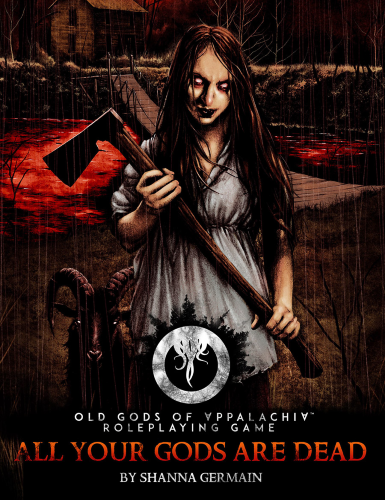
“In the original Old Gods of Appalachia RPG campaign, we thought there would be a 50-50 split, roughly between our fans and Old Gods of Appalachia fans,” said Ryan. “And what we actually saw — and this is anecdotal, I don't have hard data on this — about a third were our fans, a third were Old Gods fans, and a third were people that were not established fans of either one, but had basically at some point heard of these two things, and then they were like, oh, interesting, and came in and discovered both of them.”
This is what many publishers hope will happen when they take on licensed projects, but it rarely seems to work out that way. Maybe because it relies on more than just business acumen. MCG approaches the design and development of its games differently than many other publishers of a similar size. “Almost all of our design is done in-house,” said Sean K Reynolds, a veteran designer who has been full-time at MCG for around a decade. “It actually used to exclusively be all in-house, but this year we decided to have a few, talented freelancers come on to help with some of The Magnus Archives [supplements]. But everything else is Shanna, Bruce [Cordell], Monty, myself, and for a while, Hugo award-winning Dominique Dickey.” (Dickey is now an associate editor, rather than on the writing team.)
Doing all the writing and design in-house isn’t a common thing for a publisher with multiple lines like MCG. Many of them, like Catalyst Game Labs for an example that Rascal has written about before, rely entirely on freelancers. MCG has built a core team and focused on retaining them, together with all the associated costs and benefits. “We have a very low turnover, and part of that is we've taken the perspective from the very beginning that we would love this to be the last job that any MCG employee has”, said Ryan. “We want to make a work environment that you will enjoy, and that you'll be compensated for fairly, and that you'll have the benefits that will allow you to survive, no matter what phase of your life you're in. We have a good healthcare benefit for this day and age. We do have a retirement program. We do bonuses in the years when we have profitability.”
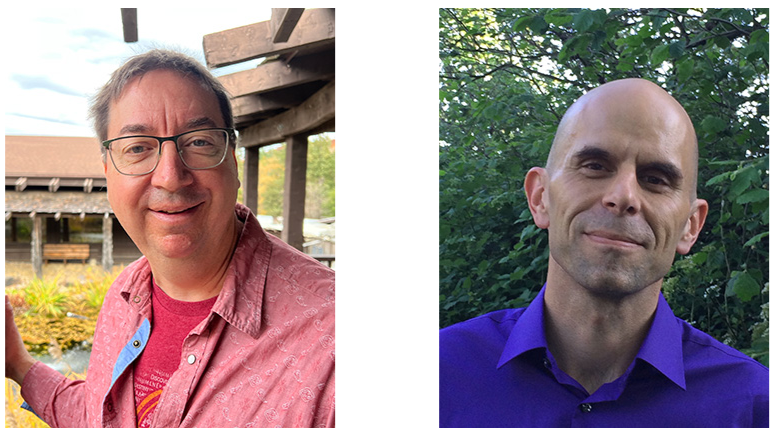
Ryan and Reynolds also stated that they were almost completely design-led. “We do not have some meeting where the marketing team comes to design and says, you need to make this product because research shows that's what gamers want, or anything like that,” said Ryan. “This is also related to licenses. There have been opportunities that we have passed up because we say, wow, boy, we could make a million dollars doing that, but it's not what we want to do.”
For Reynolds, this means ensuring that the design process is as smooth as can be. Every crowdfunding campaign has a clear list of products or deliverables. Each member of the team usually shepherds one product from start to finish, unless it’s particularly large and requires two or three to work together. “For example, Monty and Bruce and I were working on Cypher all together on different parts, while Shanna was working on things like the Divination Deck,” said Reynolds. “For our first sourcebooks [for Cypher], Bruce wrote The Stars Are Fire [science fiction] while I wrote Stay Alive [horror], and Shanna was working on They Are All Mad Here [fairy tales reimagined].”
“Every single person at this company is somebody that I consider a friend,” said Reynolds. “And I would be happy to sit down at the game table with… and we would have an amazing time, making a wonderful story, and sharing a lot of laughs. And that's something I've not had at any other company.”