Children of Time: The Roleplaying Game puts the fate of two civilizations in players’ hands
Your own personal "facsimile Adrian" Tchaikovsky.

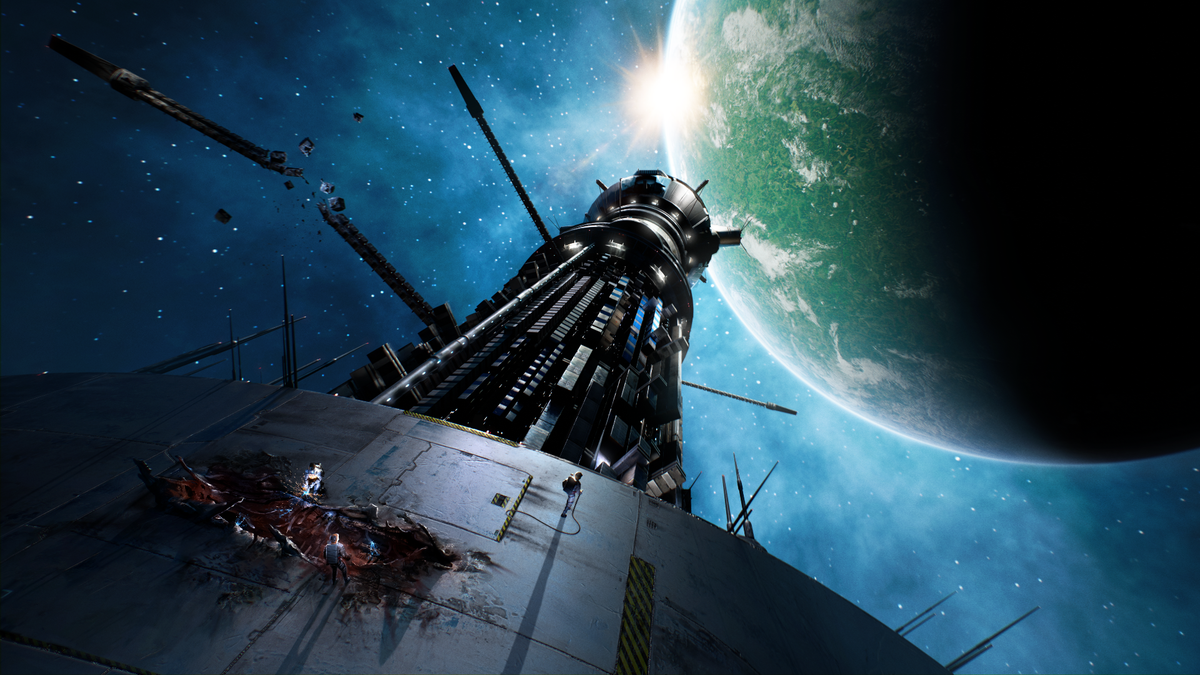
Whether or not they jumped at the concept of artificially uplifted spiders in the Children of Time, tabletop players will soon have the chance to tell their own version. Rowan, Rook, and Decard is adapting Adrian Tchaikovsky’s popular science fiction book series into Children of Time: The Roleplaying Game, which hits crowdfunding on June 16. A trio of RPG books will guide groups through tales of generational strife, tribulation, and an ultimate encounter between the remnants of humanity and the decidedly non-human beneficiaries of its lost accomplishments.
Leading the adaptation is Minærva McJanda, the creator of Voidheart Symphony, Rhapsody of Blood, and Legacy: Life Among the Ruin. That last RPG’s focus on communities in flux provides the backbone to RRD’s adaptation — sessions revolve around small but pivotal character decisions that can reverberate through time and space as the metaphorical camera zooms out from the personal to cohorts and then entire societies.
The rest of the team includes RRD co-founder Grant Howitt and publisher Elaine Lithgow offering additional writing, and illustrator Sam Lamont will bring Tchaikovsky’s world of beleaguered exocolonists and arachnid Portiids to life. Tchaikovsky is playing an active, if restrained, role in developing the RPG through playtesting, open communication, and trusting McJanda — the pair showcased an easy rapport and mutual creative respect. For the author, roleplay and writing have always been an act of cross-pollination, and he said allowing players and fans to not just explore his world, but make it their own, is a singular joy.
Children of Time: The Roleplaying Game is intentionally split across three books, the first of which will guide players through the grand, interstellar expansion and near-fatal collapse of human civilization. Worlds half-terraformed will be left to spin out on their own evolutionary journeys, and from one will rise an uplifted species set on a collision course with Earth’s final escapees. The second book will cover the ark ship that bears the latter through light years of space and millennia of time, while the third will help construct the exoplanet that will serve as a fateful collision of cultures.
McJanda and Tchaikovsky describe the RPG as an engine for dramatic irony, of tackling immediate dangers at the hands of engineers, scientists, or security guards, then collaborating on how the ramifications of those choices affect reputations, shift internal politics, angle the ark ship away from (or directly towards) unseen peril, and plant seeds that won’t bear fruit until they find a potential home already occupied.
The team said they labored to make telling good story its own reward, but that drive is scaffolded heavily by the shape of sessions: Individual characters, which can be piloted by anyone, have their own desires; cohorts work towards specialized projects or goals; and crises will interrupt all these well-laid plans. The books will instruct groups on how to roleplay as characters, narrators, and the dooms visited upon them, as well as how to leap forward 1,000 years into the future, away from apocalyptic Earth and into a future of their own crafting.
Rascal spoke further with McJanda and Tchaikovsky on how this project came about and the particulars of bridging the gap between speculative fiction readers and roleplayers empowered to tell stories together, intelligent Portia labiata or otherwise.
This interview has been edited for clarity. Also, a warning that the promotional art below includes prominent spider imagery.