Girl Frame confidently stomps its way into a niche mecha genre
Ast-Hound-ing

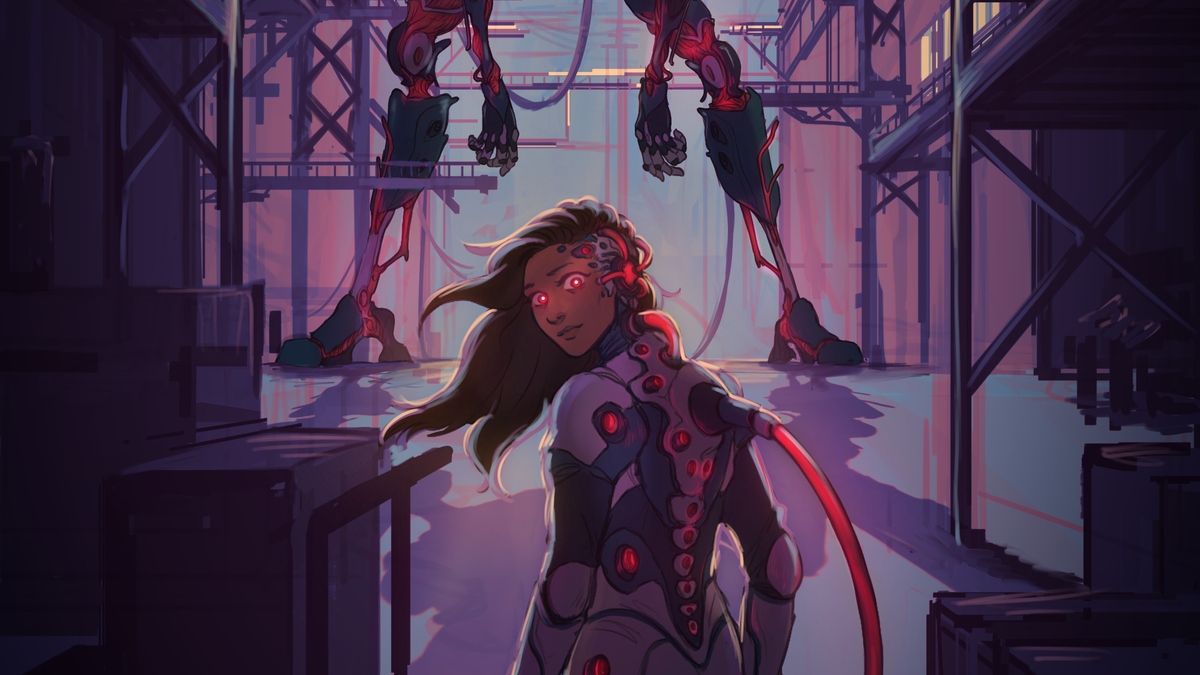
Mechsploitation is a sci-fi genre so niche, so specific in its community that I know for a fact that the vast majority of readers will fit into one of two categories. Either you will wonder what the heck mechsploitation is, or you’re a transgender lesbian. For the uninitiated, mechsploitation uses the tropes and trappings of mecha fiction to explore issues of dehumanization and oppression — which are foundational to the mecha genre, anyway — such as gender, sexuality, BDSM and kink, abuse, and trauma. Kallidora Rho’s WARHOUND is inarguably the cornerstone of the genre, defining the archetypes of Hound and Handler — a mecha pilot and her dispatcher/commander/caretaker — and their twisted, abusive relationship. In the time since WARHOUND’s 2023 release, mechsploitation has grown into a vibrant community of largely transfeminine authors, established and otherwise, who have released hundreds of works across AO3 and other platforms.
Girl Frame, by Isabelle Ruebsaat, is a Powered by the Apocalypse-based RPG (specifically the Apocalypse Keys variant) that enables play in the mechsploitation genre, and has been an instant success. When I spoke to Ruebsaat in November, just a few weeks after Girl Frame’s ashcan release, it had sold over 1,500 copies and grossed $18,000. To give some context, Ruebsaat was shocked when she hit 80 sales. Full disclosure: I bought one of those 1,500 copies as soon as the game showed up on my radar, which is probably unsurprising to our long-time readers. Trans lesbians and mecha? Totally my thing. However, I have a much more complex relationship with the mechsploitation genre. WARHOUND is a superb book that I realised was very much not for me, instead preferring my traumatic lesbian mecha fiction in the form of Maria Ying’s Hades Calculus.
I say this not to go on a literary critique tangent, but to highlight that even if the ingredients are right, and they’re expertly crafted, that the result may still not be to one’s taste. Happily, Girl Frame grabbed me immediately and swiftly became one of my favorite PbtA games, and the only one that I’ve done a good job of running.
Girl Frame players create a team of lesbians (although the PCs may not identify as such; more on that later) who pilot giant robots in order to defend humanity from extra-dimensional monstrosities called Gorgons. Play is centered around these sorties, with a simple briefing - mission - debriefing - downtime - repeat structure scaffolding sessions. Of course, it’s not all camaraderie and bunk room pillow fights, as PCs establish intimate relationships, deal with trauma (both pre-existing and from their continued encounters with the Gorgons), and jockey for position in the cadre. It’s the kind of intense interpersonal conflict that PbtA excels at, and the mission-based structure provides the perfect cycle through which it all plays out. Actions on the battlefield create tensions back at base, where relationships shift and develop, before causing drama in the midst of the next combat.
At the center of this cycle sits the Handler, who is one of the most interesting features of Girl Frame, and the one that makes it so attractive to me as a GM. While Girl Frame players pick two playbooks to create their PCs (one for the Girl, and one for the Frame), the GM picks a playbook for their Handler, a character that blurs the line between traditional PC and NPC roles. The playbooks define the Handler’s general outlook on the Girls, ranging from cruel or detached to motherly, and comes with its own Plays. I’ve struggled with running PbtA games because the relatively rigid set of mechanisms with which the GM interacts with the game doesn’t mesh well with my typically free-flowing and largely improvisational style. Having a specific character of my own to embody helped focus my attention and, combined with low prep compared to similar games, made it an incredibly enjoyable GMing experience.
As the Handler, the GM is there not only to oversee missions, but to dole out punishments and rewards, to maintain order and hierarchy, and, quite frankly, be a horrible person. As expected from the mechsploitation genre, Girl Frame is capital-D Dark, and not merely in terms of aesthetics or even themes. It’s a game where you carefully craft dolls, then put them through the kind of experiences that result in them becoming the metaphorical equivalent of something belonging to Sid from Toy Story. Or more literal, if you decide to go in on the body horror side of things. The boxout on the very first page of the rulebook gives you an idea of what to expect.
Content Notes: Misgendering/transphobia, homophobia, sexism, abuse, sexual assault, drug abuse, toxic relationships, dehumanization, fascism, body horror, torture, brainwashing, ableism, nonconsensual surgical procedures, lobotomies, hallucinations, memory loss
Promises: Messy lesbians, toxic power dynamics, giant robots fighting eldritch horrors, oppression, and hard choices
Girl Frame bakes all this into play from the first moment. Girls, who are not considered legally human for the duration of their service, are referred to by it/its pronouns, while the Frames are she/her. From the perspective of the PC, these things may not be true, and they may struggle against the depersonalisation, or the perceived misgendering. It’s worth noting that it's heavily implied that the PCs are genuinely lesbians, it’s just that the Foundation running the show figured that out before the PC did. The Handler’s first action is to rank the PCs numerically, according to whatever arbitrary criteria they decide. The highest ranking PC becomes the Ace, while the lowest is the Dog, gaining extra privileges and punishments, respectively. A list of suggested criteria includes skill, attractiveness, and passability. As a decidedly non-passing trans woman, reading the latter one caused me to close the file and go to my partner for a hug. As someone with very few hard lines when it comes to RPGs, and who greatly enjoys a good cry during a session, I was actually quite impressed with the viscerally negative reaction such a line provoked.
Fascinatingly, Ruebsaat wasn’t aware of mechsploitation when she wrote the first draft of Girl Frame. According to my conversation with her, the original version “used D12 dice pools, 19 different Frames, and was more focused on my attempt at a freeform but tactical combat engine. Mechsploitation entered my sphere of knowledge just a bit after I realized I wanted to focus more on the ‘relationships at base’ aspect of the game vs the ‘fighting big aliens,’ and helped me clarify that I wanted this game to be more of a Girl game than a Frame game.”
However, her introduction to the genre had an immediate impact. “It really resonated with me, the aspects of inhumanity and dehumanization that I was trying to capture already seemed like they had a genre that was adjacent to [Neon Genesis] Evangelion, Armored Core 6, and 86, but y’know, with lesbians,” Ruebsaat said. It was also mechsploitation that provided the inspiration for the Handler as a specific character for the GM to embody. “...in playtesting, what I’d been missing was an antagonistic force you could have a conversation with. Or have sex with, in this case,” she said.
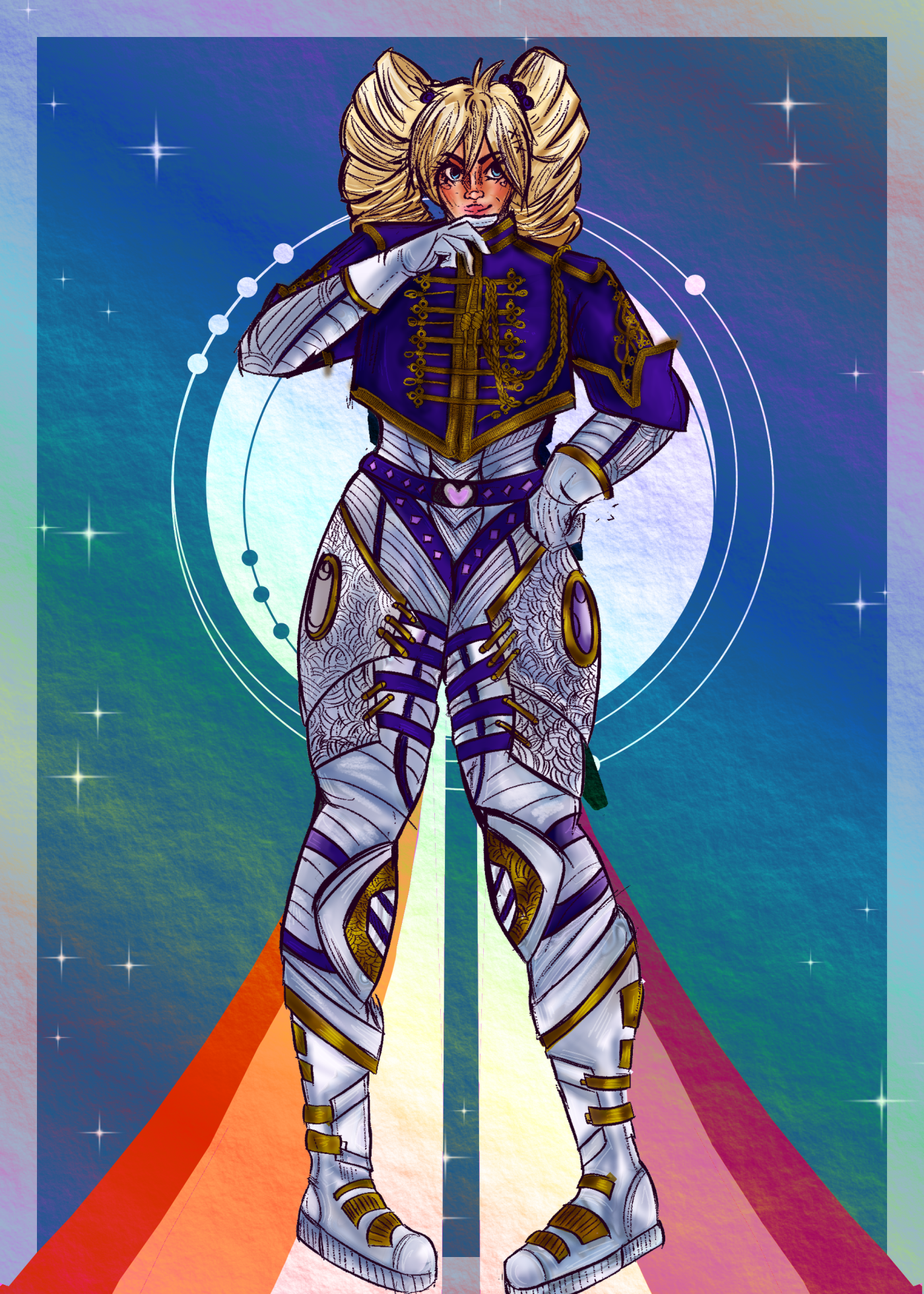
Sex is perhaps the most controversial aspect of mechsploitation, where it’s generally depicted as messy and complicated at best, with consent frequently ranging from dubious to nonexistent. It can also be tricky to navigate in RPGs, with games that take sexual attraction out of the hands of player choice and into the realm of mechanics and dice rolls, such as Monsterhearts, being off-putting to some (I certainly balked at the idea at first). Girl Frame handles this elegantly, through its system of Bonds, a measure of the relationship between characters. Bond levels are shared between the two characters, so when it reaches the deepest level where the characters “want to fuck”, the feeling is mutual. While bonds can develop in profoundly unhealthy and manipulative ways, groups have a lot of leeway in adjusting things for their personal comfort levels.
This room to maneuver around difficult themes is how Girl Frame avoids being a massive downer, and what makes it really work for me. I love playing with all these complex, dark, and deeply personal themes, but when I do, I want it to be at least cathartic, if not empowering. WARHOUND wasn’t for me because it reached a point where I felt like it was a massive downward spiral between people who were awful manipulators, victims, or both. I came away from reading through Girl Frame with a character almost fully formed in my mind, who I was able to bring to life in a play-by-post game. My choice of playbooks were Princess for my Girl, and Prince for my Frame, creating a character called Marietta, with a background of massive wealth and privilege. As a Princess, she was automatically the squad’s Ace at the start of the game and permitted to use she/her pronouns. The Prince Frame is one designed in the classic mecha protagonist mold, with the kind of sleek, hi-tech appearance designed to sell action figures and model kits. Marietta’s story was to be one of having the veil torn back, of confronting the gilded cage of social, gender, and sexual norms she’d been raised in, eventually rejecting them, and finding joy in queerness.
On the flipside, as a GM, I ran an off-the-cuff one shot for players from my Cosmere campaign, none of whom were transfeminine, or had experience with mechsploitation. There was much punching of monsters and feelings, and it was a great success. As the genre is built on a foundation of more widely-known mecha media, core concepts could be conveyed efficiently, and the Plays, both general and playbook-specific, enabled the players to quickly grasp how the game was intended to be played. I was half-joking when I suggested Girl Frame to the group, but it ended up demonstrating a broader appeal.
As I mentioned earlier, I grabbed Girl Frame because of the clear relevance to my interests, but that’s no guarantee of something being good or even enjoyable. I expected something I could play with carefully selected groups of friends I knew would already be familiar with the themes contained within, if not the mechsploitation genre itself. I was unprepared for the rollercoaster of emotions I felt just reading the book, or the creativity it sparked. Even more surprising for me was how deftly Girl Frame deals with complex themes, and how compelling it is from a mechanical standpoint. Having something that resonates so personally and deeply, and can also be shared with a wider audience, is a rare treat.
Now get in the robot, Rascals!