Cyberpunk 2025: My heart is alloy // I live in boxes
Part 2: Hardwired by Walter Jon Williams

This article first appeared on Rogue.site, our sibling in independent journalism. It's the second part in an ongoing series by author Jeffrey Parkin that explores cyberpunk as a messy, porous genre through the lens of Cyberpunk 2077. But it's also about the multivariate — and just as messy — ways that genre has influenced our modern world.
We're republishing Part 2, as it deals heavily with Mike Pondsmith's early tabletop RPG work, but it's well worth exploring the entirety (so far) of Jeff's project over on Rogue.site. Drop them a subscription and support fantastic worker-owned writing on video games!
Born in 1954, Mike Pondsmith falls firmly into the generation that saw the wild changes to their world that we talked about last time. He went to college at UC Davis in the early 70s and got degrees in graphic design and psychology.
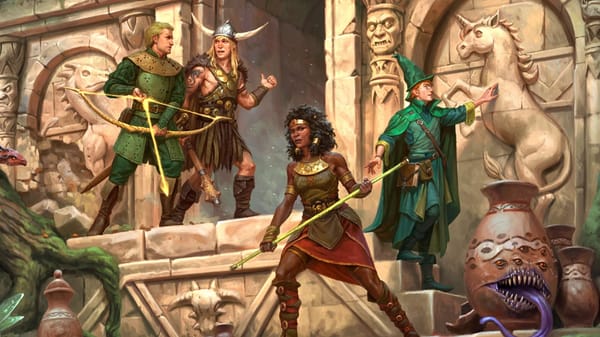
During college, a friend introduced him to Dungeons & Dragons — the original original D&D that was just a few pamphlets. The mechanics of TTRPGs clicked, but the setting didn’t. In 1977, Pondsmith played Traveller, a then-new TTRPG in a sci-fi setting — a game he’d later call the best he’d ever encountered.
Fast-forward to 1984, and Pondsmith released Mekton, a mecha TTRPG based on the visuals of an untranslated Mobile Suit Gundam manga. The success of Mekton allowed Pondsmith to found R. Talsorian Games (apparently named after an early, raisin-farming investor) as a game publisher.
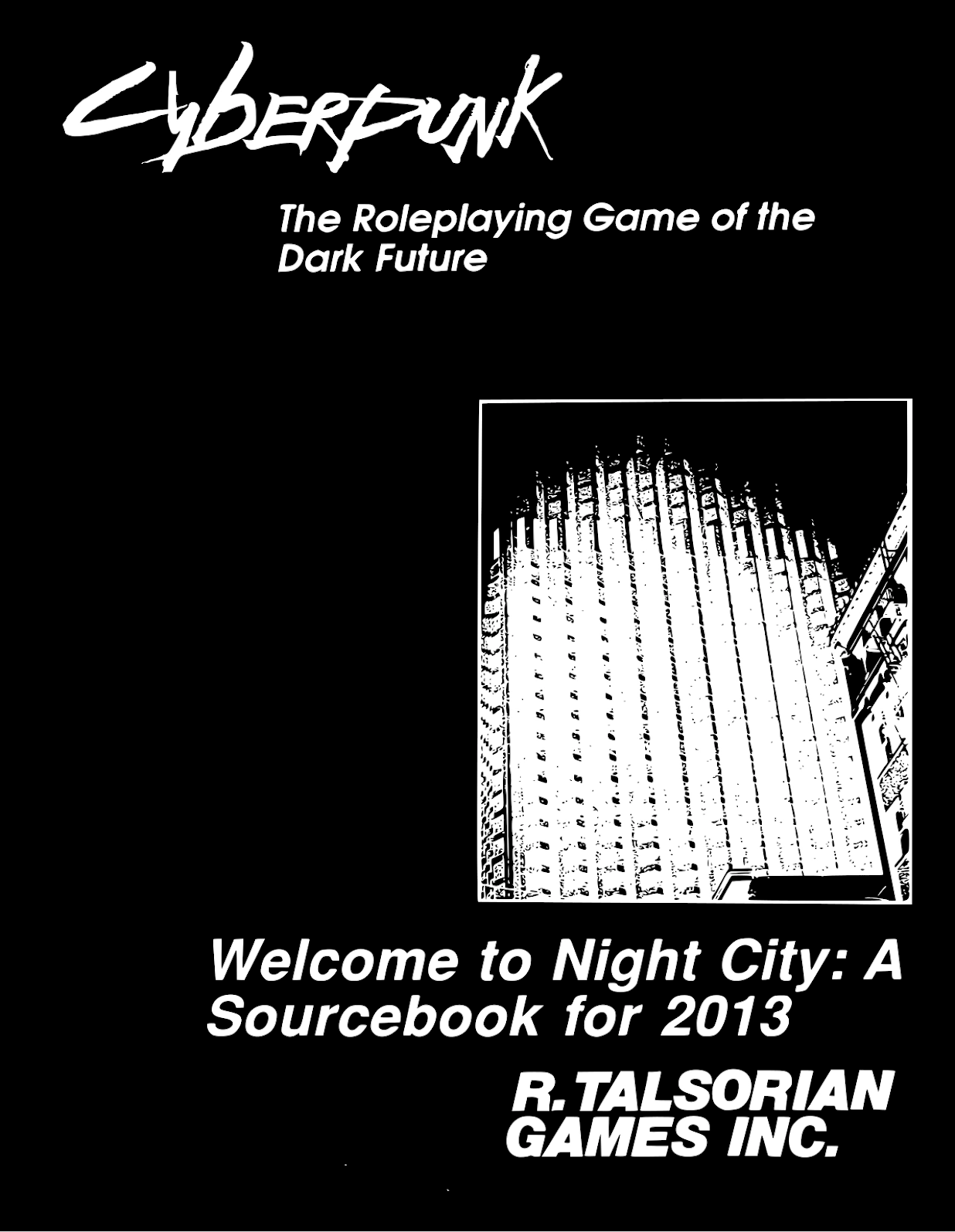
In 1988, R. Talsorian Games released Mike “Maximum Mike” Pondsmith’s Cyberpunk: The Roleplaying Game of the Dark Future.
The Dark Future
The original Cyberpunk TTRPG was set in the unimaginably distant future of 2013 on a path that diverges from our own in the 1980s. And the future history timeline presented in that first Cyberpunk sourcebook is just dripping with the decade it grew out of.
“1989 - A period of unprecedented corruption, as ‘Gang of Four’ (CIA, NSC, FBI, and DEA) combine to effectively run government behind President’s back.”
Ronald Reagan was about to turn 70 when he took office in 1981, making him the oldest president in history (HA). He wore hearing aids and, though the official White House doctors denied it, was starting to show signs of Alzheimer’s during his presidency (double HA).
During Reagan’s presidency and its monomaniacal opposition to communism, the CIA was selling arms to Iran in order to fund anti-revolutionaries in Nicaragua (but they definitely weren’t funding drug cartels). As part of the War on Drugs started by Richard Nixon, Reagan’s FBI and DEA dramatically increased their funding and their disproportionate crackdown on minorities (just 10 years after the exposure of COINTELPRO).
A clueless president and shadowy governmental organizations with too much power wasn’t exactly a leap is what I’m saying.
“1992 - With the entry of Japan into the Common market, a new entity, the Euro-market, is formed. … A common currency unit, the Eurodollar, is also established.”
The foundations of the euro go back as far as 1929, but real movement on it started in the mid- to late-80s (Margaret Thatcher opposed it). The euro became a tangible reality in 2002.
“1996 - Nomad Riots. By now, 1 in 6 Americans is homeless.”
Homelessness doubled or so from the beginning of the 80s to the end. Like most (all?) bad things from that time, it’s Reagan’s fault. Numbers from the 80s are all estimates — the United States didn’t really start tracking homelessness until 2007 — but we know that homelessness in 2024 hit about 0.2% and is reported as the highest ever.
While unemployment and homelessness aren’t the same thing, life in the US means they’re interlinked. Unemployment approached 10% in the early 80s — a number only matched by the Great Recession in the late aughts.
Today, the rate sits just above 4%. This, mind you, is before the news just today (today when I’m writing this, I’m not sure when this will go up or what new horrors await by then) that UPS has laid off 45,000 workers this year, Amazon is about to lay off 30,000 corporate workers, and Paramount is going to lay off 1,000 people tomorrow (in the first of two rounds).
Neither homelessness nor unemployment are approaching the 17% Cyberpunk’s timeline foretells. But today, just like they must’ve seemed in the 80s, the trendlines don’t look great.
“1997 - Mideast Meltdown. Tensions in the Middle East escalate to nuclear exchange.”
During the 1973 Yom Kippur War, Israel had armed and aimed some of their nuclear weapons. The US made it to DEFCON 3, and the Soviet Union almost got involved. Throughout the 80s, both the Iran-Iraq War and a series of uprising, coups, and civil wars made the Middle East seem constantly poised for all-out war.