Daggerheart weighs itself down with a dragon-sized albatross
For many, the upcoming RPG’s juice will not be worth the squeeze.

The most significant issue facing Darrington Press’ upcoming RPG, Daggerheart, is one of delineation. Sporting high fantasy set dressing and a Critical Role pedigree, it will live alongside Dungeons & Dragons in the minds of prospective players, retailers, and journalists. Darrington Press knows this, as do co-designers Spenser Starke and Rowan Hall. They have made explicit (if not always successful) efforts to stake their own claim in the sword-and-story territory. They want Daggerheart to be so much more than a fantasy heartbreaker.
Which is a shame because it keeps breaking mine.
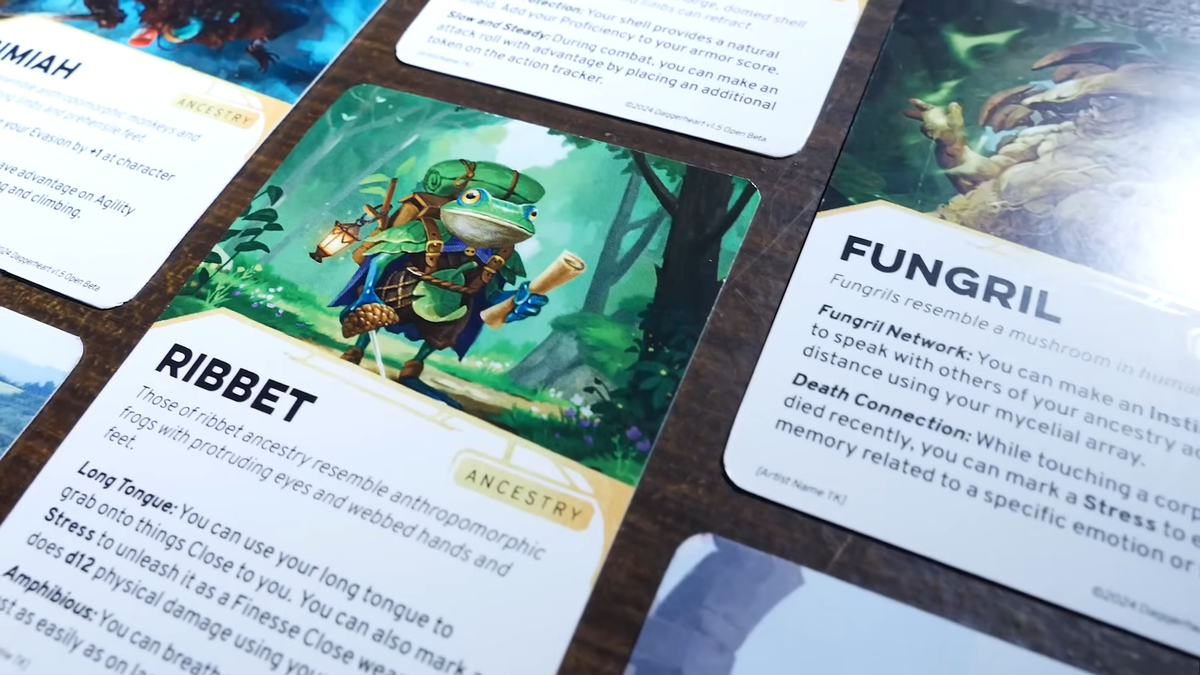
I sat down for a guided demo at GAMA 2025 hopeful that, two months before its May 20th release, Daggerheart would finally convince me it had addressed earlier wobbles. I was already impressed by the design of the character sheet sidecars, which compresses vital information at the table. Its card-based system for class and character abilities evokes the best ideas of D&D 4E. And it primarily uses twelve-sided dice, which are objectively the best.
Contrasted against these positives is a frustrating dedication to roleplay assumptions derived almost exclusively from the current iteration of D&D. Genuinely interesting design choices — such as using fictional Experience sentences (my Ribbet rogue, Barnacle, added +2 to sneaky rolls by evoking a lifetime relying on shadows for safety), and giving facilitators a resource for intervening directly — fail to shine amidst the bloat of 5E minutia. Daggerheart feels compelled to build a bridge for D&D’s massive audience while also cultivating something new for them to enjoy.
For every new change, our table tripped on a disappointing holdover. Damage thresholds change the math on combat, but you still derive bonuses from six key stats and care about keywords on weapons, such as Finesse and “very close.” Building and spending Hope on abilities introduces a fascinating resource tension, except it feels like a footnote on a character sheet where nearly half the real estate is dedicated to weapons, armor, and equipment. Other innovations such as the dynamic initiative tracker present in earlier playtest versions seems to have been scrapped entirely, leaving a hole the audience will no doubt fill with the familiar “roll initiative at the start of combat” maneuver.
Daggerheart’s commitment to “rich, narrative-focused” roleplay is at odds with the tools it gives players — yet another unfortunate parallel to the Dragon in the room.
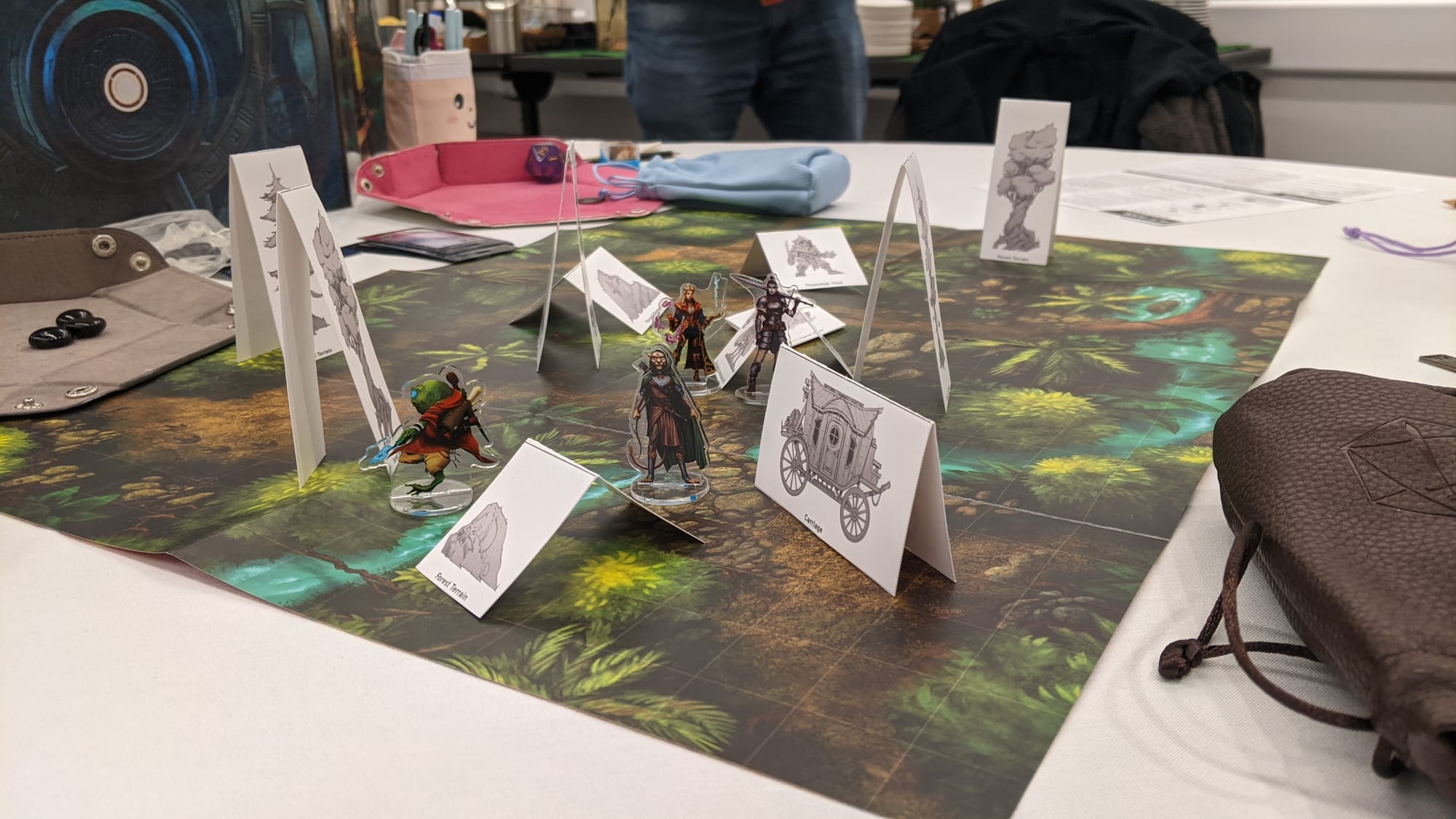
This mortal flaw was made abundantly clear by the two other players who joined me and a fellow journalist in escorting a caravan through a forest ambush. They found the questions that formed bonds between characters “delightful” and reveled in how the Hope Dice mechanic — roll two d12s and the higher number between Hope and Fear determines fictional circumstances — added much more tension than a single d20. In fact, every new concept elicited some form of intrigued “ooh” or appreciative nod from a pair obviously steeped in action economies and rolling perception checks.
Hardly any of these distinguishing characteristics shined at the table as our party mucked through a bog-standard, one-shot encounter. The volunteer running the demo tried her best to spice up our one-hour-and-change slot with home-crafted paper minis and a heap of enthusiasm, but they proved meager means compared to a mission with terminal sidequest energy. Roleplay was relegated to intraparty banter partially because the sheet has no clear levers for non-combat interaction. And so we cast spells, swung weapons, and dropped hit points to zero.
If I had been allowed to record audio or take photos of the sheets, one would be forgiven for thinking we played D&D. A demo is a poor representation of any RPG meant for long-term campaigns, I admit. So then why subject prospective retailers and D&D evangelists to a scenario that buries your game’s most novel ideas beneath a landslide of “been there” and “done that”? Brick and mortars are replete with third-party 5E books for an audience that knows their own tastes. If Daggerheart wanted to convince that crowd to explore the menu, why fill the soup pot with so many stock ingredients?
I want Daggerheart to succeed, but the version shown to me at GAMA is deeply flawed. It is a narrative RPG in search of its own story, a fantasy heartbreaker with a transplanted ticker. If Darrington Press sold a PDF containing the Hope and Fear mechanics, ability cards, and a handful of their other new ideas, I would be shouting at everyone to purchase that version of the game. As it stands, the publisher plans to sell hobbyists many of the same ideas they already own, rearranged and repackaged to bury fantastic game design under staid expectations. I worry Darrington Press feared alienating a customer base ironically lacking adventurous tastes and compromised an RPG that deserved its chance to impress.