Tracing Citizen Sleeper’s circuitous vector from tabletop to hit video game
Broken bodies, broken dice.

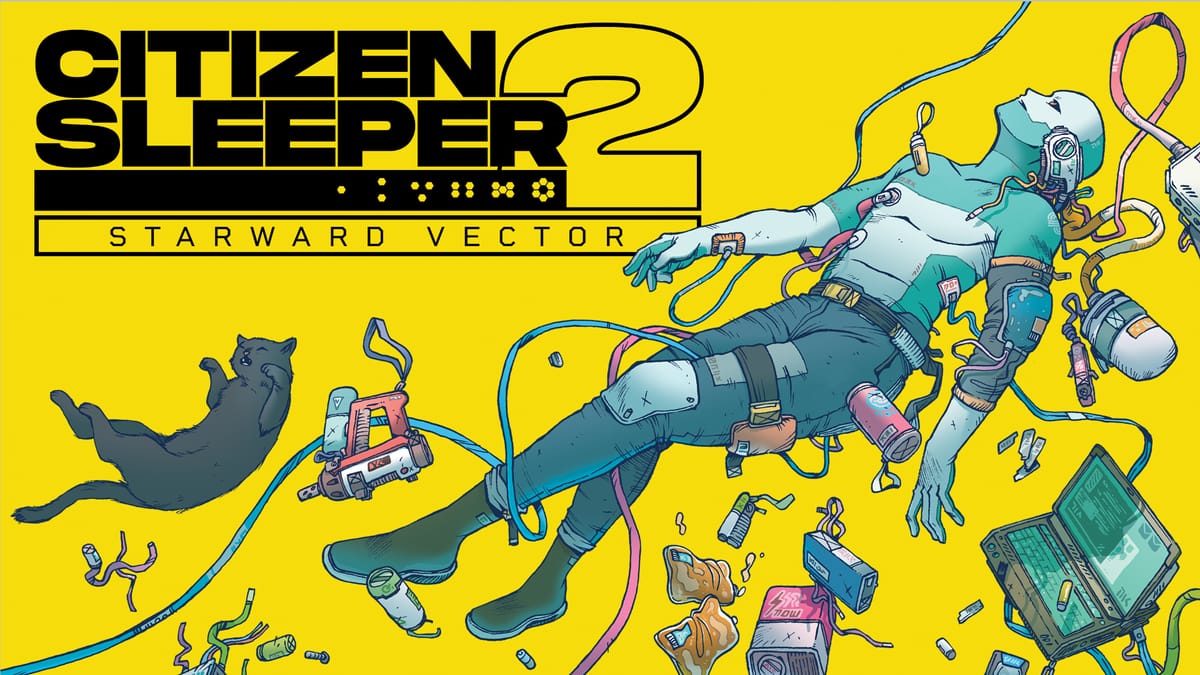
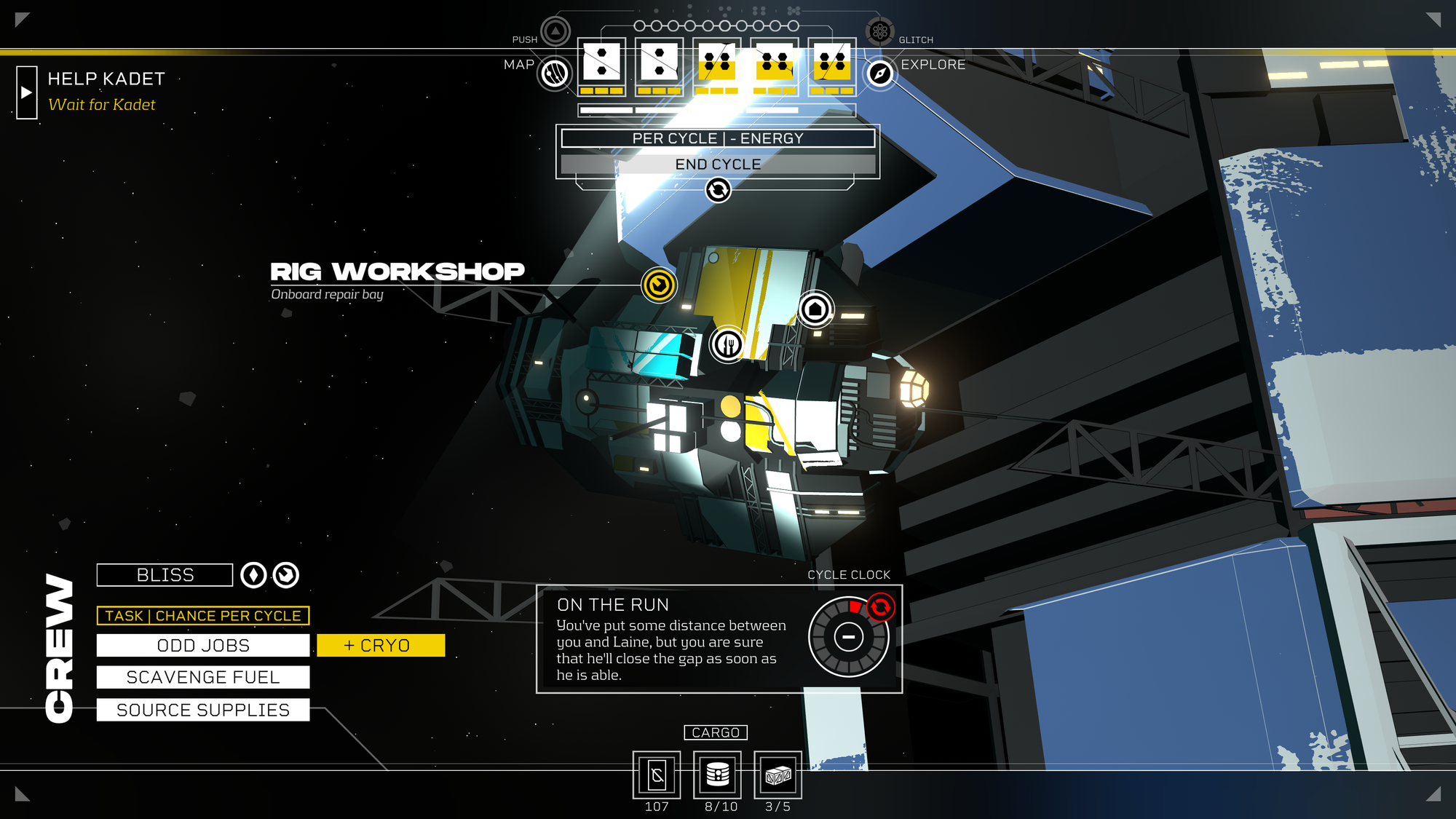
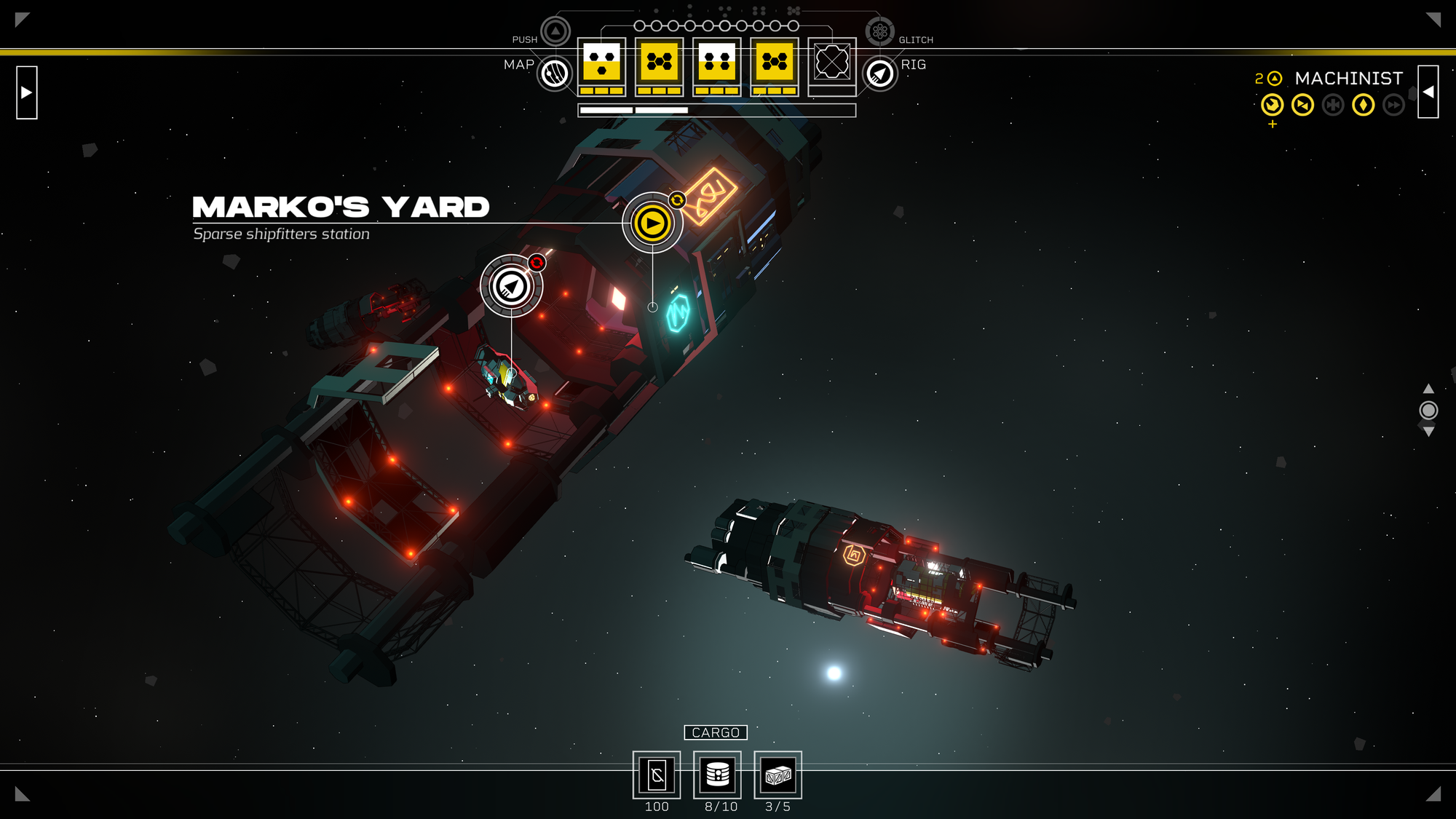
Dice swim in Citizen Sleeper’s bloodstream. The hit sci-fi video game developed by Jump Over the Age’s Gareth Damian Martin was an immediate hit when it released in 2022, not only for its emotionally gripping narrative about androids and bodies, but for the dice placement mechanic at its heart. Followup Citizen Sleeper: Starward Vector releases today and excels at everything the original already pulled off: an expansive story buttressed by more thoughtful tabletop logic.
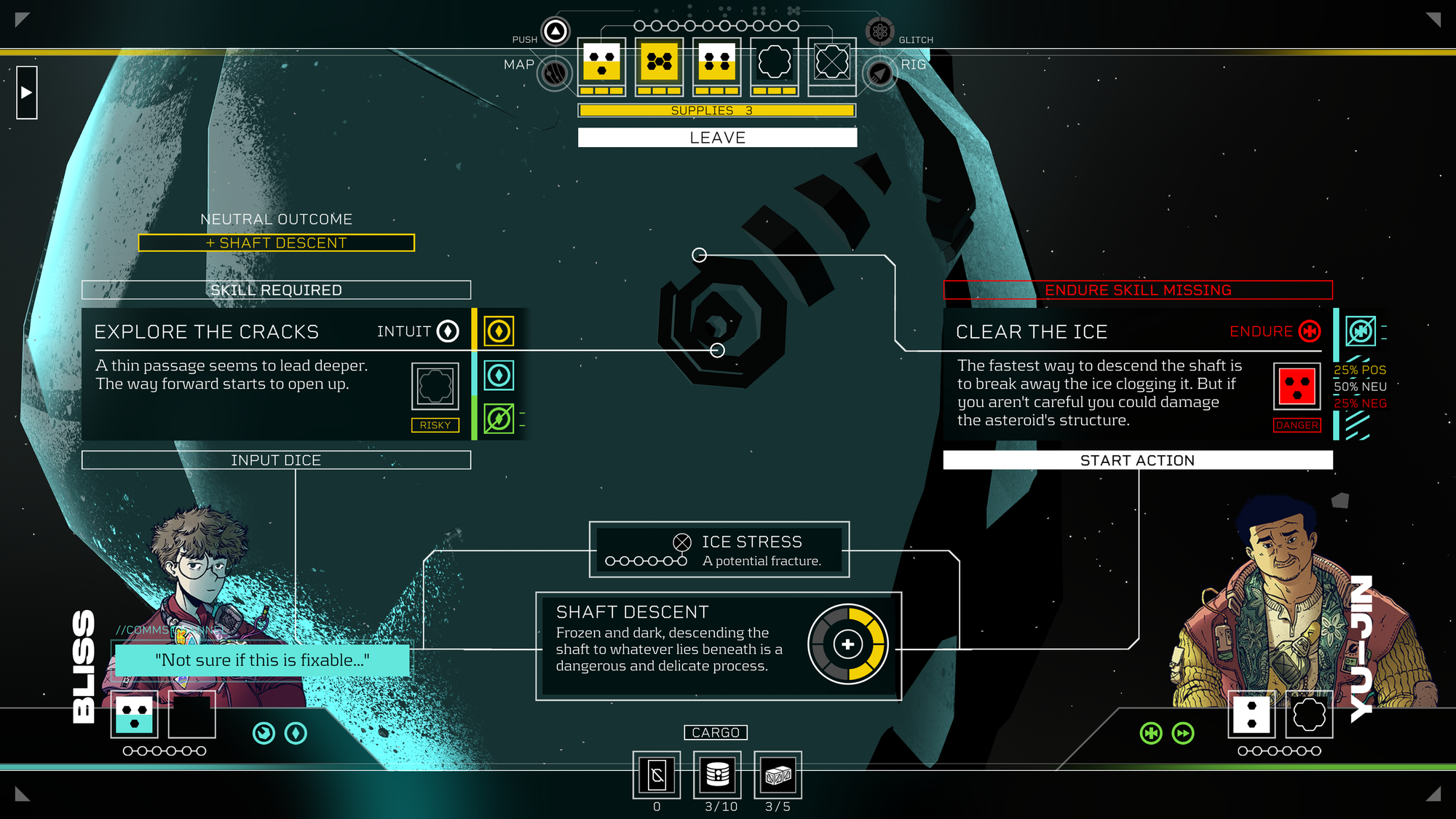
In both games players control a Sleeper, a replicated human consciousness housed in a corporate-owned frame, and use randomly rolled d6 dice to complete activities. These dice, modulated by five core skills, increase your odds at success from a straight coin flip to guaranteed victory. As Rascal’s interview with Martin explores, luck and fate are interwoven into Citizen Sleeper’s possibility space in much the same fashion as any tabletop RPG worth its salt.
That’s partially due to Martin’s own proclivities. The London-based designer has a fascinating introduction to tabletop games, and their Citizen Sleeper games are, among many other things, experiments in applying the various analog mechanics to video game structures. Most evident are the dice, stress, and clocks from Blades in the Dark, but actual play philosophy also plays a significant hand in shaping the questions Martin has asked will crafting their newest video game. Plus, they’re already thinking about bringing Citizen Sleeper all the way back to the table in the future.
The first installment of this two-part interview has been edited slightly for clarity.
Chase Carter: Why dice? Why tabletop games? What spurred you to design something steeped in this particular medium?
Gareth Damian Martin: It came very naturally out of the contrast between discovering contemporary tabletop games at the same time as developing my first game, In Other Waters, and just naturally finding what connected and what didn't. A big part of where I started in games was being super interested in the gaps of the imaginative space that games can create rather than a fully rendered reality. It’s an invitation for the player to invest their imagination.
I was also interested in what I call “off-screen play”. What is the player doing or saying, what are they vocalizing? What's their experience of actually playing the game? When I started listening to actual play podcasts and then tried running tabletop games myself (I was making games in the daytime and then running Blades in the Dark for just one player at night) it was incredible to see the kind of freedom that you were allowed in a tabletop game.
I tried to critically understand the tools that allow tabletop games this broad ability to tell stories that video games really struggle with—video game stories feel so often trapped in the same set of paradigms. Then I realized there's some potential in bringing that over into games. Part of that was a critical process, another part was an experimental process.
Credit: Jump Over the Age
Carter: You mentioned coming to tabletop through actual play, which is very interesting. For our more enfranchised audience, actual play is something that rose out of the hobby, but it was your doorway in. Do you remember which shows, specifically?
Martin: It was the Marielda season of Friends at the Table. I came to games relatively late in comparison to most people, working as a game journalist on the side while developing at about 30. Marielda was such a good podcast for inviting me immediately into the interesting space of contemporary tabletop games that I hadn't thought about. I hadn’t really encountered Dungeons & Dragons before. I have a limited interest in fantasy most of the time, and it felt very connected to the idea of playing Warhammer and getting like a ruler out to decide how long an arrow can fire or whatever. That’s not actually really fair to D&D, but that was my outside impression of it for many years.
Marielda starts with a worldbuilding episode where they use The Quiet Year, and then seeing Blades [in action] really stuck with me. There’s an incredible simplicity and purity to some of the ideas. I was like, okay, games are just a series of variables. So if Blades can do all this with such limited variables, what if I made a city in this way but in a video game? And that was a starting process for me.
Carter: What are some of the stronger design lessons that you've learned, both from tabletop RPGs and actual plays that ended up making it into the design of both Citizen Sleeper games?
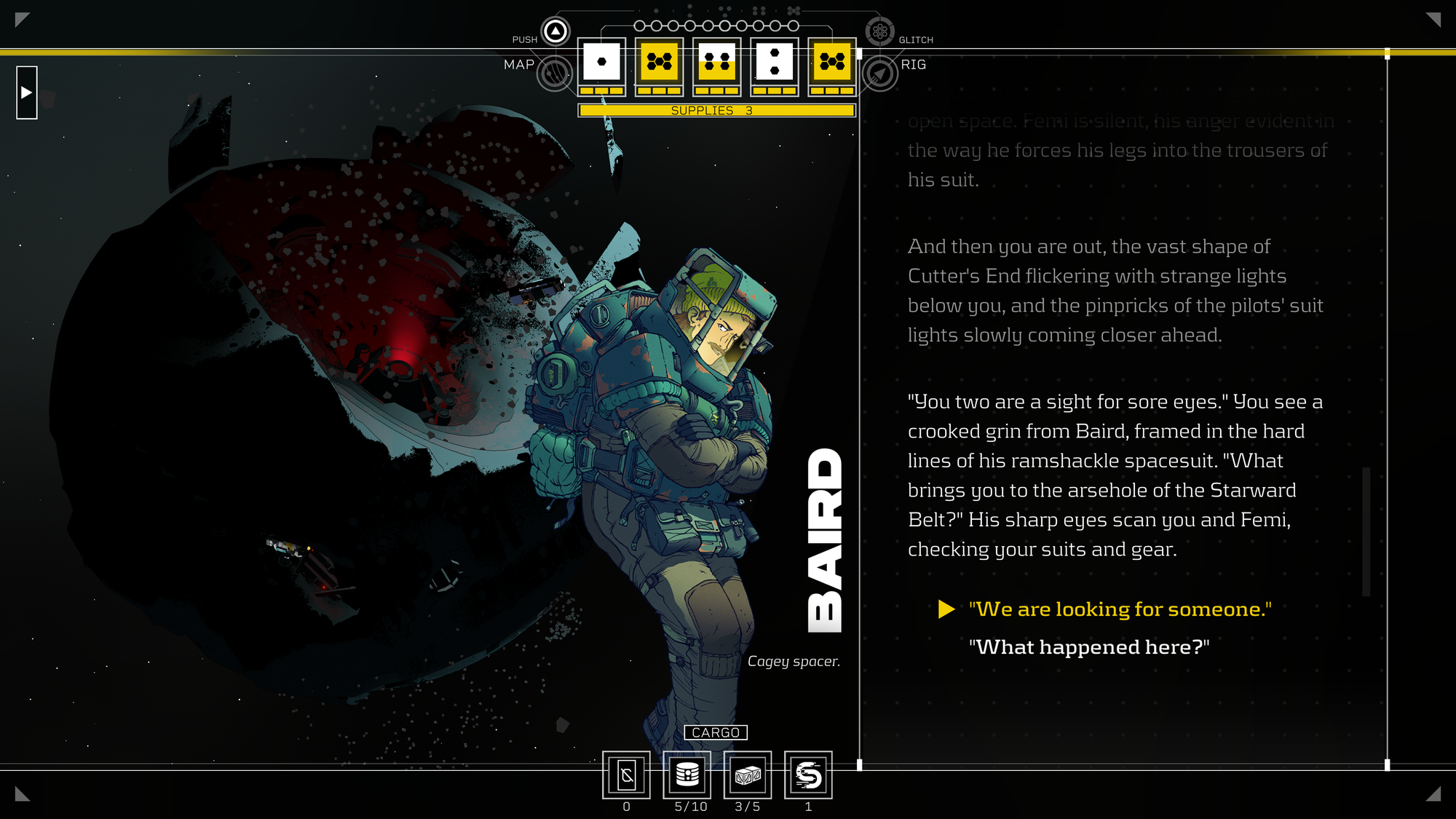
Martin: One of the massive ones is the agency of the player in relation to dice in Blades. It's really, really strong. I think it's the signature feature of Blades in the push and stress, and the idea of the player's body or character as being a resource that you invest in order to push fate in different directions.
I think of it as exposing the variables of the situation. The GM says, “this is a controlled situation or risky situation.” And then they're also asked what the outcome will be. So, you have this really great discussion where if you try to pick this lock the situation might be limited, but if you tried to knock the door down, that could be a difficult situation. It allows the player all this information before they commit resources or push with stress.
Discussing the stakes and then putting your hand on the scales as a player and committing to it really influenced my thinking about Citizen Sleeper. That's where my pre-rolling of dice to create a pool for the day came from: the fact that I was very frustrated by other video game RPGs where it felt like the only solution they could ever have was that you come up against a problem and then you roll a dice and then it's luck.
I was looking at this game that had so much richer of a dice tapestry than just roll and see what happens, but it still had that sense of fate and chance and generative quality that dice give you. Why has nobody done this in video games? I've either missed this or nobody has done it, so I want to be the first person.
Carter: It’s fascinating that you designed your way to understand that D&D is a fairly poor tool for telling stories because of the broad dice variables. When you have that much chance, you fall out of storytelling and more into a simulationist mindset.
Martin: We’re seeing an interesting moment where RPG games are moving away from that. They're reintroducing the dice, which you see in Baldur's Gate 3. It's really funny to make a game like Citizen Sleeper and then two years later see Baldur's Gate 3 come out and be like: Dice. People have short memories, but you couldn't call Citizen's Sleeper 1 a dice-driven RPG. Now, the vast majority of gamers have played something where you roll dice in order to see what happens.
Carter: You feel more confident that players know how to interpret that information surfaced on-screen?. They'll grok this information?
Martin: Not only will they grok this, but it allows them to intervene in the system of the game in a way that doesn't undermine the fiction. When I first designed Citizen Sleeper, it had a Blades in the Dark faction system and no dice. Then it had dice, but I was still calling them energy cores, trying to find a way to fictionalize them. The big realization for me was actually that undermines the power of dice as an object. Dice have this really great poetic association with fate and chance and luck and precarity and all of these themes that I wanted to explore.
The other big thing that I didn't mention is clocks. They fundamentally expose variables to a player in an exciting way, but only if you handle it right. For years, video game RPGs would ask you to kill 10 orcs to complete this quest. After a while, designers asked, what if we just said kill some orcs and we didn't tell you how many you killed? Maybe that would feel more realistic. We started down this path of believing variables are bad because they make everything feel fake. But the moment that you put a clock down on the table and start filling it in, the effect on players is so palpable. This is just a video game progress bar, but this reframing completely transforms it.
Carter: What games have you been playing that might have left a fingerprint on this sequel?
Martin: One that definitely left a fingerprint on the sequel is Heart: the City Beneath. I have very mixed feelings about that game, to be fair, because I think it's a bit of a mess. I had a player who picked a character type where it’s good to revisit havens, but the game seems written to dissuade linear progression. We played a weird soulslike version of it where I made a world full of loops, and the characters are constantly going through delves and coming back to the central hub and then going out again.
The stress system, fallout in Heart, influenced Citizen Sleeper 2 in two ways. The idea of like accruing stress and then rolling against it, having that feeling of stacking up potential harm and then seeing how it executes is really cool. Mothership is also an influence here. But then I also really like Heart's delve system where each delve is just a number. It's my attraction to seeing something brought down to a very simple variable, but here a whole dungeon is just a health bar. For Citizen Sleeper 2, that influenced the contracts and all of them having stress. It became a really simple way to expose the escalating situation of extracting a resource from a derelict while it’s falling apart. Some of those locations have these crises that trigger after accruing a certain amount of stress, and they make the stress accrue faster. You're constantly trying to deal with these escalating stakes.
I've been running a D&D campaign. I felt like it was necessary to understand RPGs, and it's become a kind of academic experiment. I got so sick of being told what D&D is that I was like, I'm just going to run it myself and find out if everyone's right.
Carter: How's the experiment going?
Martin: There's so many things about it that I struggle with, but there are so many possibilities that I think are very cool. I listened to a few actual plays as well: Worlds Beyond Number, which is the most extreme reconfiguring of D&D, but also Critical Role. The fact that there can be no consequences for actions makes a huge difference to the pace. The way I run it can feel quite exploratory, and there's so much gathering information and looking at the world in Dungeons and Dragons that can be interesting but hard to work with.
I've run a couple of a few dungeons, and I’ve recently tried to run a heist. The prep is insane. I've learned a lot, but I don't know how much my players are enjoying themselves. I'm not sure how much longer I can run it because the power curve is painful.
Carter: It sounds like you're running into all the classic problems.
Martin: One of my players has a really annoying ability that they use really annoyingly. They're a wizard and have lots of ways of turning materials into a square foot of mud. Every time there's a door, they turn a square foot of the door into mud over half an hour and then put their familiar through the gap. I'm having to invent all kinds of interesting security systems to stop them doing things.
I’m not enjoying that, but I think it's a good challenge. Designing dungeons is super fun, though. When I get time to make a full dungeon with a map and an insane number of monsters, I think that's the one thing that I do enjoy about it. As someone who never makes combat-based games, there is a kind of liberation to just creating a room, and it's got these three things in it. And that's going to be interesting for three hours. When you're making non-combat things, you never have that kind of efficiency.
Carter: Combat puzzles are really where D&D shines.
Martin: Yeah, D&D without combat doesn't really make sense to me, to be honest. The game is so contradictory and messy as a set of rules that it feels like there is no proper way to play it. The fun of tabletop games—especially as someone coming from video games where they are these concrete, un-transformable objects—is that it’s so nice to be in a medium where the system can just be broken and you can just do what you want with it. It's fun.
Carter: Two games in, are you running the risk of becoming the designer who creates tabletop-inspired games? Do you think that's a bad thing? Are there lessons from tabletop games that video game designers should pick up?
Martin: When it comes to making RPGs, there are 10,000 different lessons that could be learned by those creating video game RPGs. I’m interested in finding my own way, especially after Citizen Sleeper 2. I’ll be working on a project that takes all of the lessons learned into a space that may not be an RPG.
I've seen a lot of arguments, for example, that Baldur's Gate 3 is an immersive sim, which is a very video gamey discussion to have. The immersive sim actually has so many connective points with an RPG. There's a lot of fluid space there. Ultimately, I'm hoping that I will be known as the developer that makes things that may or may not be RPGs. That would be fun.