How do the deals for licensed games happen?
A License to Kill column about brokers, lawyers, and merch.


License to Kill is my relatively informal column about licensed games. It’s an exploratory exercise and will have more questions than answers, more quick references than deep dives. To get a sense of where I’m starting from, read the opening entry.
“For 18 months I took it to all the publishers I could find and each one… were like, whatever, it's a one note thing, it's a one monster encounter… The fact is that they all said no.” This is Andrew E C Gaska on the Ship of the Dead podcast talking about the idea for the Alien RPG. Or rather, the license for a potential Alien RPG.
Gaska trained as an artist and initially worked in comics publishing. Comics, as an industry, has a longer history with big entertainment names and licensing rights compared to tabletop games, both as a constant source of intellectual property to be plundered as well as a place to develop intellectual property (IP) from other mediums at a relatively low cost. Around 2005-2006, Gaska pitched a Planet of the Apes comic to the executives at 20th Century Fox but couldn’t make that happen because a previous comics deal had gone awry and Fox were reluctant to do another one. So, he pitched (and was approved to do) an official Planet of the Apes novel. This led to one project and then another until eventually he was working on the world bible for the Predator series under 20th Century Fox.
A world bible is the kind of document that emerges from the system of intellectual property that we now live in. It’s a (potentially exhaustive) catalogue of all the information that has been canonized about a world across its various instances, sequels, adaptations, spin-offs, and so on. It’s like a fan wiki, except, you know, official.
After he completed that task, Gaska found himself at a loose end. 20th Century Fox was being taken over by Disney, and his contacts there didn’t have any new projects for him. Instead, they opened a different kind of door. “They're like, we love everything you've done for us so if you can find a publisher who wants to put out something in something that's not already taken… you bring the deal to us and we will recommend you as the writer because we want somebody who knows what they're doing,” said Gaska in the same podcast.
Looking down their list of licenses and deals, Gaska noticed that there was no Alien RPG. Which is when he started pitching it around. As stated at the top of this article, he had no luck finding interest for 18 months. Eventually, he reached out to Joe LeFavi, who runs media franchising and licensing company, Genuine Entertainment. LeFavi had just met with Free League Publishing, and it turned out they were interested in two specific Hollywood franchises.
When it comes to licensed games, the least understood part of the process is probably how these projects actually come about. Most RPG publishers are tiny teams, and they’ve got enough problems just trying to ensure they have the paper to print their games. How do they connect to Disney, Netflix, or other giant megacorporations?
The answer seems to emerge again from the way that the IP ecosystem works. The management of rights, in terms of allocation, transfer, licensing, merchandising — as well as in the sense of cultivation, development, protection — is a business function of its own. It’s the realm of lawyers and executives and specialized companies. But that also means that there is a system, if you can access it. These entities want to make deals, as long as they’re profitable and boost their brand. And they tend to not have one license, but a stable of them, a buffet menu of options. It’s all a question of connecting with them. Of putting the right people on a call or email chain.
Brian Saliba, the co-designer of Monty Python's Cocurricular Mediaeval Reenactment Programme, who partnered with publisher Exalted Funeral, got the rights for that license in a roundabout way. Speaking to the Talk of the Table podcast, Saliba described how he was initially looking to work with a high-profile (and unrevealed) musician or band: “'I’d pushed this idea all the way up through the merch company, through the music label, and gotten it all the way to the band who said, yes, let’s do it. And then on its way back down the chain through the layers of onion, it died for a whole lot of reasons.”
But the merchandising company, who clearly respected Saliba’s hustle, asked him to take a look at their other offerings to see if anything else might work. And there, amidst their portfolio, he found the Monty Python license.
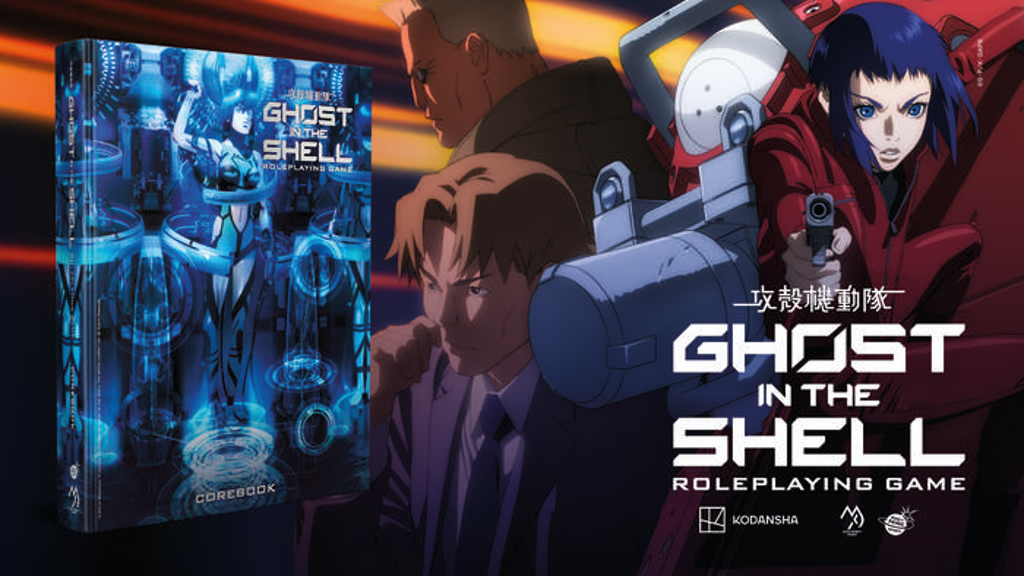
For Mana Project Studio, the Italian publisher behind games like Cowboy Bebop and Ghost in the Shell: Arise, their connection comes via Don’t Panic Games. The latter is a French board game publisher (another industry with a wide tradition of licensed games) who describe themselves as “passionate veterans of the anime industry”. They state: “Our mission is to bring beloved Japanese anime into the world of gaming, creating immersive and exciting experiences for fans worldwide.” Both Cowboy Bebop and Arise are licensed from the same publishing and music company, Kodansha.
Rarely, an RPG publisher reaches out to a big license holder directly. One example is the Invincible RPG. Adam Bradford, best known for co-founding D&D Beyond, brought the idea of the game to Free League. He didn’t have the license yet, but as a fan of the comic and the new TV show, he felt it was the perfect way for Free League to enter into the superhero RPG genre. To get the license, they needed to talk to Skybound, the licensing and distribution company founded by Invincible and The Walking Dead creator Robert Kirkman.
Speaking to The Invincible Podcast, Bradford described how Free League already were in touch with Skybound through Simon Stalenhag’s artbook, The Electric State, which Skybound distributed. Bradford made a pitch for adapting Invincible in a tabletop RPG, and it was successful. But this isn’t the norm for Free League, whose other big licensed games came through LeFavi and Genuine Entertainment.
Speaking to Rascal at GenCon in 2024, LeFavi said he originally reached out to Free League because he loved their work on Tales From The Loop. “I went to Gen Con to basically find Tomas [Harenstam] and just be: Please be my friend. Please work with me. What do you need? Do you need money? You need licenses? Do you need a best friend? Do you need someone murdered? I'll do anything for you,” said LeFavi. “And basically it came out through that discussion that they really wanted to do licensing, but they didn't really know how. And the two things that both of us immediately reacted to was Alien and Blade Runner. So, we pretty much knew from the first time we met, those were the two things we were gonna do together.”
These weren’t LeFavi’s first deals in tabletop RPGs. He had previously worked with Cortex on the Tales of Xadia games, Hunters Entertainment and Renegade Game Studios on the Altered Carbon RPG, and the Dune game with Modiphius. But according to him, tabletop RPGs are still not an easy sell, mainly because people don’t know what they are. “Their world is putting a logo on a t-shirt and putting it in Walmart,” he said. “To say, this product will never be done because it's only finished when the fan takes it home and tells their own story and creates their own characters… Some of them get it immediately. There's been a generational change since I started, where there's a lot of decision makers now in media that are my generation, that grew up with this stuff, that know D&D isn't Satan's game. So, it's gotten a little easier, but yeah, it's never been an instant yes.”
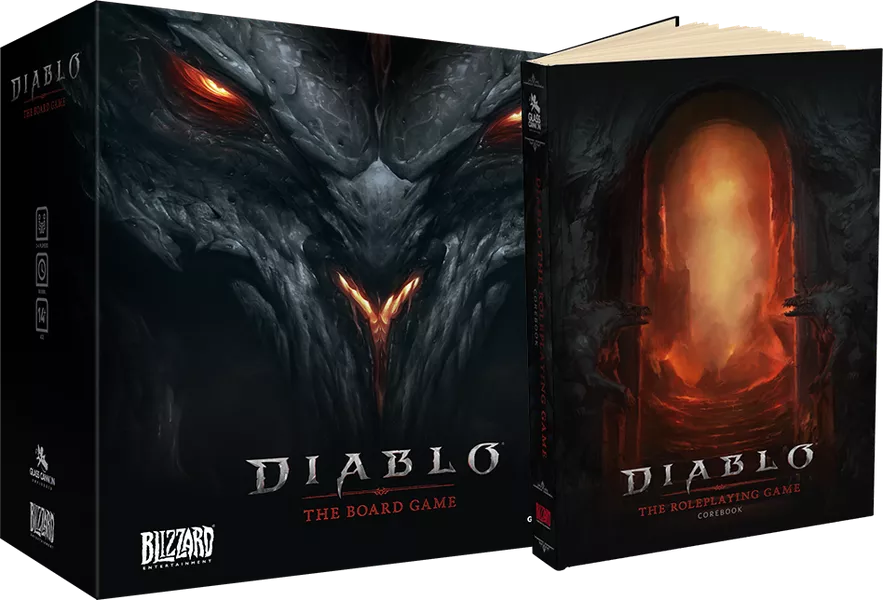
Since his initial deals with Free League, LeFavi also worked with the Swedish studio on their Walking Dead game. He worked with Exalted Funeral on the recently-launched Tavers, based on the sprawling exhibits of Santa Fe art powerhouse Meow Wolf, as well as the Diablo RPG for Glass Canon Unplugged (the boardgame publisher, no connection to the podcast). Unlike earlier projects, LeFavi’s involved with the creative and production side of the Diablo RPG as well.
According to LeFavi, his job is to convince the license holders that making up new stories in their creative works leads to more fans. “They just want to live in that world and express themselves through your IP,” he said. “But if you empower them, they will be the best fans you will ever have in your entire life. They'll spend a thousand hours in your world. You can't buy that, can't force that, you can't market that.”
There’s always going to be more to say about licensed games, so stay tuned for more of the column. ‘Til then, here’s some news that you might have missed.
- Catalyst Game Labs released a Kung Fu Panda RPG so quietly that no one seems to have really noticed.
- There was a D&D-5e-based Thundercats RPG that crowdfunded earlier this year. The design team is called Lynnvander Studios and the license seems to come via Dynamite Entertainment, who do comics.
- There’s also another Ghost in the Shell RPG on the way. This is from Mantic Games who were unfortunately one of the characters in the sad story about the Hellboy game that we discussed in the last issue. This is the first (classic?) Ghost in the Shell, which I’m sure is what comes to mind to millennials and older readers when they hear the name. Interestingly, the license seems to be owned by a completely different Japanese company called Sunrise. Which is why it looks like we'll go from zero to two Ghost in the Shell games in the space of a year.
- Modiphius announced a Wolfenstein RPG, which will join Fallout and Dishonored among its shelf of video game adaptations.This will be in its house 2d20 system and there’s very little in terms of information apart from that.
- The crowdfunding campaign for the Godzilla RPG is underway. They actually describe the whole system, which makes them really unique in the current landscape. But the whole Kickstarter page is images and that makes my eyes just slip right off the page.