Concerning Ravenloft - the original horror adventure module
Him, Strahd.

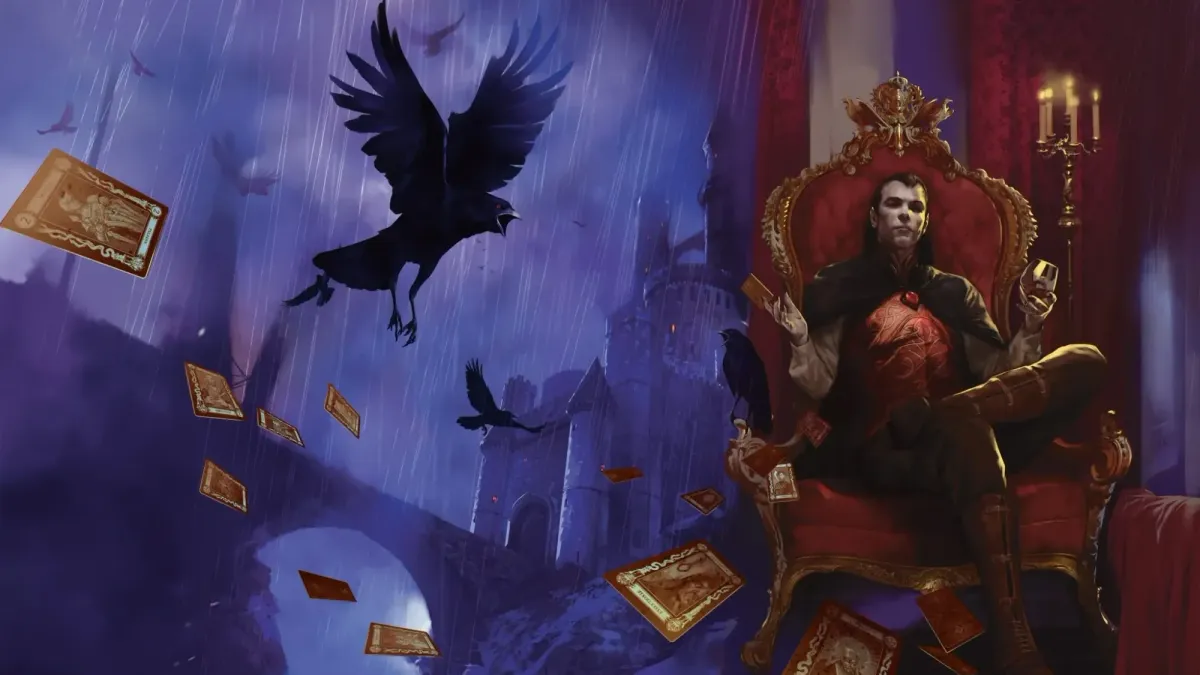
This year marks the tenth anniversary of Curse of Strahd, the latest in a long line of remakes of the classic adventure module I6: Ravenloft from 1983. Centering on vampire lord Strahd von Zarovich, the scenario finds the PCs trapped in Barovia, Strahd’s gothic horror realm, which is separated from the rest of the D&D multiverse by a misty barrier that can only be crossed with the permission of its master. I6: Ravenloft proved so popular that it became the basis for an entire eponymous campaign setting in AD&D2e, and updates of the adventure module have appeared for every edition of the game since, with the exception of D&D4e (and even then, an update was announced but never saw the light of day). At the same time, Ravenloft is built on racist stereotypes and regressive attitudes towards women, both subjects that D&D has persistently struggled with over the years.
(NOTE: For the sake of clarity, Ravenloft on its own refers to both the original module and its reimagining. For specific references to I6: Ravenloft, Curse of Strahd, or the Ravenloft Campaign Setting, the full titles will be used.)
Like groundbreaking works in any medium, the source of Ravenloft’s enduring appeal isn’t immediately obvious to modern eyes. D&D is lousy with compelling, fleshed-out antagonists, and there are more takes on the Draculian vampire archetype than you can shake a sharpened wooden stake at. It’s important to bring up Big Vladdy himself because Strahd is very much cast in that well-trod mold, and the long list of similarities between the two does diminish von Zarovich’s shine somewhat. The background of warmongering aristocracy and thorough bastardishness even before joining the ranks of the undead, the longing for lost love, and obsessive pursuit of apparent reincarnations of their beloved — “Dracula, but he decided to mope at home instead of hop on a ship to Whitby” is a pretty good summary.
The important thing to remember is that Strahd wasn’t created in 2026, or 2016, or even 1983, for that matter. Instead, his origins lie in 1978, when co-creator Tracy Hickman had an unsatisfying encounter with a vampire in a D&D game and went home to complain to his wife, Laura, about it. Which is an incredibly valid way to start the creative process, since plenty of my Rascal articles have their roots in an annoyed rant with my partner as the audience. Tracy was irritated by the use of a vampire as yet another randomly-generated collection of stats for players to bludgeon as an XP and loot pinata. Surely, such a classic literary monster deserved better? Laura agreed, and the Hickmans launched into a flurry of vampire research and module design that would eventually become I6: Ravenloft.