Why the Year Zero Games Are My Favorite Type of Trad
It's all about pushing, resource management, and more pushing.
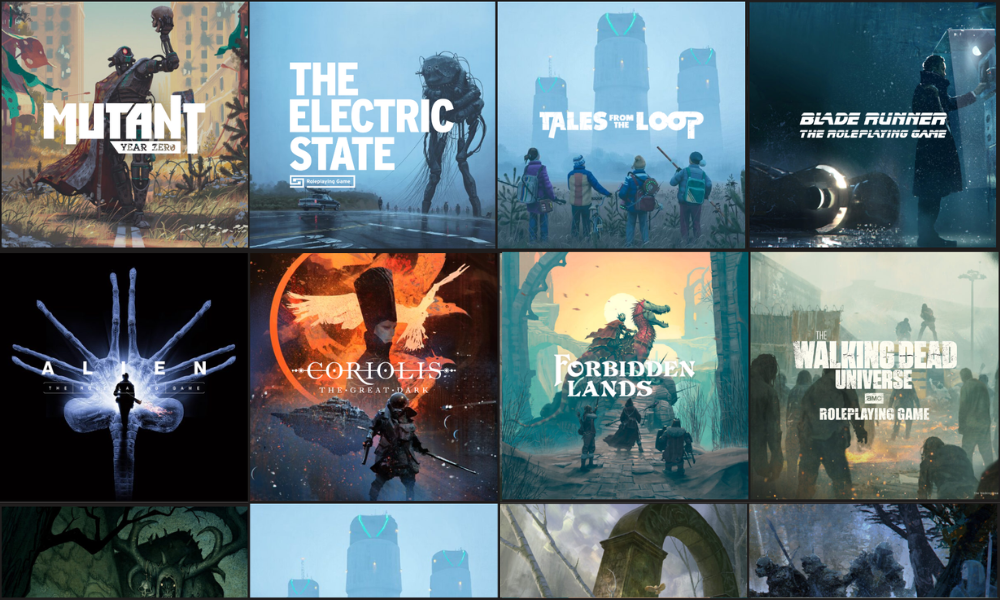
I don’t always want to play trad games, but when I do it’s usually one using the Year Zero Engine.
To be clear: “trad” is doing a lot of lifting there. What I mean is an RPG with a conventional authority structure (one GM, many players) whose rules mostly address material, not thematic, concerns. Resolution is about success and failure, and failure consequences are left to the GM’s discretion. Probably a skill or talent or ability list. You know: a normal roleplaying game.
There are so many house systems out there. Obviously, there’s ye olde d20 System Resource Document and Basic Roleplaying, aka BRP, aka Call of Cthulhu and Runequest. Modiphius has their 2d20 system, while Monte Cook Games has Cypher, and Green Ronin has AGE. Is Cortex a house system? Agon? Fate?! If you’ve bought an RPG in the past decade you probably see the branding of its underlying engine, design jams for folks to play with it, and so on: Rooted in Trophy, the Breathless SRD, Mörk Borg, Powered by the Apocalypse if you want to start fights. You get the idea.
But then there is Free League’s Year Zero Engine. I just love it.
Why It’s Good
There are two core concepts that make a Year Zero Engine (YZE going forward) game: pushing your roll, and a short harm/recovery cycle.
Pushing is the killer app of any YZE game. Mechanically, it’s a chance to reroll all the dice that missed the first time at a cost. That cost produces the economic shape of the whole game. In Mutant: Year Zero, the original YZE game from Free League about post-apocalyptic young adults protecting their community, pushing gains you mutation points that you use to power up your character’s weird stuff, but it also damages the attribute you were rolling in the first place. In Coriolis: The Great Dark, a game about far-future explorers delving alien ruins, you just get the pleasure of not missing (and perhaps gaining even more successes) at the risk of gaining Despair, one of three harm tracks. The Coriolis universe – there are two games so far – is pretty dreary, so fighting Despair is on brand. In Alien the entire pushing game is about managing your Stress. And so on. This little push-your-luck game does a lot of work.
The other distinctive bit of YZE games is that you’ll track damage in multiple ways, all of which have different recovery schemes. Usually they make players manage resources (food, water and rest in Mutant: Year Zero), or remind them to roleplay (share a quiet moment with another PC or whatever). The resource management element is never onerous. You might damage stats directly (mostly in the 3-4 range), or manage a longer “damage” track showing how much Blight or Corruption you’ve picked up. The point is that the track is short, easy to manage, and easy to overshoot. Usually, overshooting sends you to a long, gruesome table of outcomes. Fun! Maybe you pick up a short-term condition like “confused.” Maybe you lose a limb. Or, you know, just straight up die.
The vibe of all the “good” Year Zero Engine games emerges from the intersection of pushing and resource management. That combination typically is great for survival stories. Forbidden Lands, Free League’s YZE take on adventure fantasy, requires you to track your food, water, ammunition, and so on. Vaesen, a horror investigation game inspired by Johan Egerkrans’ art book of Scandinavian folklore, requires you to manage your accumulating conditions (every time you push!) since you can’t recover from them unless you’re in a safe location. Twilight: 2000, a reinvention of the classic mid-’80s post-nuclear-war game, is about managing stress as well as physical conditions (starving, dehydrated, sleep deprived, hypothermic). Much like pushing, the recovery cycle of any YZE game is where the design reinforces its underlying themes. Clean, straightforward, unsubtle.
Hits and Misses
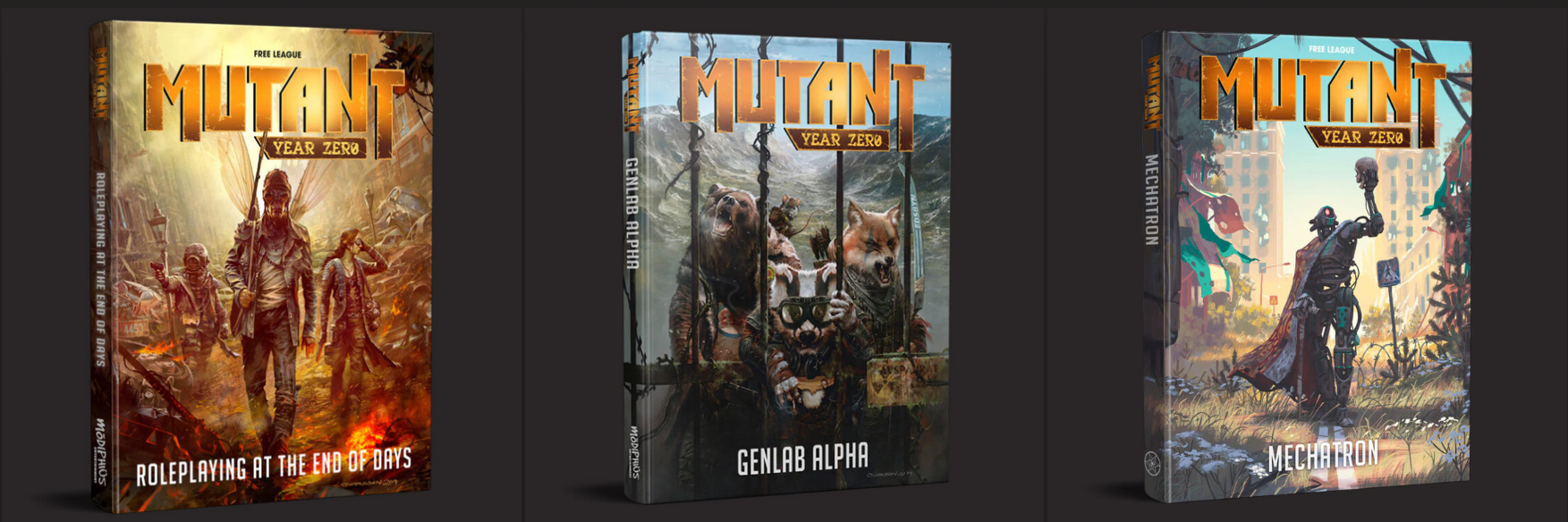
The longer Free League publishes RPGs, the less comprehensive their core rules are. The first YZE game, Mutant: Year Zero, has an amazing emergent campaign baked right into the core rulebook. You roughly sketch out “the zone” around the ark where the characters live, and as they explore the zone, there’s a chance they will stumble into one of several major events or locations where they’ll learn more about Eden, a fabled lost enclave where the mutants can go to be safe. It’s nonlinear, very flexible, and unintrusive. Later Mutant games repeat the format. But outside Mutant, Free League has mastered the art of releasing big boxed campaigns alongside the rules. In some cases – Coriolis: The Great Dark being most recent – the rules are notably incomplete because they expect everyone to play through the boxed campaign. When I ran The Great Dark for my regular play group, we had to improvise a few systems (how to repair equipment, for example – quite common when pushing a roll while using equipment frequently results in wear or breakage) that wouldn’t show up until the campaign box, Flowers of Algorab, was released months later.
Not all YZE games are great, design-wise. Coriolis: The Third Horizon, a sci-fi game distinctive for its Islamofuturist setting, introduced a GM-facing economy called “darkness points” that really didn’t work: there’s no meaningful pressure to use or earn them. Twilight: 2000 introduced dice codes (A-B-C-D) instead of just saying “d10” or “d8” — irritating! And then they repeated it in Blade Runner. The fourth game in the Mutant series, Elysium, is a dystopian fascist nightmare (you play cops in a failing sealed enclave like in the Silo series on Apple+) that feels out of step with fun-loving mutants, uplifted smart animals (Genlab Alpha), and awkward self-aware robots (Mechatron).
Tales from the Loop, Things from the Flood and The Electric State, all based on Simon Stålenhag’s art books, are popular properties, but they’re not my favorite YZE games. Each title lacks survival urgency, which defangs the YZE push-recovery cycle. Tales from the Loop is about kids, so the kinds of conditions they face are kid-appropriate (and no, they can’t die). For example, your young character must go to a grownup to heal from those conditions. All genre-appropriate, mind you! Things from the Flood is similar to Tales from the Loop, updated to the horny/dysregulated teen genre. The Electric State isn’t kid-centered, but the game is built on a road trip structure that values moving the characters through their journey, travelogue style, over threatening them much while on the journey. In all three cases, Free League has designed games around artwork first, storyline second. They all have a following, but I don’t think they’re a great match to the system.
Free League has a couple high-profile licensed games that leverage the YZE: Alien and Blade Runner. In both cases, the adaptations are outstanding. I played Alien and Mothership back to back, and I’d honestly rather use Alien for my space horror needs, whether or not there’s a xenomorph involved. It feels like a more complete, mechanically interesting game. Blade Runner is excellent as well, providing lots of structure to both the investigative work and the story’s thematic core of what does it mean to be human/are you a Replicant? And because a nontrivial slice of the buying audience for licensed games are non-playing fans, they’ve done a good job of incorporating all the existing material out there. If it’s in Fandom.com’s Blade Runner wiki, it’s probably in the RPG somewhere.
A Vibrant Third Party Ecosystem
Many third-party YZE games are on the market today, but it’s not really a toolkit for snappy kitbashing. YZE is a system for building a system.
It took Free League a while, but they eventually released a system reference document that has led to some interesting third party projects.
- Tales of the Old West: broadly about “the Old West,” does a pretty good job of decentering the cowboys-and-natives storyline, still colonialist as hell but then again that’s the Old West for you.
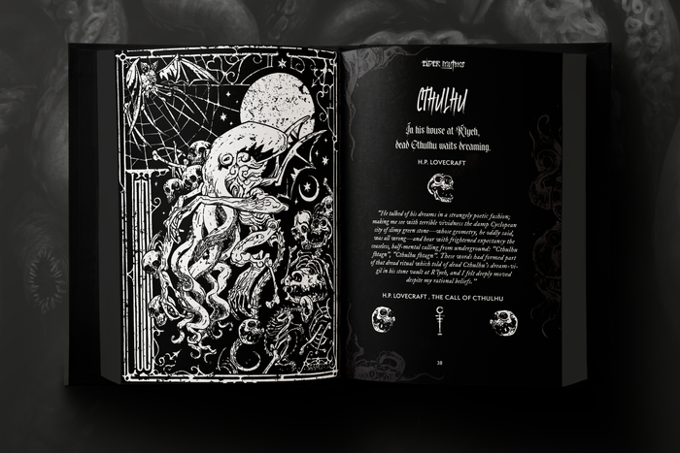
- Elder Mythos: you play Mythos gods trying to take over/destroy/corrupt the world. Interesting board game-y elements. You drop into scenes with your worshipers, acolytes, agents, whatever, and then pull back and see what damage they’ve done. Fun take on the “play evil” genre.
- Temples & Tombs: Indiana Jones, Tomb Raider, National Treasure, you get the idea. Practical and fun. The mechanical twist here is that you have a stat, “Luck,” that gives you lots of extra dice to roll when you push. But more dice mean more chances of rolling a “1”, which damages your stats.
There are tons more but these three caught my attention for one reason or another and ended up in my YZE library.
A Trindie Triumph
Insofar as you care about systems at all, you’d be hard pressed to find a faster, easier trad system than the Year Zero Engine. The existing official catalog is impressive as heck, the unofficial titles are weird and interesting, and the engine itself is among the easier robust-but-hackable ones. They all feature a nice mix of harder-edged simulation and softer-edged genre enforcement, abstract where needed to speed things along, and amenable to major side-system additions like base-building.
So, why don’t I just use Zero Engine for all my trad needs? Other than the fact that I don’t play these sorts of games much any more, the big reason is that the survival-oriented economy and push-your-luck approach doesn’t work in every genre. Vaesen, for example, feels like a mismatch. Less Sherlock Holmes and more Silent Hill.
Lots of first and second wave indies came into being because of long-standing problems with the traditions that make up “trad” gaming. Some of those indies tried to fix trad, while others asserted that the style of play and design was either dead or irredeemable. It’s been great to see those arguments brought back and applied in systems like the Year Zero Engine. Trad might be long in the tooth, but the format still has some miles to go.