Dungeon, Inc. could be your first OSR game
How a mission-based TTRPG can ease a game group into an open campaign.

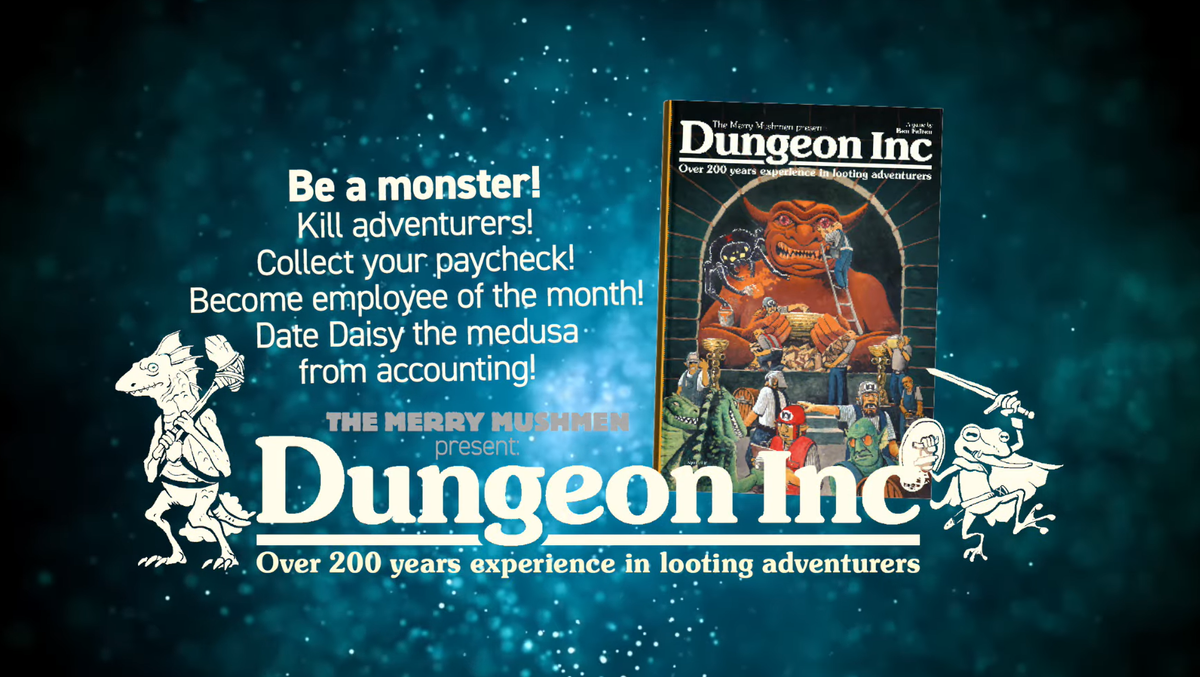
With a successful first couple days on Kickstarter, Dungeon, Inc. is on its way to rival Black Sword Hack, the Merry Mushmen's first standalone TTRPG. The OSR publisher from France, known for its gorgeous adventure modules and the bric-à-brac magazine KNOCK!, is yet again testing the waters outside its niche while keeping a foot firmly swimming in old-school gaming currents.
Belaboured metaphor aside, Dungeon. Inc. has the potential to be the game to try for OSR-curious game groups.
But first first, the tl;dr bullets:
- A mission-based structure to ease you into an open campaign
- OSR style, freeform rules to learn how to make rulings together
- Much more straightforward info about Dungeon, Inc. on Kickstarter
Why don’t you OSR like I do?
Old-School Renaissance games, be they retroclones of 70s and 80s titles or modern evolutions unconcerned with dungeon delving and hexagon map exploration (did you know that Mothership is an OSR game?), have a reputation of being, well, very different from what the 2026 TTRPG gamer is used to. “Jump into my sandbox! We play a rules-lite, procedures-heavy system and the lore is mostly anticanon!” isn’t something you hear on any of the popular actual play streams.
OSR games (or adventure games as we like to call them), put an emphasis on player agency, situation-based scenarios inside open-world settings, and of course a rulings-over-rules playstyle. It can be a lot, even for grognards like me, whose first few dungeons all had a B and a number in front of their title. I’ve played my share of trad games, storygames, and other subniches over the years before finding a creative home in adventure games. In the last decade, I have discovered my brain never balks at filling the gaps intentionally left in the rules by designers. At the start of a session however, I always feel a bit awkward. Even with a state-of-the-art, pitch-perfect game like critically acclaimed, triple ENNIE winner Mythic Bastionland, and I feel a twinge of anxiety when my players pour over the map to decide their next destination. What if I can’t make the random encounters that interesting? What if I find out the hard way that I underprepped the location they want to explore?
This long preamble to say: I fully understand people who hesitate before diving headfirst into that OSR campaign. And what do OSR designers and publishers do to help them? Quite a bit, actually: new and not-so-new games that make the rules transition easier (by building off 5E, like Shadowdark does so successfully) and the campaign frame solid and thorough (ultracomplete, uberatmospheric Dolmenwood is probably the prime example), but there aren’t too many games with a proposition that is easier than: start with a dungeon and build from there. Enter Dungeon, Inc.
Try a mission-based, open campaign
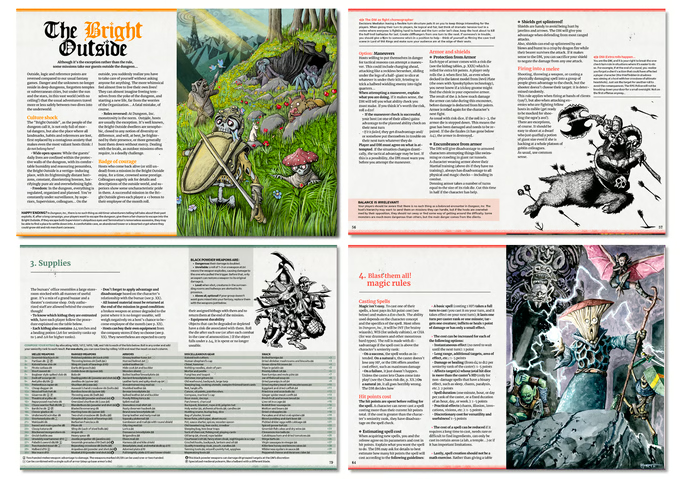
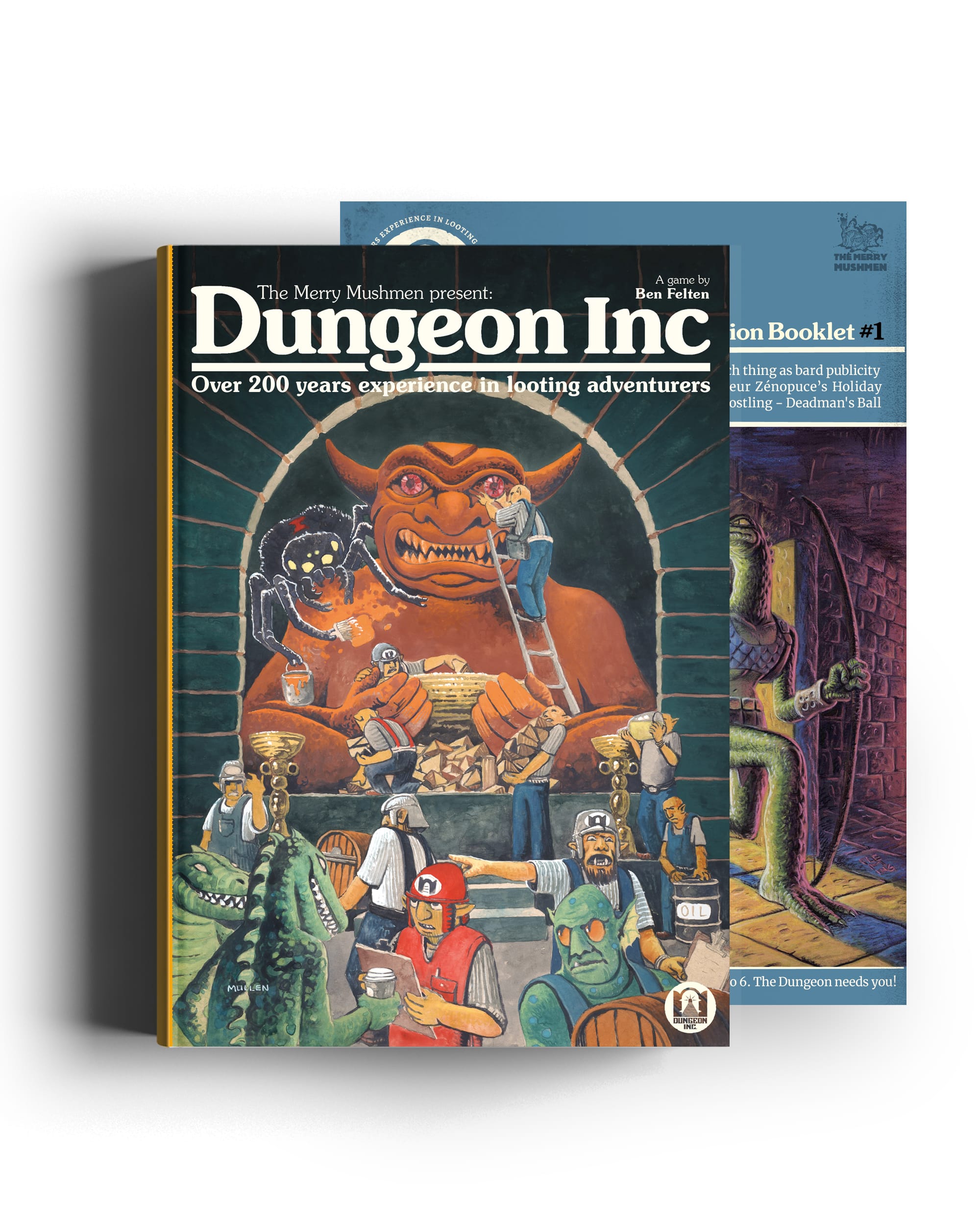
When working on this second edition (and first English version) of Dungeon, Inc., we realised what a unique proposition the game has for an OSR title. In Dungeon, Inc., you play as Reception hosts, monsters employed by the eponymous corporate megadungeon to secretly solve ‘client issues’ inside Marketing designed, thematic dungeon areas. To use the technical term, it’s a reverse dungeon like the ones we’ve seen since the 1990s, seminal video game, Dungeon Keeper. (So seminal I’m not even hyperlinking it.)
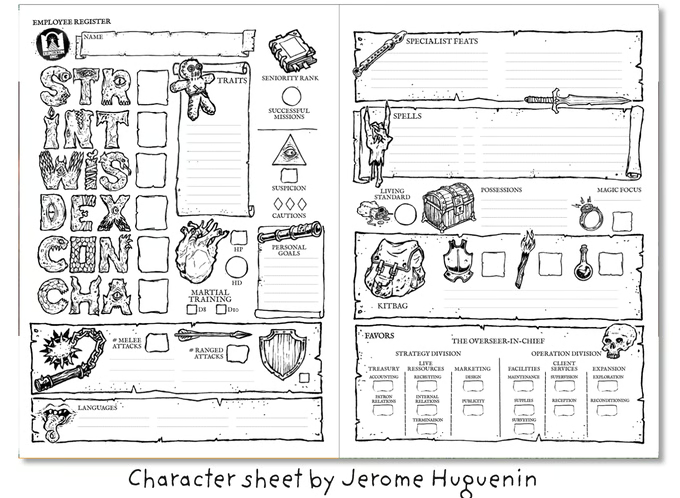
Each Dungeon, Inc. adventure is a mission and follows the same structure: the PCs are summoned to their supervisor’s office, hastily briefed (“We can’t find that halfling rogue, probably another ring of invisibility. And mind the dungeon magpies, it’s nesting season.”). They get a map that’s hopefully up to date, some ill-fitting armour, random weapons, the contractually mandated healing potion, and they must report to the dungeon level post haste.
From there ensues a dungeon delve, just one that isn’t about exploring. The players have basic information about the dungeon and its denizens, and they have a clear goal. They will have to work fast and kill smart as, like in all OSR games, characters rarely survive unplanned contact with the enemy. This makes the DM’s (Discussion Moderator) job somewhat different than in a regular dungeon crawl. It still however requires giving a lot of information to the players and letting them come up with ridiculous plans to solve problems without obvious solutions. All the adventure gaming goodness without the room-by-room, 10-foot pole and iron spikes filled tediousness.
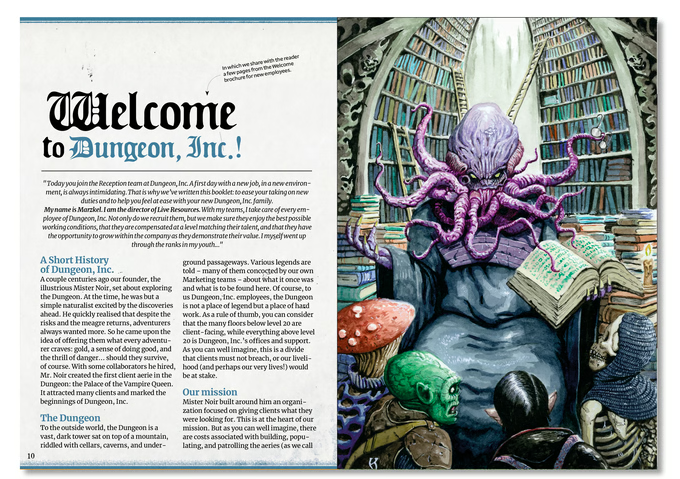
When the mission is over, the corporate sandbox opens up. The author recommends dedicating about 25% of their game sessions to office life downtime scenes. This is when the players have free rein to explore the geographically limited confines of the megadungeon’s secret corporate levels. They get to meet colleagues, spend their meagre pay (or any adventurer loot they might have forgotten to hand over), pursue relationships with NPCs and factions, investigate rumours, and generally pull the campaign one way or another. It’s the DM’s job to let them delve the company’s organisation chart however they like, and to build the campaign from there. The next mission, the next batch of rumours, and the next lethal workplace accident may be direct consequences of the players’ choices.
In short, Dungeon, Inc. pulls some toys from the OSR toybox and lets you play with specific ones: freeform rules, out-of-the-box problem solving, and as-you-go campaign building. Should you and your players enjoy the experience, you can always put everything back in. Because no one will stop you from letting your player characters leave the Dungeon and explore the big scary world outside.
Boy, did this get out of hand
I started writing a press release, and now I’ve got a weird review blog post thing about a game I’ve worked on for the last two years. Ah well, I blame all the marketing copy I've had to churn out in the past few days.
If you managed to read all this, you can always get some facts about the game on the Kickstarter campaign page for Dungeon, Inc. There is even a link to the quickstart zine we made over two years ago now.