Easter, Eggs, and Executive Functions: What Experts Are Saying About TTRPGs and Child Development
As gamification reshapes learning, experts are beginning to look at tabletop RPGs as tools for real cognitive and emotional development.

Easter stories tend to start small.
A few eggs, a simple treasure hunt, a shared moment. But those moments often carry something more: curiosity, discovery, and connection.
That makes it a fitting backdrop for a recent discussion featuring a behavioral neurologist, an education therapist, and a counselor, all exploring a question that has been gaining attention:
Can tabletop roleplaying games support how children learn and develop?
Much of the conversation centers on executive functions. Planning, focus, impulse control, decision-making. The skills children rely on every day, and which take years to fully develop.
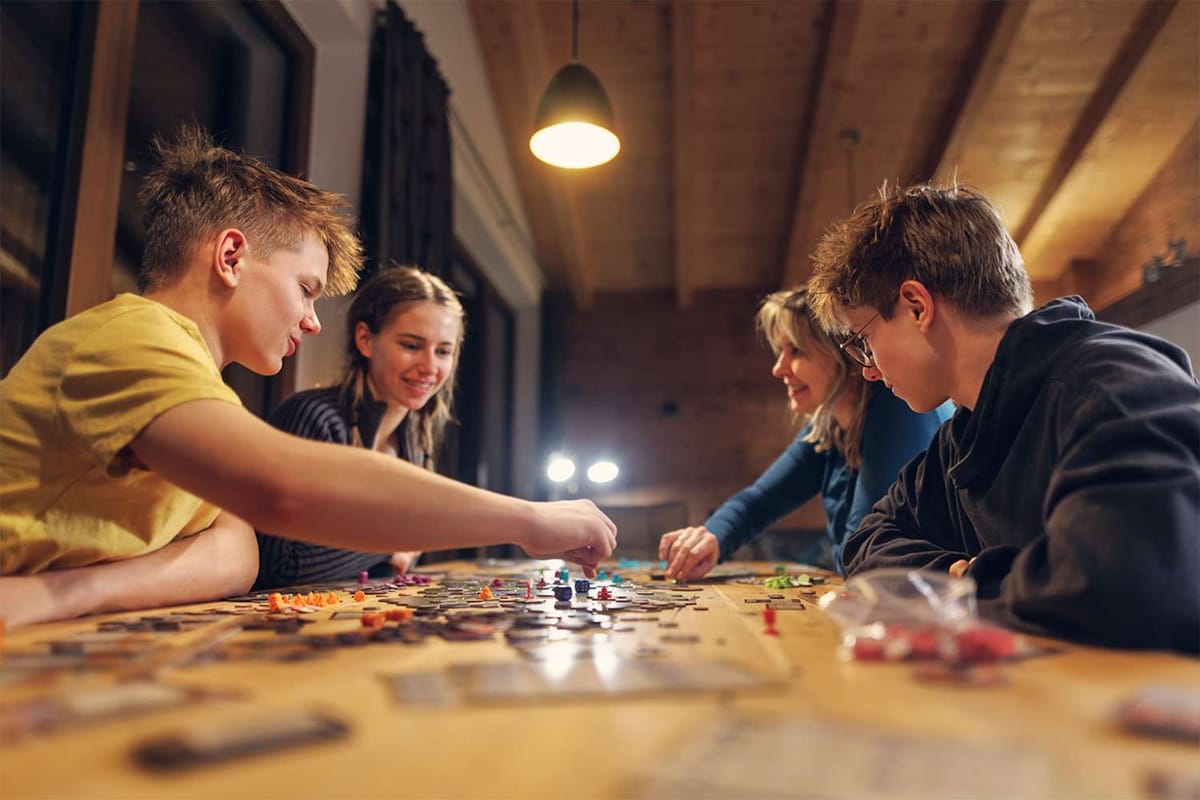
What stands out is how naturally these appear at the table.
Players are constantly making choices, adapting to new situations, waiting, listening, and thinking ahead. None of it is framed as instruction, but it closely mirrors the cognitive processes behind learning.
Storytelling adds another dimension.
It allows children to explore situations indirectly, through characters and metaphor, making it easier to process emotions and experiences.

Across education and Learning & Development, there is increasing emphasis on participation, gamification, and experience-based learning. Tabletop RPGs, in many ways, already embody these principles.
In that sense, the connection to Easter feels less thematic and more symbolic.
Small moments, shared experiences, and the kind of learning that happens without being explicitly labeled as such.
Watch the Full Discussion
If you’re interested in the full conversation between the experts, you can watch it here: