Glatisant’s evocative tale for two players shows non-romantic love can cut just as deep
Engage in a chivalric expedition against the Questing Beast.

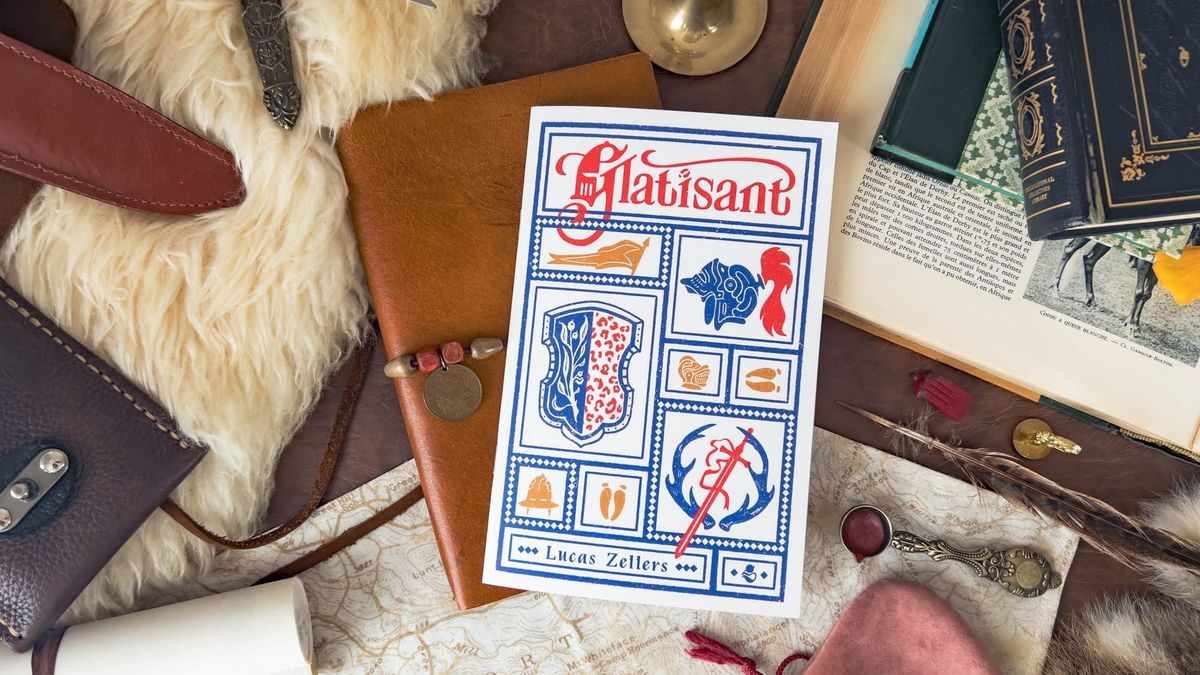
Lucas Zellers, the writer and designer behind Glatisant, was surprised that I referred to the two-player, card-based RPG’s central relationship as a form of unrequited love. “It's interesting that you read it that way!” he said in an email to Rascal. “Love in Glatisant isn't unrequited: it's a self-sacrificial, agape love rather than a romantic, eros love.”
Perhaps the right word is unreciprocated, even if Zellers did add that Glatisant is ultimately what players make of it. At the same time, the story of the Questing Beast, as depicted in The Once and Future King by T.H. White, is characterized by plenty of yearning. In the books, the Questing Beast is the target of a journey undertaken by King Pellinore, who wished to hunt her as part of his family’s ancestral tradition. When he decided to abandon his lifelong quest to sleep in a feather bed (it’s very luxurious), the Beast wasted away as she pined for his attention. In another version of the books, the Beast fell in love with the knight Palamedes when she saw him disguised as another Questing Beast. Palamedes had dressed up as the Beast in order to cheer Pellinore up, who was, in turn, pining for his own lover.
And then there’s the tale as told by Glatisant, which has one player becoming the Knight Errant as he seeks to capture the Beast. The other player embodies the Beast, who tries to help him fulfill his legacy, dropping breadcrumbs to aid in the Knight’s quest. If not exactly romantic, it’s a relationship born of transcendental affection.
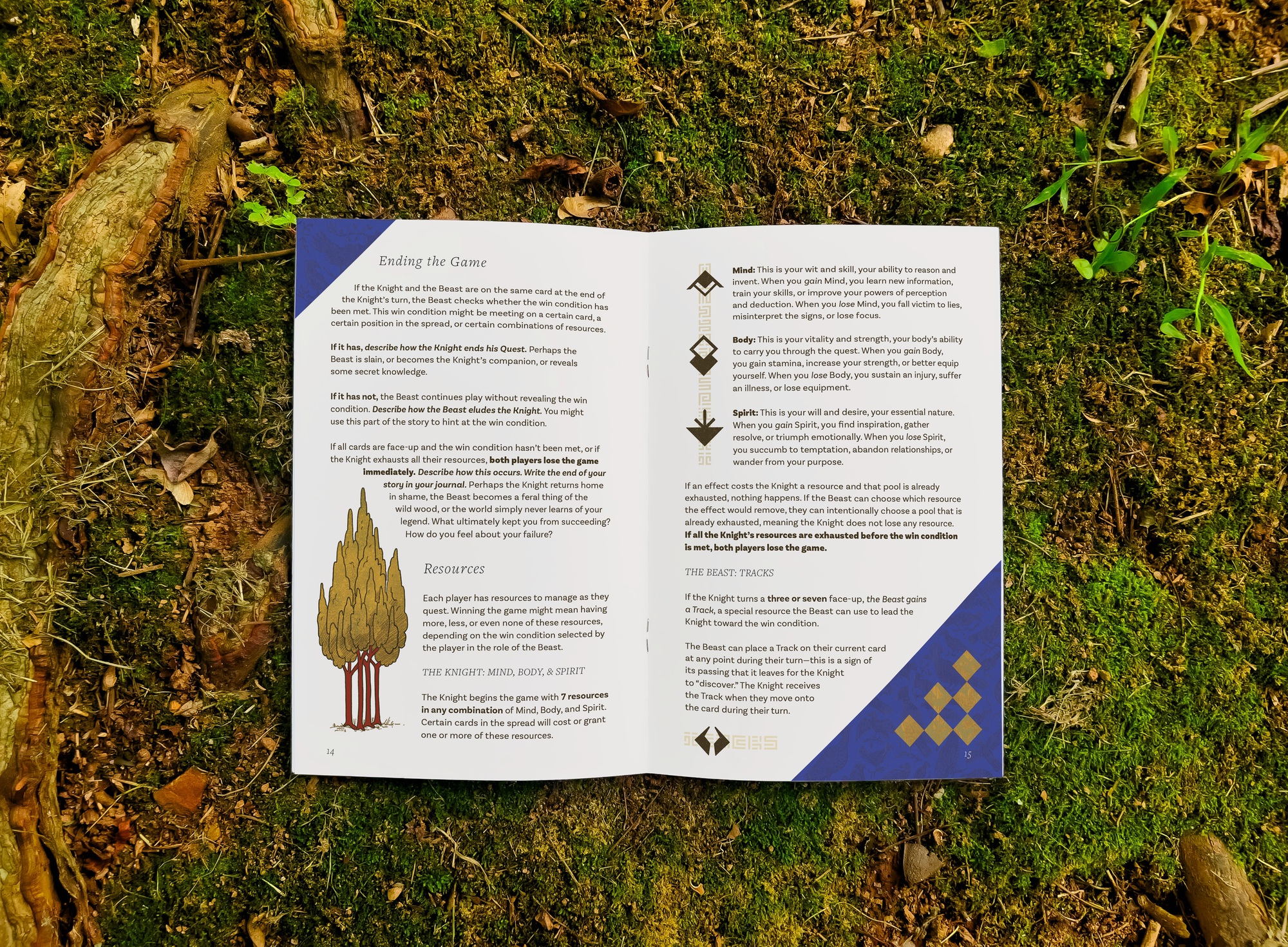
Rather than a love for Arthurian legends, Zeller said that he wanted to center Glatisant around the Questing Beast’s fable, because it was the right parable for the experience of loving more than being loved. He was also inspired by his own experience writing a 260-page D&D monster manual of conservation literature called Book of Extinction, a project that he devoted a significant amount of energy into. “Despite all that, at the time Book of Extinction couldn't even pay me a living wage,” he said. “And there were still two years of production and manufacturing left before the book appeared in print. I felt like this thing I had dedicated my life to making wasn't giving me back the love I gave it. I wrote Glatisant to imagine a purpose worthy of its pursuit, and how to walk worthy of such a calling.”
Glatisant’s deeply poignant tale between the Questing Beast and her Knight owes much to the wonderfully intuitive Carta system that it’s built upon, with playing cards from a regular deck laid out in a grid. Both the Beast and the Knight must land on the same card to win; however, only the Beast knows the additional win condition. This could be as straightforward as meeting on a specific card, or when a certain amount of resources — Mind, Body or Spirit — are collected. In a way, victories are more cooperative rather than competitive, even as the Knight is kept in the dark about the Beast’s benevolence. And it does make narrative sense; the Beast can’t speak to the Knight after all. Zellers also added that he chose Carta because the Knight’s quest is meant to be represented as a long, uncertain one, with the playing cards being turned over as the journey takes place.
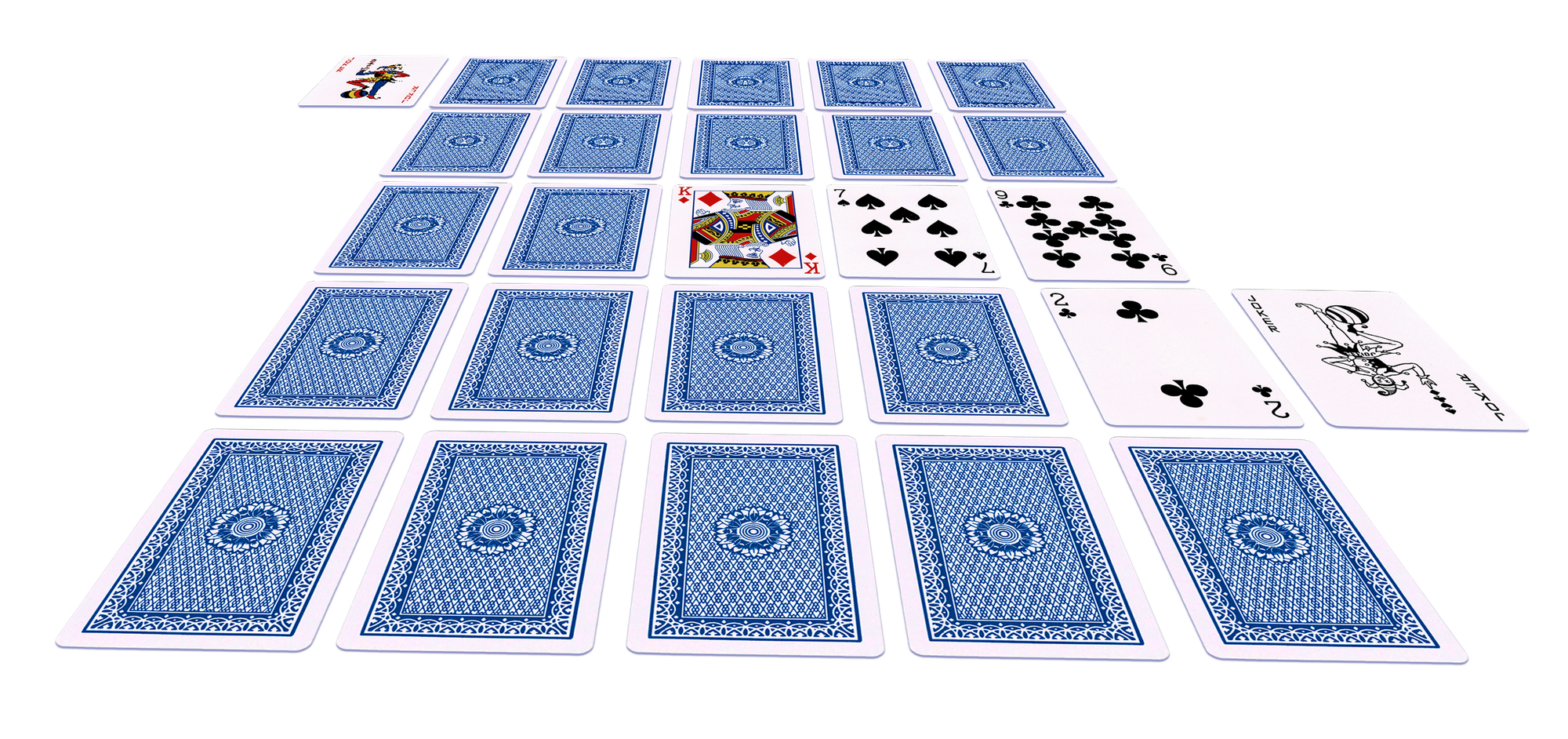
At the same time, you could approach Glatisant as a solo RPG — you simply play as the Knight who’s following the trail of the Beast. Yet, the experience of the other player sells the feeling of connection complicated by an impassable gulf. “Mechanically, most Carta games are solo journaling games. Glatisant adds a second player, a limited communication mechanic, and more robust resource management to the system. That makes it more intimate, relational, and complex,” said Zellers.
One can see Glatisant as a love story, albeit not of the traditional, romantic variety. But for creative director and layout designer Emily Entner, it’s also about the discovery of passion and purpose. Across Arthurian literature, the Questing Beast is largely a metaphor, a pursuit towards something greater; for Pellinore in The Once and Future King, it’s about falling in love with the Queen of Flanders' daughter. The designers themselves have also pointed out, in the game’s rulebook, that the Post-Vulgate Cycle's Suite du Merlin and Queste del Saint Graal associated the Questing Beast with fratricide and incest. Players, on the other hand, can make their own meaning out of their knightly quest in Glatisant. “If the Knight doesn’t catch the Questing Beast, who are they? What was [the quest] for?” she pondered. “Considering this in a game is a way to explore these ideas without hitting rock bottom in your real life. It’s a chance to examine what your values lie in and what your real goals are.”