Grand Cathay finally brings positive East Asian rep to Warhammer
By exchanging a broad brush for a fine detail one, Games Workshop avoids messy mistakes.
Hell must truly have frozen over at Games Workshop headquarters in Nottingham. After the return of a loyalist Primarch to Warhammer 40,000 in 2017’s Gathering Storm, 2019’s Plastic Sisters of Battle, 2022’s Leagues of Votann and Ironhead Squats, we have another “that’ll never happen” release to cross off the list. The return to Warhammer Fantasy Battle’s Old World is now pushing into unexplored territory with the Adepticon 2025 announcement that the Chinese-themed armies of Grand Cathay are coming to the Old World game and miniatures range! I’ve been through a spectrum of feelings about this after seeing the Warhammer Community reveal go live on March 27th because, let’s be real, wargames don’t have a great history with representations of East Asia.
Cards on the table: I'm British-born Hong Kong Chinese, my experience is very much that of the pre-1997 Hong Kong Diaspora generation which means that I have a very particular perspective about capital-O Orientalism and Sinophobia. My first encounter with miniature games and wargaming, like so many people in the UK, came via Games Workshop. In my case, that meant Warhammer Fantasy Battle in the mid 1990s when I was just a bit too young for it. My interests have waxed and waned, but I've maintained at least a casual interest in minis my entire life, and even worked retail for GW in 2010-2011, coinciding with the launch of Warhammer Fantasy Battles 8E. During this period when retail staff were regularly sent up to GW HQ in Nottingham for training, and could get a little more behind-the-scenes access to the design studio and Forge World than they can now.
Because of this, the 1992 Warhammer Fantasy Battles 4E “Battle Bestiary” was my first exposure to the lore of The Old World. In a weird bit of serendipity and on a nostalgic whim, I had bought a secondhand copy only a week before the Adepticon Grand Cathay reveal. Chock-full of a broad but shallow selection of lore, it has this to say about Cathay:
"Only rumours and strange spices come from those lands... ...To Men the lands of the east are known only as Cathay, and they are as much a part of fable as the black pits of the Dark Lands which lie between."
Besides this, the map showing almost the entire Warhammer World just has an arrow to the right saying, "To Cathay". That’s it. Still, the idea that there was a Chinese-themed army out there in the Warhammer world was amazing to my younger self. I was excited when Warhammer Fantasy Battles co-creator and Warhammer 5E author Rick Priestly teased Cathayns as a potential Regiment of Renown early in the days of Warhammer 5E, and then disappointed when they failed to appear. Even more frustratingly, we DID get steppes Hobgoblins, including a Hobgoblin warchief called Ghazak Khan, and later the man-eating Ogre Kingdoms, both of which were unflatteringly Mongolian-coded mercenaries. Cathay remained little more than a footnote for decades—I’m pretty sure “Cathayan Fishmen" was used as an in-joke in White Dwarf by either Priestly or fellow game designer Jervis Johnson about stuff that would never happen, much like how we all used to talk about new Squats or Plastic Battle Sisters. A little more info was teased in Warhammer Armies: Ogre Kingdoms books and 2011 Forge World Tamurkhan: Throne of Chaos book, but no models, no units, nothing concrete.
Beyond Warhammer Fantasy Battles
GW’s other main game and setting of Warhammer 40K has had the White Scars since the 1987’s Rogue Trader, another faction themed around Ghengis Khan’s Mongol hordes, but in space now. As Space Marines, they’re nominally heroic, but they’re also part of the Imperium of Man, a space empire so absurdly, satirically fascist that they could only be the “good guys” in a setting so bad to live in that the official description of it coined the term grimdark.
In 2001, GW introduced the Tau (later, T’au), a new, “young” faction for 40K, hailing from the “Eastern Fringe” of the galaxy and whose original main color scheme was a… perilously dusty yellow.
I’ve never really liked the T’au. They have a fair few traits that are often read as “Chinese” by the fandom. One working name for them was the Tao, which might have been a bit on the nose given their non-religious philosophy of unity and enlightenment known as “The Greater Good”, which means that they’re commonly referred to as “Space Communists” despite it really being closer to Utilitarianism (or, if you really want to push the boat out with a Chinese comparison, Mohist Consequentialism). They are characterized as having a higher standard of common living compared to the “Western” Imperium. But there’s an implication that their “harmonious” philosophy is a lie built on the back of submission without question to the Ethereal leaders (and their potential mind control), propagated by an incredible propaganda machine, while humans in particular are under constant surveillance by the state.
Just to lay it on a little thicker, the T’au have their own Sun Tzu , Commander Puretide, author of a treatise on war that almost no student of his was able to fully comprehend, and their Codexes regularly refer to their in-universe “Art of War”. One last thing that always particularly stood out to me is that the derogatory Tau word for humans, Gue’la, sounds a lot like the Cantonese pejorative for caucasians, Gwei lo.
In fairness, the T’au draw from a number of influences. Their meteoric rise to galactic player mirrors Meiji-era Japan rather than anything Chinese, and visually there’s a lot of Japanese influence on them, both ancient and modern, while their caste system resembles Huxley’s Brave New World more closely than any real-world instance. It’s not like GW have never combined influences from multiple real-world countries in a single faction before. Bretonnia is fantasy France with a King Arthur or two, plus a Robin Hood complete with a band of merry men. Mashing up Japanese and Chinese influences isn’t a great combination, though. There’s an unfortunate tendency for Japanese, Chinese, and Korean culture to be treated as interchangeable in Western fiction (and by Western individuals), especially when someone tries to create a generic East Asian/Oriental “vibe” in their fantasy or sci-fi setting.
Some of my dislike is purely aesthetic. GW managed to take inspiration from several things I enjoy and create an end result that contains none of the things I enjoyed about their influences. When I worked for GW, a tweenaged customer innocently assumed that I played T’au. I said I didn’t (at the time, I only had some 4-5 different flavours of Space Marine army), but I asked why he’d assumed I did. The answer? “Because you’re Asian. Also, you like robots.”
Years later, friends tried to get me into Corvus Belli’s Infinity, but the first thing I saw within the lore was that the “bad guy” human faction of the setting are the Yu Jing, who can be summed up as Yellow Peril In Spaaaaaaaace! They are a pan-Asian (except for Japan because Japan is special), neo-Chinese empire, themed around harmony and enlightenment where the standard of living is generally high as long as one submits to what is dictated by one's betters without question— The Party’s surveillance network and propaganda machine quells any dissent. Supposedly, the recent lore has pulled back from this somewhat, but it wasn’t a great start.
Meanwhile, I had bounced hard off of Battletech for many reasons in the past - even when taking a look at it again in light of the new direction the game (and rights owners) is taking, the very Cold-War era Sino-Russian themed police state Capellan Confederation definitely didn’t endear me to the setting. Nor did reading that the setting had an Asian Co-Prosperity Sphere in the background, even if it’s an ironic one.
Weaponized nostalgia done… right?
That brings us back to the recent Grand Cathay reveal. Their appearance in Total War Warhammer III initially passed me by, so the Adepticon 2025 announcement completely floored me, even in a post-Plastic Sisters & Leagues of Votann era because I’d had no idea the revived Old World would be adding new things to the setting. Modern GW model design allows for some beautiful plastic miniatures. Besides Atomic Mass Games’ Marvel Crisis Protocol, no other plastic gaming minis have come close.
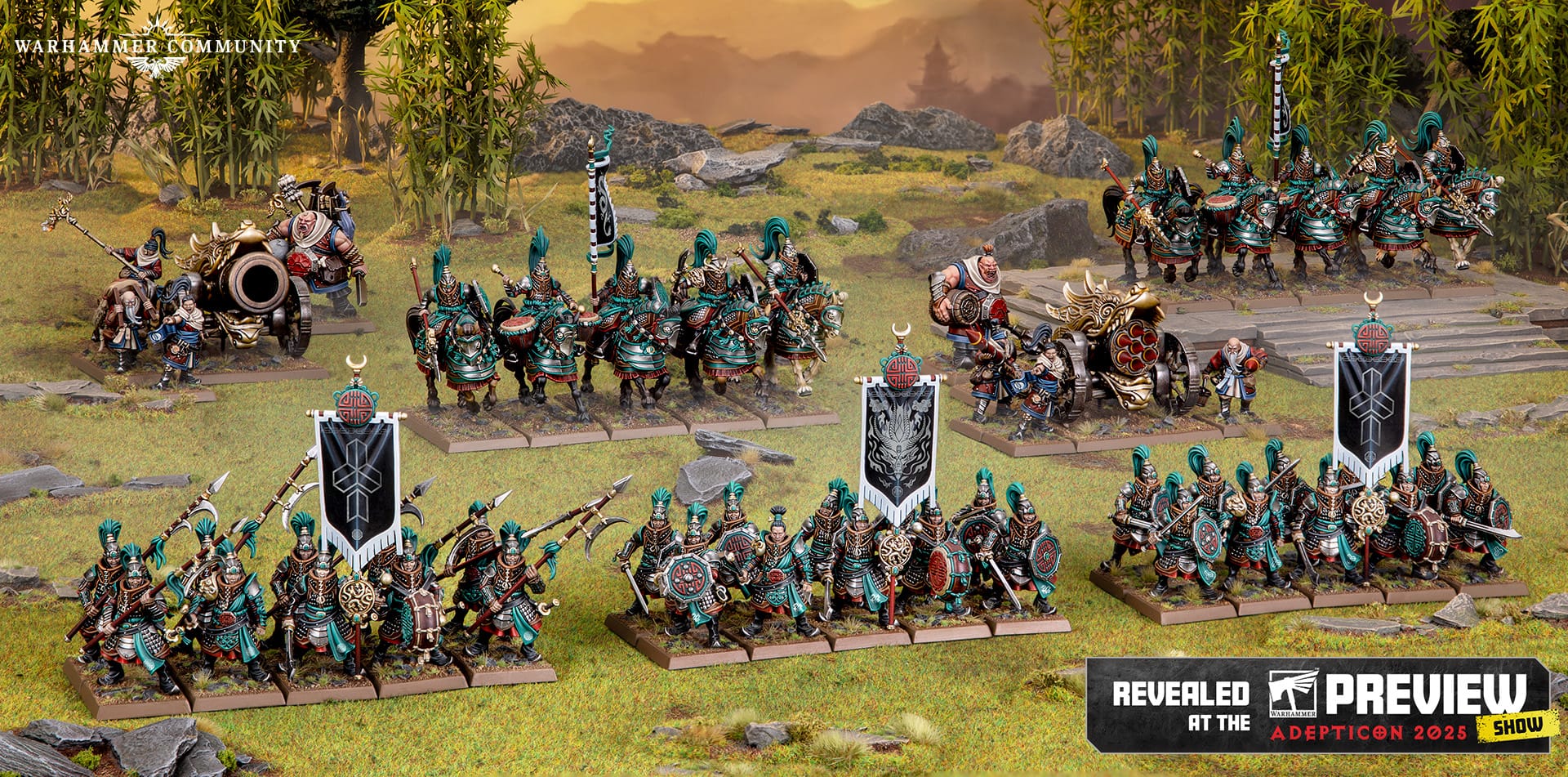
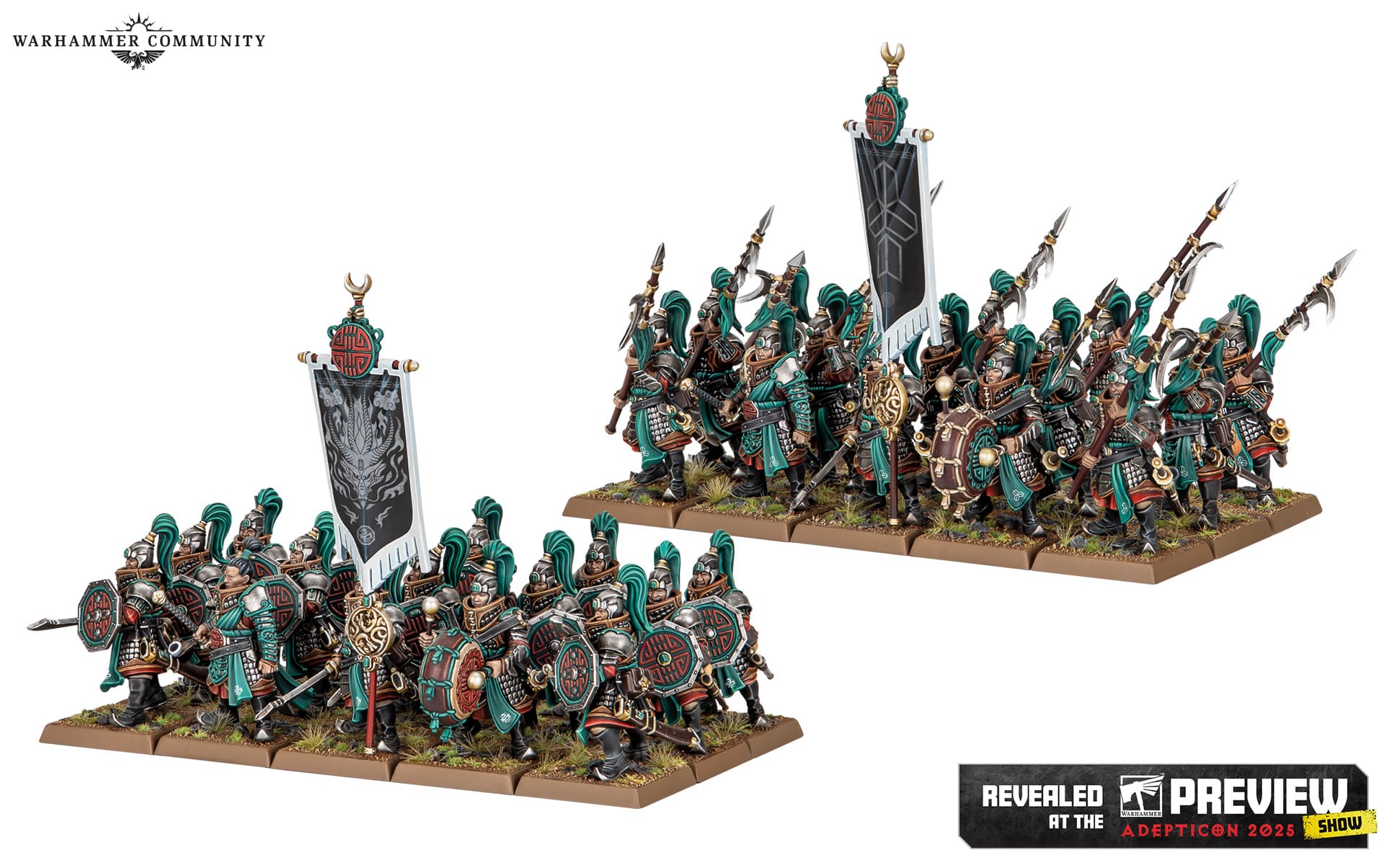
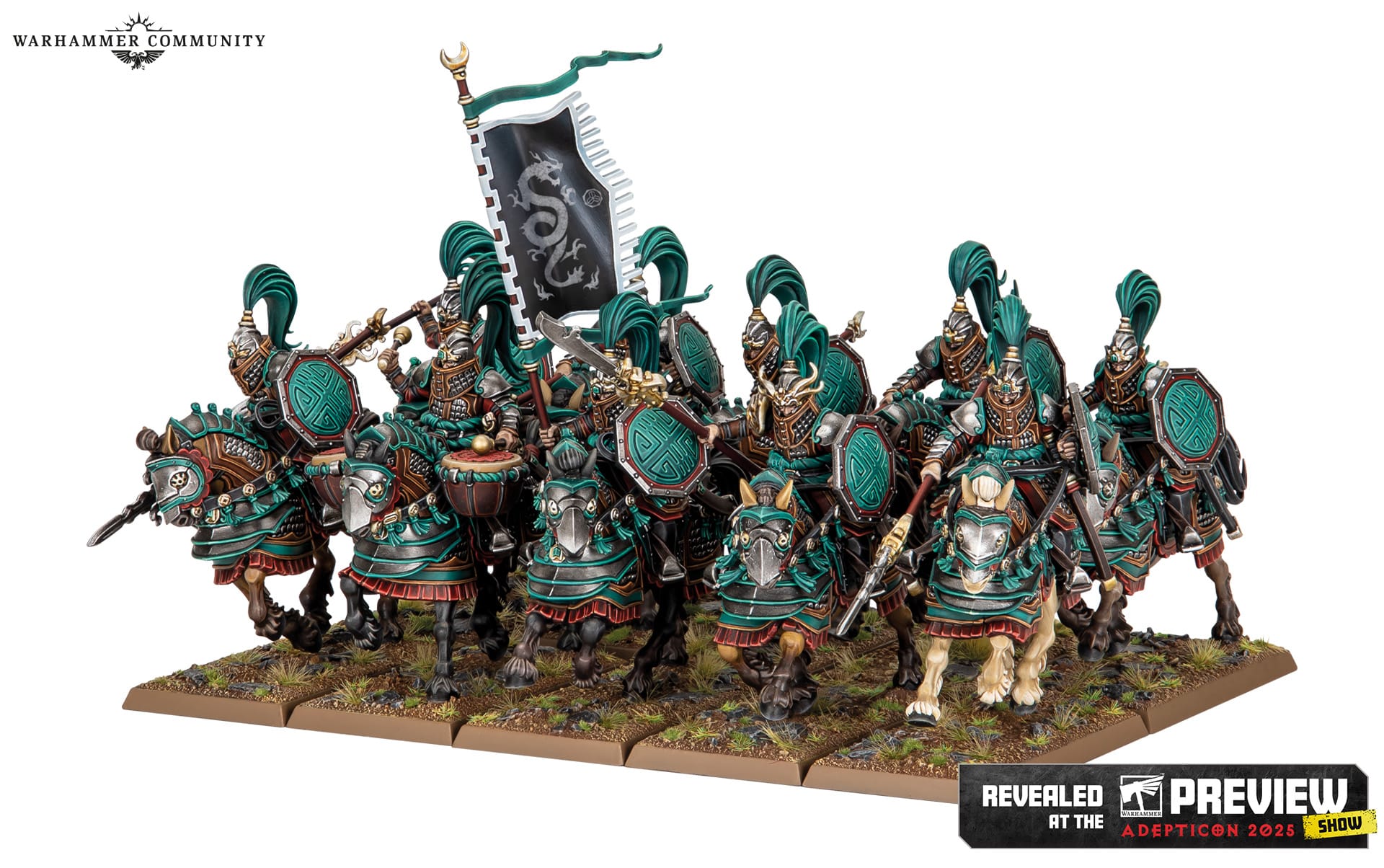
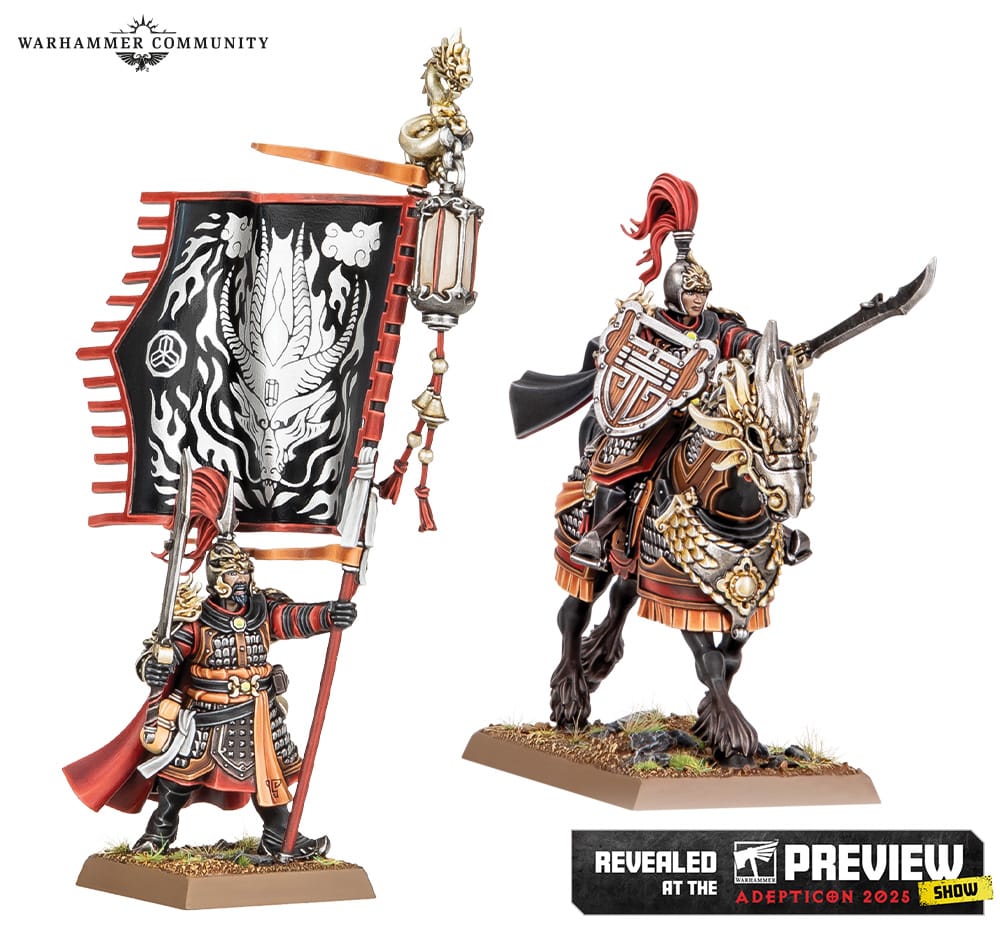
The Jade Warriors and Lancers feel like medieval Chinese soldiers interpreted through the same fantastic lens that gave us Bretonnian or Empire minis, without straying into any obvious, unfortunate stereotypes. The octagonal shields are a nice fantasy touch and evoke something like the bagua (eight trigrams) without copying it wholesale. It’s a nice design element to include instead of, say, slapping dragons or a taiji (yin-yang symbol) onto a more historically accurate shield. The Gate Masters feel like they stepped right out of a high-end historical drama, with the same vibe the Jade Warriors have but applied to the more decorated and ornamented armour of a general. This video has a great alternative breakdown of the armor and its inspirations in particular.
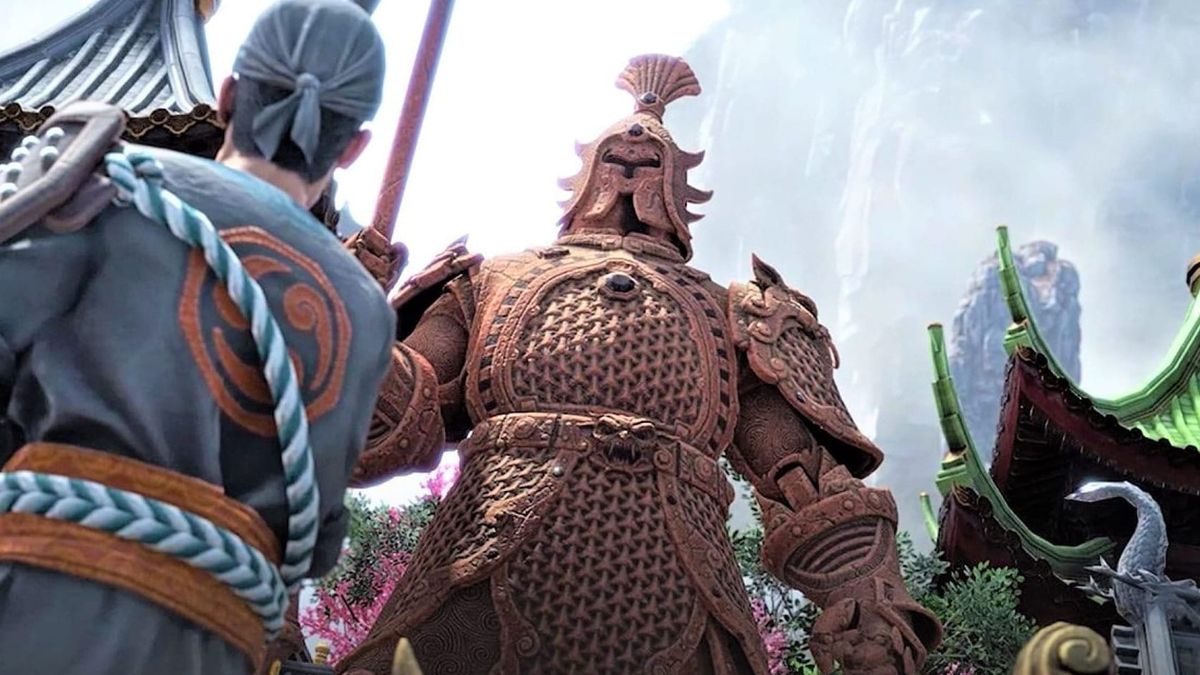
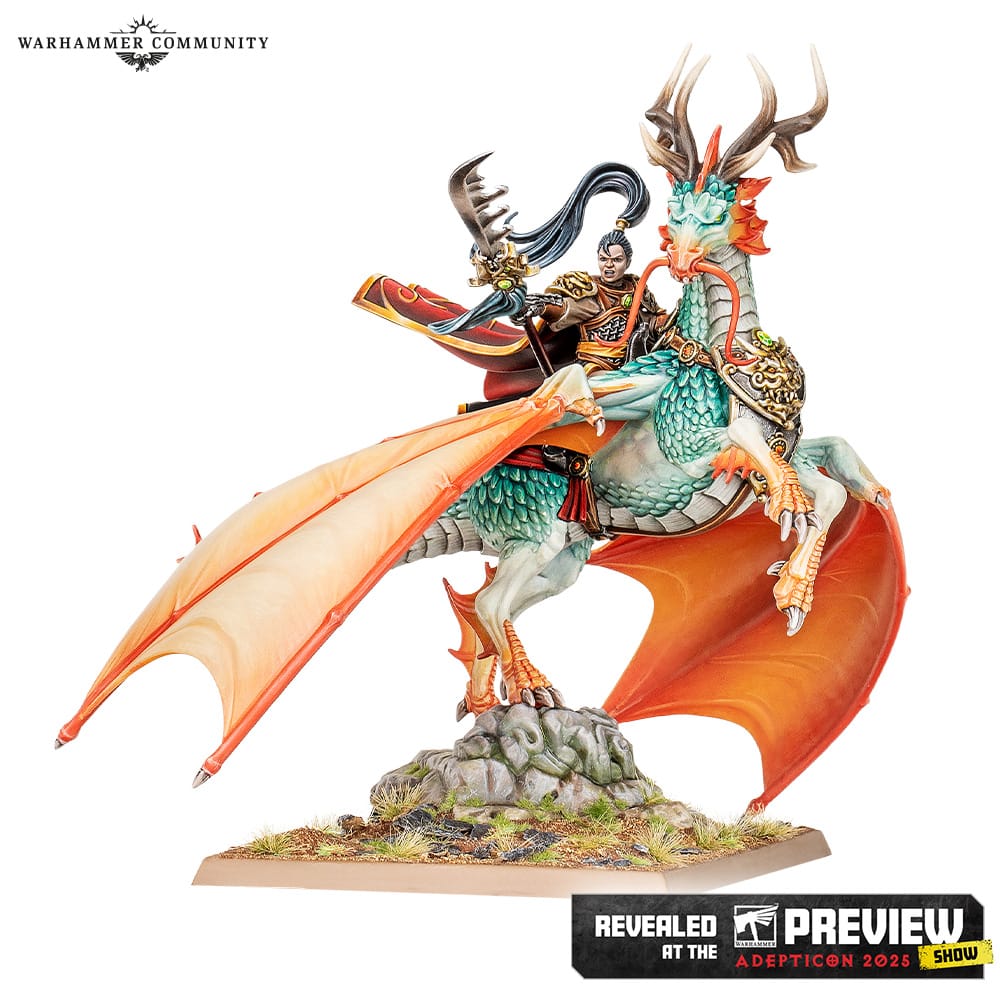
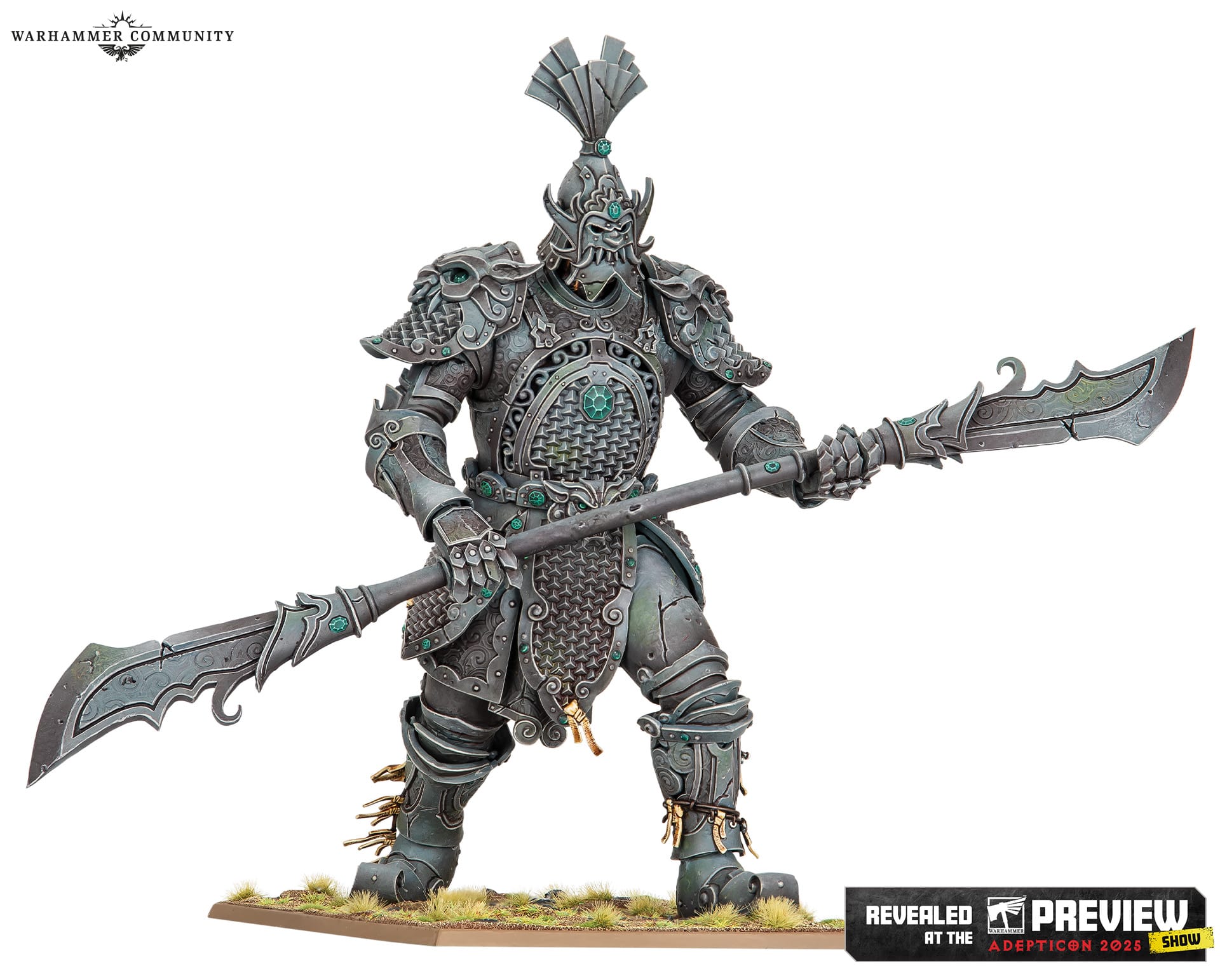
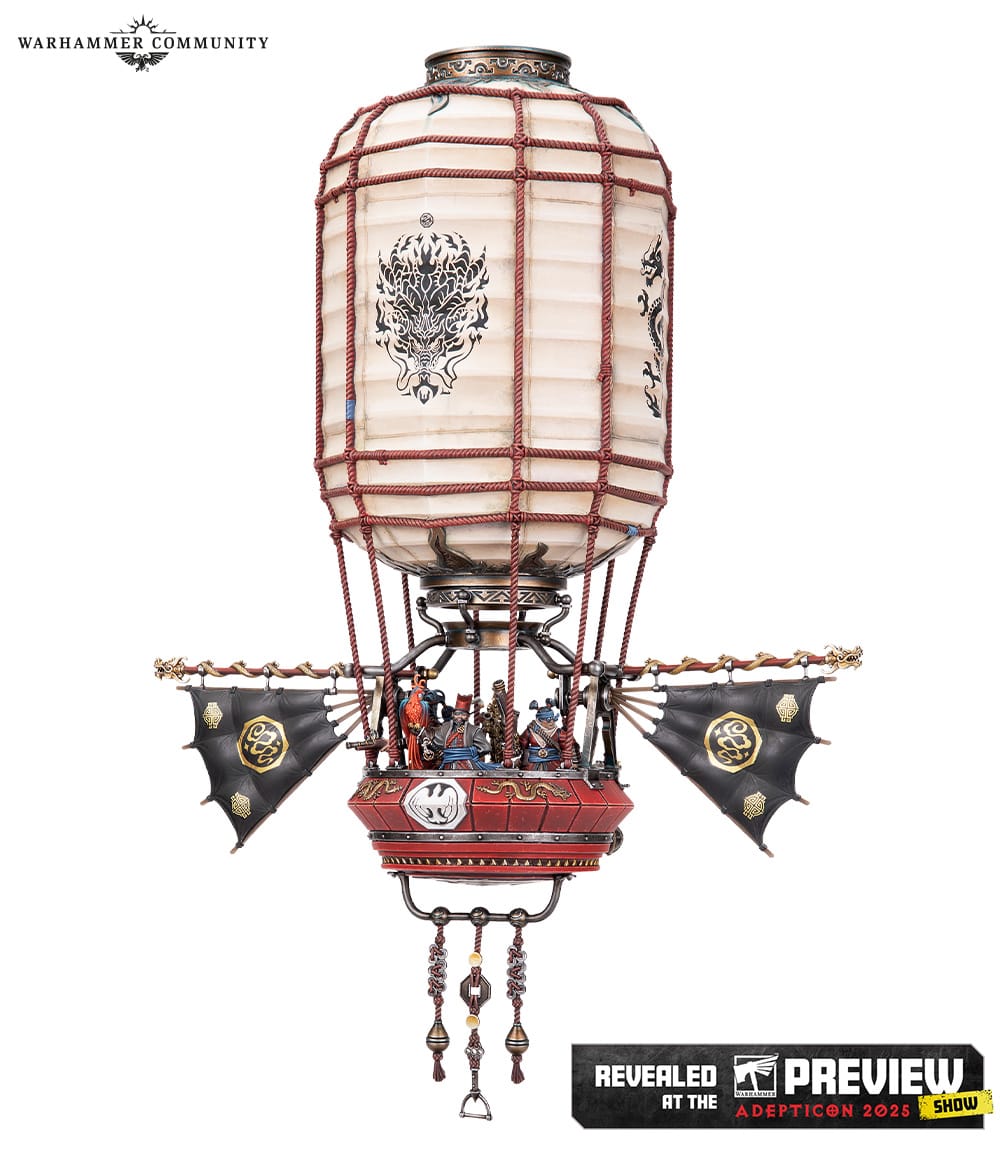
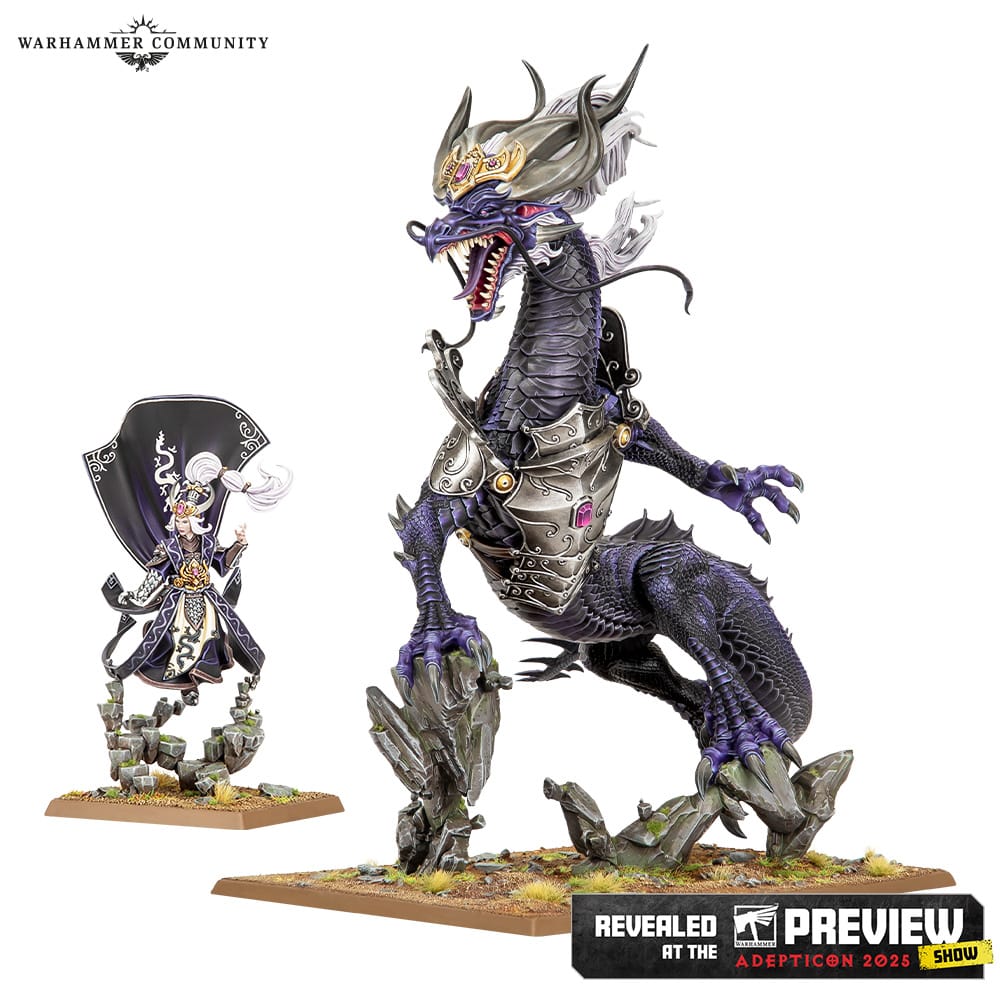
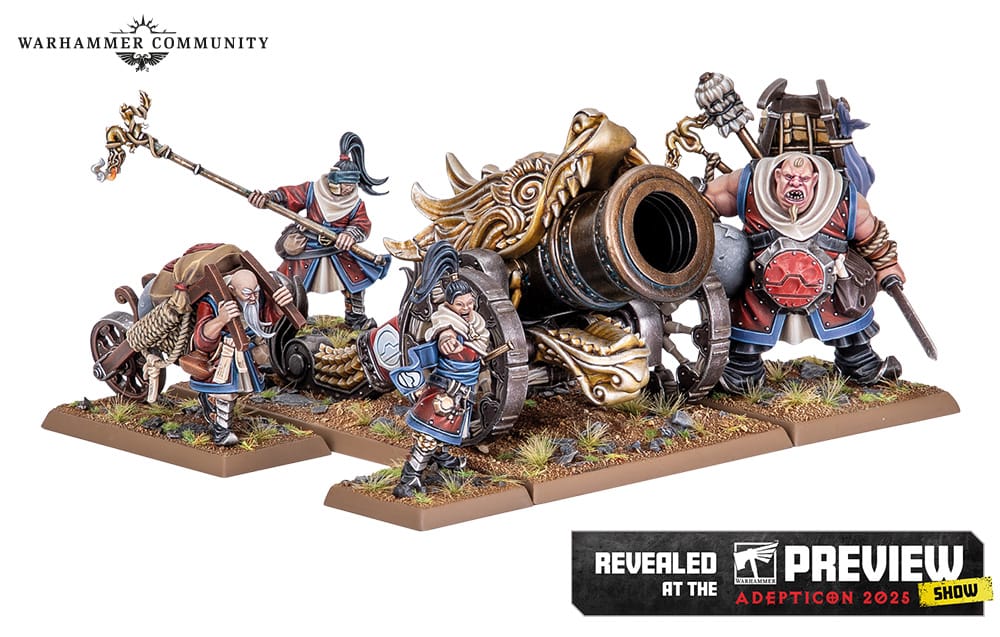
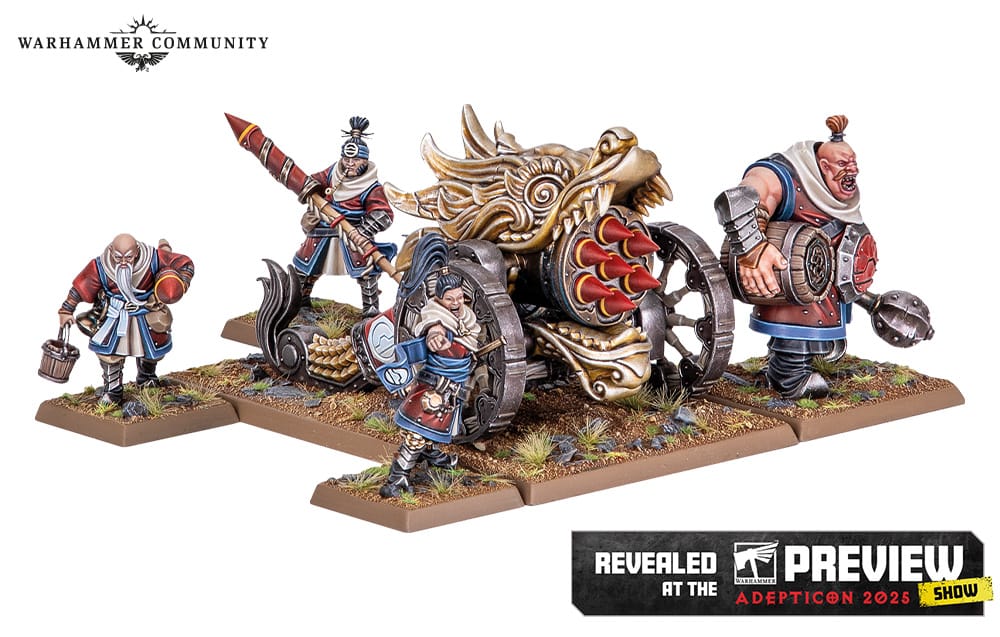
The Cathayan Sentinel is the coolest take on giant terracotta warrior robot I’ve seen to date, with some really great proportions and details, such as the particular “mountain armour” pattern of their armour scales - they’re the polar opposite of their cringey equivalent from Warcradle’s Armoured Clash. The Grand Cannon/Fire Rain rocket battery is very much a modern GW “use this barrel or this barrel for a different unit” design, but I can’t fault it for that. I love both the detailing and the fact that Grand Cathay aren’t being portrayed as technologically backwards in a world of fantasy Renaissance weapons. The crew all have a lot of character, too, and it’s cool to see an Ogre integrated into the army as a nod to past lore, given that most of Grand Cathay’s characterisation prior to TWWIII was in the Ogre Kingdoms army books. I was also pleased to see that, even though Miao Ying is a literal “Dragon Lady”, she isn’t an oversexualised seductress in a slinky red dress. The facial structure of her dragon form is very much a Warhammer dragon, but the wingless silhouette and details give her a distinct appearance. Speaking of red, I really appreciate the way it’s been used to tie the army together as a secondary color and is balanced against green, black, and blue in the official colours for this army, without dominating any of them.
It’s not all hits, alas. The proportionately large wings leave the Longma feeling a bit like a small Warhammer dragon doing cosplay, rather than a horse with draconic features similar to its mythical Chinese namesake. As for the Shugengan Lord rider, I had initially wanted to praise the Cathayan line for allowing minimal influence from Japanese or Korean sources to seep in, but then I realised that a Shugenja is a type of Japanese buddhist ascetic which managed to become a generic name for East Asian fantasy wizards thanks to D&D. You were so close, GW. I also cringed a bit at the flying lanterns, which felt a bit goofy.
Speaking of cringe, there’s no escaping the inherently problematic and Eurocentric “Cathay” as a name. Although, I can forgive it in context alongside “Bretonnia” and “Reikland”. As for the new Grand Cathay lore, they are an empire themed around an explicitly non-religious philosophy of harmony and enlightenment (uh oh), where the standard of living for most individuals compares well to their Western contemporaries, and the populace love their celestial Emperor and Empress so much that they will take great offence to any insult against them. Crucially though, they aren’t framed as a looming threat to the other “good” factions in the West—there’s no Yellow Peril angle here. Rather, while there are warnings that the empire is in decline, Grand Cathay is still cast as an ally against the common enemy of Chaos, and indeed, are the human faction that has been fighting that war the longest.
As big a deal as any kind of Cathayan release was always going to be, weaponized nostalgia alone wasn’t going to be enough to sell me on it, since I’ve only glossed over decades of frustration and exhausted cynicism here. GW didn’t just have to nail the miniatures, they also had to create a lore context that avoided making the same mistakes of the past, and even the most recent brief mentions of Cathayan armies in 2011’s Tamurkhan: Throne of Chaos had managed to prominently include several Japanese-inspired elements.
Thankfully, what we’ve seen in TWWIII and The Old World so far has been so much better. Making Chinese-coded miniatures something better than cheesy, stereotyped villains in the narrative that frames our games of toy soldiers, along with laser-targeting that weaponized nostalgia, really does sell plastic models — at least for me. It’s taken GW far too long to get here.
Credit: Warhammer Community