How RPGs Became A Haven For Women in South Korea
After a GamerGate-like incident in 2016, the industry doubled-down on inclusivity.
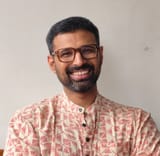
In 2016, Korean game designer and podcaster, Choi Mika, posted about a t-shirt on social media. It should’ve been a mundane event that passed without notice. But instead it was the beginning of a dark ordeal for Choi. One that she still struggles to talk about. "It all began so innocently”, she told Rascal over email. “There was a crowdfunding campaign to sell T-shirts printed with the feminist catchphrase, ‘Girls do not need a prince.’ I thought the phrase was meaningful and the shirt was made of quality material (priorities, right?) so I chipped in for mine.”
The t-shirt campaign was run by radical feminist collective, Megalia, to raise funds for victims of gender violence. But Megalia had become a lightning rod for anti-feminist attacks from a GamerGate-like mob. After voice actor Kim Ja-yeon shared a picture of the t-shirt, they harassed her and eventually got her fired from a high-profile video game. But unsatiated, the mob scoured the games industry for other women to victimize. That’s when they found Choi. The story that followed is all-too familiar—-thousands of men, thousands of threats and insults, a tidal wave of hate.
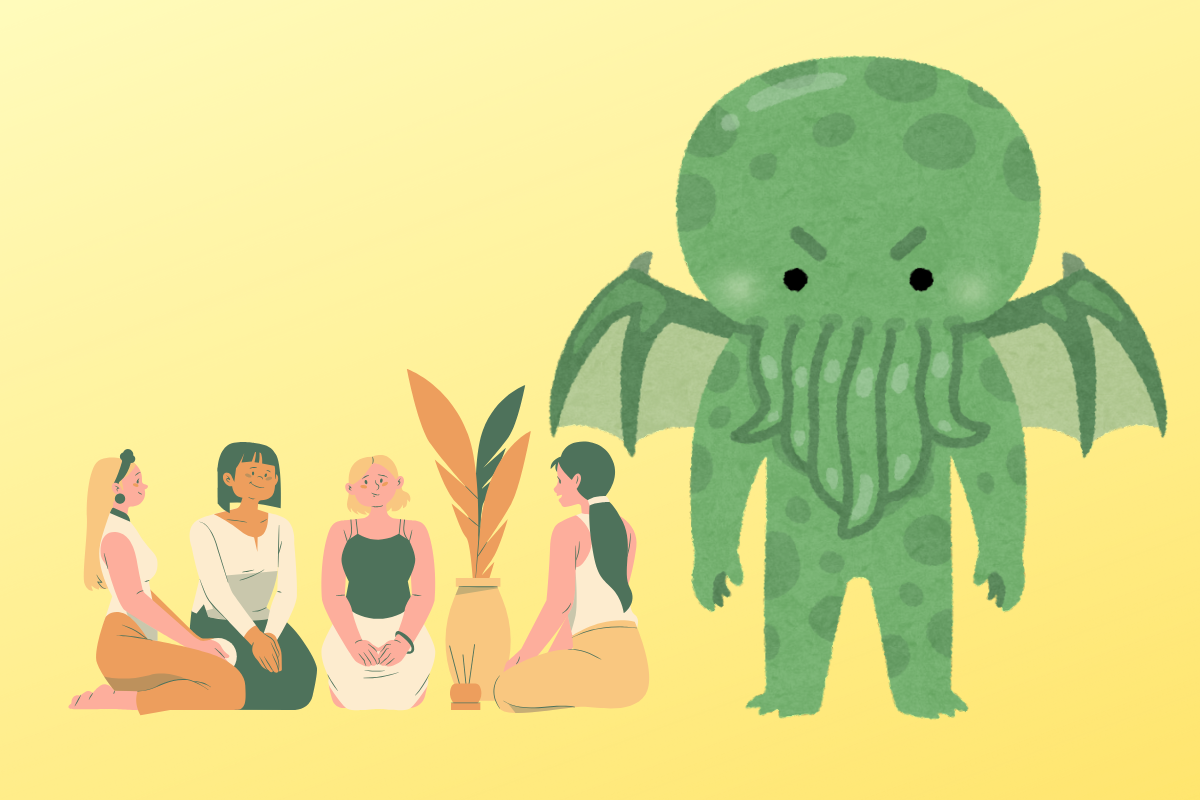
But there was one important difference. Unlike the video game studios, who almost without exception bent over backwards to appease the trolls, tabletop publishers stood up for Choi. Dayspring Games, the publisher of Call of Cthulhu in Korea, invited anyone unhappy with their stance to cancel their orders. They lost some customers, but new customers more than made up for it. These customers were mostly young women and they burrowed into the shell of this traditionally male-dominated hobby and made a home for themselves. The Korean RPG scene has transformed—it’s now a space where women make up more than half the player base.
Choi Mika is one of the pillars of the Korean RPG scene. Apart from publishing her own games through her label Rolling People, she was the editor of a podcast, Tabletop Entertainment. According to her, it was the first TTRPG podcast in Korea and featured interviews with designers, discussions with hobbyists, and even edited actual play recordings. She was a passionate gamer and in our conversation, was quick to flag her own naivete: “My motto was that a gamer has only one gender that matters, and that’s “gamer.”
When strange men started to attack her en masse, she couldn’t understand what was happening at first. “At first, I thought it was just a joke gone too far,” she said. “We’ve all had those sessions where we had to decide whether to burn down and slaughter a peaceful, hardworking kobold village close to town at the request of the human townspeople. Every gamer has struggled with in-game dilemmas over attacking someone for their beliefs, religion, race, or gender. That’s why I refused demands to publicly disavow feminism, and openly declared myself a feminist instead. That’s when a target was painted on my back.”
The mob not only attacked her but sought out colleagues, friends, associates. She said, “It got to the point where a college friend from a decade back asked if I was all right, telling me they saw my face posted online. A suspicious wiki page about me showed up, and people posted pics of my books torn to pieces. It was really something.”
When Choi posted on social media about the attacks, Kim Sung-il, co-founder of Dayspring Games, shared her post through the company’s social media. That was enough for the mob. Rumours started to spread that Choi was an employee of Dayspring and soon there were loud calls to boycott the company.
Even though this was almost a decade ago, Kim remembers the moment well. In an email to Rascal, Kim said he and his wife and co-founder, Narim Park, had just pulled off a “record-breaking crowdfunding campaign for Call of Cthulhu” and “were still in a celebratory mood.” But that quickly changed. Even though the campaign was over, people started asking for refunds. There was suddenly the danger of their success being reversed. Choi called Kim to apologize but he told her that she wasn’t responsible.
Both Kim and Choi refer to the mob as engaged in a “sa sang gum jeung”, which is a phrase used when conservatives investigate someone for being pro-North Korea, i.e., an enemy of the state. It’s now become the term for investigating if someone is a feminist. The closest American analogue might be the term “McCarthyism”, referring to the vindictive hunt for communists under Joseph McCarthy and Edgar Hoover at the height of the red scare.
“Around that time I was in Indianapolis for GenCon, meeting our licensors”, said Kim. “I discussed the matter with my wife back home over FaceTime, and I remember her saying: ‘If our business has to go under, this is the right way for it to happen.’ I wholeheartedly agreed. I explained the situation to the folks at Chaosium, and apologized for any future loss in royalties our decision would cause. They were more than supportive. So we announced that we would offer a full refund to any backer who asked. At the same time, we extended the pledge to make up for the expected loss. In the end, just under a hundred people asked for refunds, out of 2000 total backers. On the contrary, over 400 people signed up for the extra pledge.”
Since then, the Korean RPG scene has changed. Choi says it’s become a “majority-female hobby” as “a direct result of most tabletop roleplaying publishers’ support for feminism and the LGBTQ+ community, in keeping with their commitment to safe playing experiences for everyone.” According to Kim, when Dayspring organized a convention in 2019, about 70% of the attendees were women.
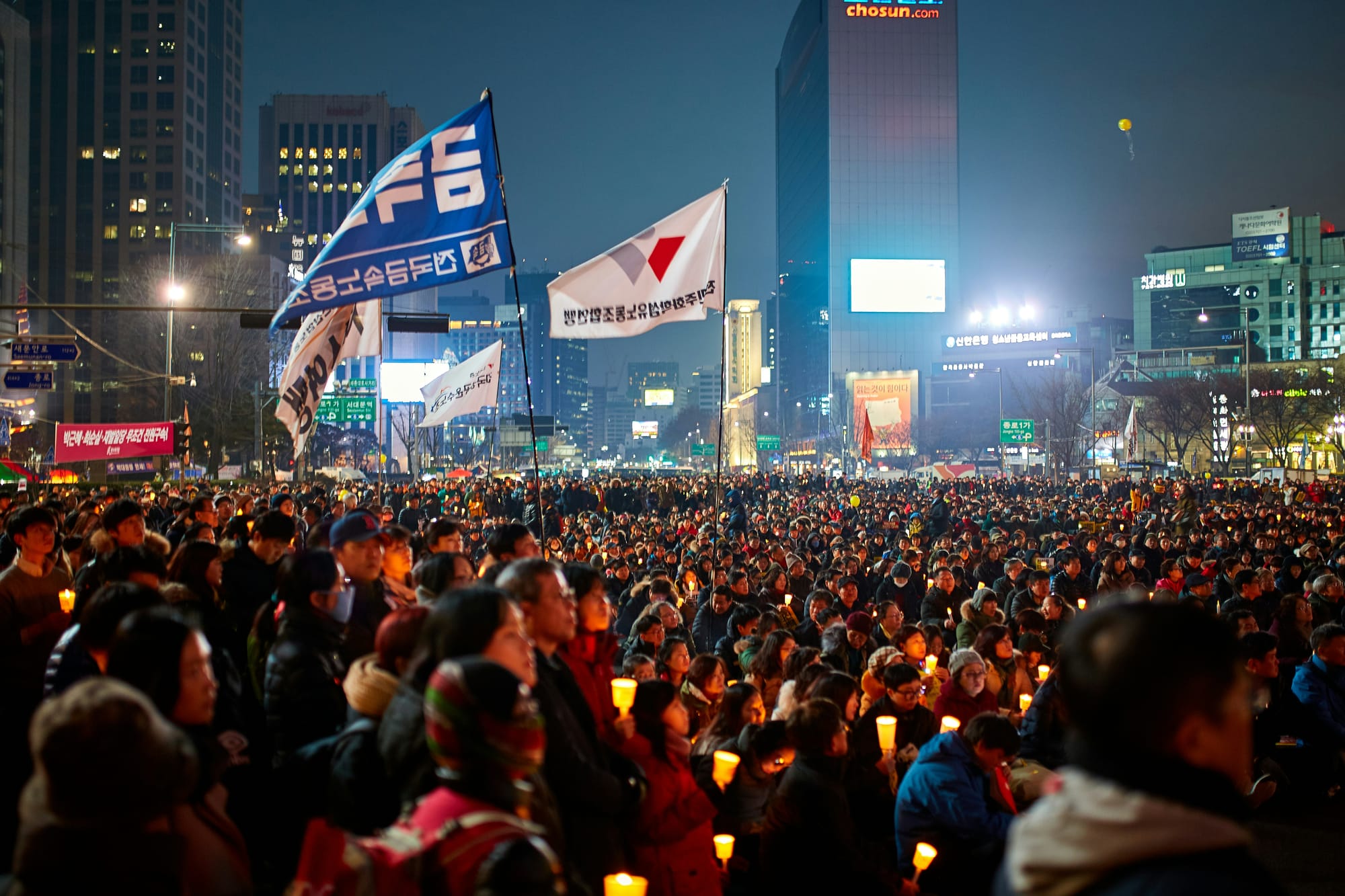
In December 2024, the currently-suspended president of South Korea, Yoon Suk Yeol, was impeached after attempting to declare martial law and concentrate powers in his own hands. While neither of the two main parties in the country have a great track record on gender issues, Yoon gleefully leveraged the misogyny rampant among disaffected young men during his campaign in 2022. One of his core (unfulfilled) election promises was to abolish the Ministry of Gender Equality and Family.
Generally, South Korea’s record of gender equality isn’t the best. They have the largest pay gap among the OECD countries, with women on average earning 30% less than men. Abortion was decriminalized in 2021 after a long fight but access remains challenging. Human Rights Watch described the country as facing “an epidemic of digital sex crimes” especially around the distribution of deepfake images.
Within this context, a progressive tabletop gaming scene is an achievement worth celebrating. Dayspring remains the biggest RPG publisher in the country and unlike industry leaders in some other countries, actively incubates a diverse community. Alongside Call of Cthulhu, which is probably the most popular system in Korea, they’ve published localized versions of a number of indie games including Dungeon World and Night Witches. Kim is proud of his response in 2016 but apologizes if his account makes him look too much like a hero: “It feels very weird to have come out on top when we didn’t mean to. But a lot of people since then used our example when other companies (mostly video game companies) capitulated to anti-feminist demands, so I think we’ve done our part.” They even hired Kim Ja-yeon, the voice actor who was fired by a video game publisher after being targeted, to work on one of their add-ons for the Night Witches campaign.
As for Choi, she remains one of the most prolific designers in the scene, selling games through an online store Kuki Box. Last year, she published a game, Please Rule The North With Me, Grand Duke!, about winning the heart of an unfairly-exiled war hero. This year, she’s already got plans to release two more.
A lot of the records of her ordeal have disappeared. After her podcast stopped, the episode where she discussed what happened to her and affirmed her support for feminism was deleted by their hosting service. But the memories haven’t faded and the t-shirt that started it all still has a treasured place in her closet.
This article was only possible due to translation and other support by Oh SeungHan (Yiyagi wa Nori).