Omios Ures is a D&D artist’s weirder, post-heroic fantasy
Conan after Conan.
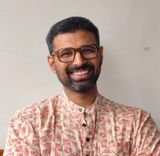
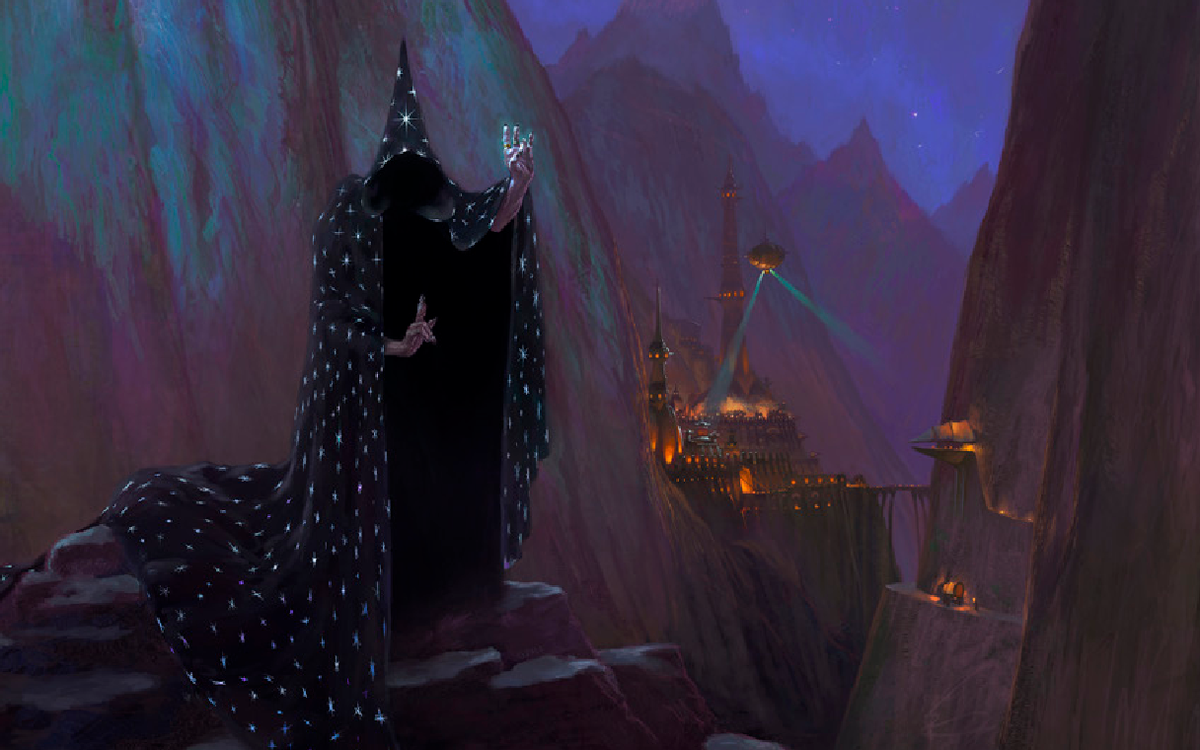
Even as AI image generation has made the average artist's life harder as work slows down and rates get squeezed, illustration has probably never been more central to tabletop publishing. Books are bought and sold because of what painters, digital or analogue, are able to do with lines and color. At Rascal, we’ve been trying to write more about this aspect of games — how artists build worlds, like with Zephyr, Trudvang, and now, Omios Ures.
Matheus Graef is a Brazilian artist who has worked on games like Age of Mythology: Retold, Dungeons & Dragons, Magic: The Gathering, and Draw Steel. He’s painted monsters and heroes of all stripes but now he’s angling to go somewhere weirder. Omios Ures is a world of sword and sorcery after the heroes have had their way with it. It’s still wild and mysterious and people would like it to stay that way. People who mess with that stuff are bad news.
The game reads: “Today, adventurers are but a dying breed. “Unpredictable,” says the king. “Unreliable,” says the guildmaster. “No admittance!” reads the tavern sign.”
Mechanically, the rules of the game are dead simple and very approachable. It has a fun, freeform magic system built around combining key words for creative effects, discards classes and levels, and characters advance through failure. Omios Ures is still technically in development and is available for free, and Graef hopes that can be the case even after its officially published. He is also working on an interactive, digital bestiary featuring a “Monster Maker”, designed by collaborator Bruno Picciafuoco.
Rascal interviewed Graef and asked about how he got started as a professional artist, how images come to him, and what makes Omios Ures exciting to work on.
This interview was edited slightly for clarity.
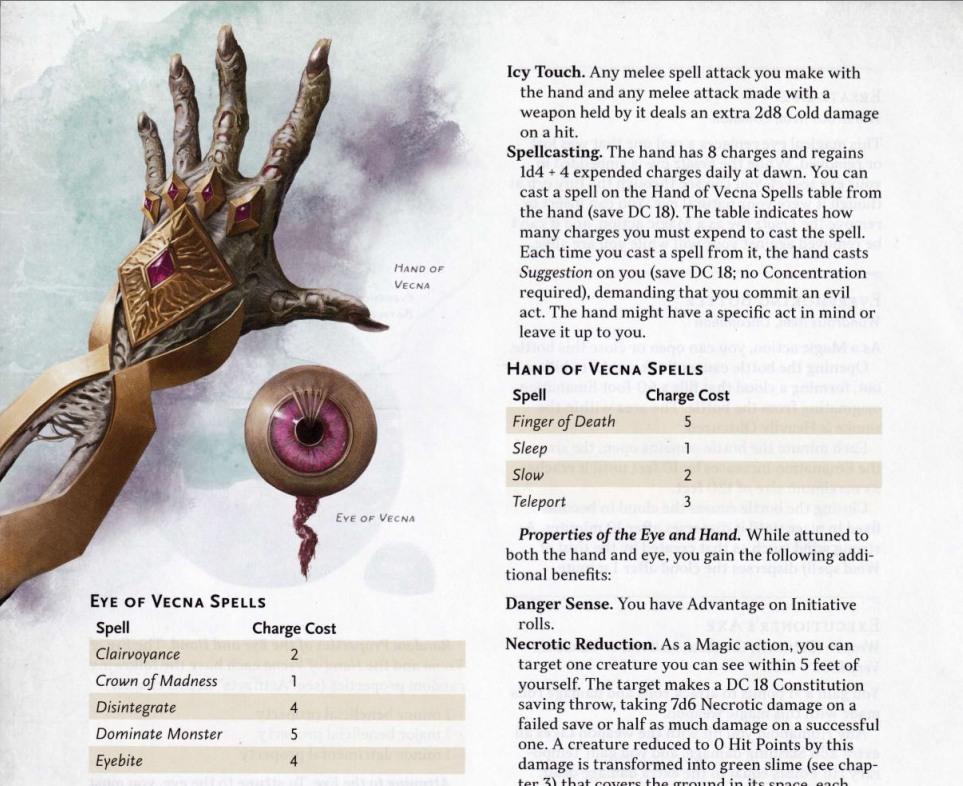
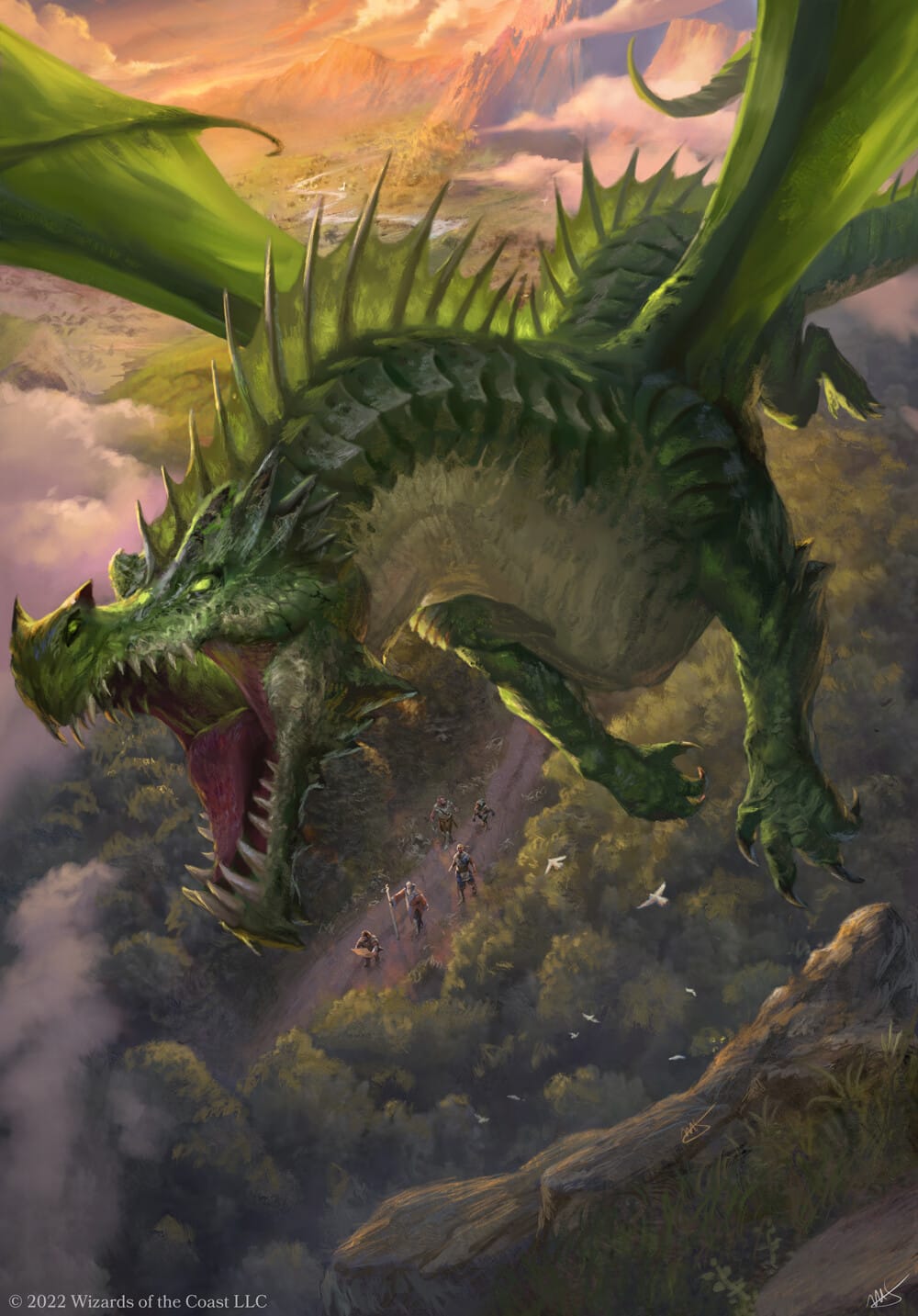
Credit: Matheus Graef / Wizards of the Coast
Thomas Manuel: Can you tell me about your art career? How did you get started? Was there a breakthrough moment that you feel established you as a "fantasy illustrator"?
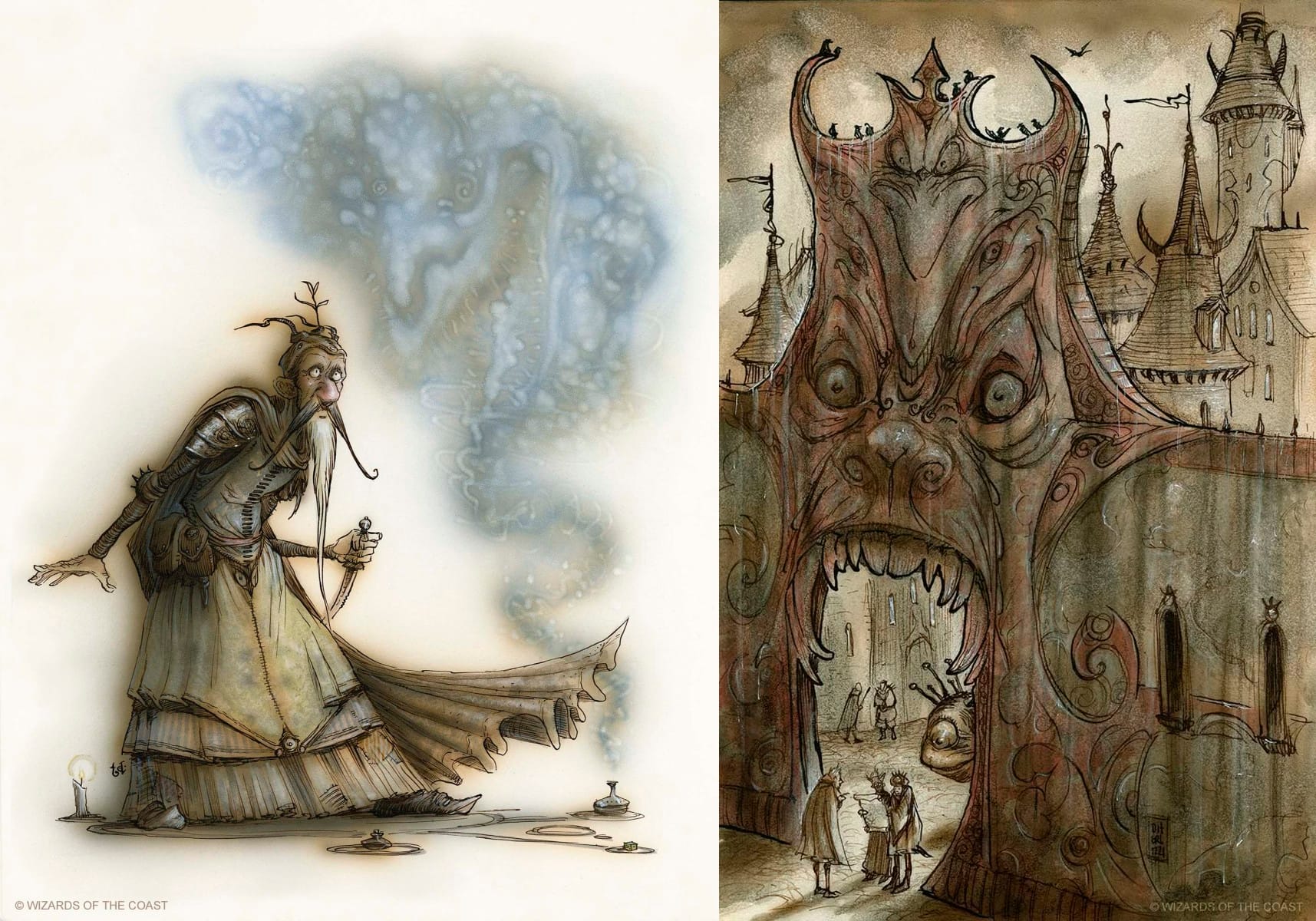
Matheus Graef: I got started with illustration back in 2015 or so; painting D&D character commissions on tumblr. I had come from a background in concept art (working for small indie projects that never really saw the light of day and Half-Life 2 mods) but fantasy art has always been in my spirit, ever since I first leafed through my older brother's AD&D 2E monster manual. The DiTerlizzi monsters left a huge impression on me. Today I think it had to do with the wispy, almost dreamlike aspect of his artwork which I love.
The breakthrough moment came looong after those tumblr days. There are two answers to this, I think. When I paid rent with my art for the first time, and working for Dungeons & Dragons. The latter was like a full circle, "this is it." moment. An Art Director I worked with at the time for an unrelated project reached out to me saying they needed someone to fill in an artist's boots, as they were not going to be able to make the deadline. I had less than a week to paint 4 pieces, one of which featured a green dragon.
Side note: a year later, I was honored to paint the Hand and Eye of Vecna for D&D 2024 and used MY OWN HAND as reference. Honestly, I still can't believe they let me get away with it.
Manuel: If you had to pick your favourite DiTerlizzi image, what would it be?
Graef: One?! That's impossible, but likely anything out of Planescape. Again, it's that wispy, dreamlike aspect, combined with his texture work and sheer boldness that manages to turn the impossible Sigil into a believable, tangible place.
Manuel: How did that first gig with Wizards of the Coast come about?
Graef: I had been working with Conceptopolis, an outsourcing studio which provided a ton of art for 5E Supplements, official or otherwise, for a couple years by then. At the time (2021?) they were working on an official series of books called D&D Young Adventurers, by Jim Zub. That's when Aaron Hubrich (my then Art Director) reached out to me and asked if I'd be able to work a handful of pieces in a very short amount of time, since one of the artists was unable to make the deadlines. I'm not gonna lie though, time crunch and all, seeing I was going to paint a dragon as my first D&D assignment was kind of enough to convince me there. That was the first time I worked for WoTC, still indirectly of course. As I'd only get my first real freelancer contract with them in 2024, for Magic the Gathering.
Manuel: Where does the name Omios Ures come from?
Graef: The book opens with the following quote: "Omios Ures" refers to both "the world" and the "buried god" in ancient, forgotten languages. How I personally came up with the name, though, I don't remember. I think it just sounded right! It rolls off the tongue like an occult chant.
Manuel: What was the first image that became Omios Ures? Which came first world or rules?
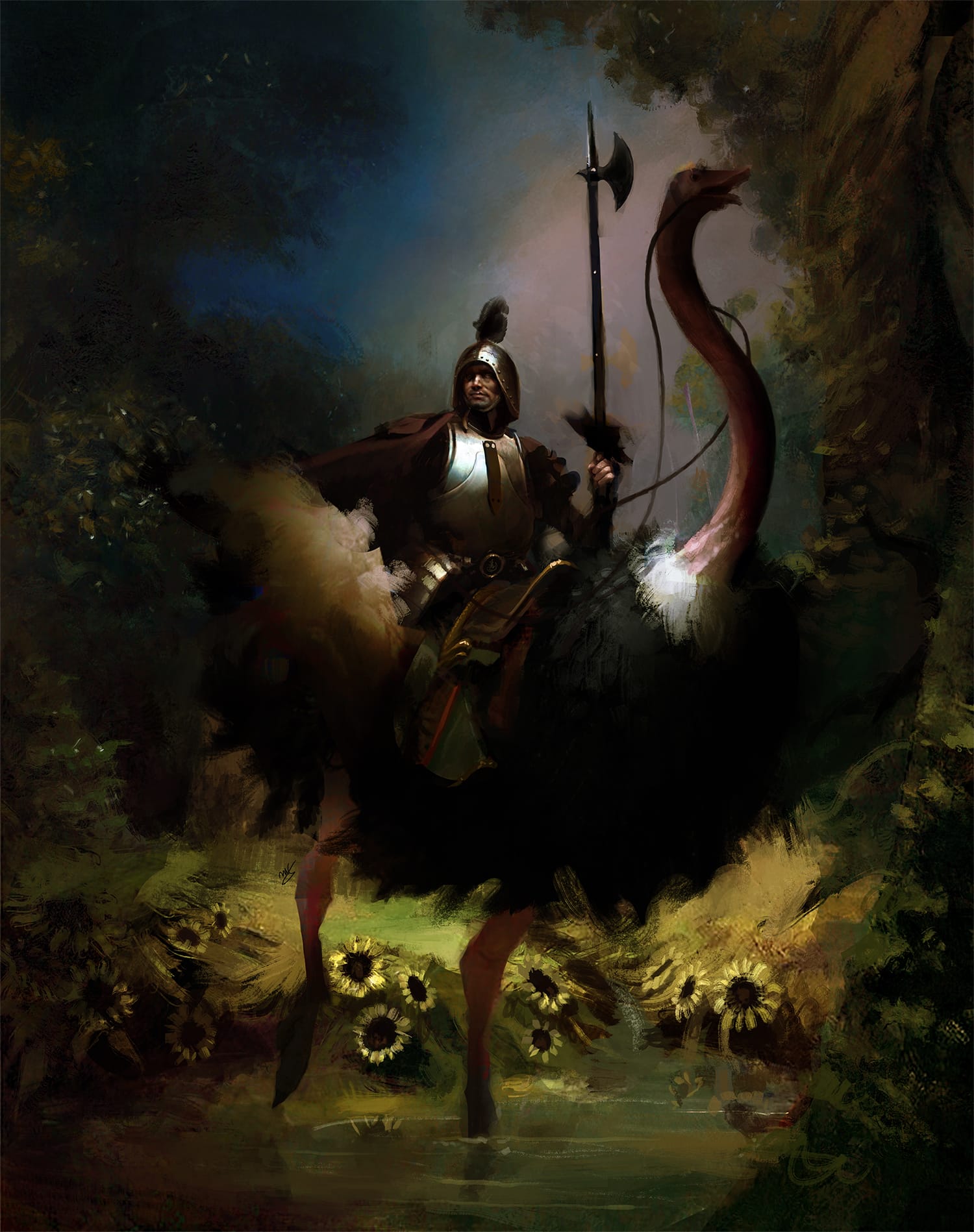
Graef: The image that started it all was a photobash/paintover piece I did of a knight riding an ostrich. I titled it "Sviterian Knight" but I wouldn't yet know what Sviteros even was. That was in 2015 also. Today, the only element that painting has in common with Omios Ures is that someone's riding an ostrich – Sviterians have grown a lot weirder and cooler since that piece – but I think the unusual choice of mount might have served as the seed for my unusual fantasy setting.
The world came first, for sure. I wrote for years before I ever started working on an Omios Ures game; development began in 2020, but only really kicked off by 2023.
Manuel: As an artist creating a new world, how important is it that the images feel "new"? I'm looking at the ostrich knight and I feel that sense of novelty, especially because it's rendered in that classical style.
Graef: Oh! I was all about exploring that baroque look at that time! I don't know if pursuing newness for the sake of newness feels very sincere. I think it's more important to make something that's uniquely "you" rather than "new". I also think it's vital to allow yourself to be surprised by your own work.
Manuel: Do you build the world through images or do you write first and then illustrate?
Graef: Sometimes the image comes first and sometimes it's the text. But before that, it's in my head; through visuals and text I'll attempt to "translate" it. I think I can get a feel if something works or not as soon as I start "translating" it. Sometimes I'll do a poor translation and shelf it, let the idea ferment for months (or years!) and see what kind of funk builds up on it, other times I'll open that shelf and notice it's spoiled or stale. Oh well! Might serve as a mother somewhere? No? Toss it. Listen, it's a bit of a mess, not a "productive" process by any means, and it's no wonder it's taken a handful of years to get Omios Ures to where it is today.
Manuel: If you were trying to give me a taste of the weirdest parts of Omios Ures to give me a sense of the world, which parts would you pick?
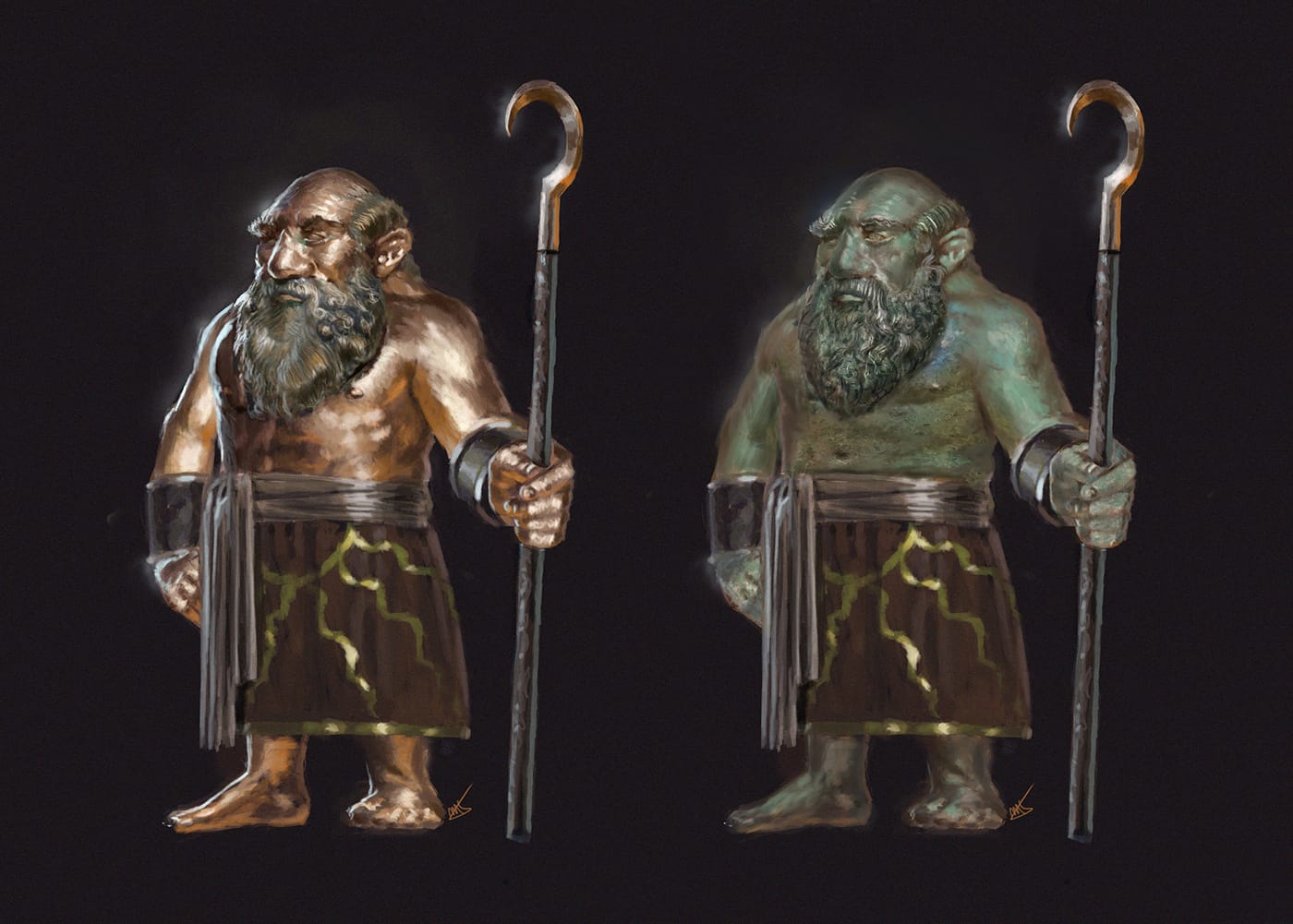
Graef: I can immediately think of two. So the dweorg are little people made of metal. The older they are, the greener their skin (from the patina). When they die, they are traditionally smelted and forged into weapons or armor to be passed on as family heirlooms. Dweorgi are born from two or more parents melting their slag and casting the alloy into a child, meaning they can have one, two or multiple parents, usually depending on culture.
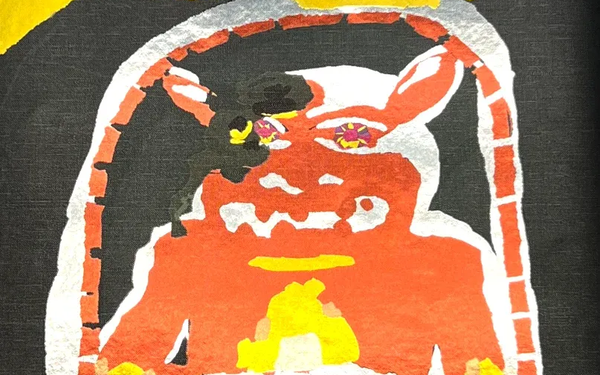
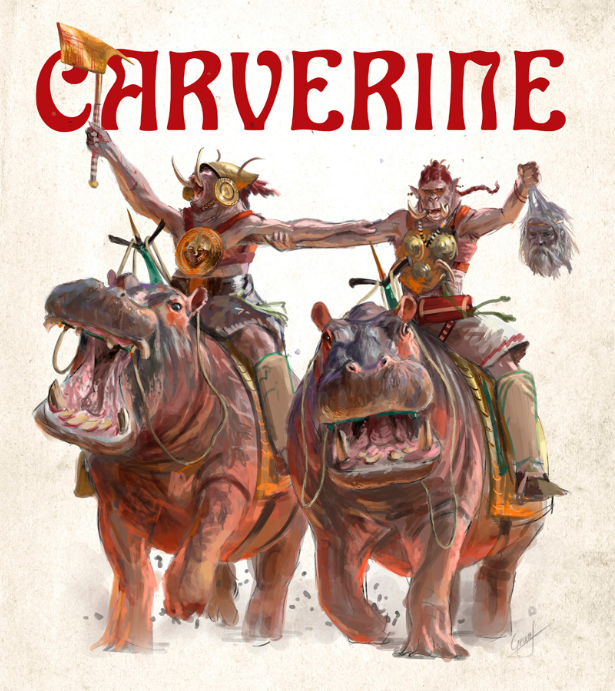
Sviterian architecture resembles tumors of dark, red metal, while most technology is half-living and parasitoid in appearance. A recently annexed village begins to exhibit small metallic protuberances and cable-like venules within the week, until it is completely overcome within the year. These all comprise what is largely referred to as the Plexus: a chaotic, evergrowing network of arcane functionoids, essential for the Empire to operate at a basic level, relying on draconic offal as fuel. Problem is; dragons are rare, and we believe Sviteros has killed them all.
Manuel: Is there an audience you'd like to reach?
Graef: I can guarantee that folks who like Planescape, Morrowind, Dread Delusion, Veins of the Earth will dig Omios Ures.
Manuel: What draws you to post-heroic fantasy? Why does it appeal to you?
Graef: I hope this doesn't become a loaded answer, knowing full well it shall, hahaha.
The first few pages of Omios Ures will outright say "adventuring is a fool's errand" and that "gone are the days of high adventuring". By immediately establishing adventurers as unreliable, unpredictable and outright dangerous in the eyes of kings and guildmasters, I think I'm also recognizing a meta element at play which is essential to RPGs. Adventurers are all those things because of the players: there's no avoiding their shenanigans so it is interesting, to me, when their actions are seriously recognized by the setting.
Then, I think it helps ground the fantasy world. While your character has access to a range of powerful abilities, everyone, at any point, is still two good sword swings away from death. Suddenly, the act of drawing blades shifts from what's to be expected out of combat, to a point of no return most will prefer to avoid. You see where this is going? Post-heroic assumes you won't be performing god-like acts of heroism, tuning the entire experience down to a more palpable 'reality'. That way, when more fantastical elements are introduced, I think they have more impact in the story, characters and players alike can more easily feel bedazzled by what they're seeing.
Lastly, it just brings the experience closer to where it personally appeals to me. When adventurers are largely seen as misfits and outcasts, you can really hone in on what really matters: the camaraderie, the danger, and the glory of the adventuring life. A Knight of the Seven Kingdoms comes to mind. Smaller scale stories that carry just as much weight as the epics. In the end, making a fantasy world relatable and immersive is something many of us worldbuilders strive for, and I believe a weird place like Omios Ures needed the post-heroic angle to achieve that.
Manuel: Do you think something about the world today makes post-heroic fantasy more appealing?
Graef: Yeah, absolutely. And thank you for asking that. Down with the crowns. In a world that hates adventurers, you adventure anyway.