2 Good 2 Society: Storybrewers do a lot with small changes in the new edition of the beloved Austen-like
"If you make the games you want to play, then the people who you want to play those games will appear.”

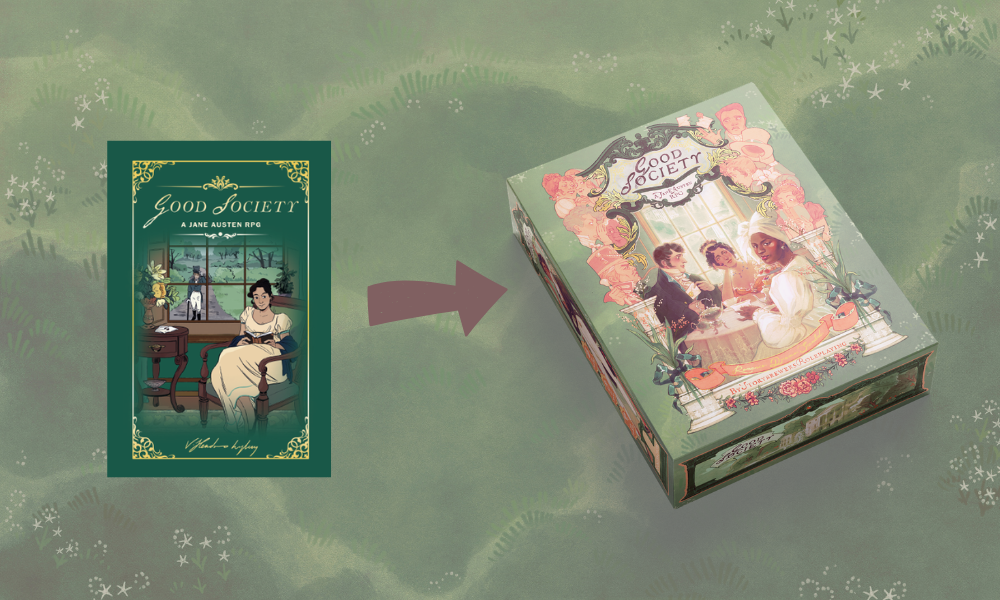
It’s not an overstatement to say the 2018 release of Good Society, the much-loved Jane Austen-inspired RPG.changed the lives of its designers, Vee Hendro and Hayley Gordon. The game’s success allowed the couple to go full time as game designers, and, since then, their publishing company The Storybrewers Roleplaying has successfully published a whole series of original, characterful games that combine strong genre sensibilities with a deep focus on interpersonal relationships. From the sport anime-inspired Fight with Spirit to their Little Box series of quick-playing storygames, their catalogue is full of gems.
Now, eight years later, they’re designing a new edition of Good Society with a small set of sharp but delicate changes. “When you sit with a game that long,” said Gordon to Rascal in an interview, “when you've played it that many times, the two things that really become apparent to you are: Firstly, all of the problems, of course. You can't help but notice them. But also, the more important driving force for us is how the community and the player base actually play the game. What's important to them? What are they prioritizing? What are they secretly changing in their home game?”
This was information that could not have come from first-hand playtesting. “We got over 50 different groups who played the game [before the release], but nothing can compare to eight years of experience with the game,” said Gordon. Good Society gathered a small group of passionate supporters from its launch, and that community has only grown, partly due to the boost from inspiring Dimension 20’s Court of Fey and Flowers actual play series in 2022. “I love [the community] so much. I'm very grateful for them,” said Gordon. “They have their own rules that have become so ubiquitous that people coming in later don't actually realize that they're not actually part of the rules of the game.”
One of these community-borne rules that is being officially included in the new edition is “24x7 epistolary.” While writing letters is an explicit part of Good Society, it’s one of the phases of the game with a specific slot sandwiched between other phases of play. But because it’s such a popular part of the game and because writing letters to fictional para- or even non-amours is such an inherently pleasurable activity, epistolary writing becomes an ongoing between-session activity for players. “You can see how that comes out of the Discord format, too, because it's so easy to have a channel to post into with a letter from your character to another character,” said Hendro. “People are enjoying being immersed in their story, in their world, in between the sessions. ‘How can we support that in the second edition’ ends up being the question that we have.”
Other changes emerged from the duo’s extensive survey of their community that asked questions about game design alongside playing habits, group dynamics, and more. The biggest mechanical change from the original is how groups handle reputation. In the first edition of the game, players framed scenes between their characters, jumped in to embody them, and then their reputation would change based on the scene’s outcome. The idea was solid. What are people saying about them in drawing rooms when they’re not present? Of course, we want to know! But the implementation felt clunky in a game that was otherwise airy and open. So, Hendro and Gordon completely overhauled the reputation mechanics in the new edition to offer more customizability (including ways to make it play faster) as well ensure that those mechanics affect the story more directly.
Not a lot of small publishers can hope to publish an elaborate survey and receive long, detailed responses from their customers. But Good Society and the other Storybrewers’ games enjoy a big, passionate community that has many more women and queer folks compared to the general demographics of the hobby. The secret has been to just follow the designers’ own sensibilities. “If you make the games you want to play, then the people who you want to play those games will appear,” said Gordon. “They manifest themselves. And you're like, wow, you existed. It's amazing.” Hendro added. “It makes me feel so good to know that some of our games have brought women into indie TTRPGs.”
Since the typical image of Austen’s regency period being predominantly straight and white, Hendro has wondered why she, as a queer woman of color, was drawn to making a Jane Austen game. “But when I was looking at Good Society, a lot of the phases [of play]… are things that happened to me,” she said. “When I came out, rumor and scandal abounded. I've been that person who was talked about and gossiped about. I've had that feeling of my reputation running away from me and then causing conflict or consequences. All of these things are deeply a part of my personal life.” Then, she added, “Also, stories of repression and yearning.”
That last fascination is something that has not changed between editions. The core of Good Society remains a delight for players who are interested in characters, relationships, and feelings, especially the frisson of inner conflicts versus the ringing of external ones. Rather than a mastery of rules or any sort of challenge, it instead asks for players to focus on listening, asking good questions, and collaborating on mutually enjoyable drama.
In 2018 and now, this is not what conventional logic says tabletop gamers want, even on the independent side of the hobby. Back then, Gordon remembers worrying that designing GM-less games felt out of fashion.Even as games built on collaborative play capture more of the hobby’s attention, she feels the subjects and themes of Storybrewers’ games still seem niche. Which isn’t a problem, really. With their community behind them, the studio is doing better than ever. As Gordon put it, “It's great to share the collegiateness of being part of indie RPGs and the struggles and the solutions, but then also being able to be like, yeah, but these are my games, and we have our own weird fan base.