Bludgeon wants you to embrace roleplaying in your own, radical way
This RPG from an Indian team approaches classes, and divinity, beyond Western conventions.


Tejas Oza was already designing tabletop RPGs before he knew what they were. He first saw a banner ad for a tutorial on Dungeon & Dragons (D&D) in 2006, while playing browser games at a local cyber cafe in India. “That blew my mind, the fact that you could use dice to simulate this roleplaying game,” said Oza in a call with Rascal. “I was just like, holy shit, that's amazing. I was so enamored by the concept.” He grabbed some dice from his Monopoly and Ludo board game sets when he reached home and quickly put together a rule set for a makeshift tabletop RPG around the Lord of the Rings. A short time later, he created another two for Star Wars and Pokémon. “I had forgotten the name D&D by the way. I forgot that's what the banner ad was for,” he recalled. It was only in college, a few years later, when someone sent him PDFs of the D&D 3.5E rulebooks, that he realized he had merely been dabbling in an RPG microcosm.
Bludgeon was, in a way, born from this sort of riffing around with D&D rules. As the game’s creative lead, Oza said Bludgeon took root as he was playing the ubiquitous RPG with his friends, Nilesh Krishnan and Vivek Ramkumar. Ramkumar had brought a copy of D&D from Canada back to India — the boxset wasn’t readily available in India beyond “pirated PDFs”. After one eventful session, Krishnan pointed out that roleplaying as a bard didn’t feel very authentic. “We were drunk, walking back home after a session, and Nilesh looked at me and he was like, ‘The bard never feels like a bard, you know? I'm just choosing the same spells, but there's nothing here that mechanically mimics singing or being eloquent,’” Oza said. They created variations of these rules over several months, which gave rise to a new repertoire of classes for their sessions — as well as the initial foundation of Bludgeon.
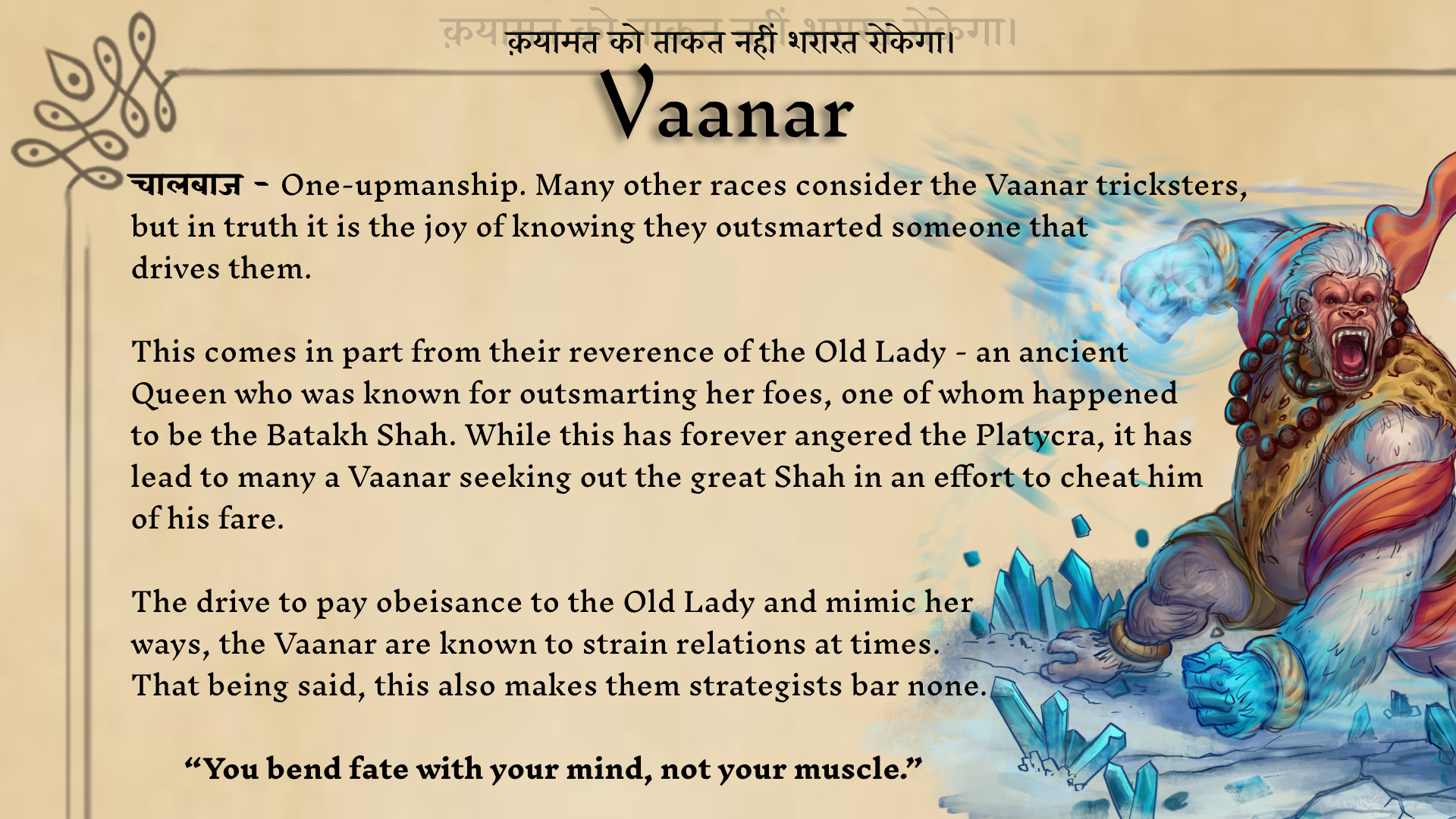
Eventually the friends, together with Jithin Peter, began to develop Bludgeon together. Oza’s partner, Panchami Pradeep, joined a while later. They named their studio Tactics ‘N Chai and worked on Bludgeon alongside their full time jobs as developers in the video games industry. In particular, Oza, Pradeep, and Krishnan subsequently sold physical copies of Bludgeon at the UK Games Expo in London for the first time in 2025 — they had moved to the country from India during the pandemic, while Ramkumar was working in Canada. Peter, meanwhile, remained in India.
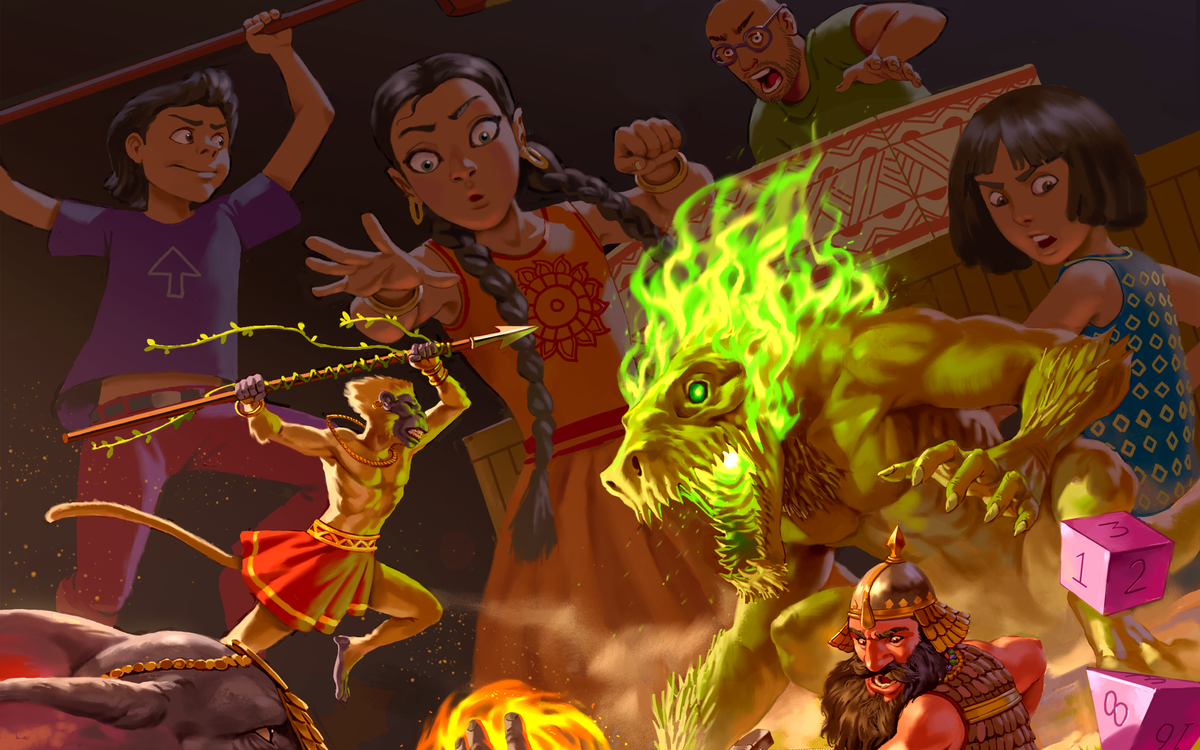
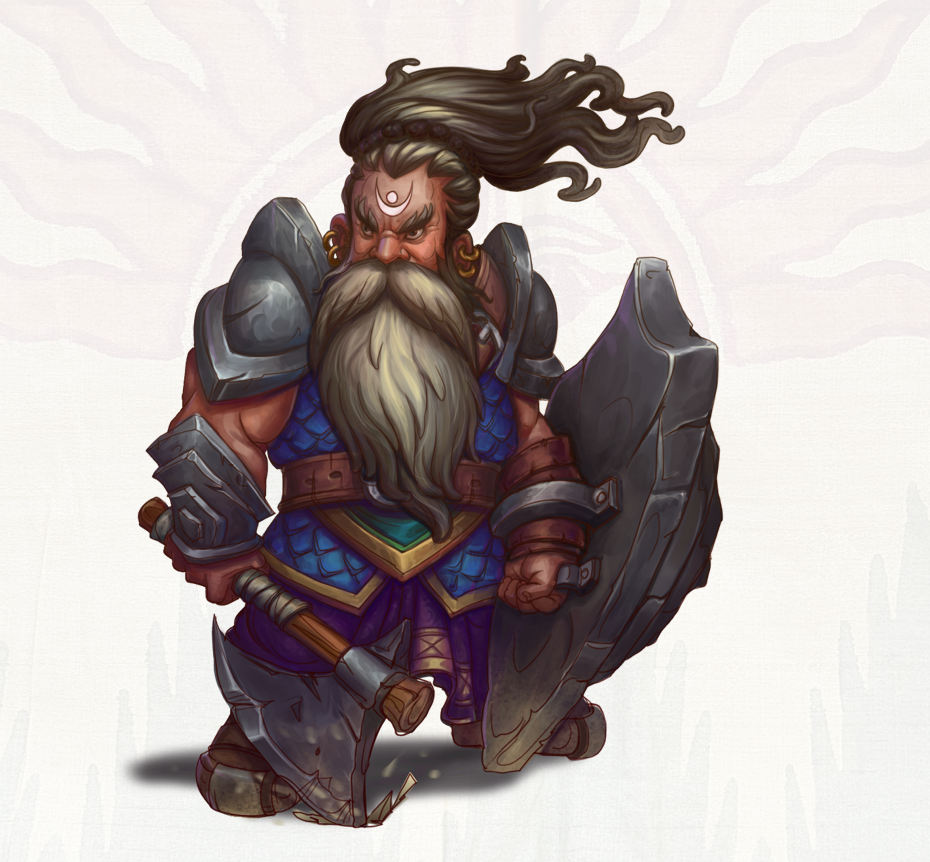
This focus on roleplay and tactics is evident in Bludgeon’s d20-inspired system, which features heavily redesigned class mechanics initially based on the third and fourth edition of D&D. The core engine mixes several features — including power source, scaling, Adaptations, and Upgrade Points — meant to offer players more flexibility in the way they approach D&D’s once vaunted three pillars: roleplaying, combat, and exploration. Other parts of the game are built upon the cultural background of its Indian creators, from the daily rituals that have inspired the Divine classes to the game’s depiction of race and Adaptations (Bludgeon’s take on physical traits). “I'm from a state called Gujarat, my wife's from Kerala; Vivek's from Maharashtra, but his family's from Tamil Nadu. Same with Nilesh, for example,” Oza said. “We all have different experiences. Even within a state, we're from different parts and all. So, we write what we know, we put in references of the things we know and like.” This influence extends to the game’s illustrations and design, which is created by artists and frequent collaborators Aakanksha Mitra and Anish Daolagupu, who Oza considers part of the expanded Tactics ‘N Chai team.
In particular, the Divine and Primal as a power source and class categories were perhaps the most “deviant from standard fantasy”, said Oza. These sections were most influenced by the studio’s shared cultural beliefs. “There's a lot of things that people do to show their devotion to whatever deities that they pray to,” he said. “There's lots of [...] different religions, and you see that around you constantly. From small things such as touching the floor and then your heart before you step on [a stage] to perform, to bigger things like the festivals we have, we wanted to show that it’s the act of constantly doing [these practices] that has brought these divine beings to life in this world.”
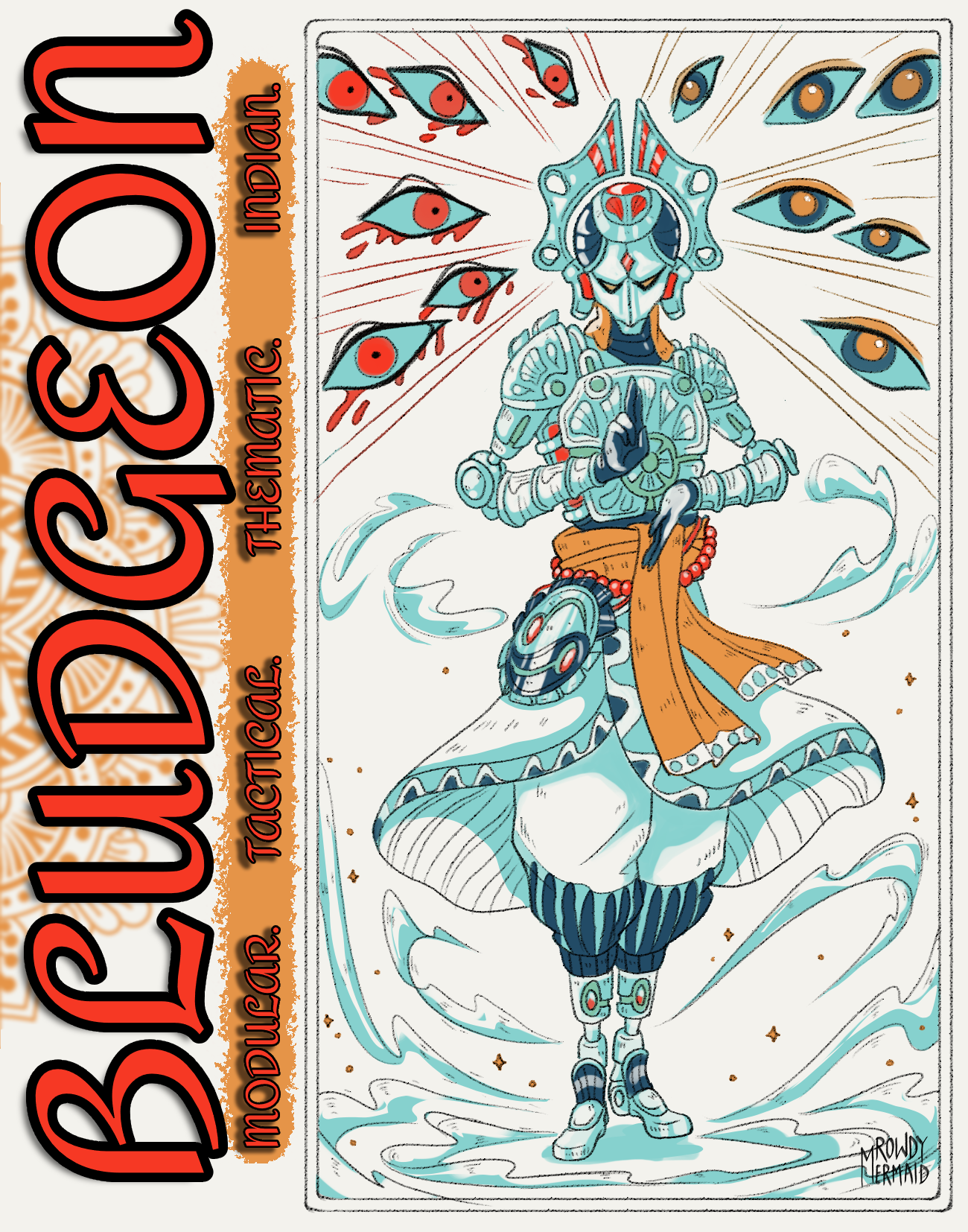
This is a gap that Oza noticed in the divine classes from D&D and other Western RPGs, such as paladins and clerics; to him, none of these classes’ actions seem particularly inspired by faith or divinity, with this ambiguity only thoroughly explored by players who are invested in the roleplaying aspect of these games. At the same time, Oza pointed out that his perception of divinity, like many Indians, is vastly different from the monotheism prevalent in the West; it’s not binary, and this contrast is exemplified in Bludgeon’s concept of Divine domains. The domain of knowledge, for example, is also the domain of secrets, just as the domain of justice is the same as — yet diametrically opposed to — the domain of authority. Are you sharing your knowledge, or hoarding them? Are you using the law to impose order and blind obedience? Oza compared this to a sliding scale, with players determining the degree to which their characters interpret and embody either ends of their chosen domains.
Another characteristic of Bludgeon, which Oza referred to as a toolset, is how players can freely adapt their sessions to their preferred style. It’s the sense that you’re fully embodying your chosen class and all its quirks; a bard will perform, sing, and pester their enemies into submission, eventually conjuring an unexpectedly powerful spell; a Dharma-Adhikari, who has sworn fealty to religious institutions, will be spreading their faith across the land, perhaps even as an official in the local government. That’s why Oza had largely characterized Bludgeon as composed of two distinct phases of play: roleplay and combat. This classic divide in structure allows game masters to customize sessions according to their players’ preference. “If you don't want to engage with a certain part of [the RPG], given the way the stats work, and the way Adaptations and all that other stuff works, you can run a very roleplay-heavy game without needing to dip into combat too much, or vice versa,” he said. “[Or] if you want to just play heavy tactics, go for that.”
That said, the current iteration of Bludgeon seems more combat-heavy than roleplay-focused, a design that Oza pointed out was intentional. He believed that roleplaying doesn’t require as many rules as combat, and has thus chosen to include more combat mechanics in the rulebook. “We've focused on giving you areas where you can call in an extra die, because we always love rolling extra dice, but not too many rules [...] at the storytelling level; we don't want to mechanize that,” he said.
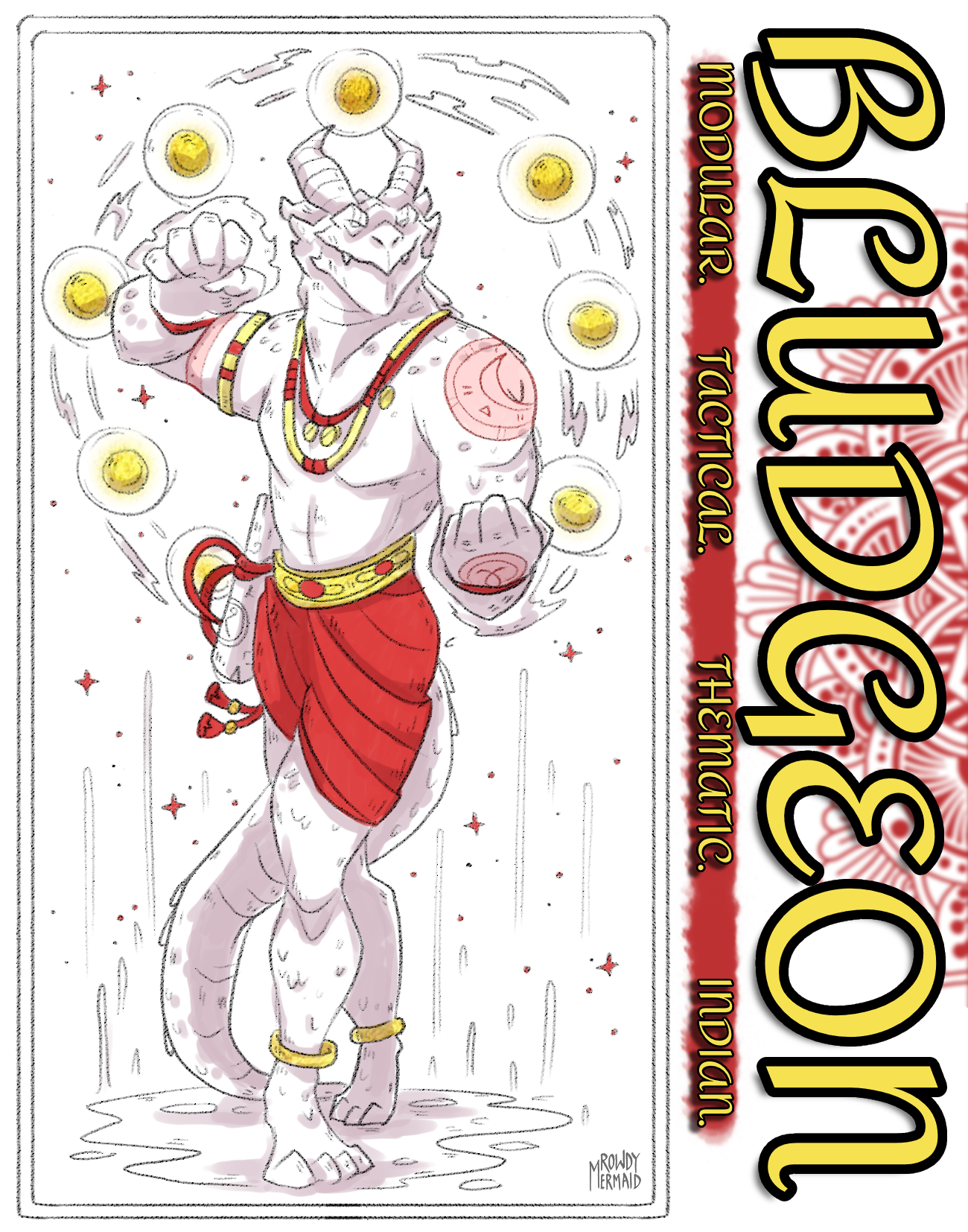
If there’s one thing that characterized the flexibility of Bludgeon’s system, it’s that no two classes will be played the same way. Oza shared that he had been running a session with two bards and a sorcerer, but the bards are distinct from one another. “The way they move in combat, their considerations of where to position, what to prioritize, [are] entirely different,” he said. “I think that speaks to how well we've managed to create a system that, based off just simple choices of [how] this element changes how you want to play the game, and that feeds back into the roleplay. That's what we're excited about.”
As with most indie RPGs, one of the biggest challenges Tactics ‘N Chaiface with Bludgeon is visibility. While he believed the scale of the game is compatible to that of D&D, Daggerheart, and Draw Steel, he admitted that the studio is nowhere on par in terms of production values, funds, or a pre-existing audience. “I don't think we have delusions of grandeur with the game; [we] just want to share our version of cool tactics with people,” he said. After all, development on Bludgeon is not yet complete.
Life, too, has thrown a curveball their way. Oza and Pradeep had originally planned to crowdfund Bludgeon via Kickstarter, in a bid to gradually expand the game’s audience, but this plan was soon discarded. Pradeep was diagnosed with a serious health condition in 2025, which forced Oza and Pradeep to return to India from the UK in order to seek medical care. As a result, the project was placed on a hiatus.
Fortunately, Pradeep has since made a full recovery, and Oza is keen to continue working on Bludgeon. “As of yesterday, I've managed to set up my PC and should slowly be able to get back to editing the book,” he told Rascal in an email update last week. Crowdfunding, however, remains untenable, as creators from India aren’t able to host their projects on Kickstarter and other platforms like Patreon, Ko-Fi and itch.io. Moreover, Oza shared that he couldn’t commit to running a crowdfunding campaign at the moment, with the majority of the Tactics ‘N Chai team occupied with their day jobs. But players can look forward to more frequent updates for the immediate future, as the studio continues to develop the game towards completion.