Concerning Ravenloft - the original horror adventure module
Him, Strahd.

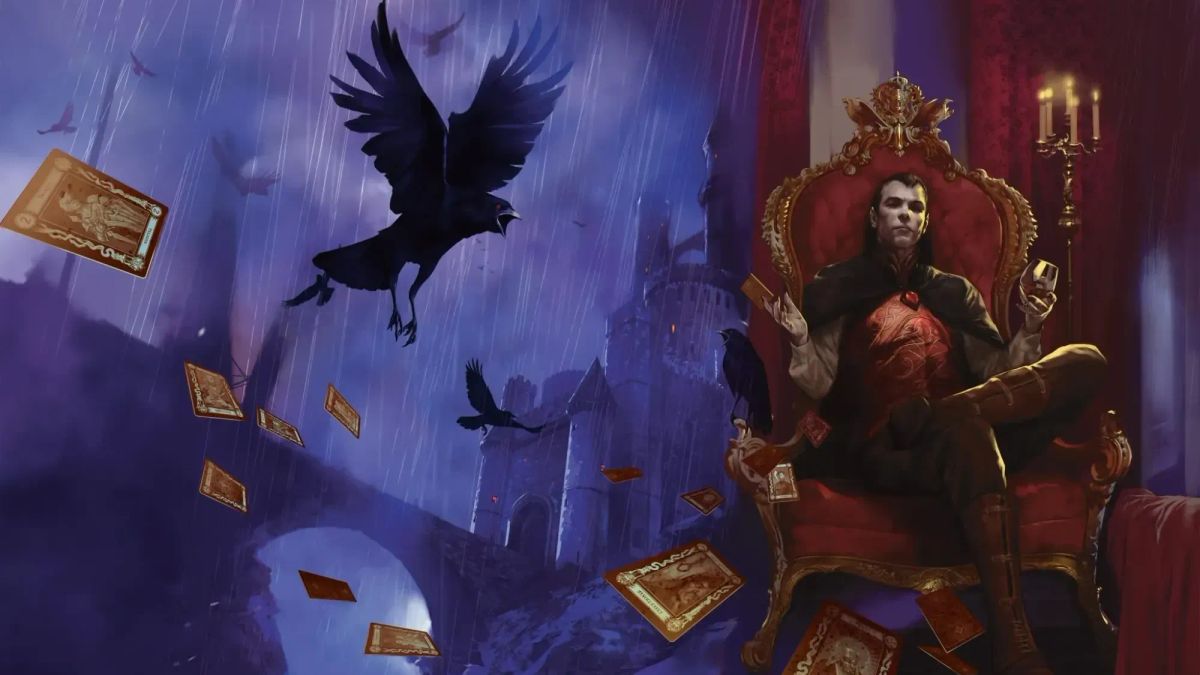
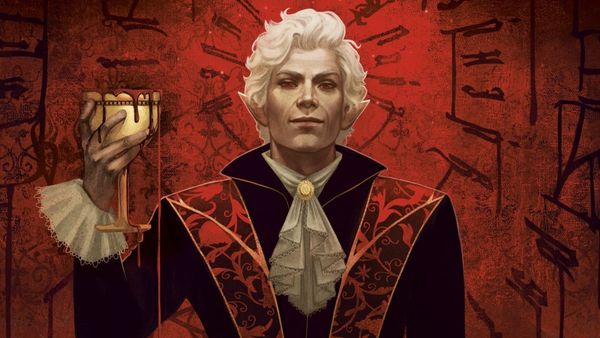
This year marks the tenth anniversary of Curse of Strahd, the latest in a long line of remakes of the classic adventure module I6: Ravenloft from 1983. Centering on vampire lord Strahd von Zarovich, the scenario finds the PCs trapped in Barovia, Strahd’s gothic horror realm, which is separated from the rest of the D&D multiverse by a misty barrier that can only be crossed with the permission of its master. I6: Ravenloft proved so popular that it became the basis for an entire eponymous campaign setting in AD&D2e, and updates of the adventure module have appeared for every edition of the game since, with the exception of D&D4e (and even then, an update was announced but never saw the light of day). At the same time, Ravenloft is built on racist stereotypes and regressive attitudes towards women, both subjects that D&D has persistently struggled with over the years.
(NOTE: For the sake of clarity, Ravenloft on its own refers to both the original module and its reimagining. For specific references to I6: Ravenloft, Curse of Strahd, or the Ravenloft Campaign Setting, the full titles will be used.)
Like groundbreaking works in any medium, the source of Ravenloft’s enduring appeal isn’t immediately obvious to modern eyes. D&D is lousy with compelling, fleshed-out antagonists, and there are more takes on the Draculian vampire archetype than you can shake a sharpened wooden stake at. It’s important to bring up Big Vladdy himself because Strahd is very much cast in that well-trod mold, and the long list of similarities between the two does diminish von Zarovich’s shine somewhat. The background of warmongering aristocracy and thorough bastardishness even before joining the ranks of the undead, the longing for lost love, and obsessive pursuit of apparent reincarnations of their beloved — “Dracula, but he decided to mope at home instead of hop on a ship to Whitby” is a pretty good summary.
The important thing to remember is that Strahd wasn’t created in 2026, or 2016, or even 1983, for that matter. Instead, his origins lie in 1978, when co-creator Tracy Hickman had an unsatisfying encounter with a vampire in a D&D game and went home to complain to his wife, Laura, about it. Which is an incredibly valid way to start the creative process, since plenty of my Rascal articles have their roots in an annoyed rant with my partner as the audience. Tracy was irritated by the use of a vampire as yet another randomly-generated collection of stats for players to bludgeon as an XP and loot pinata. Surely, such a classic literary monster deserved better? Laura agreed, and the Hickmans launched into a flurry of vampire research and module design that would eventually become I6: Ravenloft.
1978 was a very different time for both RPGs and vampires. Location-based dungeon crawls were the norm, and even a considered, cohesive theme was noteworthy. The concept of having an adventure module centered on its primary antagonist, of making the discovery of their history fundamental to success, was unique. RPGs had only just started venturing into genres beyond fantasy, and there was not yet such a thing as a horror RPG. Call of Cthulhu predates Ravenloft’s publication, but not its creation.
On the vampiric side of things, Anne Rice’s seminal Interview with the Vampire, which greatly influenced RPGs via Vampire: the Masquerade, had only been in print for two years. Audiences were more likely to be acquainted with Sir Christopher Lee’s portrayal of Dracula in the long-running series of movies from Hammer Films, and other classic formal evening wear-clad depictions of vampires. Aspects of the Dracula mythos that are in common use today, such as rendering him as the historical Dracula, Vlad the Impaler, or entangling him with a reincarnated love, were entirely new, having first appeared in Bram Stoker’s Dracula from 1974. Both the title and those elements of the story were lifted by Francis Ford Coppola for his better-known 1991 movie. The 1974 adaptation was directed by Dan Curtis, who also created the gothic soap opera Dark Shadows. This series, which featured a vampire called Barnabas Collins, was claimed by the Hickmans as a major influence on Strahd. As familiar as all of these elements of vampire tales and RPGs are to us today, in 1978, they were downright groundbreaking.
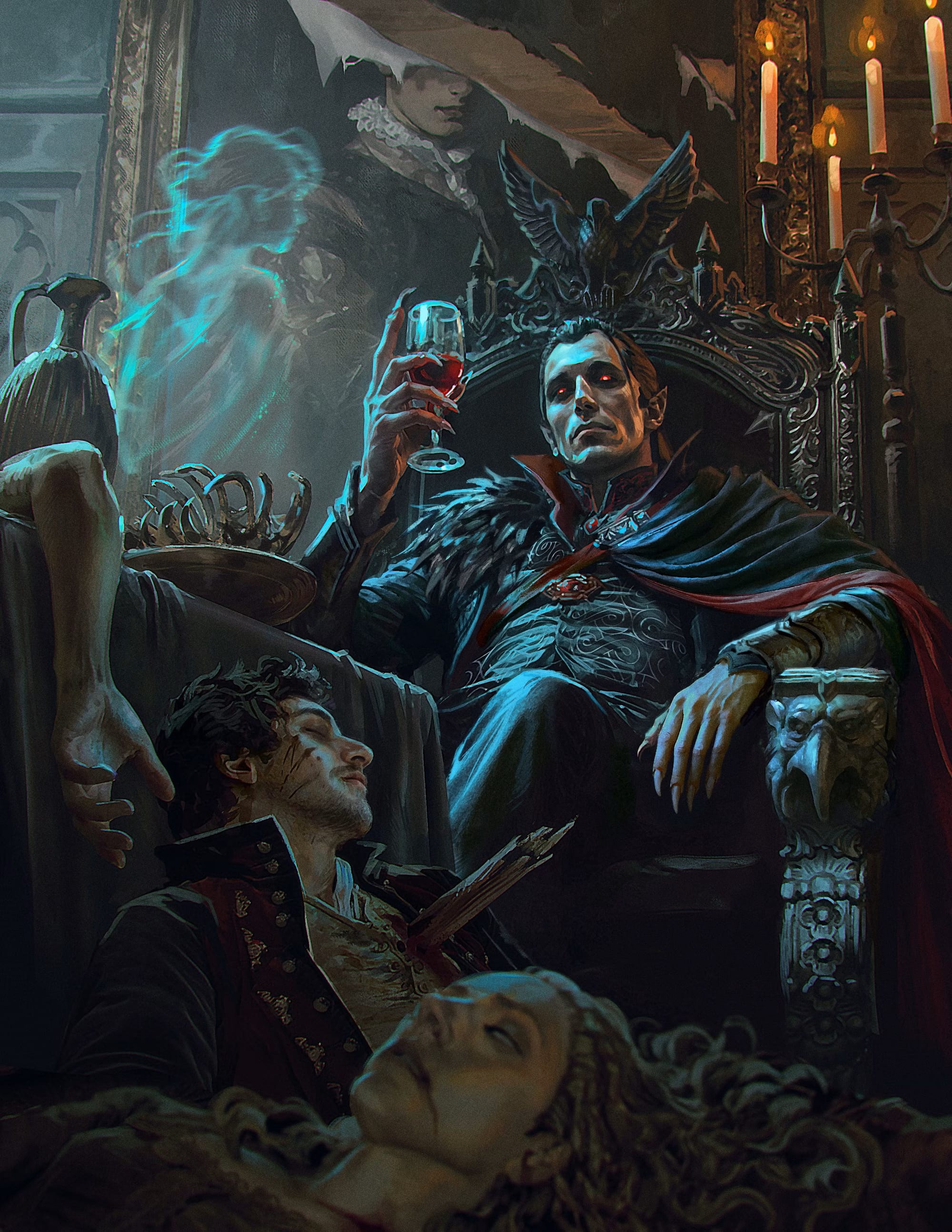
For all its innovations, I6: Ravenloft was still very much a dungeon crawl. The realm of Barovia is tiny, consisting of the village of the same name, Castle Ravenloft, and little else. Curse of Strahd expands on the concept, drawing on material from numerous supplements and novels published in the intervening decades. Strahd’s domain is extended to cover three settlements instead of just one, and Castle Ravenloft becomes the main “dungeon” of the module, instead of being the only one. D&D’s long-established Van Helsing-alike, Van Richten, is brought into the adventure as one of several NPCs who can aid the party in their quest to destroy Strahd. Perhaps most importantly of all, Curse of Strahd no longer features the word for Romani people that is now commonly considered a slur, however it still doesn’t go far enough, as a simple name change cannot disguise the fact that the fictional Vistani still comprise a collection of harmful Roma stereotypes. WotC even brought on a Romani consultant for the 2020 reprint of Curse of Strahd, but the changes made were clearly not as successful as WotC hoped.
For all that Ravenloft centers on Strahd, the Hickmans seem to have profoundly misunderstood how audiences relate to gothic romance, and vampires in particular. There’s a simple fact that was true in 1978 and even moreso today — people want to fuck monsters. Tracy writes in the the foreword to Curse of Strahd:
The romantic vampire of the earliest years of the genre was not just a spouse abuser but a spouse killer, the archetype of abuse in the worst kind of destructive codependency. For Laura and me, those were the elements that truly defined Strahd von Zarovich — a selfish beast forever lurking behind a mask of tragic romance, the illusion of redemption that was ever only camouflage for his prey.
But the vampire genre has taken a turn from its roots in recent years. The vampire we so often see today exemplifies the polar opposite of the original archetype: the lie that it’s okay to enter into a romance with an abusive monster because if you love it enough, it will change. …we hoped we could bring the message of the vampire folktale back to its original cautionary roots.
The fact is that people were craving penetration by the D long before the creation of Ravenloft. Audiences don’t read or watch romance, even gothic or horror romance, because they’re not into what’s happening. Something as specific as lesbian vampire erotica — which predates Dracula by over twenty years thanks to Joseph Sheridan Le Fanu’s Carmilla — was a flourishing movie subgenre in the ‘70s. Vampires are sexy, and the fantasies and kinks they can embody are endless. Who doesn’t want to be taken care of by a hot, rich aristocrat with an ancestral castle? It’s profoundly patronising to suggest that audiences are somehow being hoodwinked, that vampire stories have strayed from some pure, educational ideal. No-one, absolutely no-one, who fantasises about vampires, whether it’s Dracula, Strahd, Carmilla or Astarion, is doing so in the belief that these fictional characters are fundamentally good people. Their villainy, the perceived freedom from the limits of both morality and mortality, is very much part of the appeal. To have this powerful creature pluck you from the masses and place you above humanity alongside them is the draw.
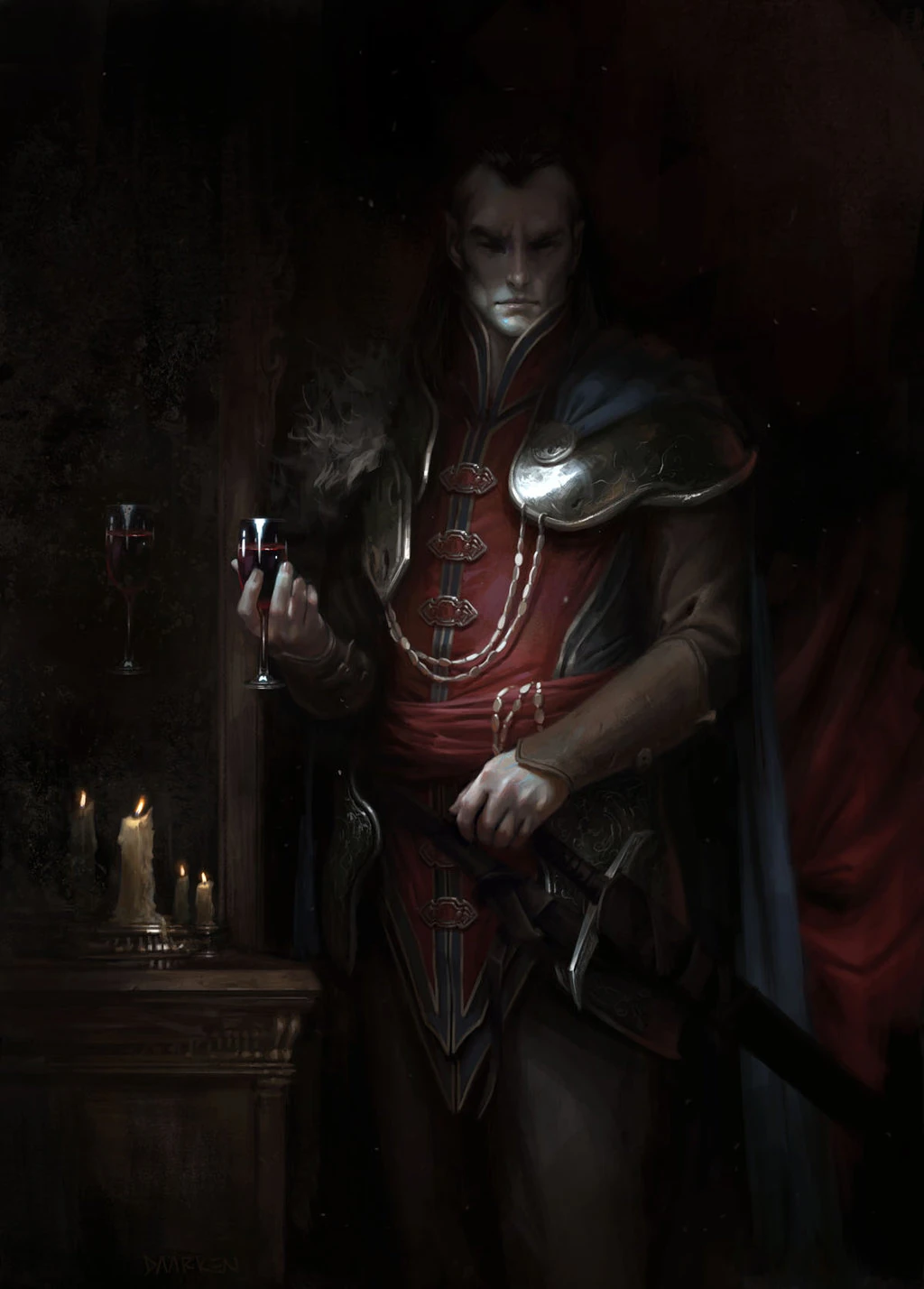
This isn’t to dismiss the idea of fiction perpetuating harmful ideas, of course. In an interview with Dragon, Tracy mentions “recent and harmful versions of glittering romance”, an obvious shot at Twilight’s sparkly vampires, and one that isn’t unearned. Twilight is a young adult series that presents a century-old vampire stalking and abusing a teenage girl as romantic and desirable. However, the idea that vampire romance can be neatly divided into two camps, the wholesome cautionary tale and the problematic normalizer of real world abuse, is intensely reductive. Ironically, both Ravenloft and Twilight share a philosophical origin — the idea that women cannot be trusted to make their own decisions, that they need to be shepherded away from bad men, but it’s right and proper for good men to control them. (It’s interesting to note that both the Hickmans and Twilight author Stephanie Meyer are members of the highly conservative Church of Jesus Christ of Latter-day Saints.)
Strahd is an irredeemable monster, there is no way to bring him back to the light, no ending for him other than death. His love is portrayed as a selfish, grasping obsession. Ravenloft states that Strahd is looking for a successor;, it’s a major part of his interactions with the PCs, but it’s a plot device that exists to sow dissent. Strahd will never choose a successor because, once again, he’s too selfish. There’s nothing wrong, either as an adventure author or a DM, with being explicit about that route not being available — it simply might not be conducive to the themes and atmosphere they wish to evoke — but in the case of Ravenloft the stated intent is to dangle stupid, sexy Strahd in front of players, then slap their hand away if they attempt to reach out to him with anything other than a fist.
In 1998, Tracy Hickman said "I still believe the original Ravenloft modules were perhaps the best that ever had my name on them.” It’s not unfair to call Ravenloft, in any of its incarnations, a flawed classic. It’s a hugely influential work, beyond doubt, but that doesn’t justify ignoring the harmful aspects, especially when they’re so fundamental to the adventure, right down to its philosophical underpinnings. Simply describing Strahd as explicitly bisexual, as is the case in Curse of Strahd, doesn’t make it any more progressive. Ravenloft has done its influencing; it can be laid to rest without diminishing its importance to RPGs. Of course we already know this isn’t happening. WotC likes to hedge its bets, and Ravenloft and its bloodsucking antagonist have proven perennially popular. They’re already being exhumed to capitalize on the nostalgia of multiple generations of D&D players. Just like Strahd himself, Ravenloft refuses to stay dead.