Esoteric Ebb’s tabletop roots travel deeper than the big ampersand
The voices in a character’s head have fascinated designers for decades.

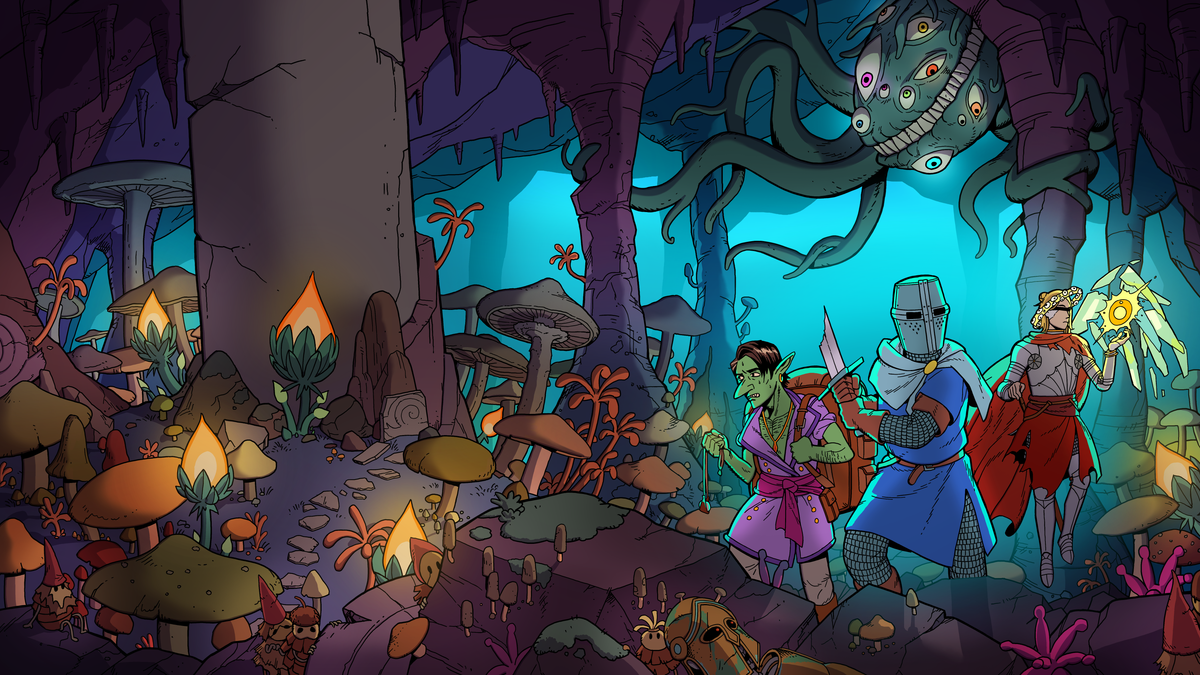
When describing the politically steeped, narrative video game Esoteric Ebb, reviewers and promoters alike reached for an easy comparison: “Disco Elysium meets Dungeons & Dragons”. And they’re not wrong. Designed by Christoffer Bodegård and published by Raw Fury, Esoteric Ebb adopts Disco Elysium’s barely competent protagonist and dueling ideologies but replaces the world and system with d20-focused math and high fantasy pastiche.
It should feel like a cheap knockoff. Instead, Bodegård distinguishes his game through its Pratchett-indebted humor and keen understanding of D&D’s cultural landmarks. Norvik does not feel like some blip on the Forgotten Coast, and its multivariate inhabitants are much more than stat blocks paired with a name and personal drive. Every strength is owed to starting at D&D and then doing more — twisting, subverting, elevating. This is nowhere more true than with Esoteric Ebb’s central cast: the six voices in our protagonist’s head vying for attention and edification. Here, the tabletop-inspired RPG reaches, perhaps unknowingly, beyond the modern conception of wargame-inspired roleplay to tap a decades-old curiosity: what if we all played a single character?
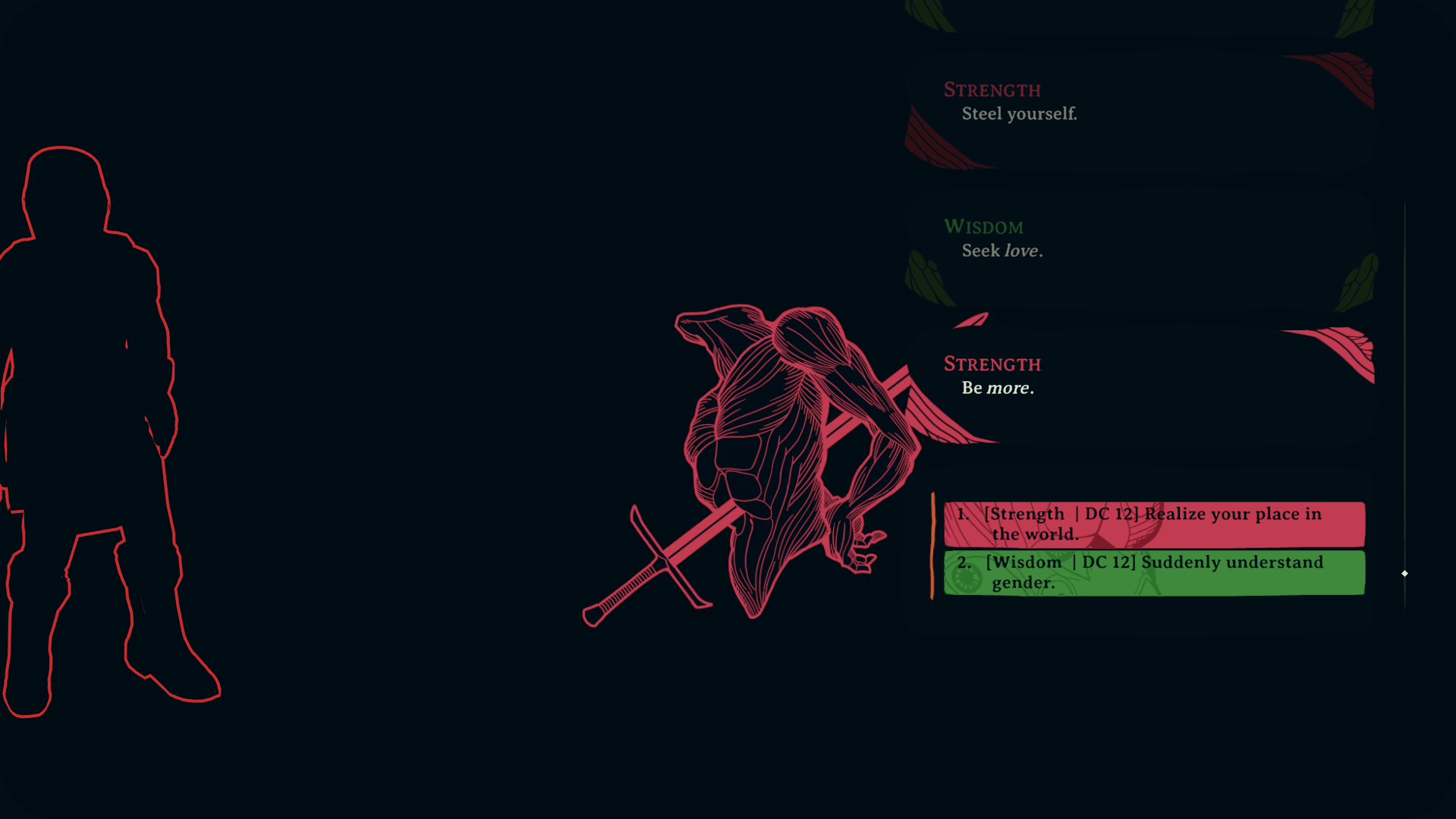
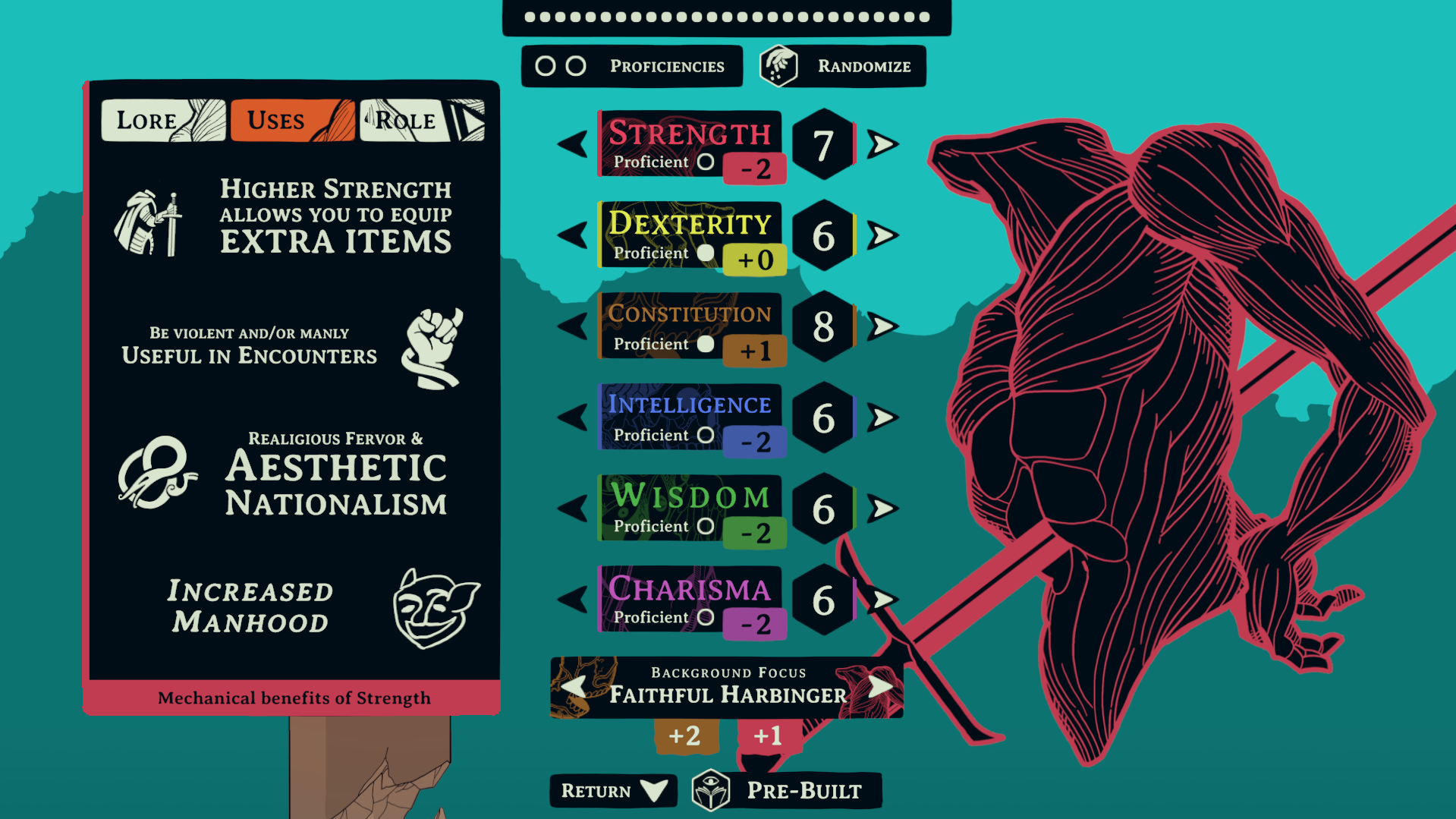
The mind of Ragn the (alleged) Cleric is populated by six voices who embody the core Attributes familiar to D&D players: Strength, Dexterity, Constitution, Intelligence, Wisdom, and Charisma. Each has their own personality and political bent, along with an affiliated party they want Ragn to vote for in Norvik’s impending election. Like in Disco Elysium, the voices answer internal queries, bicker amongst themselves, and comment on his actions — sometimes spurring him forward and other times cautioning against, say, flirting with an eons-old Gynosphynx with a drinking problem. They comport to Ragn’s lived experience, reflecting his understanding of what it means to be wise or charismatic, and what he must do to uphold those truths. This is best exemplified in Strength’s preoccupation with, and performance of, masculinity. Go read Mothership’s Zoe Hannah thoroughly plumb this well.
Want to read all of Rascal's work and support independent, worker-owned tabletop journalism? Consider becoming a paid member!
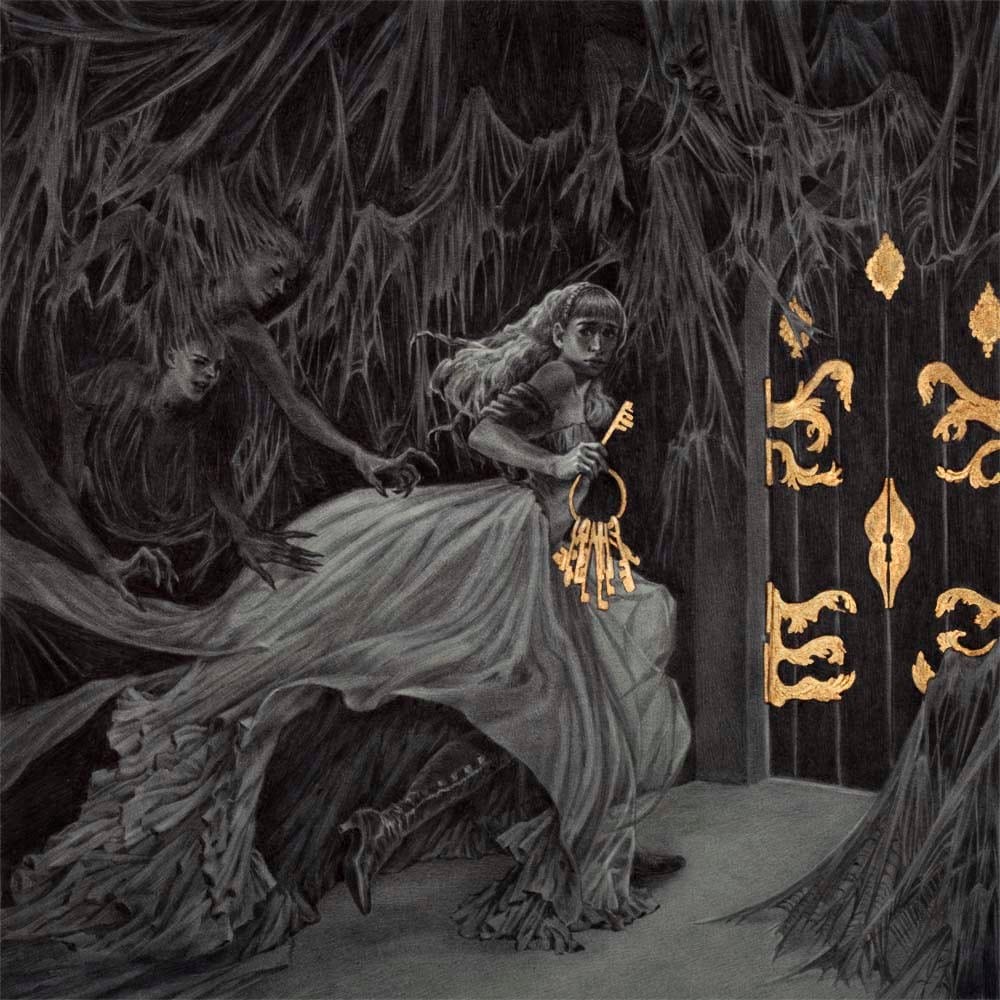
Nothing in D&D’s rules empower a six-voices-one-mind situation, but Bluebeard’s Bride sure does. Whitney Beltrán, Marissa Kelly, and Sarah Richardson’s adaptation of the dark fairy tale puts players in the head of the eponymous captured Bride, speaking and acting as a Sister — a facet of her psyche torn between morbid curiosity and dogged survival. Where Esoteric Ebb explores manhood, Bluebeard’s Bride orbits the feminine as identity, object, and prison. Player roles — Animus, Fatale, Mother, Virgin, and Witch — complement each other’s strengths and weaknesses. They have opinions on the Bride’s supposedly loving husband, and they all see the baroque mansion’s many locked doors through different eyes. The game and its resulting story grows out of compromise and irreconcilable gulfs between these slices of the self.
There are several moments in Esoteric Ebb where your attributes will walk you back from the (sometimes literal) edge, assuring you that following through on a prompt will end poorly. The voices don’t lie, even if their truths can be less than useful. An internal check will fail, and the Attribute will relent, chagrined. In Bluebeard’s Bride, players can pass the Ring to their fellow players whenever their discomfort becomes visceral. It is both a diegetic collection of keys unlocking the dread doors of Bluebeard’s manse and also a game component signifying the Bride’s currently dominant aspect. The psyche flinches, or revolts, and some other aspect steps in to shield the Bride from trauma. This negotiation of comfort and control drives the session-to-session drama. Similarly, Ragn makes choices relying heavily on his inner voices — the Attributes’ knowledge and guidance — for survival.
Two decades before either of these titles, erstwhile designer Michael Sullivan released a brief collection of rules for a party game called Everyone is John. Setting aside the repugnant portrayal of mental illness that haunts this RPG from 2002, Everyone is John distills the many players/one character paradigm to its logical conclusion: competitive control. Players must fulfill secret goals, betting Willpower to seize agency of the aggressively incompetent John and brandishing their vague Skills in order to gather Obsession from completed objectives. Imagine if Disco Elysium’s detective was wholly seized by his brain’s Electrochemistry in order to drag a cigarette down to its filter. Or if Constitution impelled Ragn to gobble that dang Slopdog. John is a chew toy in the mouths of a vicious pack. He is a vehicle for buffoonery. His humanity does not appear in the rules.
Several smaller tabletop RPGs spawned from Disco Elysium’s wake, which is predictable given the video game’s adoration for tabletop mechanics: Jamais Vu ends up more traditional in relegating mental aspects as skills to level up and deploy against challenges, but both After the Mind, The World Again and DETECT OR DIE cleave closer to the games previously discussed (and explicitly mention them as inspirations). After the Mind recommends making the newest player its Detective, who will be at the mercy of all the other players. This “GM-full” dynamic wrestles with power structures and the veneer of any one person’s willpower. DETECT OR DIE is more traditional in its group composition, adopting Bluebeard’s Bride’s Key mechanic and threatening players with losing control of their Detective’s body to lizard brain impulses.
Excavating the recesses of a collective ego supports a different flavor of fun. Solving encounters with overwhelming physical brutality loses its efficacy when the players must share two hands. Plus, it’s easier to ensure buy-in when failure for one is failure for all. Beyond shared accountability, though, I think all of these tabletop games touch upon a desire to shape the world through thought and belief. That our convictions might be as sharp as steel, that ideology and culture are more violent and destructive — but also more liberatory — than a fireball spell at any level.
By the time Norvik’s inaugural election closed, my Ragn’s embodied Wisdom had developed into a pulsing organ of folkish pride that delighted in socialism and traded in both empathy and secrets. Someone else will have exalted Strength’s martyred machismo, or Constitution’s haunted acceptance of death-as-bedfellow, designating them the face of the metaphorical party. My Ragn’s Charisma, by comparison, was not relegated to a forgotten dump stat. It constantly shoved itself into social situations with false bravado, a treasured — if less mechanically useful — member. It’s easy to imagine Esoteric Ebb’s Attributes as classes in a tabletop RPG that reward complicating their essential natures. The arguments between Intellect and Charisma traced effortlessly onto banter between group members.
Bluebeard’s Bride similarly allows players to interpret their roles through relationships with the other aspects. The Mother can be depicted as oppressive or withholding, protective or nurturing. The subject matter of this game — representing and navigating domestic violence against women — is much heavier than magical crimes and electoral hijinks, but both are in service of expanding a single character’s interiority. My favorite skills in Disco Elysium, Shivers and Inland Empire, connected the detective to expansive external and internal worlds, respectively. The turbulent subjectivity of our brains is just as ripe for exploration as the best megadungeon.
More tabletop games should explode the hobby’s foundational constructs, letting players pilot the shards like psychological Zords. Computer RPGs are longtime beneficiaries of a certain traditional slice of tabletop mechanics, but there is a wealth of ideas to be traded across the permeable barrier between analog and digital. Esoteric Ebb does it by accident to great success; imagine what an intentional exchange could accomplish.