Forge bonds through pit stops and awkward road trip conversations in Runeway
A comforting, nostalgic jaunt underpinned by an anti-fascist vision.

The road trip feels like such a millennial-coded activity. In a time before modern tech, you pump your ears with music from a cassette player, chase eclectic pit stops without the dopamine of push notifications, and speed down winding, dusty roads in a beat up car. And if you aren’t travelling alone, it’s also about making authentic, offline connections with your driver or fellow passengers — offline being the operative word. After all, no amount of digital distractions can overcome the drudgery of being stuck on a road trip with a family member or a hitchhiker whose company you can barely tolerate. Free from the shackles and distractions of always-on technology, the road trip becomes an embodiment of nostalgia, discovery, and growth; just look at the empowered duo in Thelma & Louise (driving off the Grand Canyon is entirely optional).
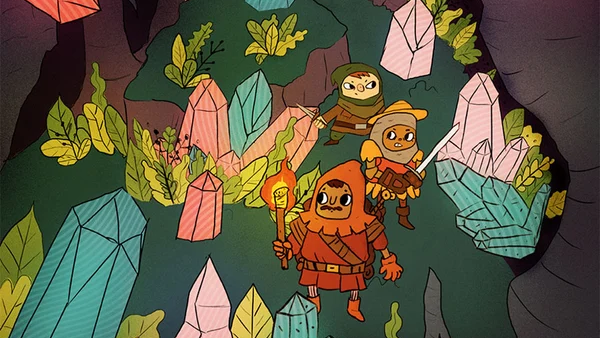
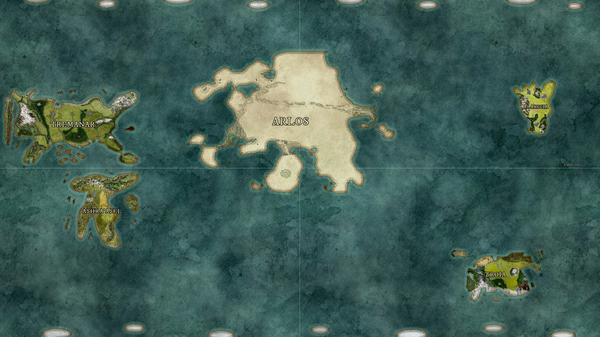
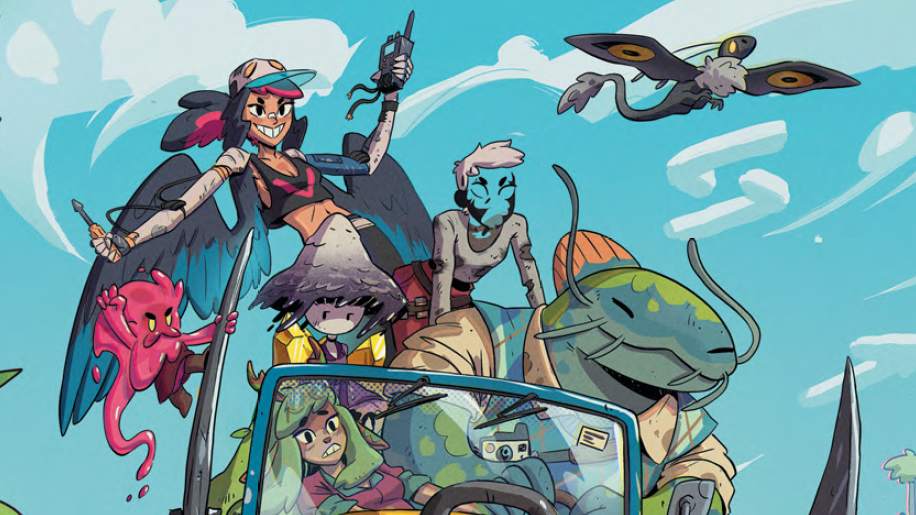
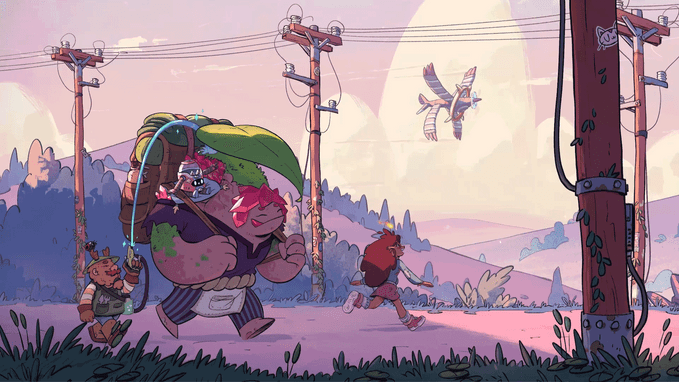
Runeway is a road trip RPG built around such themes. As Runedrifters, players band and travel together across the ever-evolving world of Weyrd, which is home to strange denizens like fish people, winged demons, and magical golems. They are wanderers of this realm, seeking out companions to accomplish a common goal together. “But the real focus is on how their characters change along the way,” said Chiara Vertuani, the designer of Runeway, in an email to Rascal. “We wanted to create a role-playing experience where growth doesn’t come from power or combat, but from relationships, vulnerability, and transformation. The ‘road trip’ structure felt like the most natural way to support that: a sequence of encounters, places, and moments that slowly shape who you are.” She referred to Runeway as a “self-discovery RPG”, in that the destination matters less than who you ultimately become after your journey is over.
That may be true, but journeying through Weyrd slaps. Its fantastical world and alien population are splendidly and brightly illustrated, evoking a sense of pastoral charm, and complete with extensive worldbuilding that hints at unexpected depths beyond its laidback, childlike presentation. Weyrd is said to be powered by the souls of the deceased, with these reincarnated into new life forms as Ancient Spirits. But on a more macabre note, these souls are also a vital power source for both technology and magic, wrenched away from their spiritual destination to power batteries for magical tools. These tools are ‘90s-era technologies such as Walkmans, cassette tapes, arcade cabinets, and computers. The implications are horrifying; you might very well be sending a soul into eternal damnation, only because you want to listen to one more song while avoiding an awkward conversation in your swanky Ford Thunderbird.
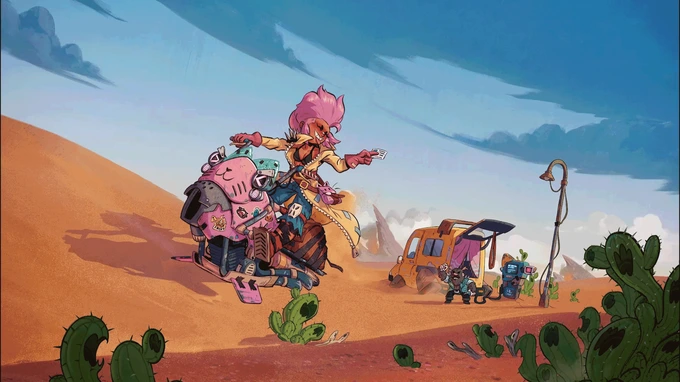
But Runeway doesn’t ruminate on this strain of existential horror. Its quickstart guide suggests that “Runeway is designed to offer you an introspective and entertaining game experience; therefore, neither violent nor disturbing situations should develop”. Sessions, known as Milestones in the game, are divided into three phases: Getting Ready to Leave, On the Road, Well-deserved Rest, with the group progressing along a prescribed Path. This charts the growth of your party, with every level of the Path characterized by quests that need to be completed before proceeding to the next. Then there are seals, which are the very obstacles that the party must overcome together— and an element that the designers of Runeway said were directly influenced by the progress clocks from Blades in the Dark. Rather than bashing at these seals with swords or other weaponry, players have to determine the type of approach for breaking these seals. In lieu of combat-focused systems, this adds complexity and depth to the gameplay.
Marta Palvarini, project manager and developer from Mana Project, told Rascal that they chose to publish Runeway because of how closely the game aligns with their game making philosophy. To the studio, Runeway’s tale of chosen families, journeys of self-discovery, and game design is imbued with a clear social and community-building purpose. Its focus on exploring and forging tight-knit, genuine connections is what they refer to as a “radically anti-establishment and anti-fascist game”. Palvarini added, “In a real world dominated by commodities and war, we celebrate relationships and bonds.”
It’s true that proximity and connection can combat the rise of fascism, but this still feels like a bit of a stretch. Mana Project, however, takes Runeway’s anti-fascist bent very seriously. Thisis most apparent with the game’s core mechanic. Rather than dice, Runeway uses a rune-based system — made up of a 24-character runic alphabet — that determines events and outcomes. “Players draw Futhark runes from a bag,” said Vertuani. “These are not just randomizers, but symbols with meaning, which adds a layer of interpretation and narrative flavor to every outcome.”
This design is perculiar in light of how Nordic runes were heavily featured in 20th century German Nazi and fascist iconography. And like the swastika, certain runes today have been used by neo-Nazis to represent their white supremacist beliefs. However, the alphabets long preceded the ideology, and their appropriation is ignoring, even misinterpreting, a rich cultural and religious heritage that began centuries ago.
When asked about the symbolic use of these runes, Palvarini pointed out that the inclusion is deliberate. “We do not believe that allowing symbols to be used out of context and appropriated for fascist purposes by the far right is the solution. Instead, we reappropriate these symbols in a historical and cultural sense as part of our European heritage. Just as we will never allow Roman numerals to be the exclusive preserve of Italian fascists, neither will we allow the runes to be the exclusive preserve of German and Scandinavian Nazis.”
Palvarini also stated that Mana Project has been attacked by right-wing groups multiple times in the past for their previous works. “As the publishers of the Italian editions of Eat the Reich by Rowan, Rook and Decard and Women Are Werewolves, a non-binary game by 9th Level, we are not afraid to face further attacks for reappropriating runes within a queer and anti-fascist context,” they said.
“We chose the runic divination system as the mechanism for resolving situations in Runeway because it is a game steeped in magic and ancient languages, and in this urban fantasy world, a Futhark-like alphabet was actually used,” they added. “In this context, the interpretation of Futhark runes has been adapted for playful discovery and divination rather than omen interpretation.” The designers could’ve used an original set of runes but they felt that “anyone who already owns runes at home — particularly those in the more esoteric and occult-enthusiast queer community — can simply purchase the Runeway PDF and play at home at no extra cost”. Making a game that required a whole new set of original tiles would've been more expensive. “This is a deliberate choice that makes the game more accessible across all income brackets,” said Palvarini.
Mana Project is not unfamiliar with Futhark runes. Their founder, Michele Paroli, is the creator behind Journey to Ragnarok, a game inspired by Norse myths and legends in which players will adventure across the Nine Worlds of Norse mythology, from Midgardr to Jotunheim. In the Norse Grimoire supplement for Journey to Ragnarok, Paroli included a note about the appropriation of Nordic symbols by the far-right in his foreword — a page that is forwarded to Rascal via email — while adding there is “nothing honorable, virtuous or divine in xenophobia, fear of diversity and intolerance”. “Let’s reappropriate these symbols and learn their true meaning, exposing those who don't know their history and those who wish to abuse a culture whose origin lies in values such as hospitality, communion with nature and respect,” he wrote.
“We do not believe that allowing symbols to be used out of context and appropriated for fascist purposes by the far right is the solution. Instead, we reappropriate these symbols in a historical and cultural sense as part of our European heritage."
One value Mana Project holds close to, according to Palvarini, is an explicit rejection of fascism, and this translates to celebrating diversity and art, as well as an exploration of distinct game systems like that of Runeway’s. “We want to give a voice to original, experimental and creative concepts. There are only three things we reject: fascism, monopolies and dogma,” Palvarini said.
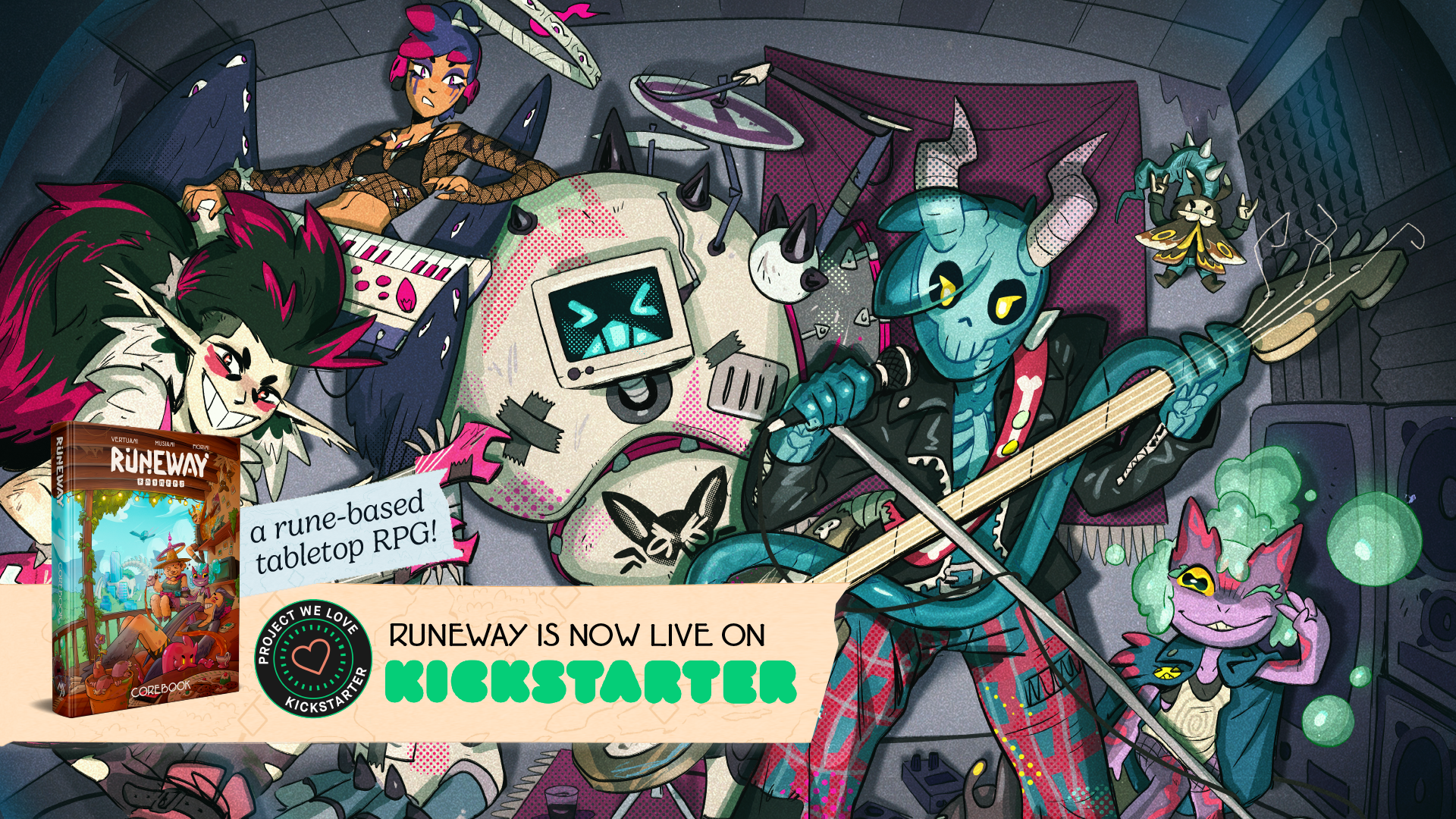
Runeway is being crowdfunded on Kickstarter, with Vertuani adding that the full version will significantly expand on the quickstart guide: a comprehensive rune-based system, tools for creating your own Runedrifters, a larger atlas of Weyrd, and more of its tasty, tasty lore.