Evil Hat’s new game about kids fighting off aliens started as a one-pager
Em Hubbard talks about the journey of designing and pitching Rocket Club.

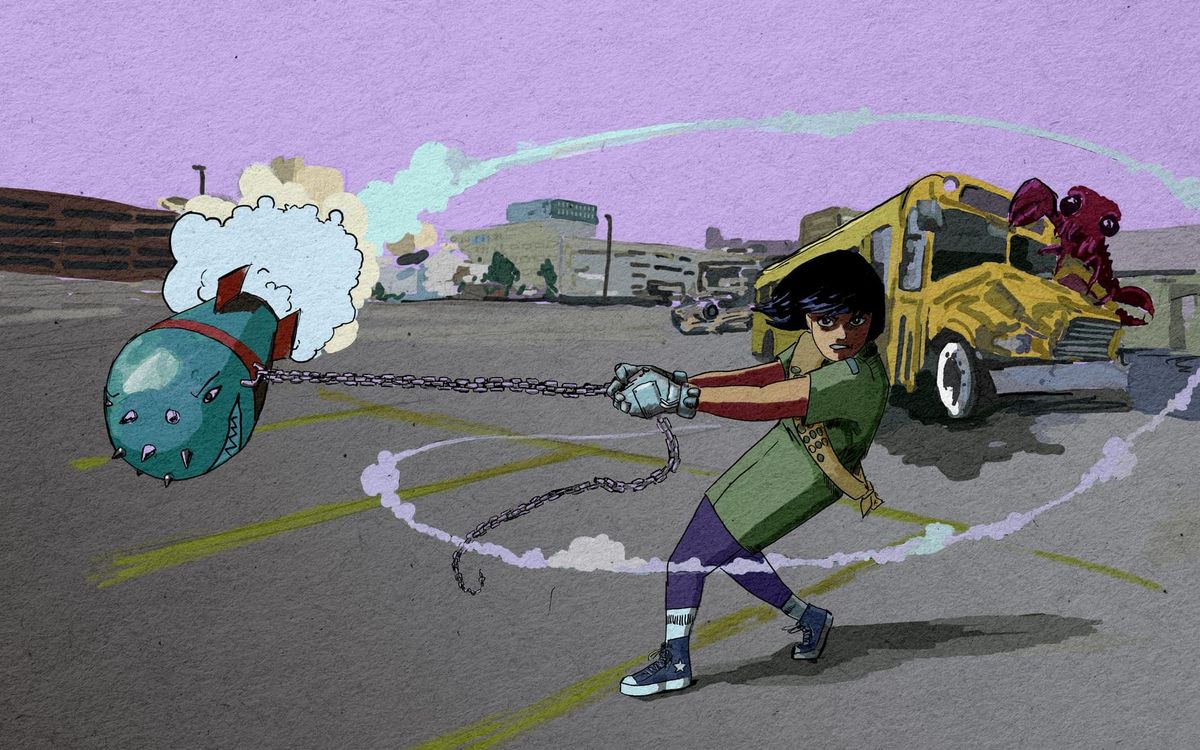
How does a game go from one page to a whole book? How does it move from something you might sell on itch.io into the development cycle of a gold standard publisher like Evil Hat? Em Hubbard has some of the answers. Their new game Rocket Club began life as a single page and is now on its way to becoming a full honking book.
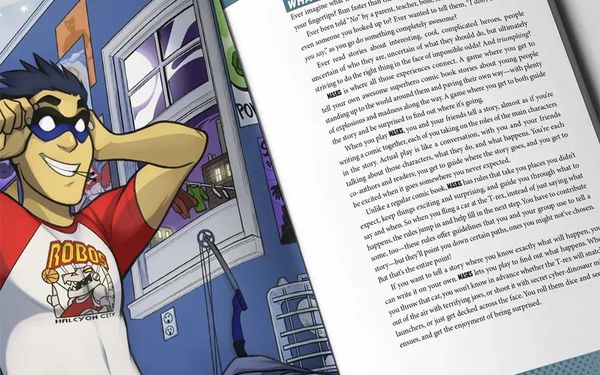
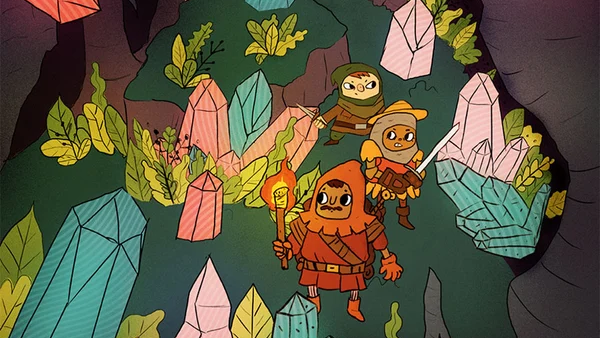
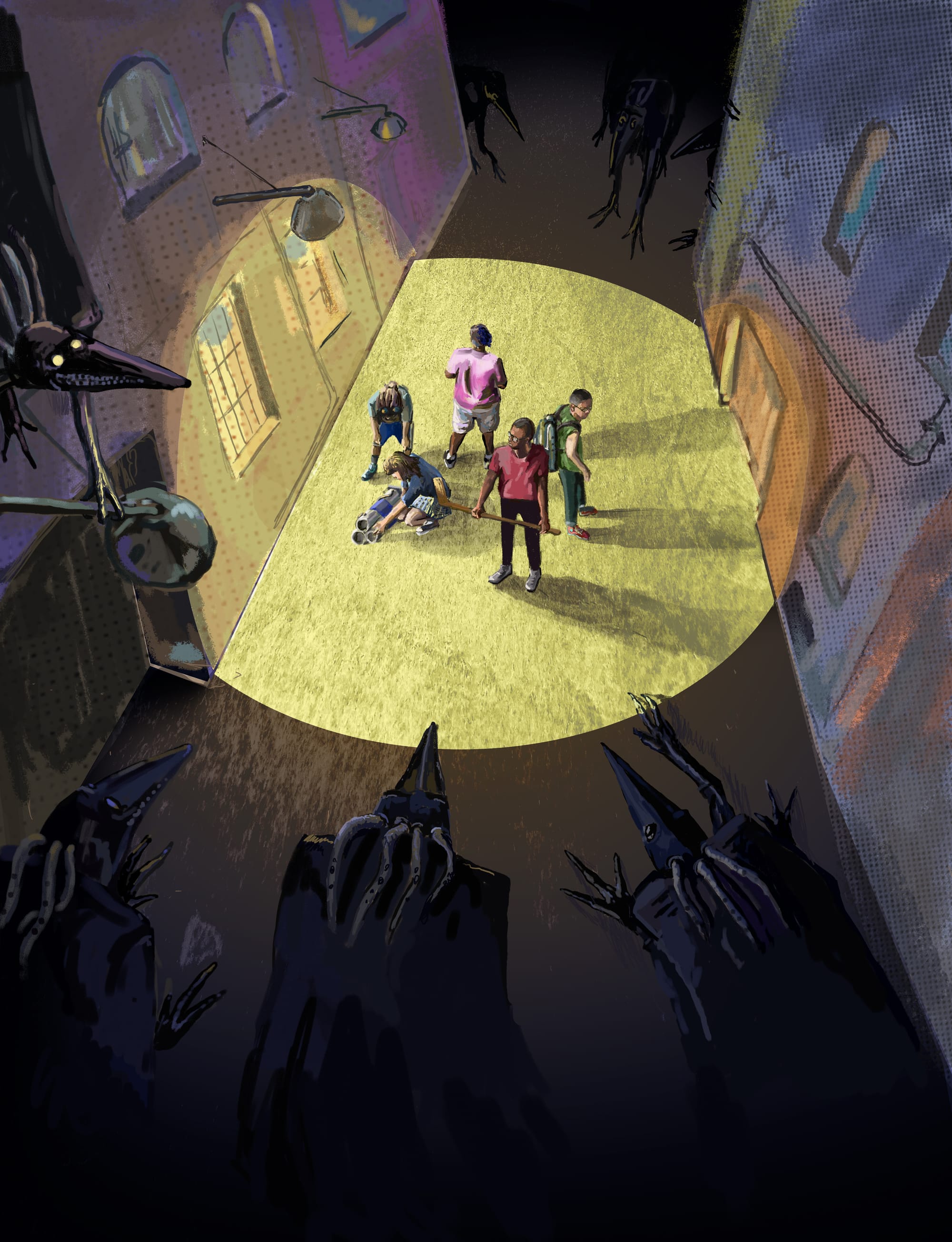
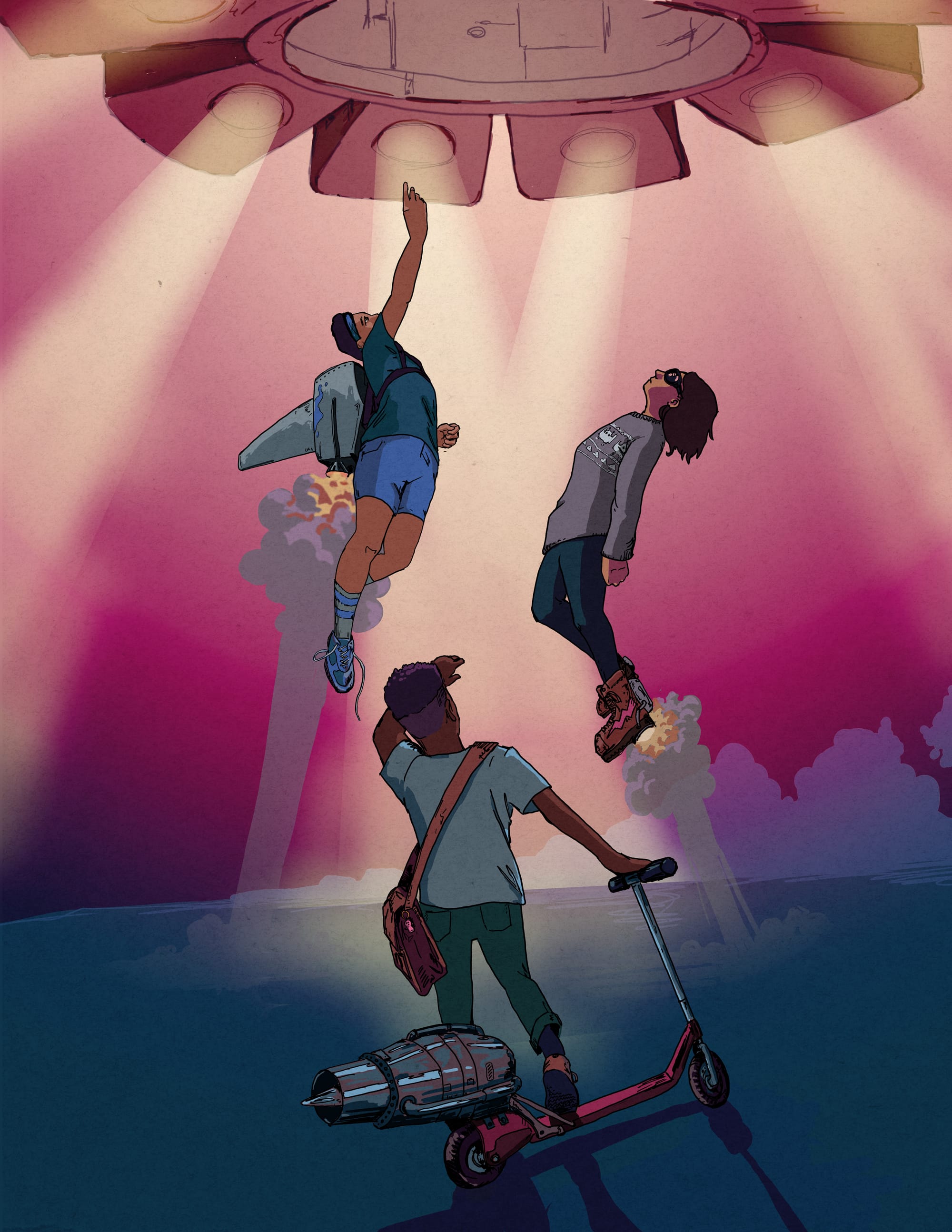
Featuring an original system all about how action and emotion are tied up together, Rocket Club portrays science-obsessed pre-teens stepping up to save their town from aliens. Not quite Paper Girls, not quite Super 8, but somewhere around there. It’s about kids messing around in garages, making friends, and figuring out who they are while the sky is falling.
Arising out of the claustrophobia of pandemic lockdowns, this game was just a simple exercise to rediscover the joy of tabletop game design and play. But when Hubbard played it, they found themselves wanting more — more of the world, more of the feelings, more of the game. With a lot of help from Evil Hat and consultants like Avery Alder, the game is getting there — it’s currently in open playtesting and is being streamed on multiple channels.
Rascal sat down with Em Hubbard to talk about how their game made this journey and what developing a game with professional support looks like.
This interview was edited for length and clarity.
Thomas Manuel: Can you just tell me a little bit about yourself and how you came to be designing an RPG?
Em Hubbard: I work as an art professor, so I teach art classes. I really think of myself more as a visual artist than anything — a painter. I've been playing TTRPGs for a very long time, since I was a kid. There was a really long break where I stopped and I came back to it after my son was born. He's 10 now, but when he was a tiny, tiny baby, he did not want to sleep without someone holding him. So, I spent a lot of hours holding a little baby in the dark and started listening to actual play podcasts. That was what brought me back into it again.
I dove in and started playing some games again. I rediscovered the love for it after many, many years. And I came to writing games during the first part of the COVID epidemic. I was fortunate, I had a steady paycheck, and worked from home and was mostly just kind of lonely and bored. So, somewhere along the way, I heard an actual play of Grant Howitt's The Witch Is Dead, which was a one-page game, and I was like, a one-page game, that's such a cool idea.
I can come up with a story that I want to tell, and then I can make a one-page game of it. Me and my friends can play it, and then I'll put it away and forget about it... And that was actually where Rocket Club started. It was one of those one-page games that I put together then.
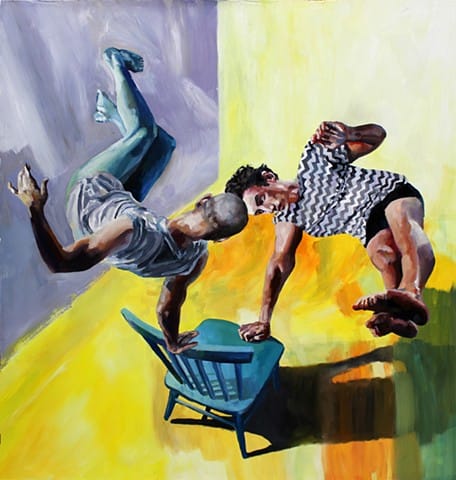
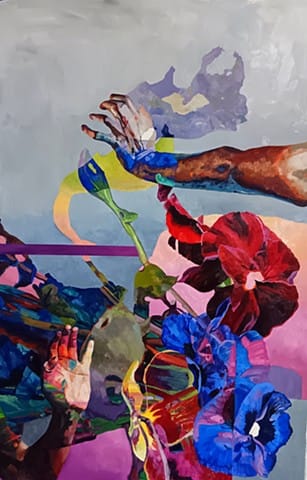
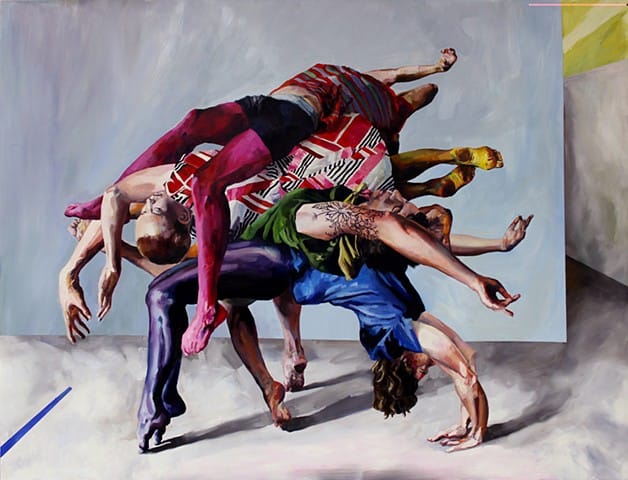
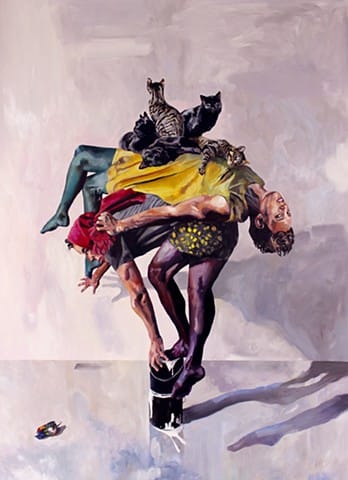
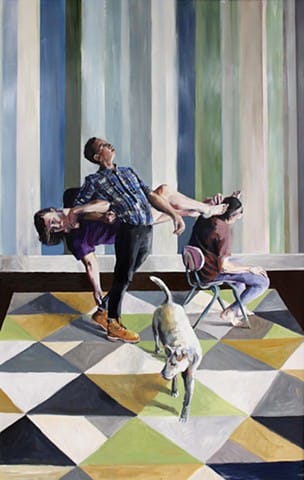
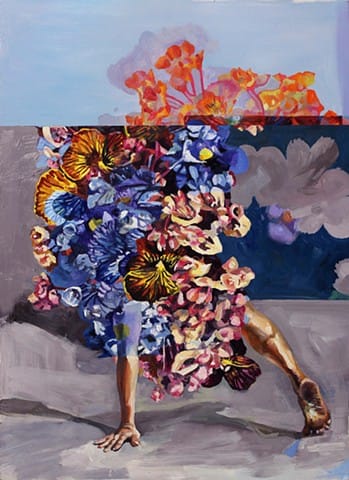
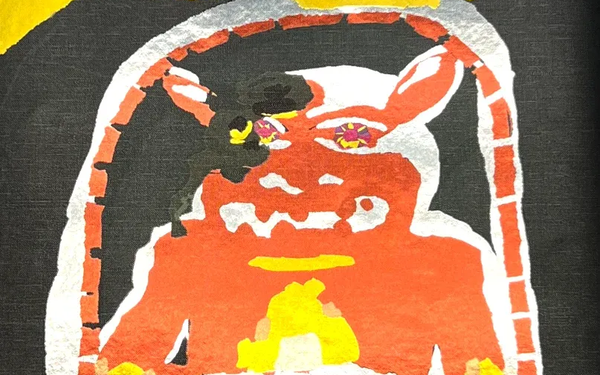
A sample of Hubbard's paintings (see more here)
Manuel: Talk to me about that one-page version of Rocket Club. What was exciting about it for you?
Hubbard: One kind of, maybe odd thing, about the way that I approach projects is I often come up with a title first. I think it started with the words Rocket Club, and it was: What if it was a game where the players are middle school rocket enthusiasts, what would happen?
So, it's really just that kind of nugget of an idea that then grows. The one-page version of it really had the core elements that are still there today. Same character identifiers, roughly the same dice system. One of the important aspects of Rocket Club is emotion, which came out of this idea of these young kids in a club, fighting for their existence? They're all emotion. One emotion leads to another, jumping from one to another. So, this idea of the game being driven by those moods was there from the beginning.
Manuel: What is the connection between having all these emotions and saving the world?
Hubbard: I mean, I think the emotions are connected to everything that they do, everything that we do as humans. We're going to have feelings about it. The saving the world, or saving their town, part was really just the action. We need to throw them into some sort of situation.
Manuel: The action is big, which mirrors the big emotions. When you're a kid, everything is the end of the world in some sense, as well.
Hubbard: Yeah, it's a good way to look at it. And the other kind of motivating thing as I continued to develop this was that in our world, these young kids, who are in middle school right now, are being saddled with crisis after crisis: COVID; there's school shootings, constantly; climate crisis. So, thinking about this from this youth perspective of "what we have to deal with, because our parents and our grandparents didn't" eventually became aliens.
Manuel: I read the design diary you did, and you wrote that it was always going to be a rocket club. What is it about a rocket club that seems to capture this mood that you're going for? Especially given that you say that you weren’t in a club like that.
Hubbard: I think it's this balance between something very realistic and something very fantasy. I like this idea of these kids in a garage building stuff together. Of course, these kids are not building jetpacks in the real world, so there's this jump to what if they could really do whatever they wanted to? And rockets just seemed like such a good way to go for that — big, explosive, dangerous, setting your sights high, flying to the moon kind of thing.
As an artist, once several years ago, I judged a grade school art competition. They had all of the art students, from kindergarten up to high school, submit art projects. And I went through and looked at them all and judged which ones were first, second, third place. I noticed the kids who were 10 to 12/13 years old, they're developing a little bit of skill, they're saying something, they have a passion and a freedom. And then after that age, you could see this self-consciousness, then they don't want to really say anything that they're gonna get made fun of for.
I'm reading a lot into this because I'm just looking at pictures, but there's this really noticeable change from the younger grades that are playing and imagination, and then that goes away. There was just this golden age group where I felt like they have this childhood creativity and awareness of the world, and they haven't yet been pushed into a box by their social groups.
Manuel: It's probably easier for us to roleplay teenagers than that age.
Hubbard: Yeah, I think it is a little bit more of a challenging age group to roleplay, because teenagers feel a little closer to being grown up. But I don't expect anyone to really play a realistic 12-year-old. That’s probably not going to be fun or entertaining at all. So it's this adult's view of what that was like. I find people really lean into that awkwardness and have fun with it.
Manuel: Is there a media touchstone that you look to when thinking about Rocket Club?
Hubbard: There isn't really one thing where it's like, oh, the game is the game version of this, but The Goonies, Stand By Me (for the science fiction part of it), Marvel's Moon Girl, where she's a kid, has a lab in an abandoned subway, and builds these crazy creations. Bits and pieces.
Manuel: Tell me a little bit about how you came to pitch this game to Evil Hat.
Hubbard: I'd made a bunch of these one-page games that, again, were sort of throwaway things for me. I wasn't trying to get them into people's hands at that point. This one, I played with a group of friends, and it was just so much fun that I was like, I want more of this game. So, I just started expanding on what was already there, building out the little pieces that were on the one page, and just adding more detail, more choices, more information in general.
Honestly, my plan for it was just [to] self-publish, maybe get a few people to play it. And I saw somewhere Evil Hat was accepting submissions. So I was like, why not? Genuinely didn't expect anything to come of it, but they saw something there that they liked, and we did a little playtest. They gave me some feedback and said, work on it, and come back in a year, and I did. Their feedback was amazing. They're such cool people to work with, and I've just been working with them on it since then.
I was thinking, they're great, that's so cool that they gave me this feedback, I'm gonna come back in a year, and they're gonna say, no thanks. I definitely massively improved the game over a year and added a lot to it and came back. They had a little bit more feedback and said, if you do this, then let's see what we can do.
Manuel: And after that?
Hubbard: There was probably another year of development. They give more notes. At this point, they are getting a little bit more specific, dialing in to particular parts of the game. There's another significant span of time of continuing to develop, continuing to playtest, and then the consultation with Avery Alder — that was honestly more about paring the game down than adding to it. It grows and grows and grows, and then it's gotten too big and needs to be cut. The biggest thing that she brought me back to was [when] I started this game, I wanted a lot of collaboration and a lot of player agency, and as I kind of built and added and added, that started to go away. So, she really brought the focus back to what are you trying to do here?
One of the core things of the game is emotion. When you roll dice, one of the dice says what mood you're feeling. Upon hearing that, it's a big sticking point for people of like, well, I don't want the game to tell me how my character feels. But I also think it's one of the best parts of the game, because it's not the dice telling you how your character feels, it's the dice telling you to consider all of the things that your character feels, and look at it from a perspective, and interpret it. People bristle about it, but when they play it, it seems like they get it.
Manuel: I absolutely recognize the tendency among people. What do you think is the cause of that?
Hubbard: When you're in the moment, and your character is trying to do something, and you roll the dice, and it says hope. It doesn't feel like, oh, the dice are making my character feel hope. It's like, why is my character feeling hopeful about this? It's meant to kind of expand the way you think about the character's emotions and put a spotlight on it, rather than shrinking it down and saying, you feel this. It took a lot of work, but in practice, I think the mechanics feel good.
Manuel: Yeah. I think what people are imagining is the game says there are five ways to feel, and which one of these are you feeling right now? And that's a weird thing for a game to do to you.
Hubbard: I think the same. I've tried to make the moods pretty open-ended and also genre-specific. These are big moods. Thrill is one of them. You're riding jetpacks, that makes sense, but there's a lot of ways to feel a thrill. Is it anticipation? Is it that you're agitated? Are you hyper? I think they're still pretty open-ended in a lot of ways to interpret what that means. And it is expressly up to the player to say what that means. It's never the GM saying, oh, I see you rolled fear, this is how I'm going to interpret that. It's always the player.