Finland recognizes roleplaying as living heritage and culture worth preserving
Tabletop RPGs join pies, puppetry, and playing in the snow.
Tabletop games have been recognized as culture worth preserving in multiple countries, but Finland might be the first country to officially recognize the act of roleplaying as a part of its living heritage. In June 2026, the country’s National Inventory of Living Heritage expanded to include 22 new traditions including baking Karellian pies, the festival of Durga Puja celebrated by Indian immigrants, and, notably, roleplaying.
The National Inventory of Living Heritage is an outcome of a 2003 UNESCO convention that recognized that, despite their benefits, “the processes of globalization and social transformation” as well as “the phenomenon of intolerance” give rise to “grave threats of deterioration, disappearance, and destruction of the intangible cultural heritage” of a nation. The convention asked member countries to create their own inventories and work towards safeguarding, developing, and promoting their intangible cultural heritage.
Jukka Ursin, designer and publisher of Mesolit Games, told Rascal News over email that the idea to apply for the application of roleplaying was first broached on Facebook. Mika Joensuu had previously successfully applied for miniature collection and gaming (“figupeli”) to be included in the National Inventory and wanted to do the same for roleplaying. Ursin and Ekso Vesala, a veteran gamer, signed up to help, and the trio formed the core team. “Organizations joined later in the process, to support and sign the submission,” said Ursin. “I think that the bottom-up manner is very apt – RPGs are not a thing that is or needs to be centrally organized, it’s a thing that people just do.”
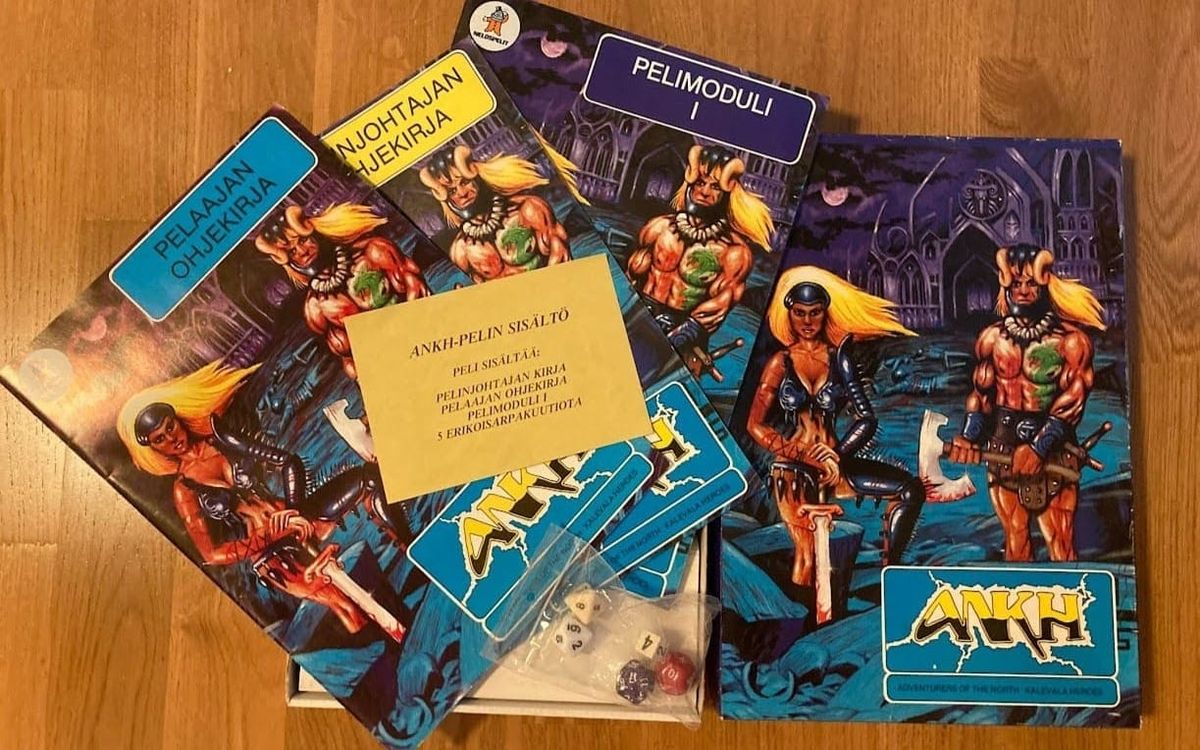
In their entry, the team members write about roleplaying as a wide practice, including tabletop, larp, and online text-based play. They talk about the culture's origins in the 1970s and ‘80s, identifying The Secret Treasure of Raguoc in the Acirema Dungeons, which was published in 1985 by Risto “Nordic” Hieta, as the first Finnish RPG. They also highlight Ropecon (pronounced more like “ropuh-con”) as the country’s largest event dedicated to the hobby. It attracted around 10,000 people over two days in 2025, which also makes it one of the largest volunteer-run gaming events in Europe. Recent guests of honor at Ropecon include the team behind Shut Up & Sit Down, Avery Alder (The Quiet Year), and Alex Roberts (For the Queen).
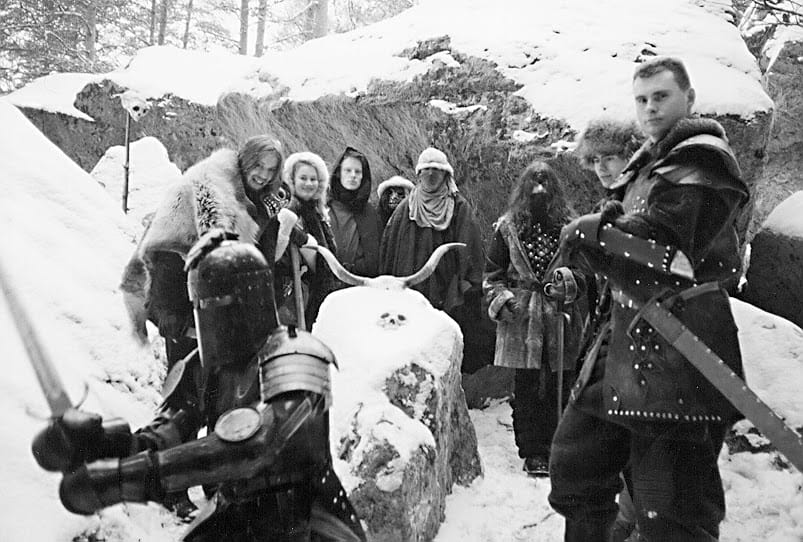
“We wanted to show that RPGs are a living tradition – something that people actively do right now, teaching it, passing it on, with its history and own traditions and culture – not just a short-lived fad that happens to be happening right now, nor something that happened in the past,” said Ursin. “From the point of view of a long-time player this is kind of obvious, but when writing a submission like this, it’s aimed at the general public, and at orgs such as the Finnish Heritage Agency, and ultimately, UNESCO.”
He continued: “We wanted to show that RPGs is its own culture that outlasts generations and individual participants; a living tradition that doesn’t need a hierarchical central governing body but that moves from player to player, from table to table. We wanted to emphasize the intangible, invisible aspects – RPGs are, of course, reflected in the tangible, material artifacts – rulebooks, character sheets, and so on; in case of LARPs, props – but the thing itself is not a thing, it’s what happens at the table. It’s not stored, it’s not material, it can’t be shared, it can’t be read or viewed later. Preserving and making visible that which can’t be directly preserved or viewed is, I think, very important in the big historical picture.”
The end result is a breath of fresh air. It’s easy to see roleplaying as a niche activity — something defined in large part by its size (or lack thereof). But including it in an archive alongside performing arts, festivals, and traditional food — not to mention puppetry, bed time stories, and even playing in the snow — reveals how much there is no silo, but instead a spectrum of deeply human activity.
“We light bonfires and dance under the sky, we play mölkky and bathe in the sauna, we get together and have fun and make beautiful things,” said Ursin about the Finnish people. “And if we don’t say that this is a thing that we do, it’s possible that eventually we forget about this particular kind of play, and the world is that much less playful in that particular direction.”