Fighting for justice in the cyberpunk city of Ten Thousand Days For The Sword
Where cyberpunk and wuxia collide.

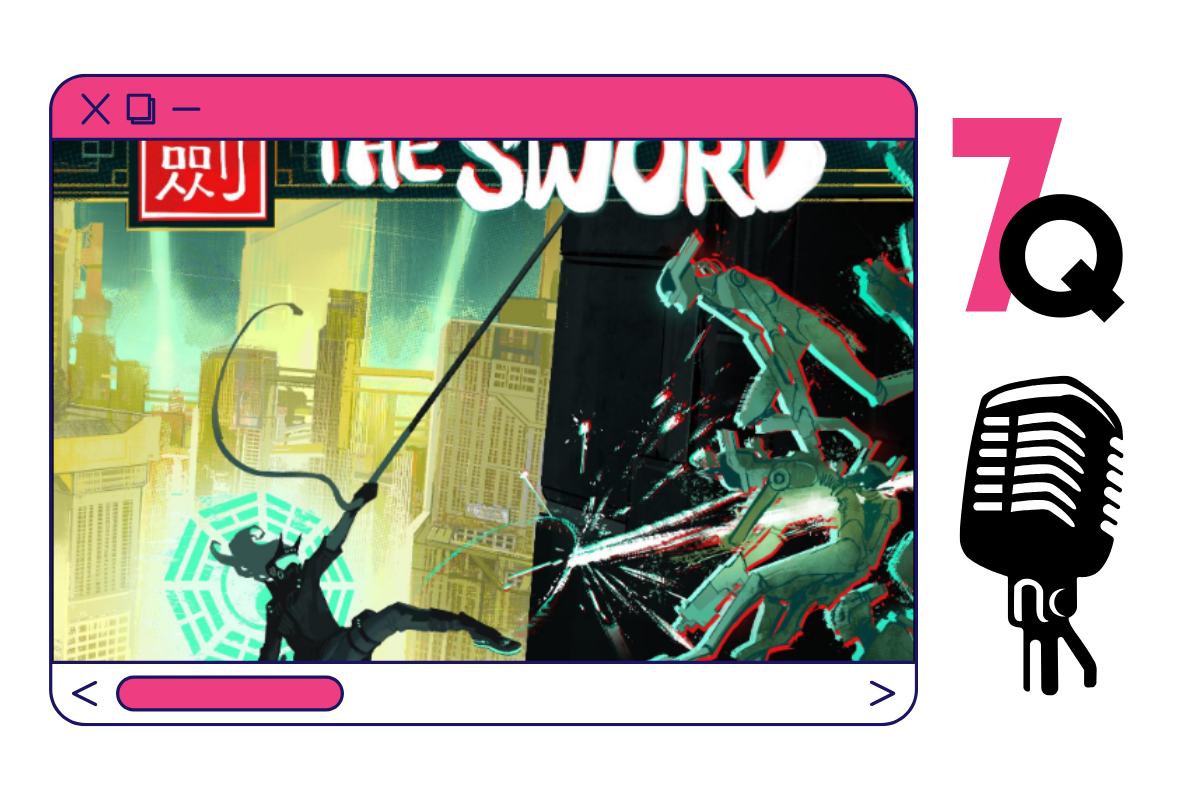
There’s something quite lyrical about the way designer Emily Zhu (朱保敬) has melded two seemingly disparate genres together in Ten Thousand Days For The Sword: the glistening, high tech streets of cyberpunk, and the fantastical, even mystical theatrics of wuxia. The RPG is set in Xiatian, a city characterized by a contrast of dingy slums and shiny skyscrapers, where protests break out as frequently as police crackdowns, and militia march the streets with impunity. Living amongst the populace — made up of thugs, refugees, factory workers, fishermen, and more — are martial artists known as youxia, many of whom belong to eight major Sects, from the Beggars’ Group to the Butterfly Sect. There’s a lot of martial arts, confrontations, and brawls involved. Threading through the rulebook’s passages are commentaries from fellow youxia themselves, as well as a smattering of Mandarin, as if easter eggs left for the benefit of Chinese players.
“Much of the Chinese in Ten Thousand Days is from the tradition of wuxia, or Daoism, or traditional Chinese medicine, etc. The words are only half as important as the context. Really, the whole issue is backwards: in order to understand the words, you understand the game. It feels ass-backwards to say it like that, but I haven't had any complaints yet. Or maybe I just can't understand them,” Zhu told Rascal in an email.
The joy of unfurling Ten Thousand Days For The Sword is in its extensive design and worldbuilding. Zhu takes abundant influences from wuxia classics — books written by beloved authors Jin Yong and Gu Long — as she alchemizes the essence of the genre within the crucible of a sprawling metropolis, one that also finally subverts the long baked-in exoticism of most fictional cyberpunk cities. “Jin Yong's work is the gold standard of wuxia for good reason,” said Zhu. “Gu Long is often considered his peer, but Gu Long's stories float in a sort of timeless dream, whereas Jin Yong's works are very heavily embedded into historical and political context. I wanted to avoid giving a player homework, but a setting without mention of where money or food comes from just rings a little hollow to me now.”
"Much of the Chinese in Ten Thousand Days is from the tradition of wuxia, or Daoism, or traditional Chinese medicine, etc. The words are only half as important as the context."
Xiatian is divided into districts that are home to a predominantly Chinese population; at one point, Zhu even included in the book a recipe for steamed fish with mushroom. “The central idea of the game arose, I think, from two or three tensions colliding at the same time. Ten Thousand Days For The Sword is a crossbreed between wuxia and cyberpunk: a genre tied to traditions, history, mysticism, and a genre of futurity,” said Zhu. “Those are also two genres heavily concerned with Asia, and it has long pissed me off how shallow and thin many portrayals are.” After reading the webcomic Kill Six Billion Demons, Zhu respected, but also disagreed with its portrayal of violence as inherently futile and malicious, and wanted to make a game that reckons with this concept. “In those days, the only way I had to work out the disagreement was to make a game where we could disagree,” she said.