Intergalactic Bastionland will be funnier and weirder than you expect
Chris McDowall’s follow-up to Mythic Bastionland charts a startling, unique course.

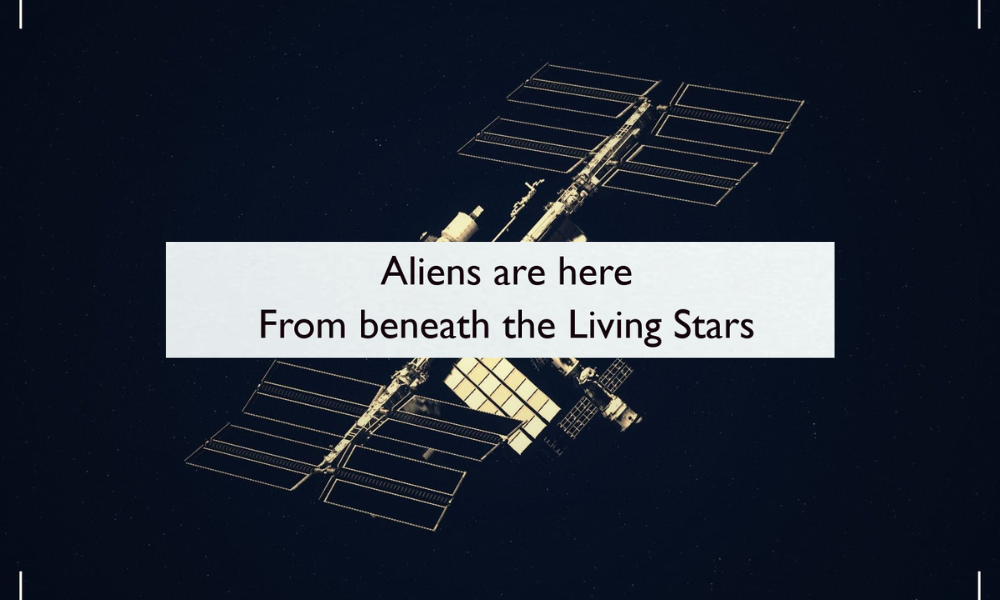
The opening page of Electric Bastionland, Chris McDowall’s game of weird city adventures in the “electric hub of mankind”, casually references the vast expanse of space: “Aliens are here / From beneath the Living Stars”. Electric Bastionland had ballooned from a module for McDowall’s breakout success, Into the Odd, into its own hardcover book. The next game in the series was supposed to be sci-fi, but it never quite caught fire creatively. Instead, he focused on a game called Primeval Bastionland, which was later renamed Mythic Bastionland. With that game’s spectacular success in 2025, it’s finally time to meet those long-promised aliens on their home turf. The playtest document for Intergalactic Bastionland opens by declaring that Bastion is dead. Now, the living stars and the space between is all humanity has.
Unlike your typical sci-fi game, McDowall didn’t want this one to only focus on zipping (or careening) from planet to planet, adventure-of-the-week style. That had been done before too many times. So, in Intergalactic Bastionland, you’re not an intrepid gang of swashbucklers in a debt-financed rustbucket held together by the power of friendship. You’re instead members of a massive starship, home to a thousand crew members, each with their own job that keeps the machine working. As players, you’ll be managers in a specific division with specific areas of oversight. You’ll have subordinates, bosses, and colleagues with the potential for promotion, demotion, and general commotion. The ship’s code asks you three things: enterprise, “to seize the prize”; excellence, “to raise the standard”; and exploration, “to brave the dark”. Oh yes, you’re not just employees, you’re supposed to be good ones.
When they’re on the ship, players will be pulled in multiple directions; they’ll face political pressure from the top, personal obligations and demands from colleagues and rivals, and the practical responsibilities of looking after the team of people assigned to them. “You've got maybe six people on the ship who outrank you,” said McDowall. “And then you've got 900 people who are below you on the ship — the hands who are doing all the real work. So you're one of 72 heads who are all dealing with each other, and each leads a department on the ship.” These 72 heads are distributed across six divisions and have names like the Assayer who does “goods valuation”, and the Swabwash who handles “ship hygiene”. You’ll spend time doing your job which, if McDowall has his way, will play out less like punching a clock and more like putting out a fire — sometimes literally. You’ll be troubleshooting and, occasionally, have trouble shooting.
“The thing I wanted to do is explore this theme of restriction and freedom,” said McDowall to Rascal. “I enjoy sandbox play most when you've got these little moments when things close up, and then open up again, and you get to kind of feel the contrast.” So, in Intergalactic Bastionland, players will deal with, on one hand, the restriction of not being able to leave the ship itself and the strictures of a thousand-person hierarchy. But on the other hand, there are moments when the ship docks, and the characters can take one of the smaller vessels out for any kind of personal business or private adventure — classic space hijinks and derring-do, but with a time limit. “It's like borrowing your boss's car,” he said. “You have to get back before the ship's ready to jump off to the next location.”
Initially, McDowall just liked the idea of the players having a home base. Even in Mythic Bastionland, the knights have a holding with a keep. But the inclusion of that choice has ended up shaping play in radical ways. “I hear so many people tell me, ‘Oh, we've been playing for six months, and we've completed two myths or something,’ and I'll be like, ‘What have you been doing?’ And they've just been doing stuff in the holdings and dealing with court, and social stuff,” said McDowall. “But then other groups would be like, ‘Oh, we've completed 24 myths within six months, and we've completed the city quest,’ because they were just racing around. So I'm hoping that this will have the same effect, where some groups will gravitate more towards different parts of the game, but it'll still work, whichever way you do it.”
The structure of a home base could’ve been achieved with “the Star Trek model” as McDowall put it but he wanted to go somewhere weirder. He found a promising direction in a surprising place: Paranoia. First published in 1984 by West End Games, Paranoia is a classic RPG with half a dozen editions over its long life. It’s a dystopian satire set in a futuristic underground city called Alpha Complex, which is completely controlled by an unreliable, sociopathic AI. Alpha Complex is a crowded place, chockablock with secret societies and conspiracy. Intergalactic Bastionland takes inspiration from the claustrophobic feel of Alpha Complex, both as a setting as well as a confusing, byzantine hierarchy.
“It feels weird at first because, well, you're not deciding where the ship goes, really,” he said. “But you can possibly influence it if you can talk to that officer who's in charge of that… For instance, the Archmerchant, Geneva Tameron: she wants to shed what's left of her physical form and emotional mind. Which is a bit of a strange agenda. If you know that about her and you want to make the ship go in a certain direction, you could find out where would be a good place to do this.” Apart from setting up all kinds of intrigue-like play where you build relationships, uncover agendas, and trade favors, the pre-written NPCs on the ship will form a common cast across all campaigns of the game. This means that different groups can compare and contrast their experiences with the same characters. Groups could even share tips on dealing with them, which opens up a whole new type of play away from the table (even as McDowall warns that might start to sound like metagaming to some).
The net effect, though, is that Intergalactic Bastionland might end up feeling like a game of office politics. Or to put it another way, a more prosocial Paranoia (an understandable direction as being bumbling tools of an unintelligible dictator doesn’t feel like satire anymore). The starship is functionally a democracy; the council who lead the ship and chart its course are elected, and thus can also be un-elected. But since you’re stuck with these people, the wheeling and dealing is going to be less zero-sum pitting people against each other, and probably more about finding ways for situations to become a win-win for all parties. That said, there will probably be some amount of firing people — both from their jobs and out of airlocks. The tone of the game, like all McDowall’s work, is wide open and left to each table’s interpretation.
When he writes up this ponderous hierarchical setting, McDowall isn’t drawing on personal experience in the corporate world, but rather something far more insidious: the British schooling system. As someone who’s been both a student and teacher, he makes sense of a 1,000-person starship’s scale by framing it in terms of the public education institutions he’s frequented.. “Obviously, it depends on what school you went to, but I remember in school thinking you kind of recognized everyone, but you didn't know everyone,” he said. “So there was lots of scope for meeting new people and discovering new people, but it was small enough that if you had an enemy, you’d bump into them all the time.”
This is all McDowall.
Fans can also expect character creation to be a departure from how things have been done in McDowall’s previous RPGs. You won’t be rolling for a pre-written poem of a character, like the knights in Mythic Bastionland. You won’t even be getting stats. Instead, characters will be defined by a unique set of three skills — one person might have Technopathy, while the other has Networking, and so on. Each skill is tied to a planet where they spent part of their life. It’s a system that does double work: it’s a very compact way of doing ‘life paths’ that also gives people history and connection with existing planets in the wider setting. By itself, moving to skills would probably not have a huge effect on play, but the lack of stats means GMs won’t have the familiar handhold of phrases like “make a DEX save”. Instead, they’ll have to navigate the fiction in a more freeform way. “People roll less, seems to be my initial vibe of it,” said McDowall. “It's often more about the discussion, about what leverage do you have, what's the risk, what are you trying to do? And it comes back to the action procedure, which I try and make the core of the game. So far, I'm enjoying what's happening with it. I think it will definitely be an adjustment for some groups, but we'll see.”
As for adventure material, there won’t be a direct replacement for myths. What players will be getting instead are planets. Many, many planets. “Writing the knights in Mythic Bastionland was really fun… because it was quite easy,” McDowall said. “You just come up with a weird idea for a knight, some stuff they've got, and a weird ability, and then call it a day. I'm not saying it was easy to write 72. But that was quite straightforward. Writing the myths was hard work, because you had to get a story down to six bullet points, and write these characters that were in it. Writing the planets feels like doing both at once, because you've got locations and characters, and the weird things about the planet. I'm trying to make each one interesting, so that it could be the star of its own sci-fi book. So, they've each got a little gimmick, if you like.
Like many creators before him, Intergalactic Bastionland sees McDowall wrestling with a common challenge of success: following up on a hit. On one hand, he can try to change as little as possible and stick to a winning formula, or he can use the rare opportunity of having an indulgent and engaged audience to do something creatively risky. His decision is clear. “There is definitely an element of wanting to be contrarian, because I really don't want to just do the same book again,” he said. “I'm very happy with how [Mythic Bastionland] came out, but I want people to know, going in, that this is going to be the goal: for it to feel very different to that game. But if you like that game, you'll hopefully like this one as well. Similar in terms of what I'm going for in the design, but very different in the specifics.”
For now, Intergalactic Bastionland is still a twinkle on the horizon with crowdfunding set for the end of this year. McDowall has time to mold the game to his lofty vision, but regardless of what we discover when we finally dock on that distant shore, all preliminary scans show that it’s going to be worth the voyage.