How Wizards of the Coast almost published a Buffy the Vampire Slayer RPG
And the story of who actually did.

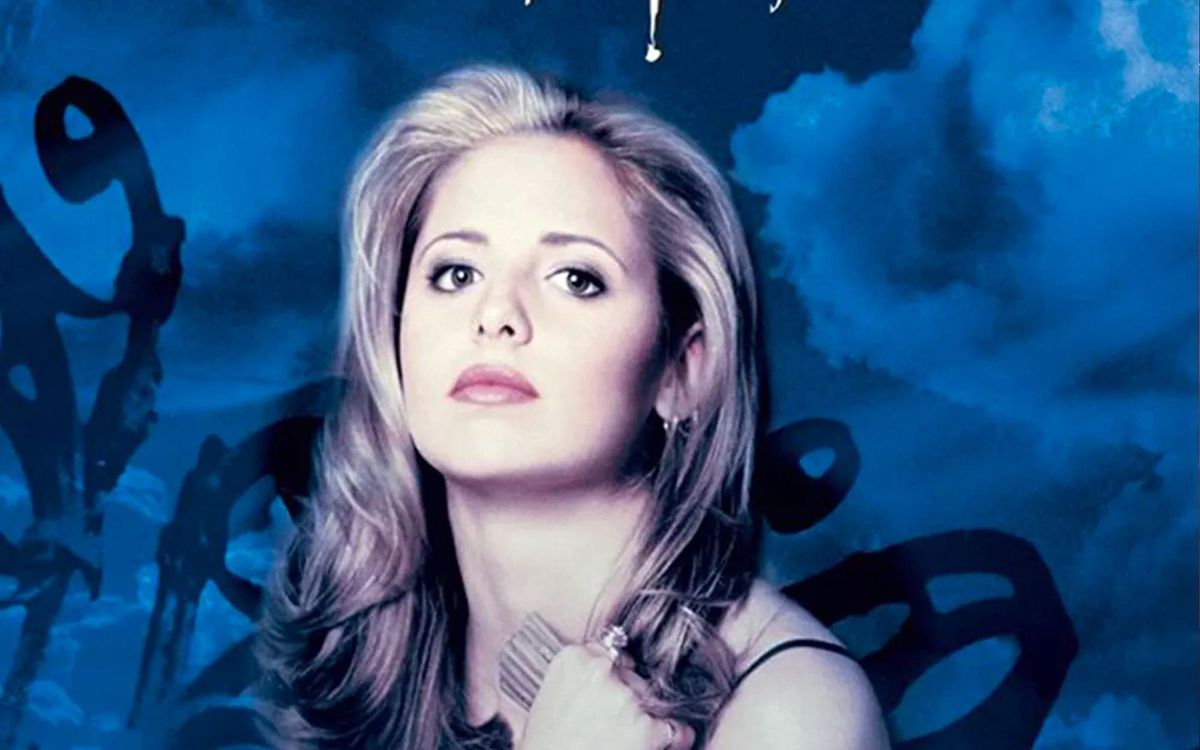
Like a lot of people, Ross A Isaacs never missed an episode of Buffy the Vampire Slayer. The show had launched in 1997 and very quickly, people like the late anthropologist David Graeber were calling it “quite possibly the best show on television”. Graeber wasn’t the only academic to think so. Have you heard of Buffy studies? Turns out that researchers love writing about Buffy so much that the show has its own informal microdiscipline. David Simon, the acerbic creator of The Wire, once said Buffy was better than his show. He was probably not being entirely serious, but it’s not an uncommon opinion. Empire Magazine, that bastion of culture, rated it the second greatest TV show of all time — with The Wire coming in fourth.
Creator Joss Whedon was revealed over the last decade or so to be an abusive dirtbag. The cast and crew of Buffy still tend to have nice things to say about the show — even as they want nothing further to do with the man who created it.
Back in 1999, Isaacs thought Buffy had the potential to be an RPG. And he was in a position to maybe do something about it. Isaacs worked for Last Unicorn Games, a company founded by Christian Moore and Owen Seyler. Moore and Seyler started the company in the mid-1990s to publish a game called Aria: Canticle of the Monomyth, a fantasy game that let players switch between individuals and factions and kingdoms. According to Shannon Appelcline in Designers and Dragons, Aria was considered by some to be “the industry’s first 'intellectual' roleplaying game.” Last Unicorn also had the license to two of the biggest sci-fi franchises in the world: Star Trek and Dune. Matt Colville, founder of MCDM, got his start in the games industry working on the Dune CCG and RPG at Last Unicorn. And for Star Trek, there were different lines for each series and Isaacs worked as the line developer on their The Next Generation line.
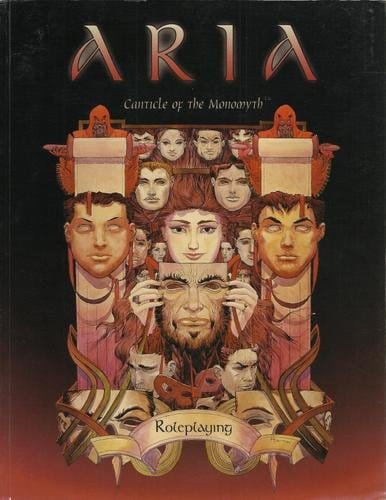
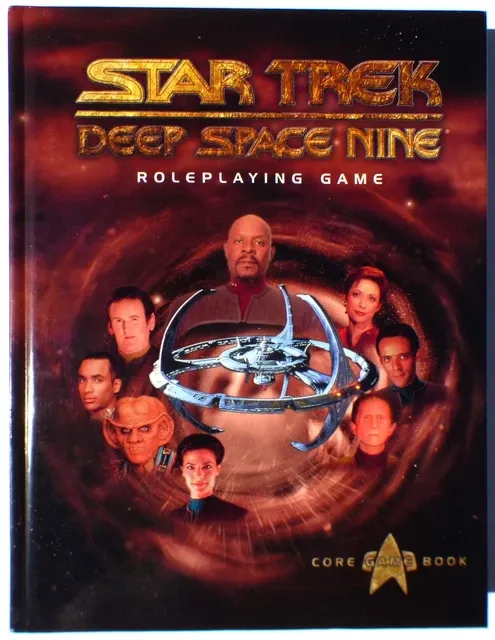
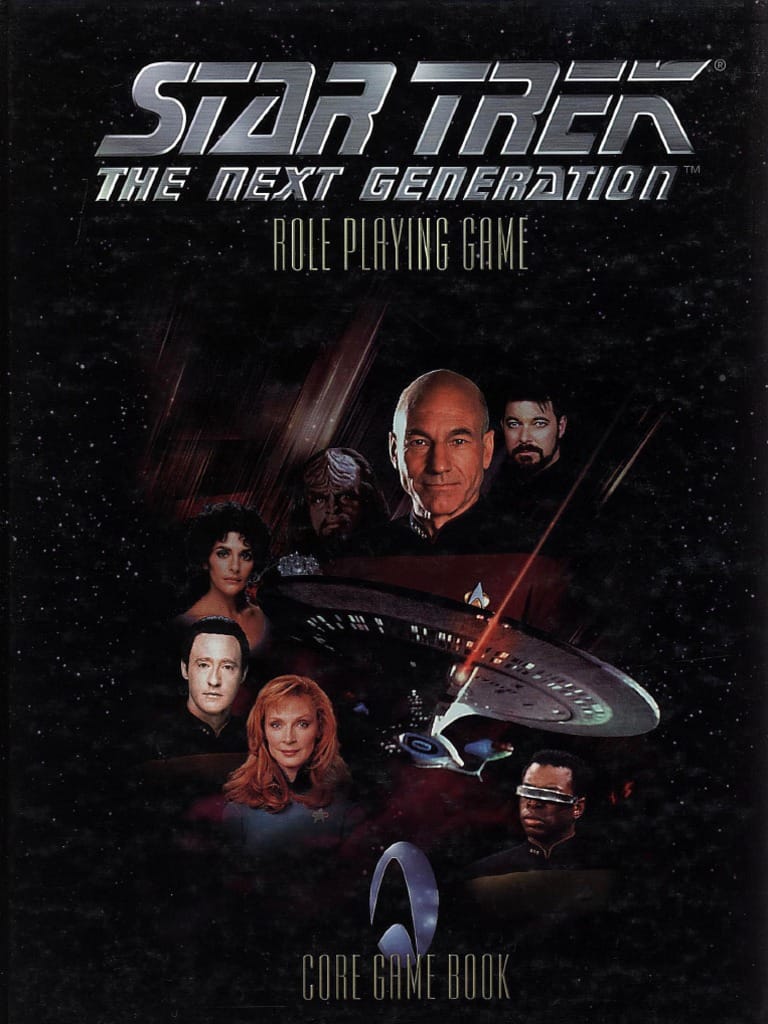
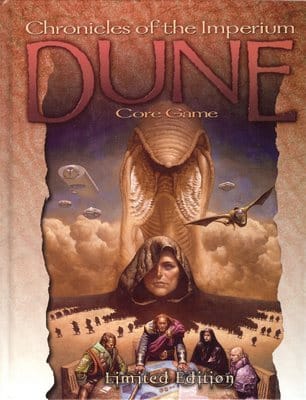
Credit: Last Unicorn Games
The founders of Last Unicorn were pretty close to the management of Wizards of the Coast and would talk shop with them. At this time, Wizards were the only ones with any budget to do real market research. They had rooms with two-way mirrors where people could be studied as they played games. Through this kind of research, they would hypothesize about what kind of games to make. One of the hypotheses that came to the ear of Isaacs was that a good RPG should have clearly defined roles. Which made him, of course, think of Buffy. “You can play the werewolf, the witch, the half-demon, the average Joe, and the slayer. You killed monsters and took their stuff. It was crying out for an RPG”, wrote Isaacs in a recent post on Gofundme.
Isaacs took his pitch to the founders but it seemed like they weren’t interested at first. He thought maybe it was burnout from all the time and energy they had put into chasing the Star Wars license, which never worked out. And then suddenly, one day, they came into his office and told him there was a meeting at 20th Century Fox. To his surprise, they wanted him to come along. “Their reasoning seemed to be 'well, it was your idea after all,' but they told me to keep my mouth shut,” wrote Isaacs, adding that he was “prone to foot-in-mouth disease.”
Isaacs remembers that the office for Fox was in Fox Plaza — or Nakatomi Plaza, as some might know it — and as they walked in, Die Hard was playing on TV screens in the lobby. According to Isaacs, the meeting had a rocky start and the Fox executives weren’t getting the entire concept of an RPG. This wasn’t a meeting to win the license. It was an attempt to get them to even consider an application for one — to get them to open up a new licensing avenue. So Isaacs tried to help —despite previously clear instructions to keep his mouth shut. This is how he told the story:
"Did you ever play cops and robbers when you were a kid?" I piped up. Christian and Owen looked like they wanted to stake me.
Yeah, sure, all three of [the Fox execs] admitted.
"You ever go '*bang bang* I got you' and the other kid said 'nuh uh! No you didn't!' and the game stopped?" They all admitted that had happened.
So I explained that we, as gamers, play cops and robbers, but we use numbers and dice.
Then, Isaacs rolled a six-sided die that he had brought along with him. The Fox exec rolled better than he did and voila, Isaacs declared his character was undeniably hit and couldn’t say “nuh uh”. And apparently, that worked. The execs immediately got the fun of it.
Spirits were high after that meeting and Last Unicorn tapped Kenneth Hite, who was their developer on the Star Trek: The Original Series line of games, to write their proposal. Hite was involved in a lot of pitches for licenses at that time. He told Rascal over email that they pitched for The X Files but never got it. But they did get Buffy the Vampire Slayer and Angel as a package deal — licenses both for an RPG and a CCG. At least, verbally. It seemed like this was going to be the next big thing for the company.
But then, it was early 2000 and the best-worst thing that could’ve happened, happened. They were bought by Wizards of the Coast. The new management revamped the whole office: installing top-end computers, $500 Aeron chairs, and a wired T1 internet connection so communication from Wizards HQ in Seattle and Last Unicorn’s office in LA could be as fast and smooth as possible. This should’ve been the beginning of a new boom for the team. But it wasn’t to be.
Things unraveled fast. At Gen Con 2000, a company called Decipher, known for their How To Host A Murder series of games and multiple licensed collectible card games, announced that they had won the Star Trek license. Last Unicorn’s license was expiring at the end of the year, but according to Designers & Dragons, “Wizards hadn’t bothered to negotiate with Paramount about an extension; they just assumed that they’d get it”. They soon lost the Dune license as well; when renegotiations began, the Herbert estate expected Wizards to pay a higher fee as they were a bigger company. And as for Buffy, Wizards simply weren’t interested. This was the time when the OGL was first being drafted and Wizards saw a boom in d20 games on the horizon. So even though a contract with Fox for Buffy was ready to be signed, Christian Moore told Rascal that pen was never put to paper.
Moore was surprised that Wizards wasn’t interested but he wasn’t going to let all those meetings and negotiations (and lawyer fees) go to waste. So Moore and Seyler took the deal to a company called Score Entertainment which mainly did baseball cards and the like, but had recently found success with the Dragonball Z CCG. So Score made the Buffy CCG (designed by Moore and Seyler) and the RPG license went to a company called Eden Studios, the brainchild of George Vasilakos who was the art director of Last Unicorn and who now runs the Zombie Planet comic and game store in Albany, NY.
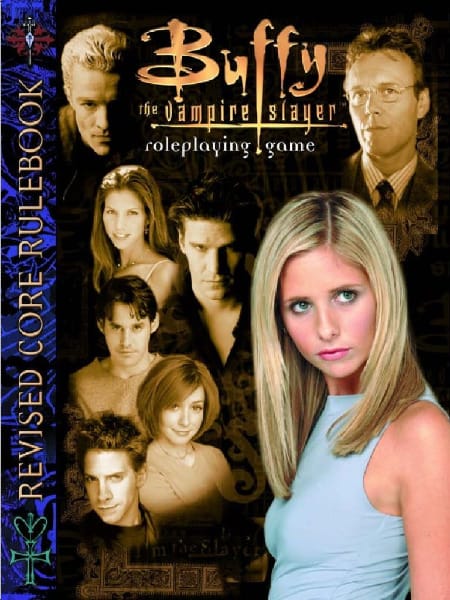
The development was still not the easiest thing. In an interview with Unbound Magazine, Alexander Jurkat, one of the co-owners of Eden Studios said, “Buffy was our ticket to the big time… Given the royalty structure we proposed in order to secure the license to Buffy, we were literally betting the entire company on Buffy’s success.” They sometimes struggled with getting approvals from Fox. “They were used to approving underwear, knick-knacks, toys, and other merch that could be looked over for a few minutes and judged,” said Jurkat. “Thousands of words of RPG text was a completely different beast.”
Eden Studios would bring out the Buffy the Vampire Slayer RPG in 2002, followed by Angel in 2003, and Army of Darkness (yes, based on the movie) in 2005. All of them used a cinematic (meaning simplified) version of CJ Carella’s Witchcraft system. The Buffy RPG was pretty successful, commercially and critically. An RPG.net review from 2003 reads, “Is this the elusive 'Best Game Evar'? Nope. Is it a flawless game? Nope. Is it the best licensed game I have yet encountered? Absolutely.” And the game is surprisingly still available now on DriveThruRPG.
Sadly, while Eden Studios were making their games, the Last Unicorn team was going through turmoil. Many of them fell victim to the cyclical layoffs that happened at Wizards every December — most were fired or chose to leave in December 2000. But this ill fortune seemed to turn around almost immediately when the team was rehired en masse by Decipher, the company that had the Star Trek licenses. The logic was sound: here were the people who had made the Star Trek RPGs for years, why not hire them to continue doing it? So they did. And the team continued to make Star Trek books for about three more years... till Decipher imploded in devastating fashion.
The VP of finance, Rick Eddleman, was caught embezzling from the company. He had paid himself a double salary, concocted loans, charged personal expenses to the company card, and more — the official cost to the company was close to $9 million dollars, as per the Virginian-Pilot. This was despite being the brother-in-law of the company’s owner. Eventually, Eddleman went to jail but it was the company and the staff who really paid the price. Around 90 people were laid off, shrinking the employee headcount to the single digits. This included everyone from the Last Unicorn team. Everyone who still remained at least.
The team were scattered after this — Moore and Seyler joined Upper Deck, Hite joined Steve Jackson Games, Colville moved to the video game industry. But Isaacs quit games altogether. He told Rascal he was burned out. But then, after two decades in different jobs, mostly in various restaurants in New York City, Isaacs found himself talking about games again… under the grimmest circumstances.
Late last year, a friend of Isaacs started a fundraising campaign for him. A sudden hospitalization and painful diagnosis had left Isaacs unable to work and unable to pay bills, with complete isolation and bankruptcy just around the corner. When a GoFundMe link was shared around social media, he found a lot of names from his gaming days showing up to support him — colleagues,as well as just people who enjoyed his time at the helm of the The Next Generation line. In an attempt to give something back to the folks helping him out, he shared his story about rolling dice with Fox executives at Nakatomi Plaza — which led to this article. He’s currently still raising funds.