Why localizing Japan’s decades-old fantasy RPGs can be a behemoth task
Meet the studios bringing Sword World and Wares Blade to the English-speaking world.

Update 6.40AM EDT, 5/6/2026: The original article had incorrectly cited Hobby Japan as the original designer for Wares Blade; the right studio is Shindosha. We have updated the piece, and apologize for the error.
"Hi! I like shorts! They're comfy and easy to wear!" is perhaps one of the most strangely translated lines in the Pokémon series, uttered by a kid who’s just known as “Youngster” in Pokémon Red and Blue. As an ardent shorts fan, the sentiment may be understandable, yet it feels like an odd non-sequitur; I certainly wouldn’t say this to someone I’ve just locked eyes with before a friendly battle. In contrast, the original Japanese dialogue seems to make more sense, at least according to a translation by Legends of Localization: “Shorts are nice and easy to move around in! Why don’t you wear some too?” There’s an acknowledgement of your conspicuous lack of shorts in this dialogue, with this becoming an exchange that feels more authentic and plausible — with the Youngster being a snotty kid you can imagine running into in real life.
I may be going on a bit of a tangent on the positives of shorts here, but this is one example of a localization quagmire faced by many studios. “Localization is a delicate and deeply complex process in ways that are difficult to fully grasp unless you’ve actually done it,” said Bradly Halestorm, president and publisher of LionWing Publishing, to Rascal via email. “There are constant judgment calls, small decisions that may appear insignificant on paper but that can meaningfully shape how the game is ultimately experienced.” LionWing Publishing is currently localizing Wares Blade, a classic Japanese tabletop RPG originally published in 1989, and which has never received an official release in English. The mecha fantasy RPG is the first of several planned old-school Japanese RPG re-releases, known as Legends of Japan, with the studio also translating and releasing more recent Japanese titles, such as Eldritch Escape: Tokyo, Embryo Machine and Shin Megami Tensei - The Roleplaying Game.
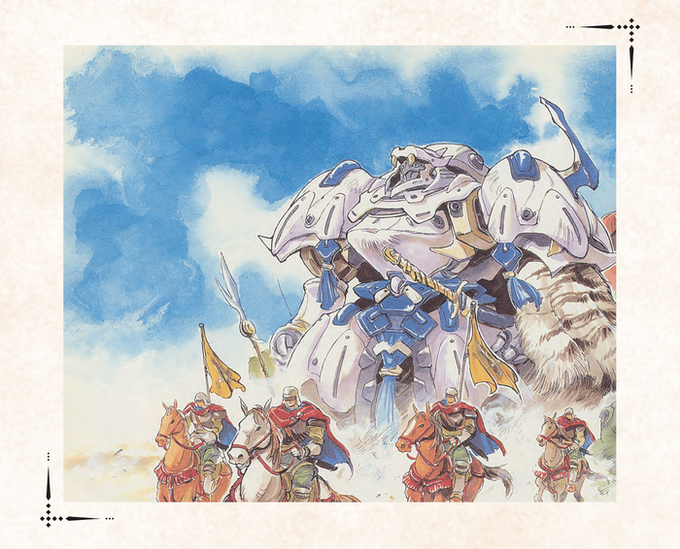
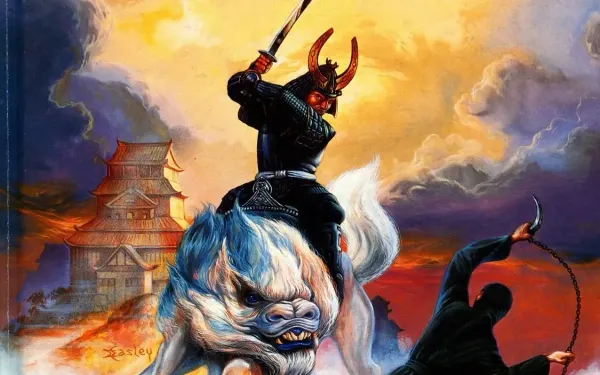
“Aside from Sword World and Wizardry, Wares Blade is arguably one of the most influential Japanese TTRPGs ever created,” Halestorm added. “In many ways, it was the natural choice for being the first release in our series. It checks every box for us: it’s dense and unapologetically old-school, which I wanted. It has stunning 80s and 90s anime artwork, which I also wanted. And it has a deep catalog of supplemental material that we can draw from, which I definitely wanted.”
Then there’s Mugen Gaming, a studio that’s also localizing another landmark fantasy RPG from Japan: the aforementioned Sword World. Starting out as a brick-and-mortar retailer called Level One Game Shop in 2016, Mugen Gaming eventually expanded to translating Japanese board games to English. Kiri-Ai, a two-player card game, is their first and only published title for now. “As we started to talk to Japanese designers, we realized that a lot of them were never really going to be available outside of Japan, in particular Kiri-Ai,” said Shawn Davison, one half of Mugen Gaming, over an online call to Rascal. “[It] was one that I fell in love with and that we both really enjoyed.”
Like Wares Blade, Sword World has yet to receive an official English release, even though fan translations of the game have been created by a dedicated fan community. Davison and his wife, Ai Namima-Davison, the other half of Mugen Gaming, said that one of the first things they did, upon being awarded the Sword World license, was to reach out to the fan translation group on Discord. They were effusive in their praises about the community. “We actually chat with and get advice from some of them about translation topics,” said Shawn Davison. “We really feel like they're an important part of everything that Sword World is, in English, and we continue to consider them a valuable part of the Sword World community.”
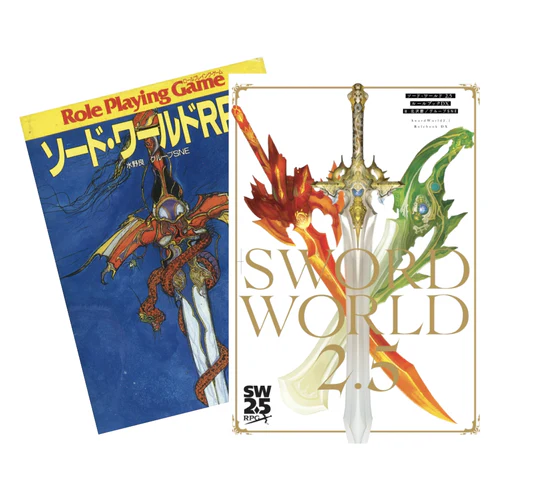
Sword World and Wares Blade share many similarities. Of course, there are marked mechanical differences in their systems — for a start, Wares Blade uses a d10-based system, whereas Sword World employs a 2d6 structure — but both are decades-old RPGs that were released in 1989, and have multi-media franchises that span from novels to video games. Their popularity also eclipses that of Dungeons & Dragons in Japan, even though their lineage can be traced back to D&D in some way. A d20 version of Wares Blade, based on the 3rd edition of D&D, was published in 2008, whereas Sword World was born out of the immense popularity of Record of Lodoss War, a novel series and “RPG replay”, i.e., it’s a written account of a D&D campaign.
“[Sword World designers Group SNE was] the first group of people who found D&D from the United States, brought it back to Japan and tried to play it,” said Ai, who read Record of Lodoss War as a child. “They wanted to work with [the publisher of] D&D that time, but that didn't work out, so they made their own system that turned into Sword World. When I learned about that history, I was so fascinated.” This rich history was why Mugen Gaming wanted to work on localizing Sword World, but at the same time, it felt like a calling for the Davisons, as they both recounted how they met Hitoshi Yasuda, the CEO of Group SNE, in a serendipitous meeting in Essen, Germany. They continued to keep in touch, and when they were offered the license to translate the game, they leaped at the opportunity to do so.
Mugan Gaming is using the Sword World 2.5 Deluxe rulebook, which was released in Japan in 2018, as a basis for the localization project. An early step in the localization process was to speak to the fan community about their experiences with Sword World. “How do they explain rules to their players when it comes up? Were there any rules that they felt were more challenging to explain, or that could use some clarification?” Shawn Davison elaborated. “[We] have had long conversations about translation terms, and it's really nice to be able to just ask them about it.” In a way, this helped to accelerate the translation process, especially when it comes to finding the right phrases to use in specific contexts, so the studio doesn’t have to realize, only months later, that certain phrases aren’t suitable when they introduce the game for playtesting. According to Shawn Davison, such conversations were probably already taking place among the community in Discord after all, and years before Mugen Gaming secured the Sword World license. “There’s a history of discussions that we can have told to us that really helped the process,” he said.
He also added that the bulk of translation work is pretty mundane, and this involves plenty of back and forth with Group SNE on semantics, especially with words that do not have a straightforward translation into English. Mugen Gaming will then pull up a list of words, discuss the best ones to use from a mechanical or lore perspective, and present these to Group SNE. “You do section by section, and just kind of translate it as we go. To be honest, I wish it were more interesting than that,” Shawn Davison laughed. He also pointed out that part of their discussion with the Sword World creators also included explanations on the background of certain rules, and why they were implemented in the first place. This is a crucial step as the English release will need to be aligned with ongoing and future Sword World releases and supplements, while edits are guided by their vision to preserve the core system as much as possible. “We are really not out to change the system in any way,” said Shawn Davison.
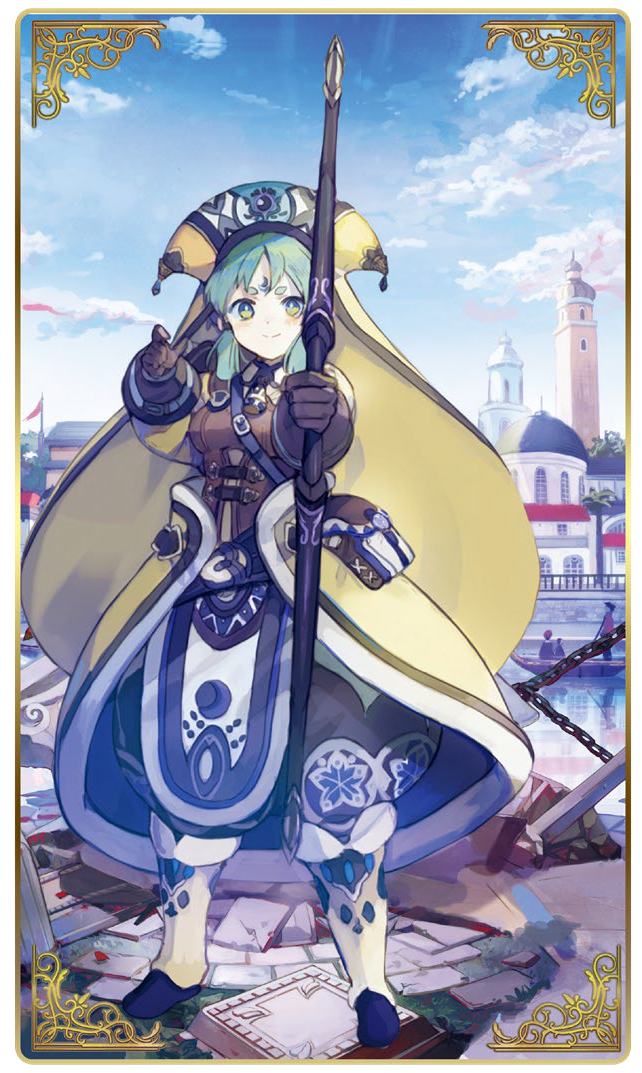
One significant change, however, is the art. The English release will feature brand new illustrations by Japanese artists, with Shunsuke Nakashige, an anime director who’s known for series like Solo Leveling and Sword Art Online, helming the localization project as their art director. “As of right now, we have an entirely Japanese art team. We think that's a very important aspect of maintaining the feel of the game,” Shawn Davison said.
Localization, too, is more than just a word-for-word translation of the rulebook into English. For instance, rules or playstyles that are considered typical for Japanese audiences may not be so for Western players, and vice versa. This is because D&D has dominated much of the tabletop scene outside Japan, and this lens is how the bulk of its players perceive the conventions of the hobby itself. Many of us hold certain assumptions about RPGs; classes are paramount to the tabletop experience, with most adventures being tactical and combat-heavy.
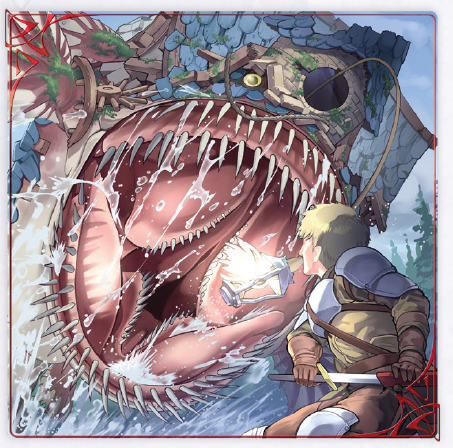
As D&D isn’t as widely played by Japanese tabletop players, such idiosyncrasies won’t be seen in many Japanese RPGs. This is most evident in how Sword World is heavily focused on multi-classing, with a lot of the original Japanese terms relating more closely to skills rather than class. At the same time, the Japanese language uses several loan words from English, which can complicate deciphering and choosing the right word. One example is how the Japanese word for priest, 神官 (shinkan), as well プリースト (purīsuto), a loanword from English which is phonically similar to priest, are both used in the Sword World rulebook, yet they are used to refer to different mechanics. This is why the right word or turn of phrases is paramount during localization; the game can get confusing otherwise.
As for LionWing, the studio is translating the Wares Blade: The Renewal rulebook, which was released in 1994. It’s a consolidated version of the original Starter Set in 1989 alongside three expansion sets. Halestorm believes that the biggest challenge in translating Wares Blade is getting the intricacies of its crunchy-heavy system right; there hasn’t been any significant changes to the rules since 1989. “The density. Oh my goodness, the density,” he said. “Wares Blade comes from an era when RPGs were built differently. In the 80s and 90s, RPGs weren’t designed for mainstream accessibility. They were proud to be niche. Systems were heavy. Mechanics were layered. Lore was exhaustive.”
And given that Wares Blade had been adapted to several types of media, Halestorm felt the immense pressure of ensuring that world-specific terminologies were handled carefully and consistently. Then there’s the accuracy of translating the rules; getting one detail wrong, be it from misunderstanding or mistranslation, can easily derail the entire experience. “Unlike video games, we don’t get a day one patch. What we print lives forever, at least until a new edition is produced,” he said. “And in a niche-within-a-niche industry like translated Japanese RPGs, a second edition is never guaranteed. [That’s why] my team feels it every time we work on a new project.”
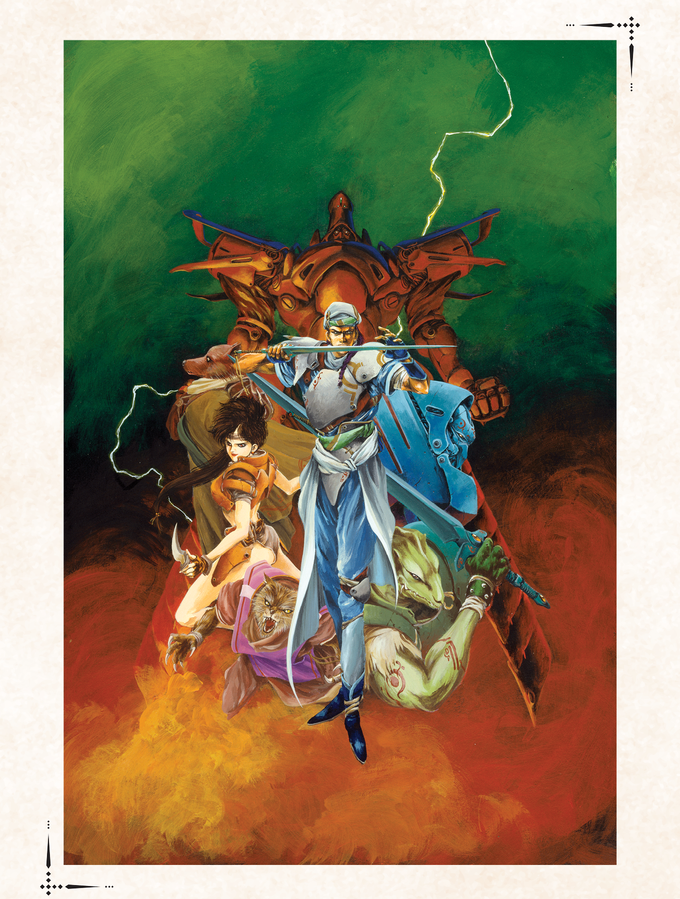
And like Mugen Gaming, LionWing is dedicated to releasing the game “almost exactly as it originally presented”. To Halestorm, a well-translated RPG is one that preserves the essence, integrity, and intent of the original, while still keeping it playable for a new audience. That’s why he didn’t want the game to be modernized or reinterpreted, even when the original designers, Shindosha, have suggested some mechanical updates to the team. Changes are limited to minor quality-of-life improvements, alongside new artwork and layout. “Most updates come in the form of structural improvements: formatting enhancements, layout clarity, and rules clarifications,” said Halestorm. “We’re presenting the information in a way that makes sense for players in 2026.” At the same time, he shared that LionWing is working with cultural consultants to ensure the studio doesn’t misinterpret or misrepresent the game. “Localization carries responsibility. As Western publishers, we’re representing a culture that isn’t our own. That demands care and integrity,” he said. It also makes good business sense to do so; Halestorm mentioned that poorly translated works can potentially tank LionWing’s reputation as a localization studio.
LionWing’s Kickstarter campaign for Wares Blade’s English release was already launched in late August last year, with the studio amassing $255,890. It’s currently working on a beta version, with Halestorm sharing that they have another game lined up for the Legends of Japan series. On the other hand, Mugen Gaming is targeting a mid-May launch for Sword World’s crowdfunding campaign on Backerkit. But Shawn Davison has admitted that they may have to reassess that timeline. This is partly due to Nakashige’s incredibly packed schedule, which has led to Mugen Gaming pushing back the timeline for the rulebook, as well as other other complications; Mugen Gaming is located in Kansas City, Missouri in the United States, and the artists are all located in Japan, with the time difference also exacerbating the delay.
Despite the minor setback, both the Davisons were still eager to see the project to the finish line. “When Group SNE asked us if we were interested [to translate Sword World], it was like well, if Group SNE thinks we can do it, then we feel like we should do it,” said Shawn Davison. “Yasuda-san is a legend, and we definitely don't want to let him down.”