Countless Bridges
The heavy burden of being more popular than Timothee Chalamet.

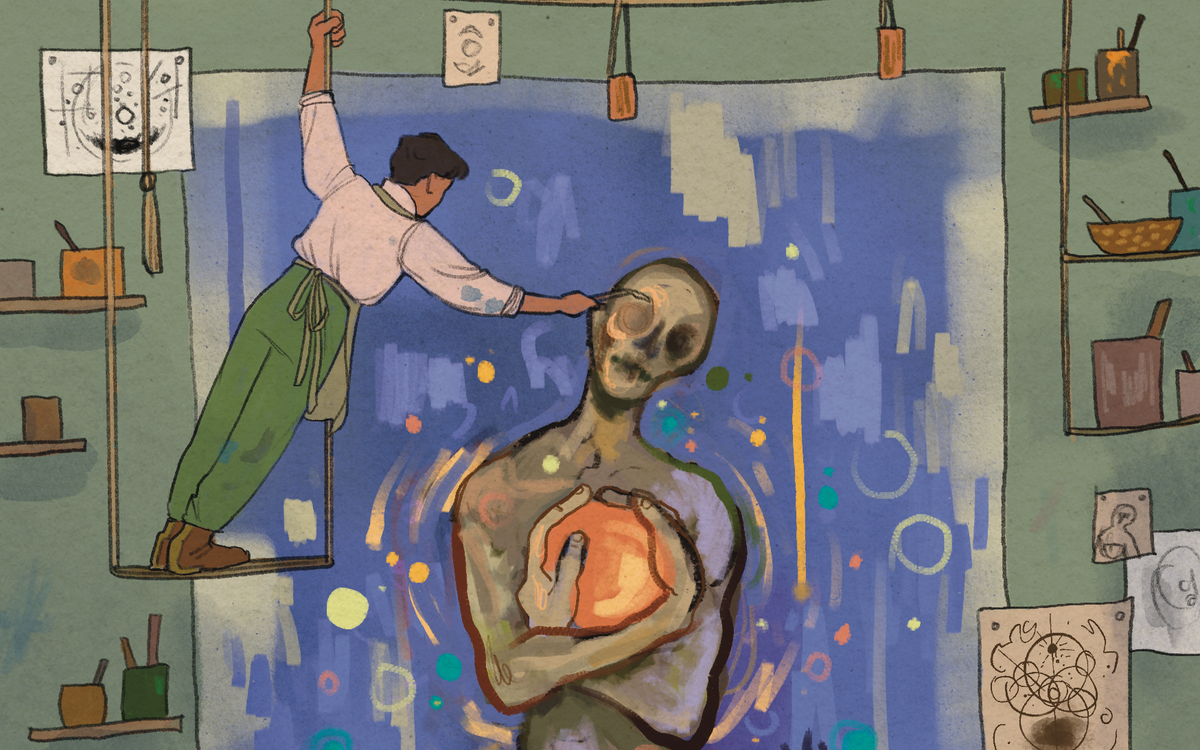
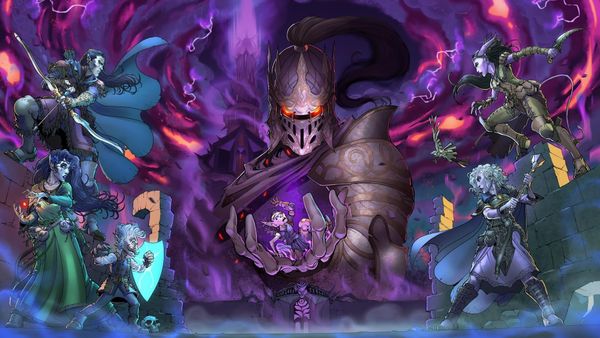
Episode 35 of the Rascal Radio Hour brings Austin Walker and Tyler Crumrine onto the show to discuss the upcoming science fantasy RPG, Realis. Austin brings his history of facilitating tabletop games to bear against one of the last additions to the game's text. Tyler shares his love for big, beautiful books made as much for the hand as the shelf.
The talk extends into discussion of classes as a set of tools, or perhaps magical incantations. It touches on a tabletop RPG's capacity to build bridges for players to cross into an experience, while also leaving plenty of room for them to then build their own into worlds — or Moons — unknown. Bridges are for sickos (complimentary).
You can find Rascal Radio Hour on Apple, Spotify (for now), and all the other various podcatchers. Leaving a five-star review helps new listeners find our show and website. Since we eschew traditional advertising, these reviews and any word-of-mouth are genuinely a massive help — thank you!
Here's an excerpt:
Chase: When you think about classes in an RPG, what do you believe they meant to be? Because you've made a bunch of them
Austin: I don't know what they're meant to be in an RPG. I know what they're meant to be in Realis. And I say that because, in a game with five classes, they're meant to be something different than a game with 55 classes. In the same way that I was resisting the urge of universalizing GM guidance, I'm always really cautious about saying what is true across the medium. If I had to identify some that seem true across the medium, a class is a declaration from the player that is I want to do this cool stuff. This is the stuff I'm interested in. Or I want to start here at least, right? I'm interested right now at this moment in this stuff, not in [that] stuff so much. This stuff might be neat. Maybe I'll dip into this stuff over here later, but right now I'm interested in this stuff. And I think everything else after that might be game by game dependent, you know?
For Realis, a class is very clearly, this is how I want to express myself in this world. These are the things I want to do. Not just how I want to look, not just the armor I want to wear, not just the spell book I want to have. These are the verbs. These are the Sentences that I want to say out loud. And like, I really think that that's, or I want to type out if I'm playing by post. I think that there is a spell like quality to Realis because you do incantations. You say, I always win a one-on-one fight. You say, I always lead my comrades to victory. And the table goes, yes, you fucking do! We got this one. And then the GM says, I'm sorry. The enemy juggernaut has, Against multiple people, I am always unstoppable.
That, to me, is part of what I thought about a lot already in classes for Realis. It's a collection of sentences you want to say out loud to describe how you move through the world, how your character moves through the world. And that is not a universalizable thing with classes necessarily. I think there are lots of games where I play a class because I like to roll more dice than everybody else at the table. Or I like doing more attacks per round. It's fun to do that. And that might not even have a character conceptual part of it. Sometimes it does; it often does for me.
Tyler: Thinking in terms of theater, which is so many of my touchstones for how I approach roleplaying games, part of what makes the idea of playing a certain class in Realis, or any kind of game, exciting is the same thing that gets someone excited to play Hamlet in Shakespeare because there is an established truth to the character. There are words on the page, there are sentences that define them. The same way that you think it would be fun for me to embody this kind of person or have a nuance that I could bring to this in the delivery or the actions on stage.
As much as a class is a menu of options, it is also a roadmap for a journey that you are interested in going down. And one of the fun things about roleplaying games is that you're not playing from a script. You do have more options, more agency, in a way that makes roleplaying games closer to devised theater, which is a practice of getting a bunch of improvisers together in a room. Some people are designated roles, some people share roles, et cetera, and kind of creating a piece of work through iteration. There are lot of different ways that works. For some people, they want to start from zero and fully craft a characterthe same way that someone might be interested in min-maxing to achieve this specific thing. Whereas for some people, the most productive storytelling or improvising is if they start with this blueprint that then can be expanded on to see how it bounces against other things.