The Keftiu Return: An Egyptian Tarot from Crete
Mythic Archetypes: Egypt tarot deck blends mythology with tarot archetypes, featuring deities, hieroglyphics, and cosmic symbolism.
Under Hatshepsut and Thutmose III, around 1450 BC, envoys from Crete carried gifts to the court of the pharaohs, and Egyptian artists recorded them on tomb walls as the Keftiu. Today, in a studio in Heraklion, a short drive from the ruins of Knossos, Tonia Avgoustaki and Spiros Drakatos are picking up the thread of that exchange with a tarot built around the gods of ancient Egypt, close to three years in the making. The couple, who work together as Second Floor Now and have shared art and life for 27 years, call it Mythic Archetypes: Egypt.
The project grew from Tonia's long engagement with matters of the spirit and Spiros's research into early civilizations. As designers, both work daily with symbols and archetypes, the visual shorthand that modern communication relies on to help people read the world around them. Those paths came together once they began setting the stories of the Nile within the structure of the tarot.
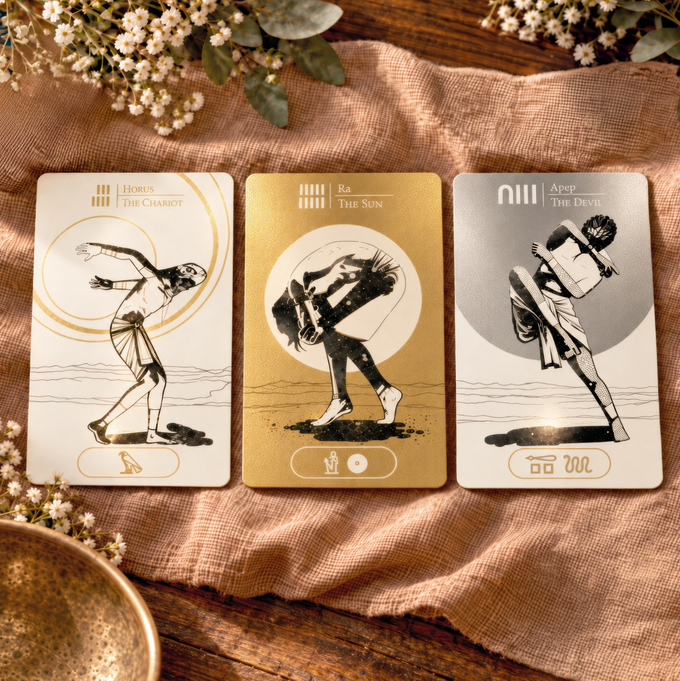
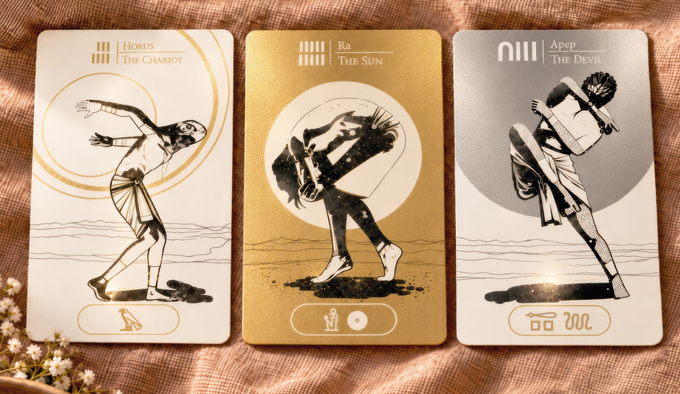
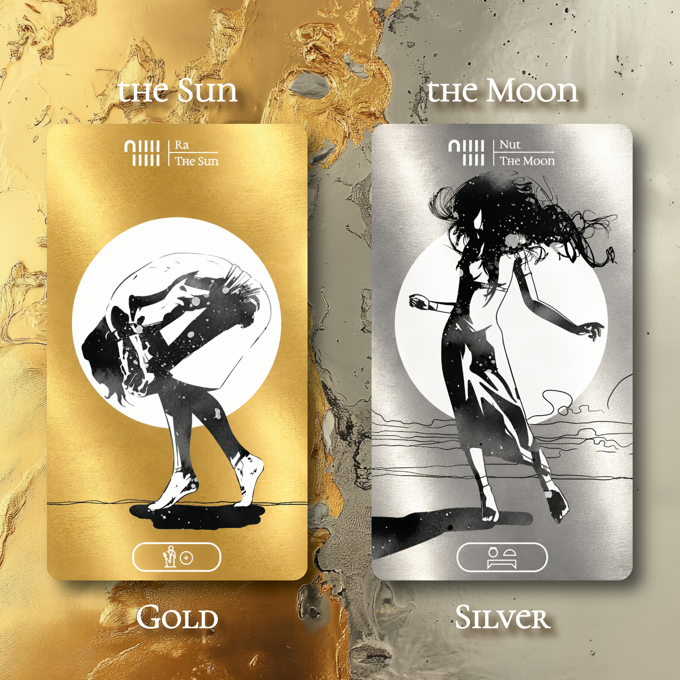
They collaborated with Konstantinos Moschonas, an illustrator based in Athens, who drew the 78 cards by hand, from first sketch to final linework, giving the old gods a presence that feels ancient and modern at once. In the Major Arcana, deities step into roles that suit their legends. Thoth, patron of writing and magic, becomes the Magician. Ma'at, keeper of cosmic order, holds Justice with her feather and scale, and Nut, the sky goddess arched over the earth, takes the Moon. Gold foil marks the solar figures and silver the lunar ones, a pairing the creators read as two kinds of divine light.
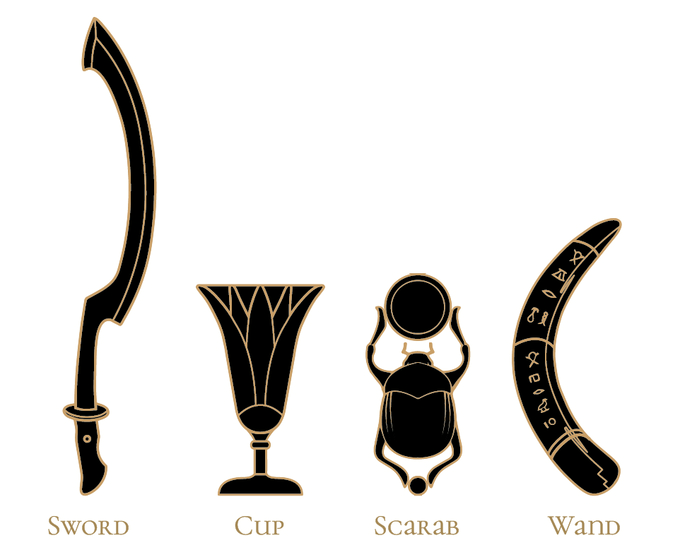
The four suits draw on Egyptian forms as well. Scarabs replace pentacles and speak of transformation and rebirth, while the khopesh sword, the lotus chalice and the apotropaic wand carry protection, offering and creative energy. Hieroglyphs run through the Minor Arcana: a primary sign holds the core meaning of a card, and secondary signs add finer notes of insight.
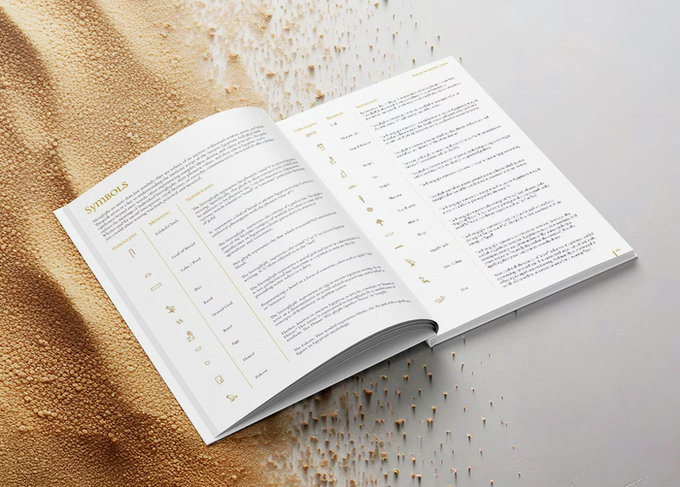
Alongside the deck comes the Symbols & Sacred Readings book, tracing Egyptian cosmogony, the pantheon and the hieroglyphs, and the archetypal ideas that join them to the tarot. It guides the reader through every card of the Major and Minor Arcana and offers six original spreads built for the deck. It also gathers the Council of 44, a circle of readers from several countries who each brought their own reading to an assigned card, so the book carries a chorus of voices next to its authors' research.
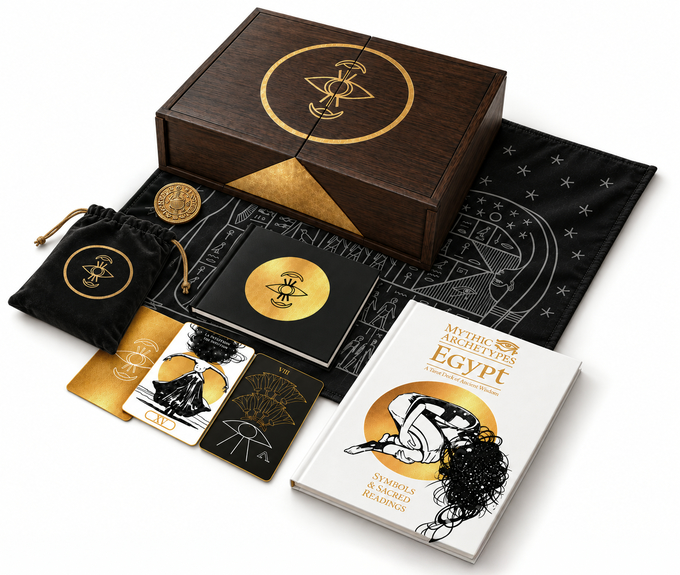
Collectors will look toward the Wedjat Edition, named for the restored eye of Horus (wedjat, "the sound one"). Only 125 will exist, a number drawn from Spell 125 of the Book of the Dead, where the heart is weighed against Ma'at's feather. The wooden case is crafted and painted by hand and opens on a pair of doors like a small shrine, holding the book, the gilded tarot, a silver-printed altar cloth, a pouch, a scarab coin and three gold silkscreen prints.
The campaign is running on Kickstarter, and a free web companion, the Veil of Nut, lets anyone browse the deck and draw a reading online at https://mythic-archetypes.netlify.app/ Three and a half thousand years ago, Cretan envoys sailed south carrying gifts for the pharaohs. Now, from a studio near Knossos, the gods of the Nile set out once more, drawn by hand, touched with gold and silver, and offered to anyone willing to read them.