Creators of the Strange Studies of Strange Stories podcast are betting on audio guides to set their new horror RPG apart
Funnelling hundreds of episodes of genre analysis into ten impossible tales.

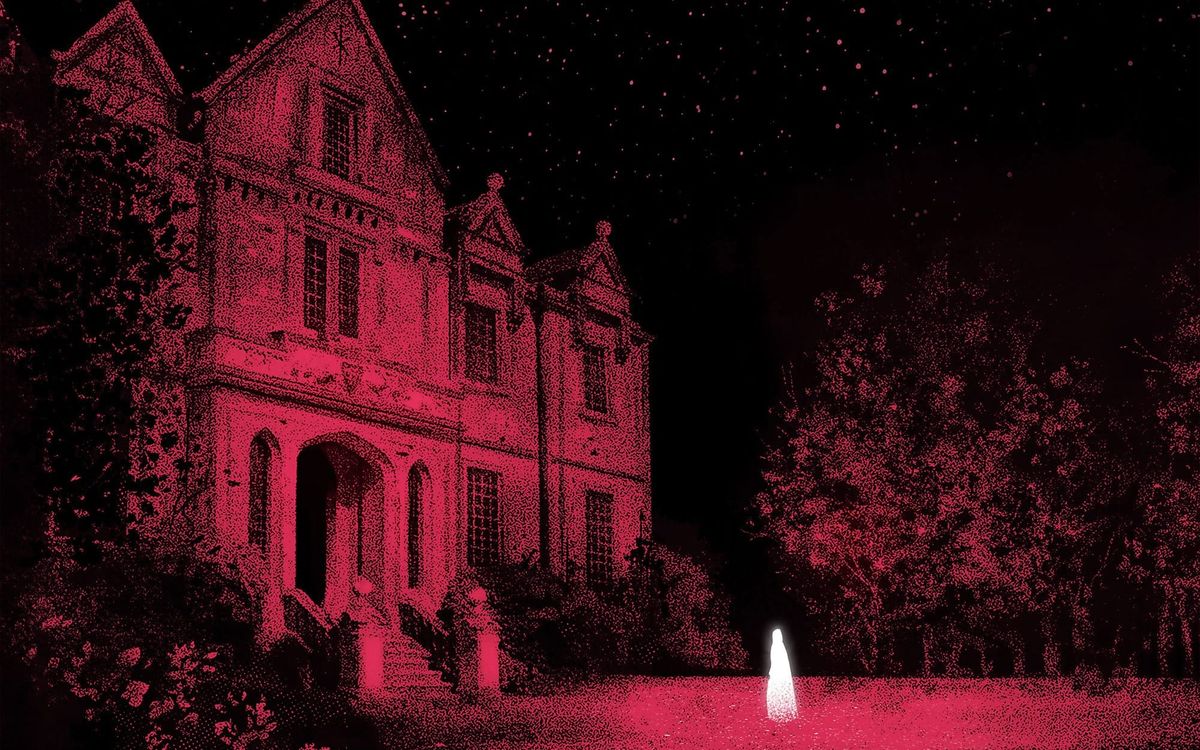
In July 2022, Chris Lackey won best supplement at the Ennies for a sourcebook he co-wrote for Chaosium called Cults of Cthulhu. It wasn’t a big leap from there to designing an original game. Four years later, he and co-designer Chad Fifer are crowdfunding a game called Strange Stories, a scenario-driven, one-short horror experience that is designed to require no prep outside of listening to a single podcast episode. It’s a solid pitch: pop in their companion guide on the drive back from work, and by the time you’re home, you’re ready to run a game.
Recording an audio tutorial isn’t necessarily a new idea, but it’s hopefully one whose time has come. And this attempt is coming from two people who have a deep understanding of the medium. Seventeen years ago, Lackey and Fifer, two childhood friends, started a podcast together to discuss weird fiction called The H.P. Lovecraft Literary Podcast. “I remember reading [a Lovecraft story] for the first time, thinking, ugh, it's a bit much…” said Lackey in an interview with Rascal. “[It’s] kind of hard for most people to get into because his language is pretty purple, and it's not very accessible. So I thought, maybe, why don't we do a show about Lovecraft's work, and we'll try to make it more accessible to people and explain why it’s cool.”
Eventually, the podcast finished Lovecraft’s entire body of work, and so the scope grew to include other authors and related genres — this transitioned the podcast to its current form: Strange Studies of Strange Stories. Every episode of the show is a discussion of a different short story — the two hosts analyze plot, theme and character punctuated by excerpts of the story performed by different professional voice actors. The production is crisp, the analysis is sharp and funny, and the runtimes, unlike most of the medium, are reined in very tightly. It’s a formula that has worked for them. For the last ten years, the show has been their full-time job, their salaries paid completely by listeners via Patreon.
As the show’s reputation grew, working in games happened organically. Lackey began to freelance for publishers steeped in the Lovecraft tradition, such as Pelgrane Press and Chaosium, helped no doubt by the fact that he’d been playing RPGs since he was a kid. Lackey remembers his father playing Dungeons & Dragons in games run by their vicar. As a teenager, he played a wide variety of games — Star Frontiers, Marvel Super Heroes, Teenage Mutant Ninja Turtles & Other Strangeness — but as an adult, when he was introduced to the HP Lovecraft Historical Society, he discovered a type of game that he still thinks is hard to top. At that point, the HP Lovecraft Historical Society were a group of friends who ran completely homegrown Call of Cthulhu-inspired larps for each other.
“We did this insane live-action game where they rented a helicopter because the players were [playing] FBI,” he said about one memorable game in Los Angeles in the 2000s. “The helicopter comes whizzing in, and I'm standing in the desert. It's real! There's no pretending here. I'm holding my hat as the wind blows and the dust comes in.” Rather than the games of his childhood, these horror larps were all about ordinary people being thrust into exciting and impossible situations. And it’s a similar feeling that he wants to capture in his new game.
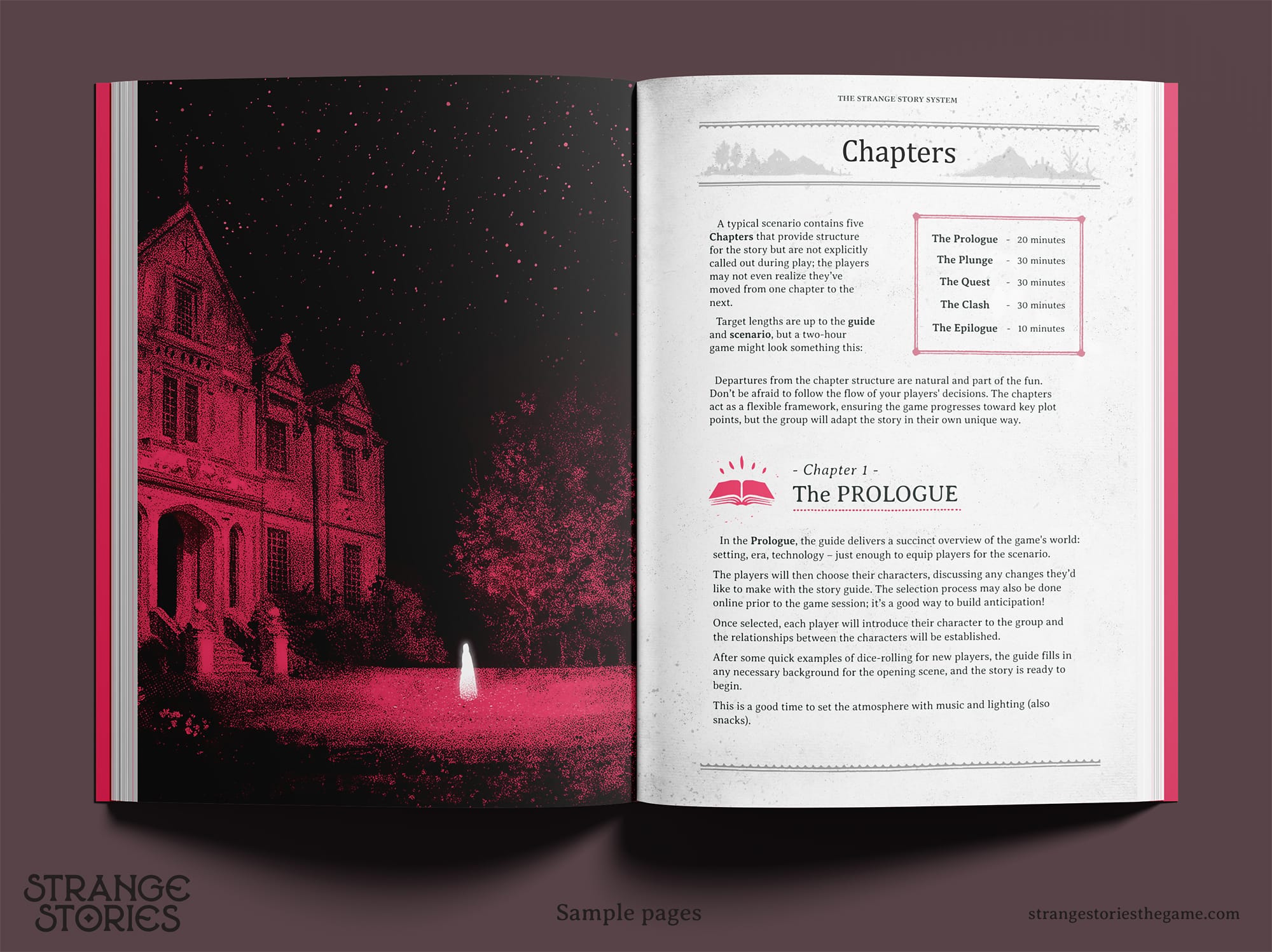
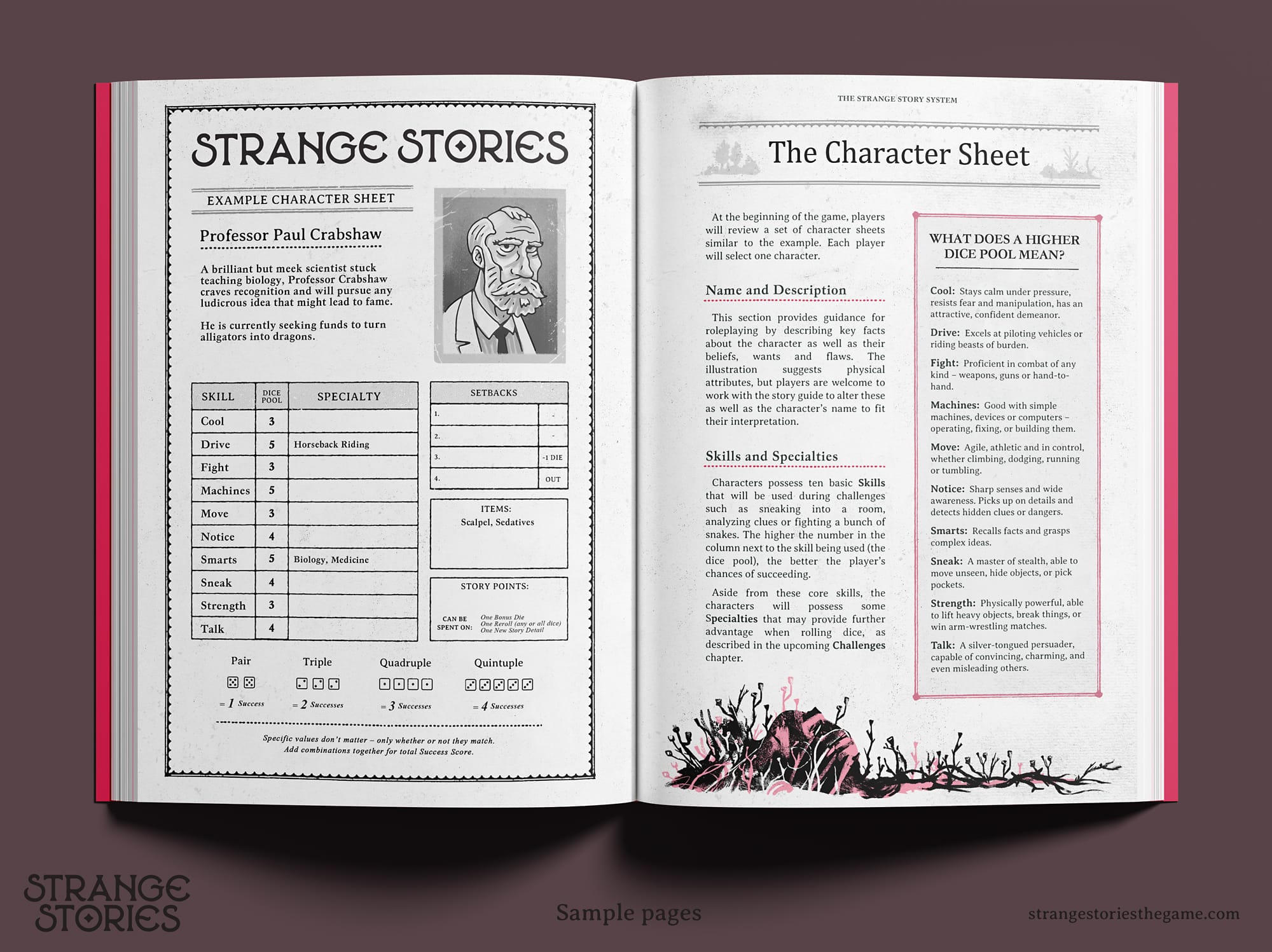
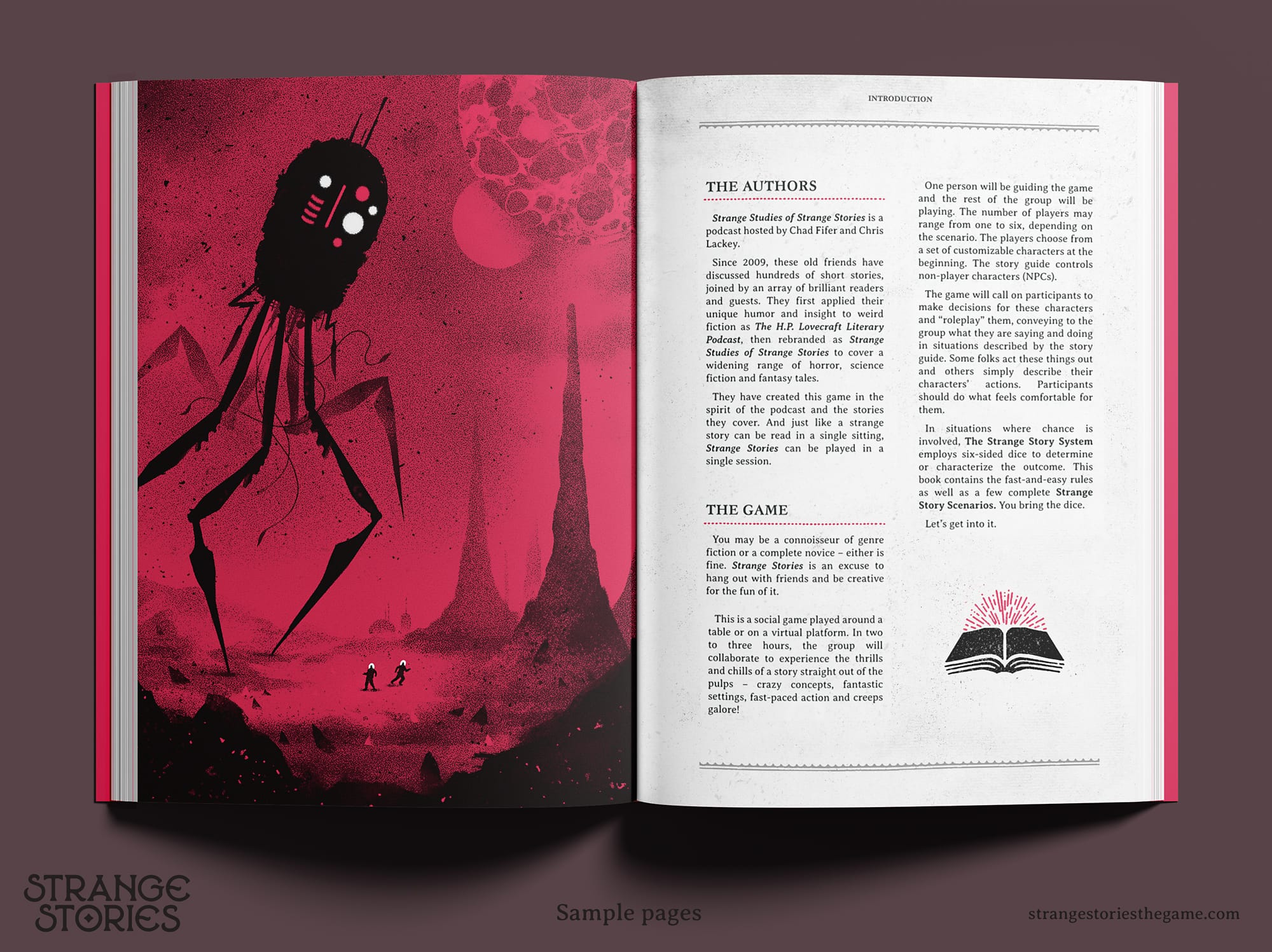
Credit: Witch House Media
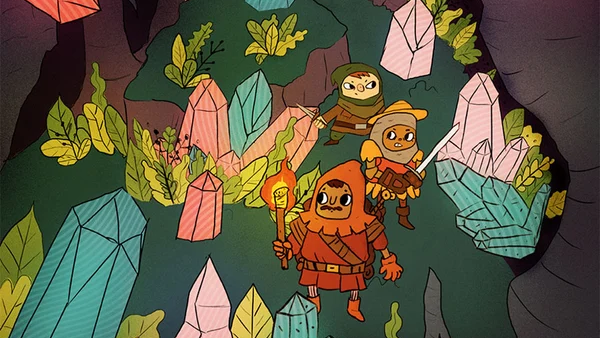
Strange Stories will come with a simple ruleset and around five different scenarios. In one, you might be cyberpunks chasing down a vampire in a twisted arcology. In another, you might be friends and family on a getaway that stumble onto something they didn’t bargain on. All of them are meant to be short and punchy, playing in two hours. To keep to that tight schedule, the characters all come pre-written, and the scenarios are structured into five parts: the prologue, the plunge, the quest, the clash, and the epilogue. The scenarios are built around careening towards a climactic clash, but Lackey feels the epilogues are often where players make the most surprising moves.
“Some people like horrible endings, some people like going insane, some people like their character dying in a very dramatic or horrible way,” said Lackey. “It’s like, Oh, we beat the cult, but in our epilogue, my character goes home, puts his keys in the bowl by the door, takes off his hat, goes to the fridge, and when he closes the fridge, there's a cultist with a knife. That's where my story ends… That's the balance that we try to have. You're always gonna get a dramatic clash, but the epilogue allows the players to tailor their ending.”
Alongside the scenario design, Fifer and Lackey are betting that their “audio prep”, the podcast guides, will also help prospective GMs. “There's a lot of live plays, and, in a way, they can do it,” said Lackey. “But live plays are usually really long. There are hours and hours of stuff, and it's kind of retrofitting for purpose. You're like, oh, I could run that, but I feel like I would be less inclined to run something I listened to for four hours because I've had enough of it.”
When Lackey and Fifer started podcasting in 2009, the soundscape was really different. The true crime show, Serial, one of the first (if not the first) viral podcasts, only released in 2014. Back then, according to Listen Notes, there were around 3 million podcast episodes released per year. In 2025, the number was almost ten times larger, around 27 million. But despite how ubiquitous podcasts are, the dream of hitting play on an episode and being led on an auditory walkthrough of an upcoming game session with no need for pen or paper remains out of reach. The prep requirements for most RPGs make it essentially impossible, but maybe designing a game to allow for it from the ground up could change that.