Mark Diaz Truman explains how Magpie Games changed over the last decade
As Masks turns 10, a candid conversation about the publisher’s artistic choices and compromises.

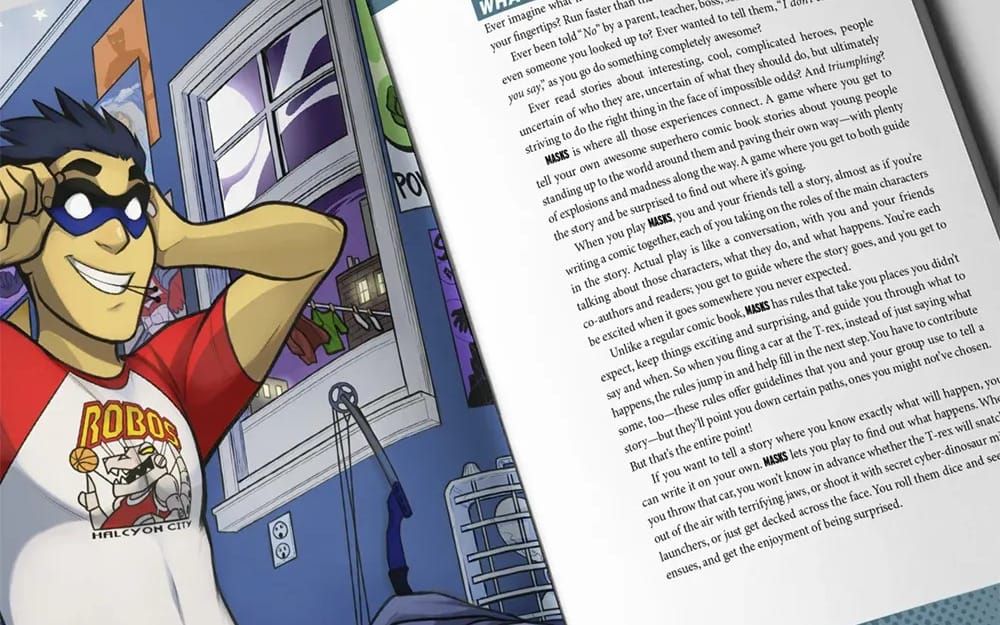
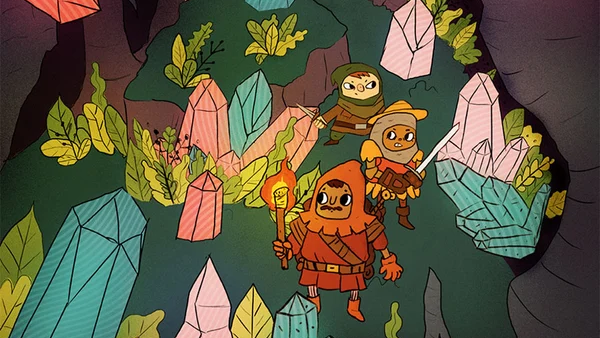
“Growing up very rarely is a straight line.” Mark Diaz Truman is talking about Masks: A New Generation, the beloved game of teenage superheroes that marked its 10th anniversary this year with the announcement of a new edition. But Truman isn’t just referring to games growing up. He’s also talking about himself. “I started this business at 29 years old,” he said to Rascal. “That's a lot of time. I am a very different person.”
Now that he’s 44, he finds himself running a very different company, in a different industry landscape, for a different audience, making games that are also a little different than he might’ve imagined 15 years ago. The story of Magpie Games started around 2011 with the release of a small game about rewriting Shakespeare called The Play’s The Thing. It wasn’t a big release by any metric. Their first real critical success, urban fantasy thriller Urban Shadows, would arrive a couple years later, and then Masks marked Magpie’s first real commercial success when it crowdfunded in 2016..
For Truman, this was when Magpie Games became “a real company.” The success of Masks’ campaign — raising more than $100,000 — is what convinced him and co-owners Marissa Kelly and Brendan Conway that they could make a career out of designing games. It didn’t happen straight away, but Masks started developing honest-to-god fans. By 2019-2020, according to Truman, he had gone from being known as “the writer of Urban Shadows” to “the publisher of Masks.”
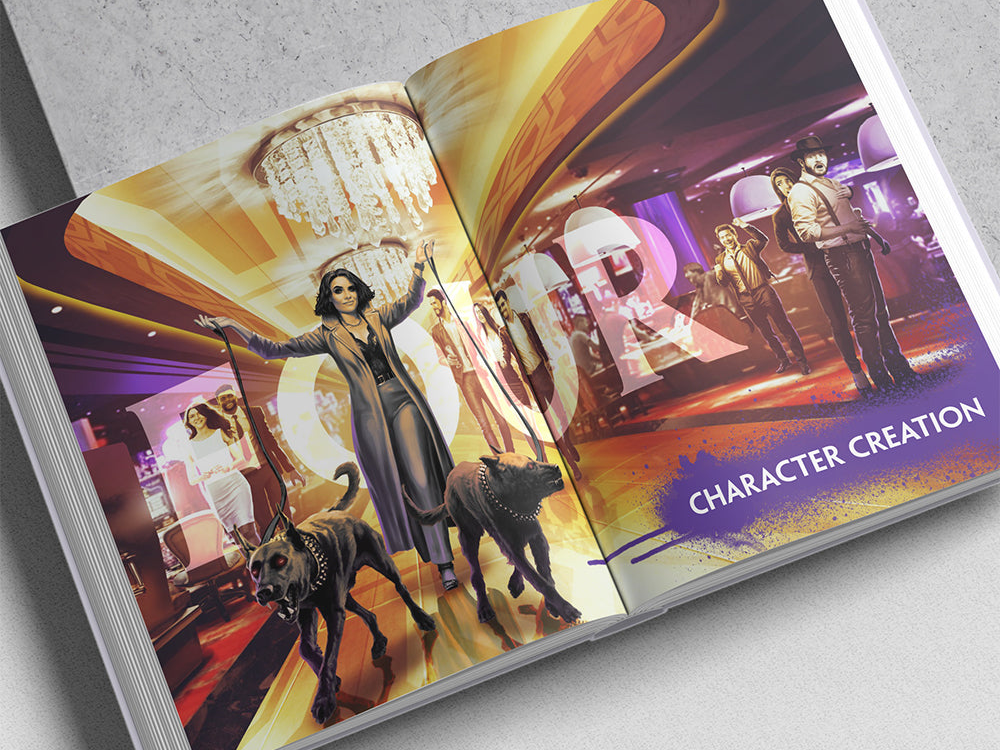
But that was still ten years ago. Since then, Magpie’s catalog has grown to encompass a lot of successful games. The critical high watermark was likely the genre-defining, gender-horror game Bluebeard’s Bride, and the commercial one was undoubtedly the financial record-breaking Avatar: Legends. And there's the under-appreciated trio of games that tell Latino stories: Cartel, Pasion de la Pasiones, and Nahual. And with the to-be-released Fallen London RPG, Magpie launched a new original house system, partially moving away from Powered by the Apocalypse as their go-to design framework.
While those games show how the studio has grown creatively, a lot of the recent public conversation from the company’s backers has been preoccupied with production missteps —specifically delayed releases or cancellation of stretch goals for games like Urban Shadows 2e and Cartel. Most recently, those discussions included delaying the crowdfunding campaign for the new edition of Masks to next year.
While Truman acknowledges these problems, he hopes Magpie has seen the back of them. Over the last few years, the three co-owners have been working their way towards answering big questions about what kind of company they want to be. It’s not whether Magpie has changed in the last decade but rather how and why. The answers are tied up in different inter-connected facets: what their audience is looking for, how the industry has transformed, what excites them as artists, and what they can accomplish as a business.
Audiences and Industries
“In 2016, we were naive in the best possible way,” Truman said. “We just did things that we believed in. And we're very lucky that there were enough people who believed in those things, too, that we got to do some cool stuff.” But he believes the customer base for RPGs in general, and Magpie Games in particular, is very different now than when they first started. “At that time, what people wanted from Kickstarters was an artistic journey with the creators,” he said. “I'm going to show up to this project. It's going to be a little weird and a little different. I'm going to give my money to this. I'm going to wait patiently while it arrives because these are artists, and they do what they do, when they do it. And then I'm going to get my stuff when it shows up.”
While this still might be true for smaller creators, Magpie’s scale of operations means that their relationship with their customer base has changed. “There was a time where our work was for people who were basically us,” said Truman. He described Urban Shadows as a game about “sexy vampires and the long-term effects of redlining,” about how the setting supplement for that game should be a newspaper or a history book. Who is the audience for that? he asked, before pointing at himself. It’s a tougher sell to the average gamer. “We have had to really understand that our audience has grown, and not by just the same people getting more [common], but different people coming into the pool with different expectations, different needs, different desires, and that our projects have oriented themselves towards this kind of experience that people want now.”
Truman referenced a comment from a backer on the Avatar: Legends kickstarter, who, around one year after the campaign closed, posted that it felt like they had been waiting years for the game to deliver. But Avatar fulfilled relatively quickly, despite global shipping shocks — around 18 months after the campaign. Other projects that were in development around the same time took longer: Urban Shadows 2e needed 4.5 years for the core book to release and the extra playbook stretch goals are still being fulfilled.
Truman said that Magpie has learned from this. Future campaigns will look more like Avatar, which didn’t presume an audience that wanted to stick around and support a line of relatively-niche additional products. “Look at [the upcoming campaign for] Masks,” he said, “We're not promising five books that are going to come out over a period of three years. We're going to have a core book, we're going to have a supplement book, and it's going to have as much amazing Masks stuff as we can pack into those books. Then, we're going to release them, and we're going to ask people, Do you want more like that? Is there more to do? And that actually matches what 2026 looks like.”
But the company is not just thinking about crowdfunding. They’re seeing what kinds of products are actually able to find an audience. For Truman, even as the market for RPGs has expanded, it also feels smaller. “We have a very different market in terms of just there's more. It's kind of mind blowing to me how much more there is, but I think that “more” has tilted decisively towards Dungeons & Dragons,” Truman said. “If you were here in 2011, there was a deeper hunger and broader appetite for things that were not Dungeons & Dragons. But if you're out there right now, and you're looking at what people are backing, what they're buying, and what they're excited about, I think D&D is back with a vengeance.”
While the tabletop RPG market is expanding, it’s not necessarily creating space for the kinds of games that Truman, and Magpie Games, were making in the 2010s. “I think that the kind of D&D people like tends to be a little whiter, and a little more male, and a little less open to an understanding of a cognitive, social, political atmosphere,” he said. “I'm trying to say that without criticism because I think one of the reasons for that is the fucking fascists. When you spend all day dealing with the fact that there were, what, a couple hundred guys who marched in masks in DC proclaiming that they think America should be a white supremacist country… Maybe Cartel’s not that fun when you get home. Maybe what you want is to be a tiefling.”
But even as Truman does his best to remain impartial, it’s clear that he struggles not to take it at least a little personally. “There's nothing that teaches you more about what people want than making something that they really, really don't want. It's eye opening to sit down and play a game with somebody, have them finish the game, say, how was it? And they're like, I want you to never play a game with me again. I want to never play this game again, and I want to never have anything to do with any of this. That is such an intense reaction. That is a very eye-opening experience for what people actually do want from RPGs, and what RPGs actually are for a huge number of people.”
There’s also an internal change that has affected Truman’s decision-making. “The appetite for risk shifts as you get older, too,” he said. “I think there's a time for you as an artist where all you see is blue sky. You're just like, I'm going to make awesome things, and people are going to connect with them. And as you get older, as you get more mature as a company, you have to grapple with the fact that you actually have a data set. You have stuff that people connected with and stuff they didn't. You can delude yourself about what that data set really says. Or you can grapple with it.”
Artists and Businesses
“This is one of the hardest times to make RPGs and have them make enough money to sustain these art houses that we have,”said Truman. He and his colleagues agree that the shifting regulations around tariffs and the import and export of goods, along with the Iran War and its effect on income and spending, have created an unprecedented period of instability for Magpie. “We can track in our sales when the Iran war started,” he said. “I can show you on a spreadsheet that this happened, and it starts to ripple, and people start to get cautious with money, and Magpie sales get impacted. I can show you how our entire release schedule was thrown up in the air by the tariffs.”
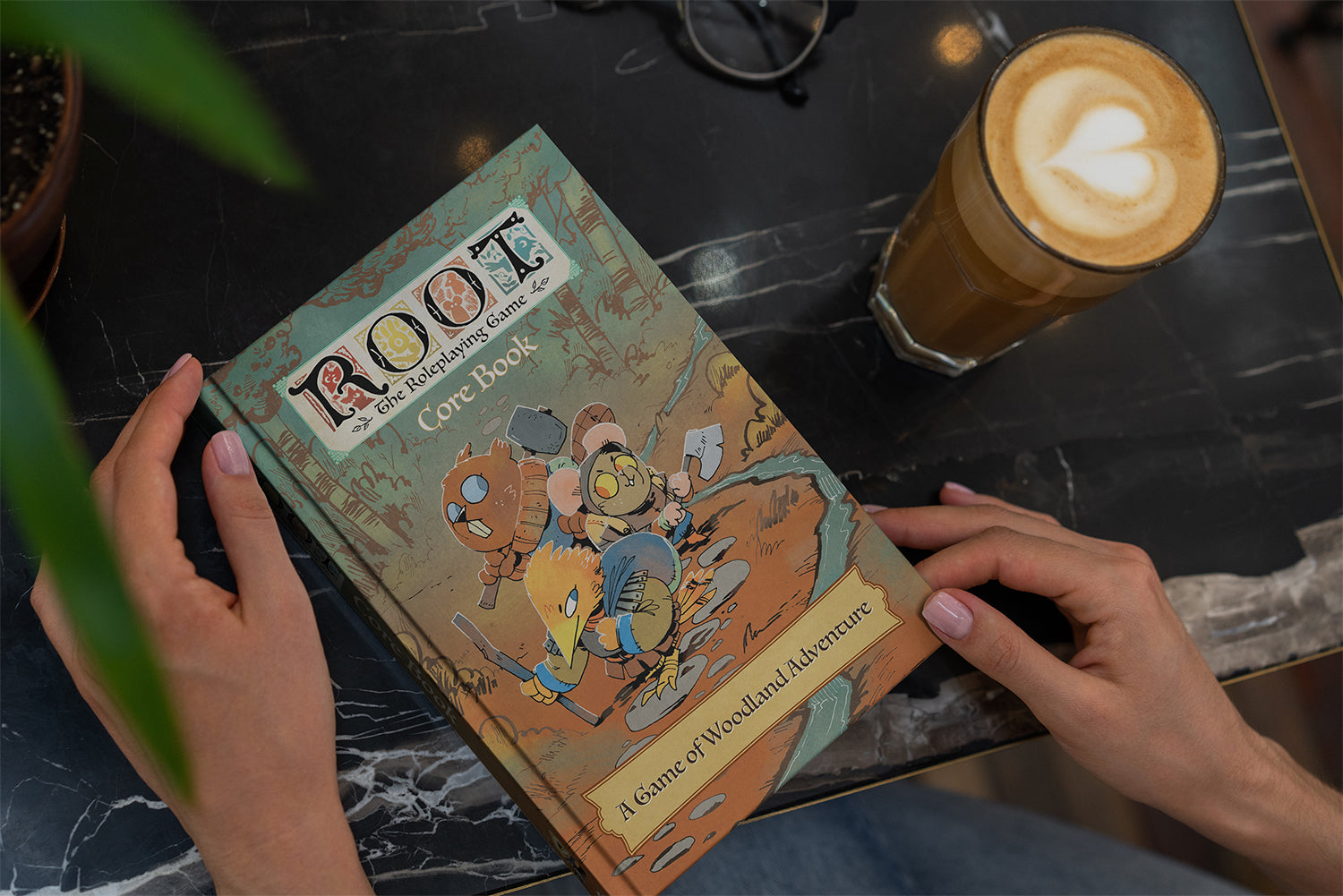
Exacerbating this precarity is the fact that Magpie made the fundamental decision to be an RPG publisher producing original games that leap from genre to genre with each new release. It’s creatively rewarding, but there’s often limited overlap between customers who want the pleasures of teenage rebellion in Masks versus survival amidst the systemic violence of Cartel, or the D&D-adjacent fantasy adventuring of Root. “I think there's a reason that a lot of companies in our industry go to spaces where there is an infinite pool of potential products,” he said. “The reason that the Cthulhu side of the industry has consistently done well over the last 50 years is because there's always a need for a new Cthulhu adventure. If you've ever run Call of Cthulhu, it is rather difficult to run with just ideas that are in your head. It is very nice to have somebody else do the work of sorting out how that mystery is going to play out.”
“There's a small group of people who love what we do and are willing to try anything we do, but I don't think there's a large group of people who wake up every day and wonder: What is Magpie Games up to this week?” he said. The difference between a large and small potential audience is the difference between confidently supporting a staff of nine people and not. While nine people isn’t the largest head count (that peaked with the fulfillment of Avatar: Legends where they had ten people just doing customer service), this scale means that Magpie not only must keep making games, but keep making successful games.
“I think that this industry is ultimately about hits,” he said. “If you have a hit, then you are engaged with an audience that is engaged with that hit. And if you don't have a hit, if you go a long time without a hit, then you're not engaged with anybody. And I think that is the brutal reality.”
“What we have to address and deal with is: you can never stay still,” said Truman. “It's never like, Aha, we've cracked the code! We just make awesome things that people like. Check! Done… Instead, we have to wear our hearts on our sleeves, and say, these are the things that we're excited to make, and be humble enough to see if there are people who are interested in that thing at the scale that works for Magpie Games.”
Sometimes the answer is no — or to be more precise, not enough people saying yes. Last year, Magpie ran a campaign to produce fast-playing, card-based RPGs-in-a-box, building on their previous success with Zombie World. The game technically met its funding goal, but the Magpie cancelled the campaign midway. In an update, the company stated that, given more complex production and shipping costs, it wasn’t feasible to continue with production at this scale. To be viable, they would have to produce at a scale larger than the actual demand. “We are really passionate about card-based RPGs that are easier to get to the table,” said Truman. “We have the capacity to make this game at a very high scale. We bring it to fans. They're like, not really interested.”
Truman feels that sometimes these struggles and failures — and that is how he sees them, at least partially — are left out of Magpie’s story. “One of the things that I see a lot as criticism from even within our fan base is this idea that somehow Magpie has a cheat code, that we've unlocked infinite resources for any project that we would do. And I think it's related to Avatar.It's related to having a long history of success in the industry. People believe that if we would just take something seriously, if we would just really dedicate ourselves to whatever they think we should dedicate ourselves to, then we could make it work. I would love that to be true. But the truth is sometimes I throw myself body, heart, and soul into a project, and it still doesn't work.”
While such failures include something like the card-based RPGs, Truman believes it also explains Cartel. “We didn't just not make money on Cartel. My best estimate is we probably spent about twice what Cartel raised trying to make Cartel work as a product. And that was a decision that we made and followed through on because we had the resources to do so. We believe deeply in the product.” Talking about the game of mid-2000s Mexican narcos, Truman is clear that, as a business owner, he should probably see it as a big mistake. But he is still glad to have made it. “If I hadn't made Cartel, I'd still be wondering what my contribution to RPGs would look like as a Latino artist.”
Even though he doesn’t necessarily regret it, the business owner-side of him believes that Magpie can’t sustain another game like Cartel. “It is a function of scale. If I do another Cartel kind of project and I come back to my team and say, hey, in our budget, we'd like to be doing significant, serious revenue through Kickstarter to support this team of nine people. Good news, everybody: We raised $50,000. Have I met my financial responsibility to everybody who works here? That seems like the answer is no. That seems like I have let my artistic ambitions eclipse the promises I have made. If I want to run a business that does $50,000 Kickstarters and produces really wonderful, weird art that a minimum number of people engage with, that's awesome. Magpie didn't make those decisions.”
Truman doesn’t pretend that these circumstances were pre-ordained, or that he had no other choice. “I don't want to tell you: It just happened to us, man. There's nothing we could do, our hands are tied. We had to get to be three times bigger than we were. But I also know that I didn't ever decide to have 9, 10, or 15 employees.” The decision wasn’t about whether to grow or not; the decision was about which projects to adopt. Or, to put it another way, how ambitious did they want their projects to be? Growing in size was an outcome of the workload, rather than vice versa. But once they grew, that not only meant more resources to execute projects, but also greater overhead to maintain that new size.
“We talk a lot about the triad of: What is it that I want to do? What is it that I can do, (i.e., have the skill and the resources to do)? What is it that audiences are looking for? There has to be some overlap with those things, or do not pass go, do not collect $200,” said Truman. “What Magpie needs to figure out is, what is the scale at which we can work without fundamentally transforming ourselves?”
The Changed Game
The ten-year anniversary of Masks pulls all of these facets of Magpie’s journey into focus. The game still enjoys genuine fans who love it. It has a tag on the fan fiction website Archive of Our Own. There are podcasts that have played it for years and an open table campaign that ran for 600 sessions. Truman is pretty sure that if Conway, the designer, gave a talk about the game and its setting every week, people would show up. And he knows that Conway is excited about a sequel and the creative freedom of returning to a game that is so close to him. The whole team seems to be excited. But it also might be the last Powered by the Apocalypse-style game Magpie makes, at least for a while.
The audience seems to be voting with its wallet that they want games designed for a more GM-centric style of play. The emotional chaos and unpredictability of Magpie’s early titles aren’t to their taste. The challenge, then, is designing games that meet those players where they are while still creating something that has their mark on it. One big part of that mission is ensuring that the games still try to incorporate interpersonal relationships and stakes within that play style — because that’s what the team values in roleplaying and what they feel they do well.
For example, in Temeraire, Truman is excited about a game that allows for two people to be deeply bonded and connected, without making that the site of conflict in the way that a PbtA game would. “RPGs problematize relationships,” he said. “So that means that as soon as you say, me and my best friend are best friends, the GM is like, oh, are you? Here's a threat to your best friend-ness, or whatever… I just want to be my partner's dragon in this game and have us be on the same team forever.”
There are undoubtedly people, especially those who loved the earlier games in Magpie’s catalog, who will be unhappy with the compromises they’ve made. But when it comes to decisions like cutting short the stretch goals for Cartel, given that backers were refunded, the person who was most directly aggrieved was the man who made that call.
Was it the right call? Truman thinks only time will tell. “I'll have to wait 20 years to find out if some kid who bought the [Avatar: Legends] starter set at Target — which is mind-boggling to me, a starter set at Target — comes up to me 25 years from now in 2051, and says, I'm a game designer, and my first game that I ever got was when my grandma bought the starter set for the Avatar game at Target, that was the first time I ever played an RPG, and my games reflect that lived experience,” said Truman. “I don't get to know that for 25 years because that person is [currently] playing that game and they're eight.” For now, all we know for sure is that growing up is rarely a straight line.