World of Styria turns a 39-year home campaign into a Pathfinder 2e setting book
After four decades of collaborative play, designer Sutton Moore is releasing his world to the public.

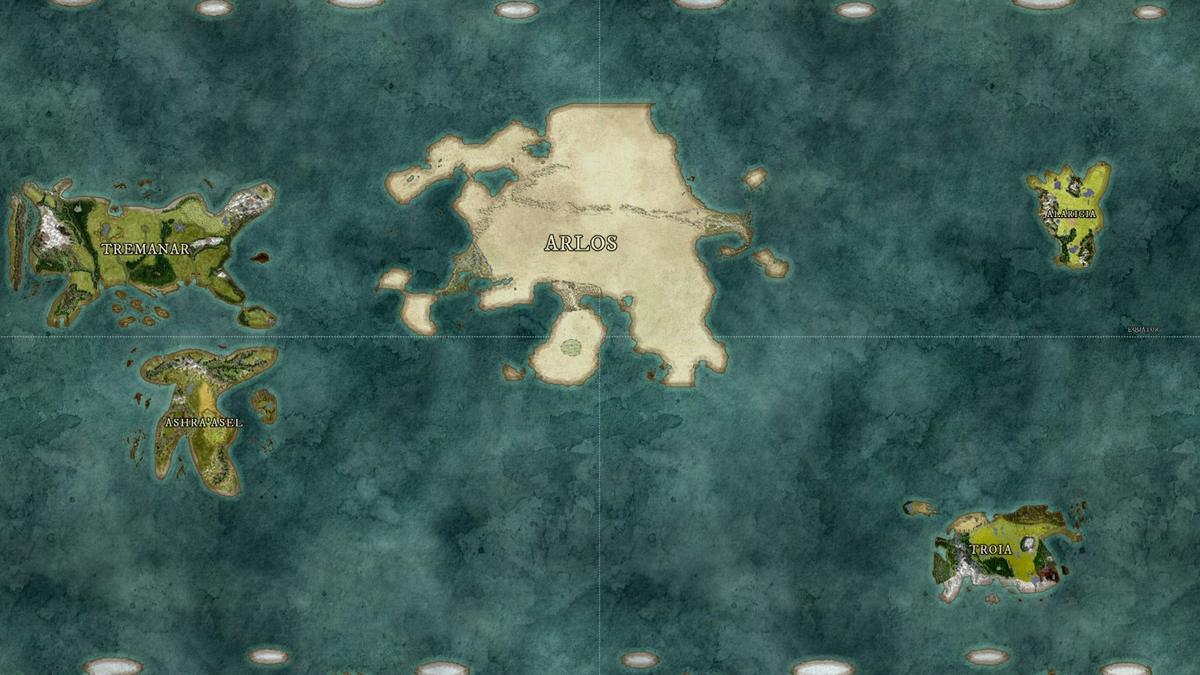
The almighty gods of Styria used to be human — that is, they were the very players that sat around the table with game designer Sutton J. Moore in the late 1980s, when he was running the first few games set in this high fantasy world. “They were dealing with the disappearance of the old gods, beings in Styria called the Aspects, and they were making choices based on the information they had available to them at the time,” said Moore in an email to Rascal. “They discovered weapons made from fragments of the Primordials that could permanently kill an Aspect. What they did not initially understand was that when an Aspect died that way, the person responsible absorbed the concept and power that Aspect represented [...] Eventually, they crossed a threshold where they were no longer really mortal.”
When the next group of players continued the narrative in a separate campaign, Moore decided not to reset the setting. The nascent gods portrayed by the previous group became part of the world’s ongoing mythology.
This was how World of Styria was crystallized over the decades, morphing into a world made from the detritus of old empires and ancient civilizations, and rife with magic coursing through its lands. After all the campaigns that he has orchestrated as game master, Moore sees himself more as a recordkeeper, rather than a designer who built Styria from scratch. “Hundreds of ideas in this world exist because somebody sat down at my table and asked a question, made a character, invented a place, named an NPC, came up with a solution I never would have considered, or made a joke that somehow survived long enough to become canon,” he said.
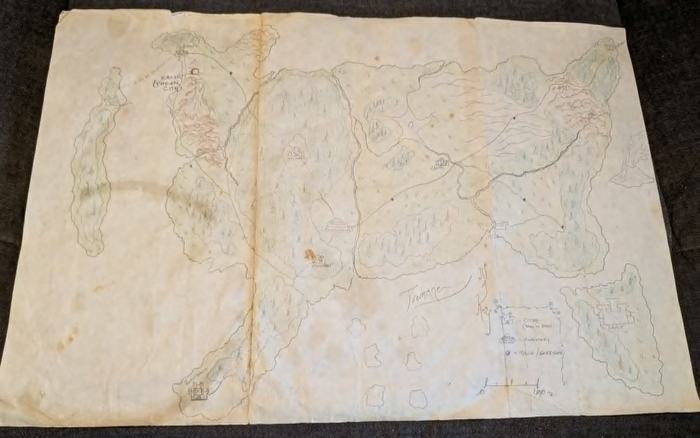
Moore didn’t create a sprawling world under the assumption he would still be running it nearly four decades later. Instead, Styria was created when he joined the Moses Lake Job Corps two weeks after his 16th birthday — back when the Satanic panic was still in full swing. His D&D books were swiftly confiscated upon arrival and placed in an old bomb shelter under the administration building (“Dice were apparently fine. Evidently you need the books, too, if you actually wanted to summon Lucier,” Moore added). As it turns out, there was a sizable gaming community at the vocational school; people smuggled in both D&D’s Players Handbooks and Dungeon Masters’ Guides, as well as RuneQuest and Middle-earth Role Playing (MERP) books like contraband. With plenty of mechanics but limited setting material, the players couldn’t decide on where their adventures would take place — until one player suggested that Moore create a world after listening to his short stories. “Then, everybody immediately started telling me what they wanted,” he said. “Lots of magic. Different peoples. Different kinds of places. Somebody wanted mechs. Somebody wanted to play a dragon. People had very strong opinions about what I absolutely should and should not put into this world that did not exist yet.”
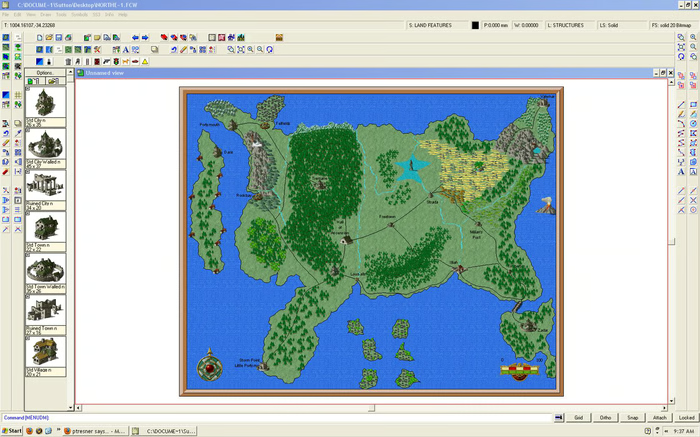
Eventually, Moore was facilitating up to four campaigns at a time, drawing his maps in spiral-bound notebooks. By the time he left the Job Corps, Styria boasted two fully fleshed out continents. He added to these illustrations over the years, eventually replicating maps digitally via map creation software like Campaign Cartographer and Wanderdraft. And when new players were introduced to the game, its world took on more intricacies. Characters started families and founded settlements. Territorial expansions led to evolving borders. Feuds were born and quashed. Even more gods, too, confronted their mortality.
But the name, Styria, did not materialize until 20 years after its inception. Moore shared that his son, Lucas, was asking him about his “sterious” game with magic when he was young. “He was trying to say "mysterious," but what came out sounded like 'sterious.’ That stuck in my head,” he said.
After decades cultivating a fantastical universe alongside his community of players, Moore now wants to publish World of Styria and plans to launch a crowdfunding campaign on Kickstarter and Backerkit in February next year. The decision to put the game on the map, so to speak, stems from a request from Moore’s son, who wanted to run a campaign in Styria for his own friends. His son, however, lacked the years of accumulated knowledge around Styria, so Moore had to put everything together into a document. After a hundred pages or so, he realized he was essentially collating a setting guide. “I had the slightly ridiculous realization that all I really had to do was put a rules engine behind the world, and I would have an actual, real-life RPG book,” he said.
Moore has put together a free Explorer Edition available on his itch.io page. This version is Pathfinder compatible, even though World of Styria had gone through several RPG systems over the years. Initially built upon AD&D, Moore had also previously run sessions through RuneQuest and GURPS, and at one point was even designing his own custom rules. He eventually settled on Pathfinder, which he attributed to the discomfort around the Open Game License (OGL) controversy in 2023. “I was no longer comfortable building the published version of Styria around the OGL or the Creative Commons route available for D&D material,” he said. “I had spent decades building this world, and once I made the decision to publish it commercially, I wanted the rules framework sitting underneath it to be something I felt comfortable relying on long term.” That said, Moore said that the Pathfinder system largely functions to impart Styria’s stories, rather than being core to its identity. “Whatever system offered the best experience at the table [is what I’ll use],” he said. “If I discovered a rules system that seemed to work better than what I was using, I evaluated it, fiddled with it, and if it gave us a better experience in Styria, I adopted it.”
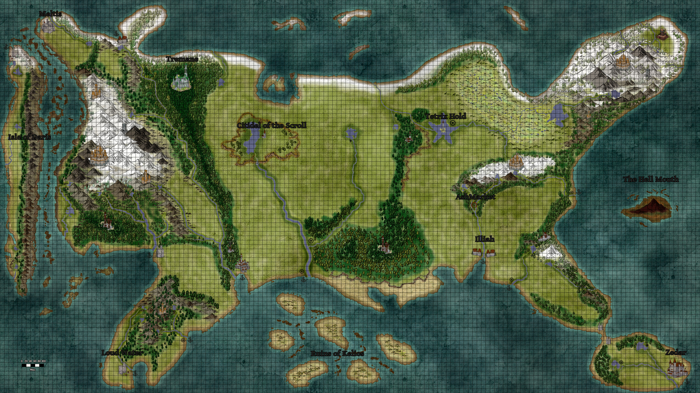
Styria feels resonant with memories, its universe molded by past campaigns whose players left behind remnants of their own experiences in its environments. That’s why Moore wants to encourage future players to leave an indelible mark on this ever-expanding world through the Living Styria, a portal where players can submit stories from their own Styria home campaigns, thus allowing players to update the setting. “That matters to me because that’s basically how Styria has always grown,” he said. “So yes, the setting will keep moving. The campaign ends. The world doesn’t.”