Francesca Baerald’s new book celebrates a decade of mapping some of gaming’s most beloved worlds
The Italian artist talks about her process and why maps should “invite the viewer inside the setting.”

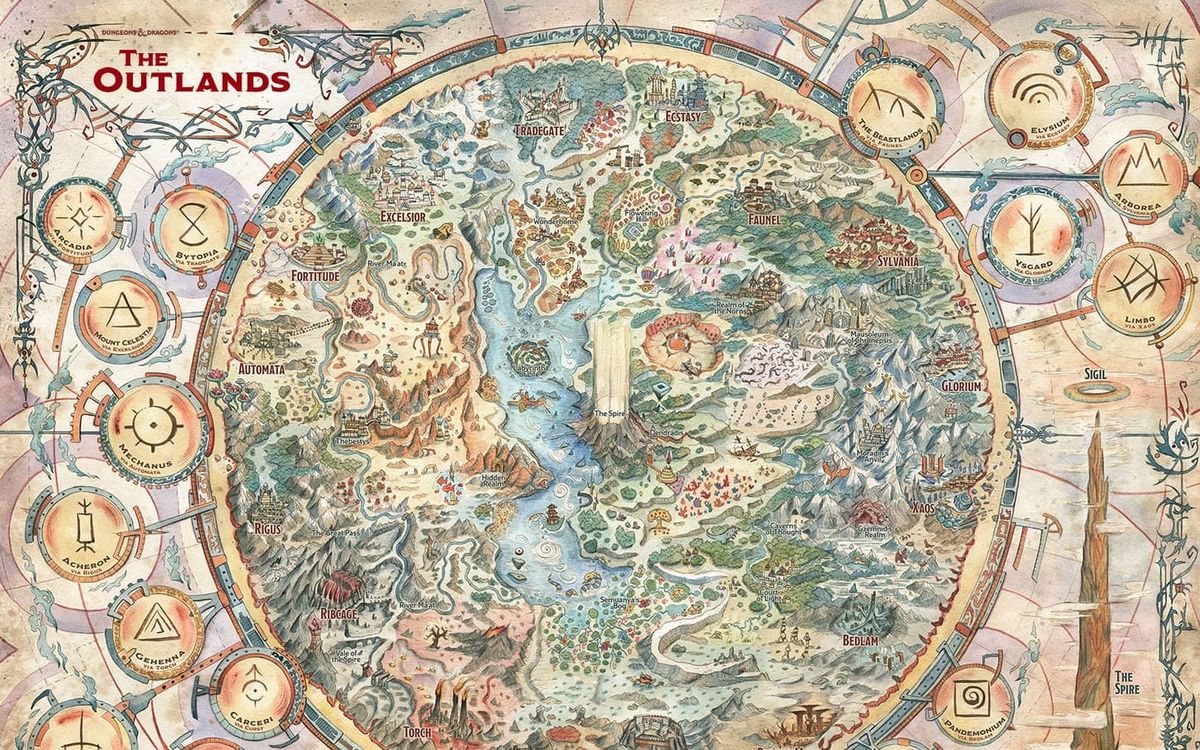
Despite being one of the preeminent fantasy cartographers in the world, Italian artist Francesca Baerald flies under the radar for a lot of the game-playing public. Video game enthusiasts might recognize her map of Diablo IV for Blizzard or for Square Enix on Octopath Traveler 2. Dark Horse regularly turn her work into fine art prints or puzzles — like her renditions of Thedas from Dragon Age or the world of Horizon Forbidden West. In the tabletop world, you’ll see her work in various D&D and Magic: the Gathering products (Dragonlance, Planescape, Strixhaven), Draw Steel, and many Free League games including Dragonbane: Trudvang. Her work won back-to-back ENNIE awards for Cartography – gold in 2024 and silver in 2025 — and was also recognized with the Magnifico award at Italian convention PLAY 2024.
Speaking to Rascal over email, Baerald said that she always had a passion for fantastical places and creating her worlds even as a child. “At school, I enjoyed doodling small maps while listening to lessons, so you could say maps have constantly been in my childhood years,” she said. “I forgot about it until, many years later, I decided to sign up for a three-year evening illustration course here in Italy. I was doing it while working by day at a warehouse, but after the first year I understood I wanted to go all-in on art. I started creating my portfolio and began contacting small publishers in the gaming industry. Among the first collaborations I had, I was offered the chance to draw a map for a game; I immediately accepted, and since that day I haven’t stopped painting maps and exploring fantastical worlds.”
In the 13 years since that crystallizing moment, Baerald has also created a lot of traditional illustration, but drawing imaginary places is the practice that has taken over her life. Like many traditional artists, Baerald’s process is almost entirely physical, inks and watercolors on large-scale cotton paper. From there, she scans it and color corrects the work, while trying to maintain the handdrawn feel that translates into the final work. A single work can take hours, days, or weeks, both in terms of ensuring the minor details stay true to the canon in cases of work that builds on existing worlds, but also populating the frames and gaps with subtle references or charming decorations that evoke the feeling of the world.
Apart from her skill, Baerald’s ability to strike a balance between a map as a store of information and as an art object is one of the reasons she is highly sought after. “I personally believe that a fantastical map should first evoke the world and invite the viewer inside the setting, then become a functional item,” she said. “Getting all information right on the map is essential, because a map must guide players through the lands, but the artistic side of a map is what evolves it to something more: my aim is always to create an artwork that would feel coherent in the hands of a character that lives inside the fantastical world, something that reminds you of an artefact.”
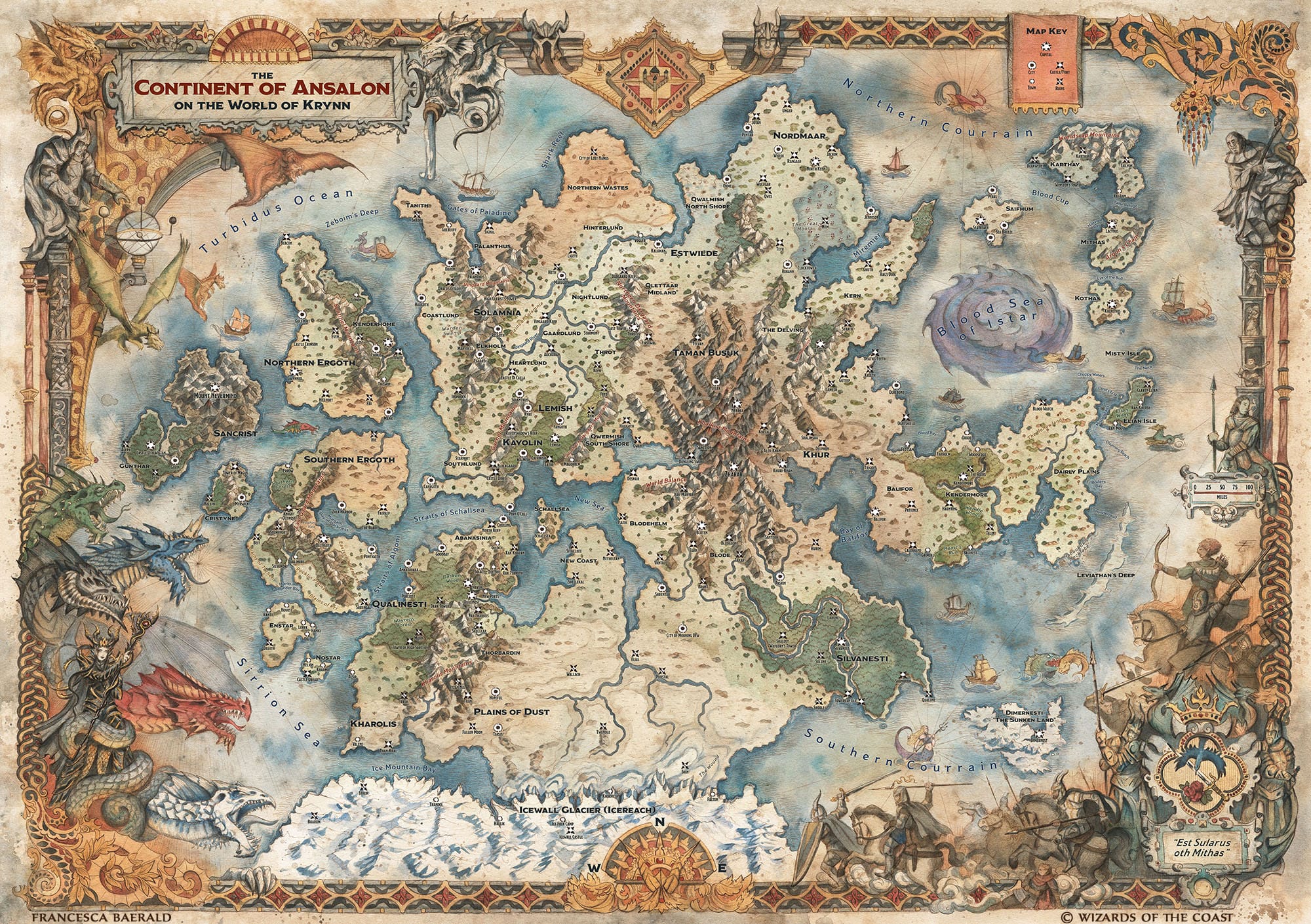
In her map of Dragonlance, for example, the border captures the world as much as the map itself. On the left, there’s Takhisis, the eponymous Dragon Queen featured in 5e’s Shadow of the Dragon Queen, surrounded by five chromatic dragons. On the right, there’s the oath of the Knights of Solamnia, who would oppose her. Beyond that, the frame itself suggests high fantasy and noble adventure in its styling. Baerald is able to do this with a certain amount of ease because she’s often a fan of the worlds before she works on them. Years before she was contacted by Wizards of the Coast to work on Ravenloft and then the official map of Dragonlance, she had already practised by drawing Ansalon, the main continent in the world, as “a personal work.”
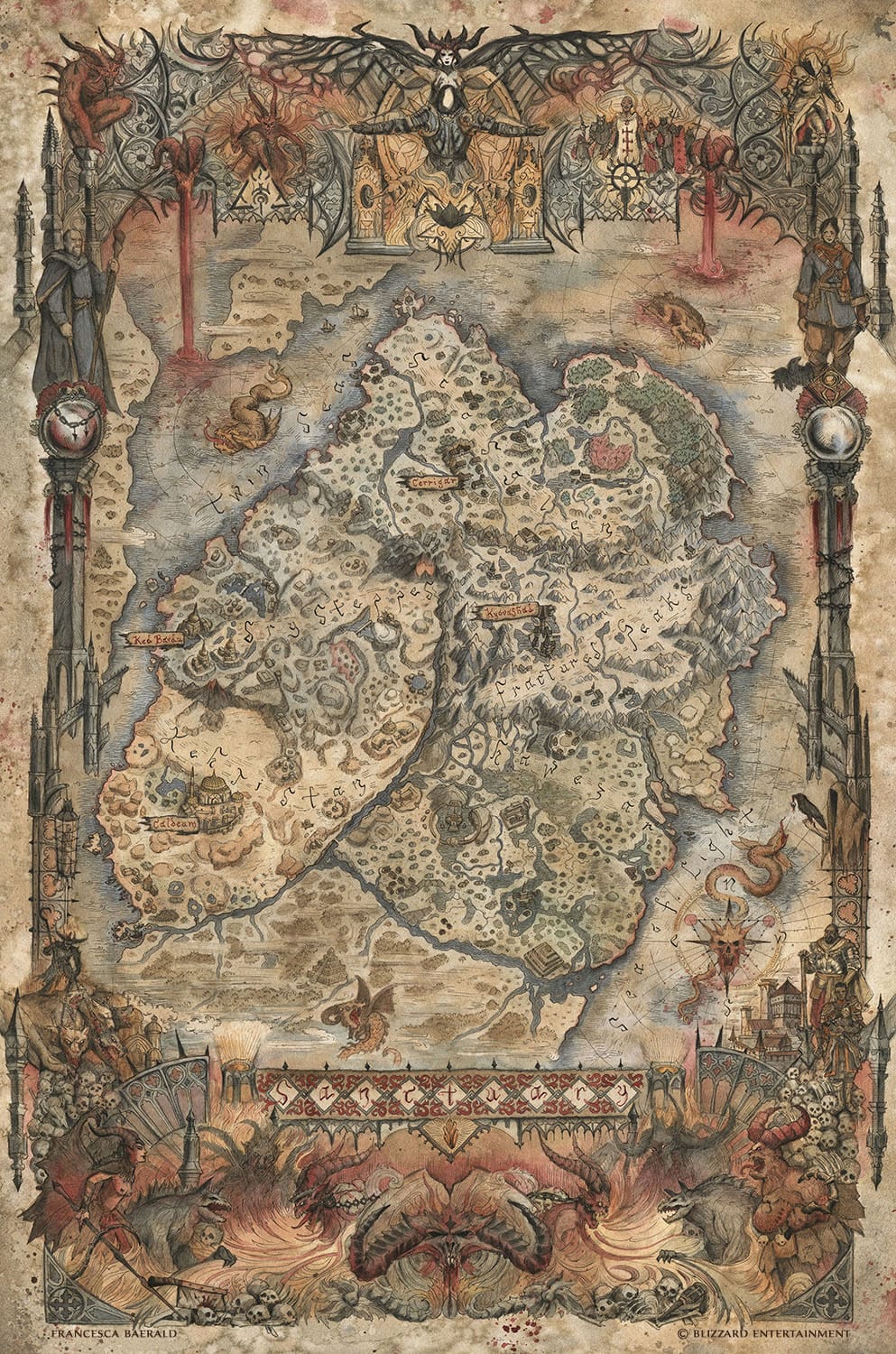
It was a similar story with her work for Blizzard, as she had spent “hundreds of hours” playing World of Warcraft and their other games before being commissioned for their Exploring Azeroth book series, which may have led to her being contacted later for work on Diablo IV to draft a map as a special item for the Collector’s Edition of the game. And as usual, there are nods to the game stuffed in the crannies. “There is Wirt’s Leg hidden among some skulls and bones; there is a crow with an eye in his beak coming directly from the first Diablo intro cinematic; and there are a few more easter eggs that I will let you discover – I don’t like to ruin all surprises!”
This kind of work on worlds that have a lot of detail and texture to them means they often come with extensive style guides, world bibles, and, of course, existing maps. But Baerald has also worked on places that have never been drawn before where she’s given mostly text and art briefs, like her work on Coriolis and her maps for fantasy novels. Then, there’s her work on board games where she’s often working on the board itself, which is arguably the most important game piece or element. Her board for the Legends of the Five Rings game Rivers of Gold is visually stunning, with the chromatic finish that makes it glint in the light lending it that sought after ‘table presence’.
“At the time of its original Kickstarter campaign, I had just started doing my first professional jobs, so I could only dream of working on such a great game,” said Baerald. “A few years later, the team at Cephalofair decided to create Jaws of the Lion, a more casual prequel to the game, and I was really surprised to get contacted to create a new map of Gloomhaven. That was the first time I had the chance to paint the iconic city.” Later, she worked with the tabletop publisher on the second edition of the game. “I had the honor of drawing a new version of the famous board,” she said. She was most recently tasked with drawing the maps for the upcoming RPG version of the massively popular game.
Baerald is now collecting around 250 different maps into one book titled Unbound that will be produced by art book publishers, Spiridon and Éditions Caurette. Alongside close-ups of some of the details, she’s contributed anecdotes and commentary. While Baerald has been a part of exhibitions, this will be the first time her work has been collected together in this form. After more than a decade of contributing to so many games, it’s a welcome moment of recognition for Baerald’s talents.