From blog posts to mighty 1,200-page books: Stonetop's creators reflect on a decade-long journey
And how their belief in the power of community has only sharpened.

The story of Stonetop mirrors my modern experience of the tabletop hobby. It was 2015, and I was recommending this hot game called Dungeon World to all of my friends. No, it’s so different from Dungeons & Dragons and uses this thing called Powered by the Apocalypse! I had picked up A Book of Beasts and The Perilous Wilds on recommendation from internet forums — my first ever purchase from DriveThruRPG. Through that connection with designer Jason Lutes I heard about Jeremy Strandberg’s exciting new project, a “hearth fantasy” hack about developing and protecting a pastoral community.
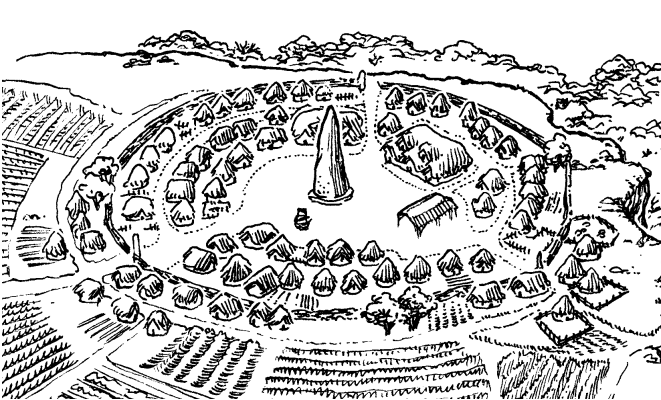
Stonetop was described to me through Strandberg’s Spouting Lore blog, which referenced this rich history of tabletop design culture I had never heard of. I followed discussions to Google+ and discovered a tiny but thriving ecosystem of players and creators. It was also where I saw early illustrations and maps of the town at the heart of Stonetop, rows of crops and humble homes circling this thick finger of stone carved in runic designs. It felt equal parts evocative and comforting, a beloved bedtime story given new life by different voices. It was, to my disappointment, a couple of years away from being ready. Fine, I would keep myself busy with Uncharted Worlds and another G+ darling, Blades in the Dark.
And that’s where Stonetop stayed for the next decade. I would check in occasionally to find Strandberg, Lutes, and illustrator Lucie Arnoux gradually plugging away at the project, placating readers with some form of “the work continues.” I had turned my efforts inward, too, struggling to launch a post-grad school career and shelving my active engagement with RPGs. When the team launched a Kickstarter campaign in March 2021, I rushed to support it. I had just started writing news for a site called Dicebreaker and was eagerly reacquainting myself with the hobby. There couldn’t be a better time for the books to finally make their way to me.
It would be March 2026 before I interviewed the Stonetop team for my own tabletop news website. They recounted the emotional journey from those early days imagining a version of tabletop roleplay that luxuriates in the mundane facets of a fantasy game. The books were preparing to be shipped, and Strandberg, Lutes, and Arnoux found time to reflect on everything it took to arrive at the finish line. So much had changed in the intervening 12 years — with the hobby and its attached industry, with crowdfunding, with themselves — but Stonetop remained a marriage of adventure and community where marking the seasons matters just as much as marking XP.
This interview has been lightly edited for clarity.
Chase Taylor-Carter: Your first credited game as a designer took six years to make it happen. You must have some feelings about that.
Jeremy Strandberg: Yeah, I guess that's true. It took 12 years. I was noodling with it for probably six years before we were ready to launch, and we [still] weren't ready to launch. Sorry about that, Jason. My best friend is a professor and has a PhD in computer science, and she continually likened it to the feeling of submitting a dissertation. I think I recognize the truth in how good it feels to put in that last chapter and to just be done. We've written the content, and it's ready to go. There was then the flurry of all the proofreading — crossing the T's, dotting the I's, getting it ready for press.
The thing that's sunk in now is the stage of self doubt. Why the hell is it 1,200 pages? Couldn't I have said this more succinctly? I know how we got there, and I know why it is the way that it is. I think that [feeling] will go away. I am proud of what we've done. But any small creator does an unhealthy amount of looking for people talking about their work, and you'll see the commentary of like, what is in it? Why isn't it done yet? And I know why. I think I can justify it. But at the same time, I have to agree. It's really long. That's a lot of words. Until it's a physical thing and the larger public starts to see it and react to it, I don't know that I'm going to be able to completely shake this feeling of what have I done?
Taylor-Carter: You said that you could justify to people why it took so long. Have you wrestled with whether you should justify it to people?
Strandberg: There was so much that I wanted to do already baked into the stuff that we had written eight years ago, which I thought was good and valuable. And I didn't want to have the rest of the content just be like, just draw the rest of the owl. Just do this, and fill this in and have it not be up to the same level. So, it was either figure out a way to pare things down to be more succinct, less verbose, and less supportive in order to have an even level, or do it all to that level. And that is what felt right and. It does mean that it's an awful lot of words, and I'm sure that some people are going to bounce off of it because it's so overwhelming to read, but what I hope is that it becomes a resource that people can just kind of go back to again and again. Should I justify it? I don't think it needs much more justification than itself.
Jason Lutes: I think the only people we needed to justify it to were the actual backers of the Kickstarter. They're the ones who pledge the money, and we are obligated to some degree to explain to them. But beyond that, no, the book is the book. You don't have to worry about that at all.
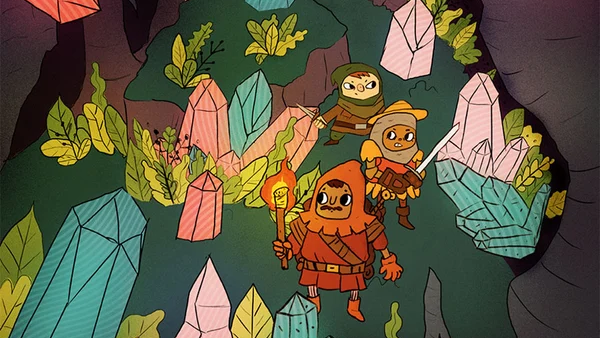
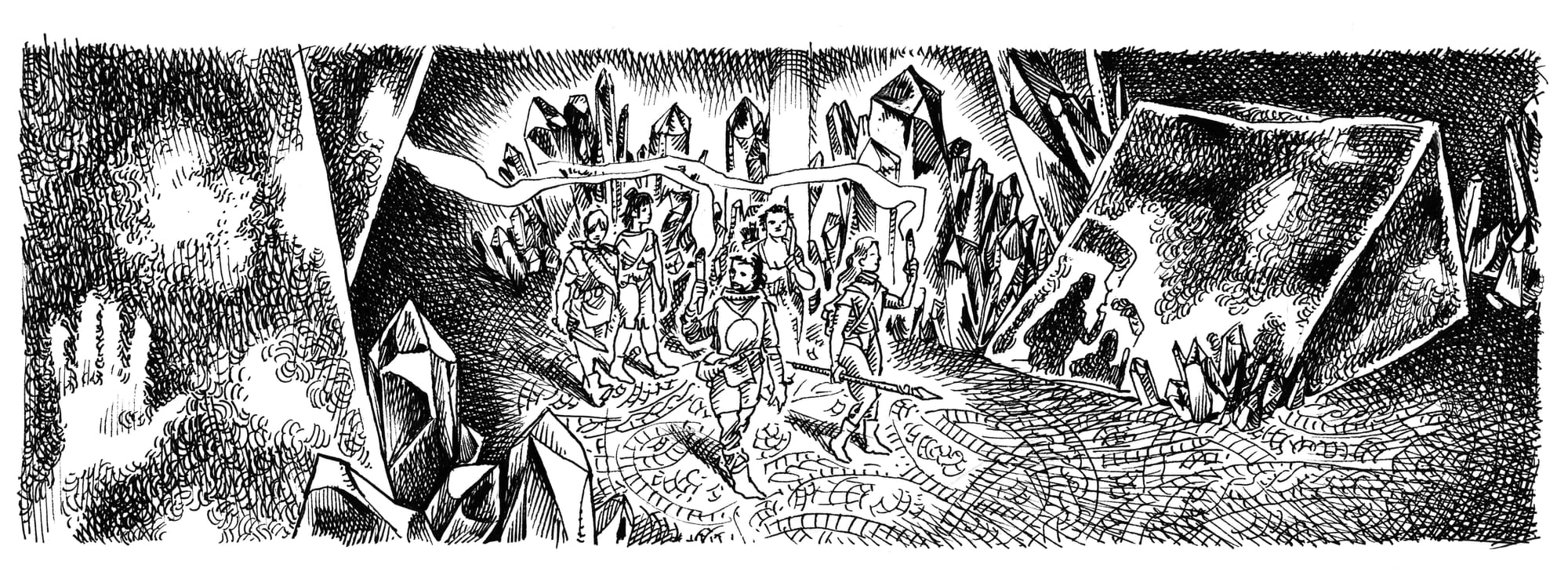
Lucie Arnoux: I think it was easier for me because I was called to illustrate, but I bore none of the responsibility. My responsibility was very different. And in a completely selfish, cut-off way, it was great that it took so long because it meant I spent that long with Stonetop in my life. It was really hard when I did the last illustration. Jason sends me the chapters, so I have a bunch of illustrations to do at the same time. I thought, I'm gonna keep the one with all the characters on it for the very last so I can say goodbye. And that was the moment I realized I wouldn't be getting more chapters. It was really sad for me. Also great because it means the book's finished and it can exist, but for my own wellbeing, I really enjoyed six years of Stonetop. It's a legacy. It's a big, beautiful book. And what matters is that it's done well because it'll be read for a long time.
Lutes: In the beginning, I feel like Jeremy and I had an understanding of the scope of the project, but it wasn't super nailed down. It was a very general conversation about what we were imagining, and then the change that Jeremy described started to happen. My other day job is teaching at an art school. I'm very used to working with students who have a big project they're working on and trying to figure out the best way to support this person in their project. Sometimes it's saying a 200-page graphic novel is too much for this story. You need to bring it down to 96 pages or whatever. Sometimes you can see exactly what needs to happen.
There were moments where I could push Jeremy more in this direction or try to limit this. I always try to pay attention to what's the impulse coming from inside the artist. Where is it taking them? And Jeremy was clearly listening to that and really paying attention to that, and he felt some need to flush things out more, bring things up to the same level. Recognizing that, I told myself, okay, well, that’s the book it's gotta be. There's a level of editorial input I can offer, but given what I see happening, I think the best thing for me to do is just be encouraging and supportive. The other part of it was that he was creating a really unique and rich and textured world. Yeah, the two books together are 1,200 pages long, but like they're digest size. They're like 5.5 inches by 8.5 inches. Not huge books in terms of their format. And they really are reference texts designed so that you can look through a chapter that's relevant to what you're doing. The second book is basically an encyclopedia of the world — you don't need to read that all the way through.
My big personal project prior to this was a comic book called Berlin, which took me 22 years to make. So Stonetop is like... Yeah. I knew that, for Jeremy, this was a huge, huge, weight and a massive journey to undertake, but I had the patience. I'm so grateful to have found Lucie who was consistently turning in this amazing work, and one of my favorite jobs as a publisher and art director is to ask an artist to do something and then have them just create this wonderful thing. There are very few roleplaying game books that have a totally consistent aesthetic quality to them, especially over that many pages. When people flip through Stonetop, it's not five different artists making the art, it is of a piece and ties into the whole sense of it being a complete world.
Taylor-Carter: Lucie, how did these two find you? How were you brought into the project?
Arnoux: Pure luck, serendipity. They found me on an online directory of illustrators that aren't men, basically. The idea from the beginning wasn't necessarily to have me do the whole thing because it's huge. Jason offered me an opportunity to bow out if I didn't have the time anymore, but I didn't want to. So, I didn't. Weirdly, the directory just closed. I think it just existed so that I could find Stonetop.
Lutes: It was called Women Who Draw. I just sifted through hundreds and hundreds of portfolios and websites. I can't remember how much time I spent doing it, but I ended up with two potential candidates. The other artist was wonderful, but Lucie's had a particular unique character to it that I really appreciated.
Arnoux: It was the black crosshatch that you were looking for that I luckily had on my website, whereas I usually do watercolors. So, it's really random that you saw the right thing as well.
Lutes: Right, but the watercolors really had a quality to them as well. There was something really particular to Lucie's sensibility that I thought, there's a fantastical element there, but it's not steeped in the tropes of fantasy that we see everywhere nowadays.
Taylor-Carter: Lucie, you said Stonetop was one of the most emotionally resonant projects that you've worked on. Why is that? I'm also curious how your style has adapted or changed over six years, and how much of that is because of your work on Stonetop.
Arnoux: Six years in the life of an illustrator is a really long time. And because Stonetop is everything, you have to draw everything. You have to draw underwater stuff and forests and monsters and tons of characters and villages. So, you find yourself drawing things you didn't know you could draw, and then you get better. So often I would receive Jason's pitch, and I was like, how do I do that with little lines in black and white? That's insane. And most of the time, I managed. That was a great journey of creative self discovery. I felt like they trusted me, so I really let go and didn't have anxiety about it, which is not always the case for commissions. I think I really vibed with the universe as well. It's not just a skill thing. I not only cared about the story but also the angle that Jeremy wanted to take that's just a bit more gender diverse, a bit more diverse in representation, versus what I know to be fantasy illustration. We all had the same vision, and that's rare.
Taylor-Carter: Jeremy, six years is a long time for you to adapt and grow as a designer. When you work on the same project for several years, I have to imagine that familiarity could lead to contempt, at least in some parts. How have you kept a whole image of the game in your mind and didn't start to hate parts of it?
Strandberg: Stonetop is heavily modified from Dungeon World, but Dungeon World is still there at its core. And as much as Dungeon World has been a huge part of my gaming life, it's got flaws. Some of them are pretty structural. The number of times that I had to just tell myself, I will not tear out the hit point system and replace it with something else, was significant. There definitely were times — and I'm sure Jason kind of rolled his eyes at this when they came in — where I would start tweaking a playbook or even a core basic move that had been established for a long time. The ripple effects were relatively easy to contain and track down and make sure that we had done them correctly. I certainly have looked at the combat mechanics over the years and just been like, I could do better.
At the same time, we have over a decade of playtesting on this. We know what works, know that things are balanced against each other relatively well. The amount of effort and rethinking and unknowns that would get introduced by playing with that is not worth the cost to create something that is good enough. There is a part of my brain that's constantly asking what would a Stonetop Lite look like? Or what will the next game look like? It certainly doesn't help that Dungeon World 2 is in development right now. I spend a fair bit of time wondering and trying to keep an eye on it. So many amazing games have come out and changed the shape of what people expect. Blades in the Dark didn't exist when we started down this journey. Let that sink in.
There is second guessing and wondering if I could start over from the ground up, but I don't. It wasn't particularly hard to keep the vision as a whole in mind because I spent so much time in [the game]. I knew what I was working towards. I knew what I wanted. It's been enough time talking about it with people that finishing was never really in question. Everything else is just working out how we go about doing X, Y and Z.
Now, despite the things that I said earlier, I am weirdly self-confident with the stuff that I set myself to, which mostly is a blessing. But it certainly can make me stubborn.
Taylor-Carter: Speaking of how much the tabletop hobby has changed, are you worried whether Stonetop will succeed as a retail product now compared to, say, a pre-Blades in the Dark market?
Lutes: I'm not worried at all. Not one iota. The quality of this thing, because of the creators involved, is just super high. The hype around it is totally organic. We have not done anything to promote it outside of the Kickstarter channels, and yet when it went up on BackerKit for pre-orders, people kept streaming to it. We're printing a very optimistic number of books, so I think it'll have a long tail. I don't really have any concerns about that. I know that we're gonna sell every last one of those physical books within the next two years.
I am with Jeremy on this idea that when new games come out and change the field, change your concept of certain mechanics or show you what's possible in other ways, it's really hard to resist folding it into your own games. But even though new games keep coming out, people keep playing all the old classic games, too. It doesn’t obviate the existence of other things that are good, and this game is really, really good. Jeremy has shaped them and restructured Dungeon World’s bones, and one of the big selling points is that being community centered. It's about the village, leaving and coming home to the village. I think the closest thing to that is probably The One Ring, maybe. Jeremy calls it “hearth fantasy”, and the mechanics are designed to support that unique feeling regardless of the fact that hit points exist.
People have been playing it for years. There are many hundreds of groups that are playing the game, and I can't count the number of times where people have said, this is the game I've been waiting for. I'm not trying to brag; those are just facts. And that's why I'm not worried at all about the commercial strength of it.
Taylor-Carter: Can you share the size of the initial print run?
Lutes: We're going to print 10,000 copies.
Taylor-Carter: Every year that Stonetop didn't come out, that initial seed money was stretched over a longer period. What were the financial conversations like? Did it get supplemented by other things as it became a more long term project?
Lutes: I've managed to hold on to most of that initial nut, but you're right. Lucie was paid illustration by illustration, but it's towards an eventual profit share. They will get a percentage of the profit, and the illustration fees were kind of like an advance against how much money the book makes in the long run. Jeremy has not been paid anything because he's just pouring his heart and soul into this thing. I had to pay taxes on that money because it's all through my company, and some of it had to go towards my publishing thing, but the majority of it's still there. That's what we're using as the basis for this print run. But we are going to have to get a little money from elsewhere.
Taylor-Carter: Is that pre-orders? What do you mean when you say “elsewhere”?
Lutes: The final numbers are not totally solid yet. I got the quote for the print run, but we're gonna be printing Lucie's maps through this same printer. I am a self-employed person; there's the publishing thing, and then I have my comic books, and I sell my original art. There's other ways that I make money that's all part of Lampblack and Brimstone. All those things are part of the big pool, and I have to figure out where to put that money. So, I'll probably draw from other places within my LLC to be able to do that.
Taylor-Carter: One other part of tabletop that has significantly changed since Stonetop began is crowdfunding. How have your own feelings towards that practice shifted over the years?
Lutes: I'd like to get off Kickstarter. I'm looking at BackerKit as the place to do my next game. Whatever various things about Kickstarter I don't like, I find BackerKit very proactive with customer service. I'm totally confused by the backend, but that's just my brain. There's lots of drawbacks to crowdfunding, and I am very fortunate that I'm able to raise money to publish stuff largely through word of mouth. I'm not on most social media at all. Members of my very few, very small communities have people in them who are mavens that spread the word. If crowdfunding wasn't there, I'd still be doing stuff, but it would be on a much, much smaller scale. Crowdfunding has been an enormous boon for roleplaying games, but I refuse to play the hype engine game.
Strandberg: A lot of the initial pop that we got for Stonetop was, frankly, me cashing in a lot of social capital that I had built up over the years. Jason as well, right? Perilous Wilds was easily the most cited supplement you need when playing Dungeon World. I was a very active member of the Google+ community for Dungeon World, to the point where I archived it and made that archive in my free time. “Use” is a terrible phrase because not everything is transactional, but it was there to use and made a big difference.
Taylor-Carter: Lucie, if you used your work on Stonetop as part of your portfolio, did book publishers understand illustration for RPGs? Did you have to translate across industries?
Arnoux: No, for me it's completely different. Nobody that I do murals for knows that I illustrated Stonetop. Nothing is comparable to Stonetop in what I've done. I mention it because it's some of my favourite drawings that I've ever done, but I don't do any other project with that style, for example. Which is amazing because Jason and Jeremy gave me so much freedom to interpret the world as I wanted. There's a lot of Lucie in there. But I would like for people to see what I've done for Stonetop and think, ooh, could you illustrate this other fantasy thing? That would be cool. But for now it will remain incomparable in my career.
Taylor-Carter: Jeremy, was there a distinct reciprocity between your design and Lucie’s illustration? Was there a creative back and forth, a conversation between the work you were producing and sharing?
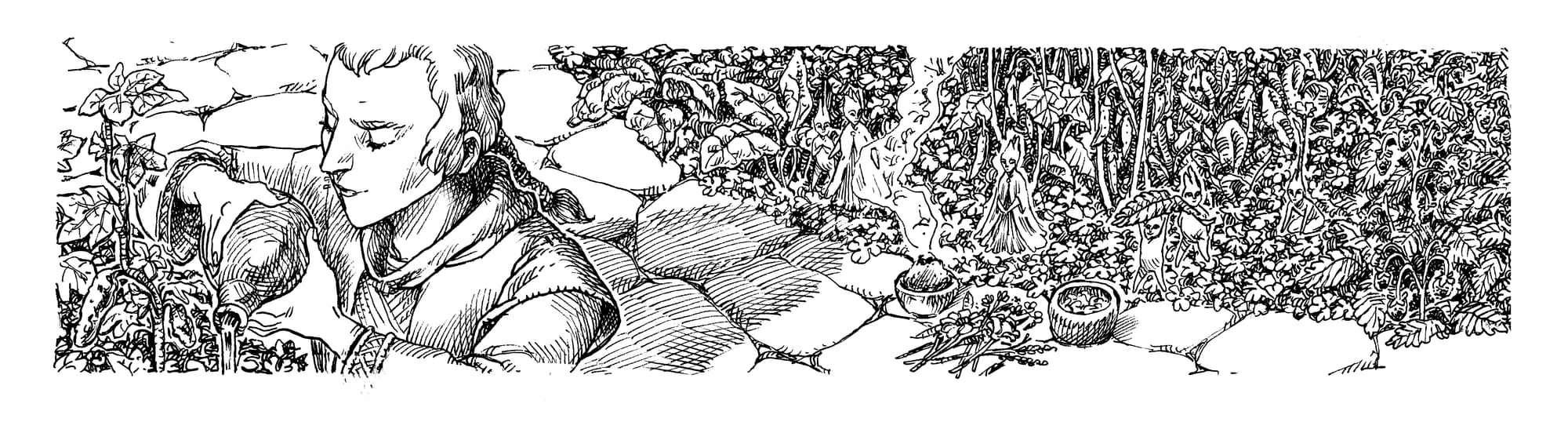
Strandberg: Consciously, nothing's immediately jumping to mind. But, if nothing else, Lucie's characterizations of the four core characters in examples throughout the book changed and influenced how I perceived those characters in my head. I would write the characters, their actions and their scenes, with her depictions in mind. A lot of their personality, when I was playtesting or even playing things out in my head, stemmed out of the characters that Lucie created for them.
Arnoux: That's so cool! I didn't know.
Strandberg: It's the kind of thing where you don't think about it, right? I didn't realize how much of an influence that had. But Blodwen in particular absolutely came to life under your illustration, and Rhianna to a great extent, too. Like, I would never have come up with Rhianna looking the way that she does and having the attitude, the presence, that she does.
Arnoux: That's so cool because, for me, I'm just the instrument of your story. I'm just at the service of your story. I’m not an artist, I'm an illustrator. But it's cool to know it goes both ways.
Taylor-Carter: Can you explain the difference, Lucie, when you say “I'm not an artist, I'm an illustrator”?
Arnoux: [laughs] Jesus, I walked straight into that. The difference between artist and illustrator in this conversation just means that, as an illustrator, you're at the service of the story. You're supporting someone's idea and building upon it. That's what I meant. Artist is anything creative, but you can be on your own. Illustrator is with someone else's stuff. Jason is that.
Strandberg: Illustration is following the spec, whereas an artist is you're making your own thing, following the whims of your soul.
Lutes: One of the great strengths of the art in this book is that Lucie's artistry comes through.
Taylor-Carter: Speaking of working alone versus together, Jeremy, you have public places where people gather to talk about and playtest Stonetop. Once it got out of your brain and into a playtest document around 2019, it's been an open conversation with folks. Was that helpful? Troubling?
Strandberg: Hugely valuable. Jason, we did have a scramble of activity to put an initial playtest kit together. Before that, I was playtesting in-house with my own group. But we started recruiting playtest groups pretty early on, and it got a fair amount of traction right out of the bat. To the point where we had, I don't know, five, six, seven testimonials from different playtest groups before we launched the Kickstarter — and we were able to put [them] in there. It’s enormously fruitful as far as getting feedback from people. What was confusing? What just wasn't working? When we were stumped on what direction to take the design, throwing it out to the community, seeing the churn, and picking out the right things absolutely made it so much better than it could possibly have been.
It's taken a long enough time and had enough eyes on it where I feel comfortable saying that this is the quality of a second edition game. We've had so much iteration. We've had so many positive, powerful, creative improvements from the community.
Taylor-Carter: Is this how your brain works — more conducive when you have this well of other people to throw ideas at and have them speak back to you? Or was there something about Stonetop that fit this feedback model?
Strandberg: Some of it is performative. I enjoy making the thing, throwing it out there, and seeing people's reaction to it. That's fun. I get endorphins from that. I won’t limit myself, but I don't think that I'll ever not throw a draft out there and see what a larger community thinks of it before taking the next few steps towards something more polished. There's too much value in that.
Taylor-Carter: What other tabletop games have you been playing over the past decade that cross-pollinated your creation of Stonetop?
Strandberg: I'm going to be honest with you: I have had my head buried in Stonetop. I have been aware of the conversation around a bunch of other games. I've read a number of them, or at least flipped through them to get a sense of how they work. But I haven't played a Forge in the Dark game. I have not played Pasión de las Pasiones, even though I absolutely love what it's doing. I haven't had the spoons, if you will, to play another game. It's one of the things I really admire about Jason is that he maintains an active, consistent practice of play.
Honestly, I have not even played Stonetop in over a year now. We did the annotated actual play, and then we shifted into, shit, can we get this done by February of next year? I had to quit basically all of my other hobbies on the side. So, I am now starting to get to the point of wondering what game I want to play now. The kind of sad thing is I know it's probably going to end up being Stonetop. I have been really out of the loop.
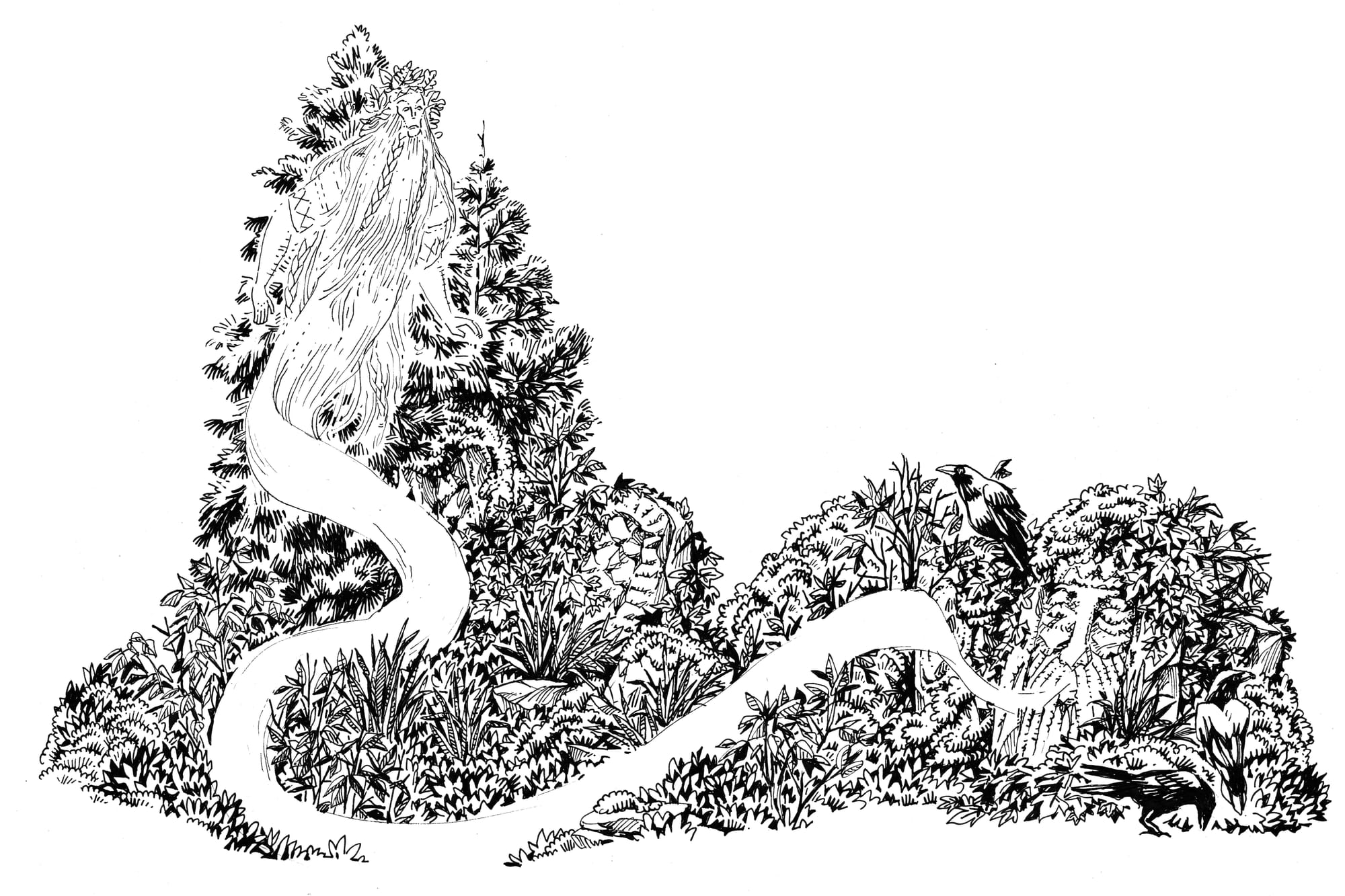
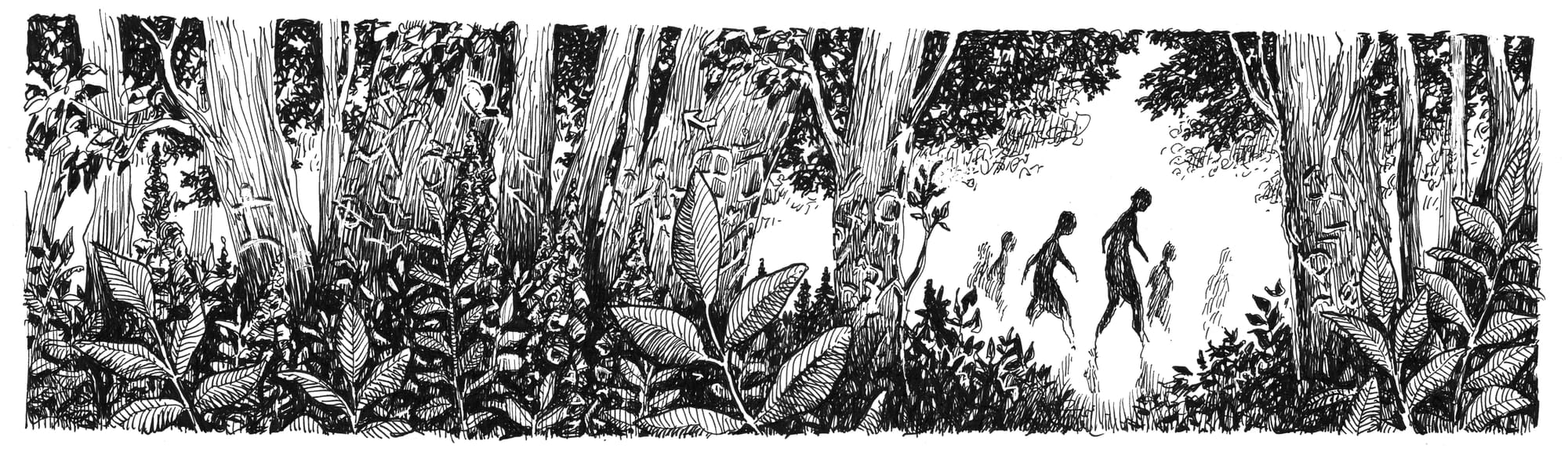
Arnoux: None. I played Stonetop with my friends, but it's hard to find a good group, and I'm not willing to do the work of the GM. Also, I didn't want to be distracted by my own ideas. I didn't want to have in my head this is how other people have drawn fairies and fae. There's a drawing I redid because I drew some birds that I realised weren't related to Wales. They weren't the right kind of birds. But I don't really look at other artists’ stuff because I'm not sure that's very conducive for a visual artist. I used to send [Strandberg and Lutes] what looked like blobs, and they would just go, yeah, I believe that will turn into a nice illustration at some point. I'm very aware of fantasy comics because that's what I grew up with, and I’m mildly aware of fantasy art like you'd find in Magic: the Gathering and all the classics. I thought maybe the distance would be helpful so I don't give into tropes as much.
Taylor-Carter: With Stonetop’s production in the rearview mirror, what’s next for this team?
Lutes: Lampblack and Brimstone will be more recognized because I think that this book is going to make some waves, which is great. My next design and publishing project is Freebooters on the Frontier, which is my take on the Dungeons & Dragons I played when I was 12. It's my attempt to use the PBTA approach on classic fantasy: hardscrabble, high mortality rate fantasy stuff. That's been in development and playtesting this whole time. I will probably launch that in 2027. In the meantime, I'll be supporting Stonetop.
Strandberg: Yeah, I suspect that Stonetop is going to take up an awful lot of my time for a while. If nothing else, there's some stretch goals that we have promised people. But also there's some things that I think would be really fun to do with the Stonetop community. I haven't even talked to Jason about this, but I would love to put out a call for Arcana submissions and have it be a mentorship process. How do you get from that draft to a polished product? Actually work with the creators to do that. Similarly, I can imagine a space for the adventure starters to do something very similar. I would love to see a vibrant community of people not only making stuff for this game but also feeling like the creators are encouraging it and helping, teaching people to do it.
Arnoux: That's cool, more Stonetop. Yay! Let it never end. If Stonetop is the only TTRPG I work on, I'm happy. If that brings more people to me, that's great, but I've got my comics career that's doing fine. I've always wanted to do more in a fantasy setting.
Taylor-Carter: I want to ask about the inherent politics of Stonetop, this game where you are explicitly charged with defending your home against evil, which means you need to define the evil and the defenders. After the events of the last couple of months in Minneapolis, Boston, Los Angeles, Portland, and other US cities, defending a home has taken on a much different cast. How intentional were the politics baked into the design and the world of Stonetop? How does it feel to release a game like this into the current environment?
Strandberg: I don't know that I have a great answer for it other than be thoughtful and see how things go. As far as the design aspect, yeah, it was intentional. There are certain choices made in the setup and framing that are intended to help deal with some of that. People sometimes notice and comment on the world being really empty. The next closest village is four days away, which cuts down on the likelihood of direct conflict with your immediate neighbors or becoming a colonial power. That is intentional. I didn't want the game to involve stomping a bunch of green folk, you know? The closest thing to that is the crinwin in the forest who are very intentionally characterized as something about them being clearly different and wrong. But it's also not clear cut. The game raises questions even there of whether these are more than apparent beasts.
We frame the community as centered on communalism, the lack of jobs and coin being used in favor of a gift and honor debt society, not a capitalist society. It's also contrasted with other communities: the capitalist, libertarian hellscape of Gordon's Delve up in the hills, which is basically Deadwood. You've got a much more hierarchical established family order — they’re the aristocrats of the area. You've got feudal lords in the Manmarch. And then you've got free roaming, nomadic people who are a wild card in the whole thing. But the community of Stonetop is unique, and it's set up as something worth fighting for and protecting.
That is intentional partly for gameplay reasons but also because that's what I think a good community is. And I don't think there's any way to take my politics out of that. I can't make a community that's worth fighting for if I don't say what I think such a community looks like. There’s other stuff that was very intentionally handled with a light touch like. Stonetop is very quiet about gender norms and racial tensions. It makes it clear that you don't have to be from here. Your characters absolutely could be from down South or from the mountains or be transplants. Lucie, in particular, did a really nice job of front-and-centering Vahid as not a white person, and I think that that is great and important. One of the playtesters, Luke Jordan, pointed out really early on that I had the names lists broken out by gender.I had the masculine and feminine symbols next to them. Some very queer-heavy groups called out that it felt very alienating. So, we just pulled away from that. I intentionally didn't say anything in the game about gender norms? What are the family structures of Stonetop? We turned those into questions for groups to decide and potentially be a part of their character arcs.
Lutes: There's something about the way the game itself is shaped that reinforces this idea of us all being around the table, and that sense of community is not just a fantasy, right? It is something that is part of the real world, and I think that's one of the reasons that this game is powerful.
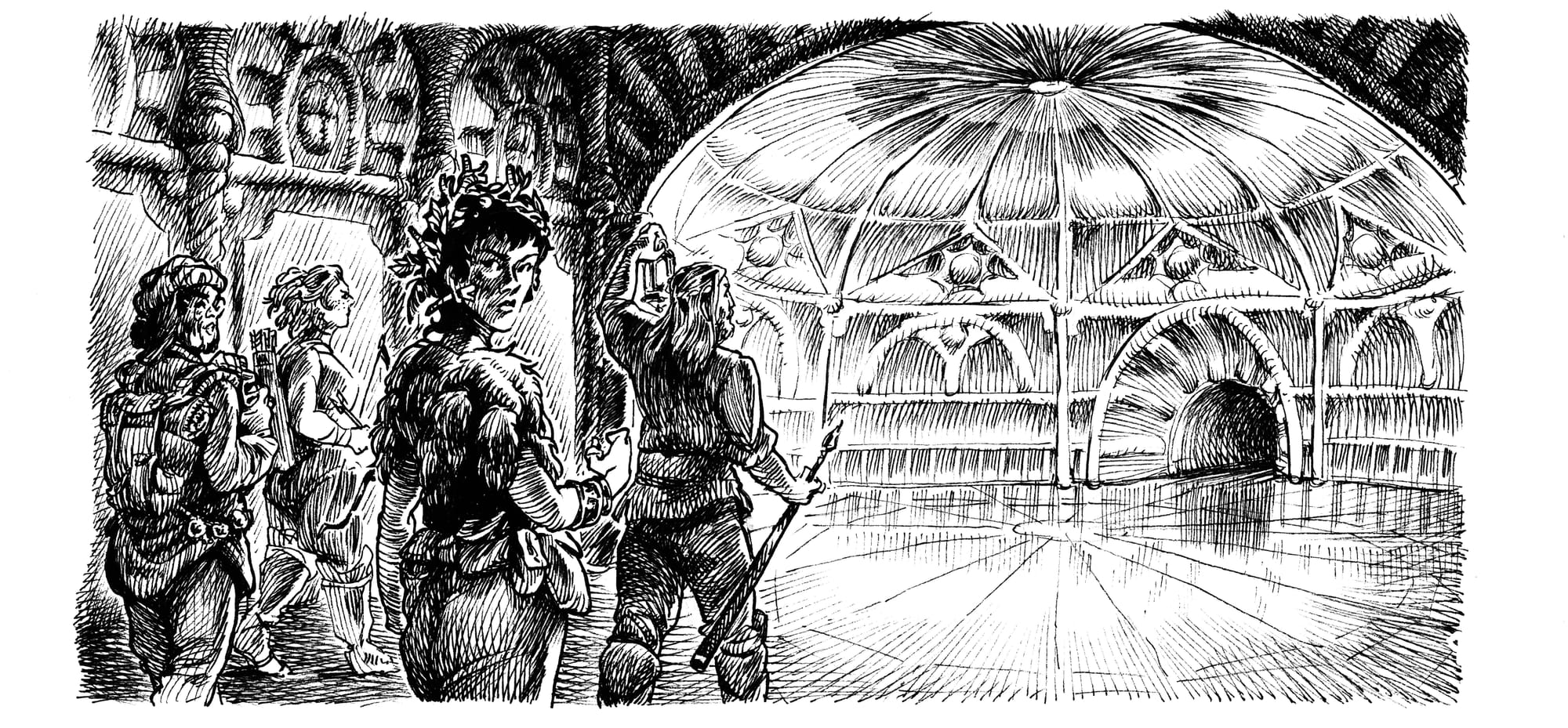
Arnoux: Stonetop is ethically gorgeous. It's trying very hard, and that's all you can do. My role in that was to attempt to draw very different looking people so that whoever opens the book may find themselves in it at some point. I love that it's really been picked up by the queer community massively. It's wonderful for someone who grew up with a different kind of fantasy tabletop, playing things, especially in French, which is very gendered in terms of language. It's great to see another community highlighted, and I'm very proud to be part of that.
Strandberg: There's a bit in the Welcome to Stonetop section titled “Why Play?” that probably has the single paragraph that I'm most proud of in the whole book: “Because here in the real world, our communities are often fractured, broken, disconnected. Because maybe you want to imagine a community that works when it pulls together and struggles together and looks out for its own. Because play is practice, and practice is how you change yourself, how you change your world.”
You know, it's a little silly to think that a game will make you a better person and make the world better, but it can help.
Stonetop is still available to preorder here.