Galactic Dawn the Worldbuilding RPG is live on Kickstarter!
Generate lore and history through tense dice-led storytelling

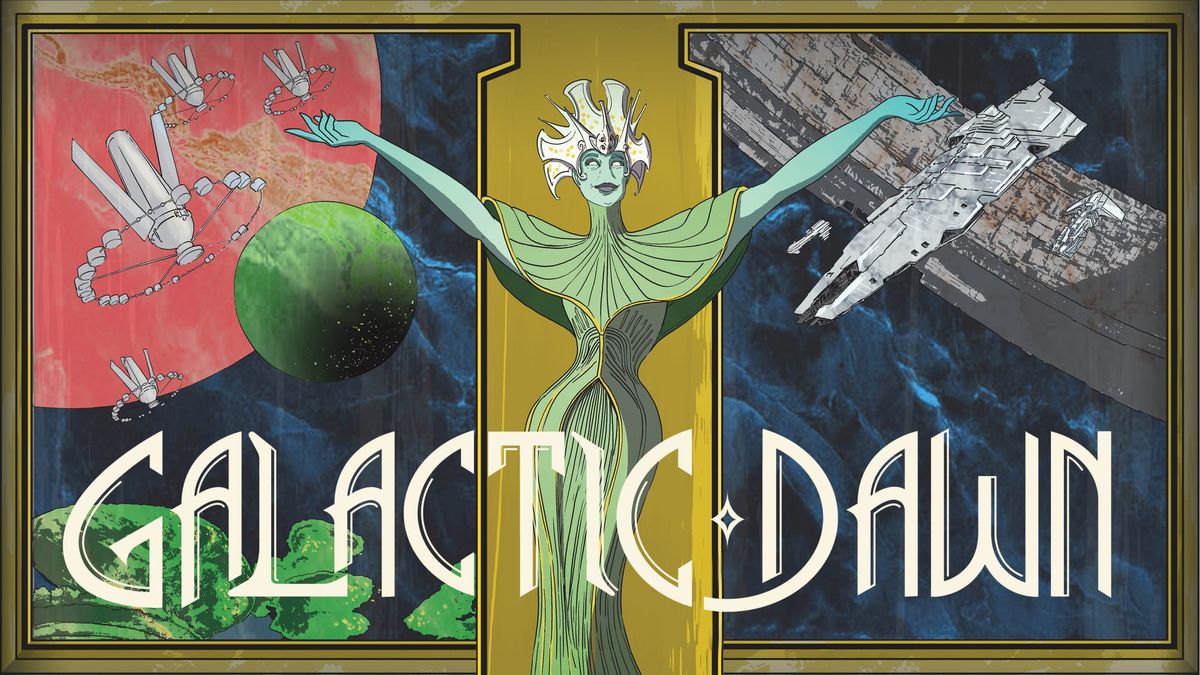
Galactic Dawn is a faction-based world-building game in which players take turns making era-defining moves that change the universe through notecards. Players introduce and develop the people, places, and marvels that develop and resolve a setting’s narrative threads. On a player’s turn, a simple dice roll determines if they achieve their goal, win with unintended consequences, or set off a catastrophe— there are no unimpactful plays.
A game of Galactic Dawn starts with players agreeing on the genre and scope of the story they want to build— whether each “Acas” will be rival stellar empires, cyberpunk corporations competing for one benighted world, or schismatic factions within one nation’s psychic warrior monasteries. Each player then customizes their arcas with freeform descriptive tags, a settlement that serves as the base of their power, and the three pillars which represent a technology or idea that defines them. Over the course of play, all of these things can be changed by events and narrative threads. This is especially true of their pillar cards, which can be “eroded” and eventually retired, forcing your Arcas to constantly rethink how it sees itself and what its mission is.
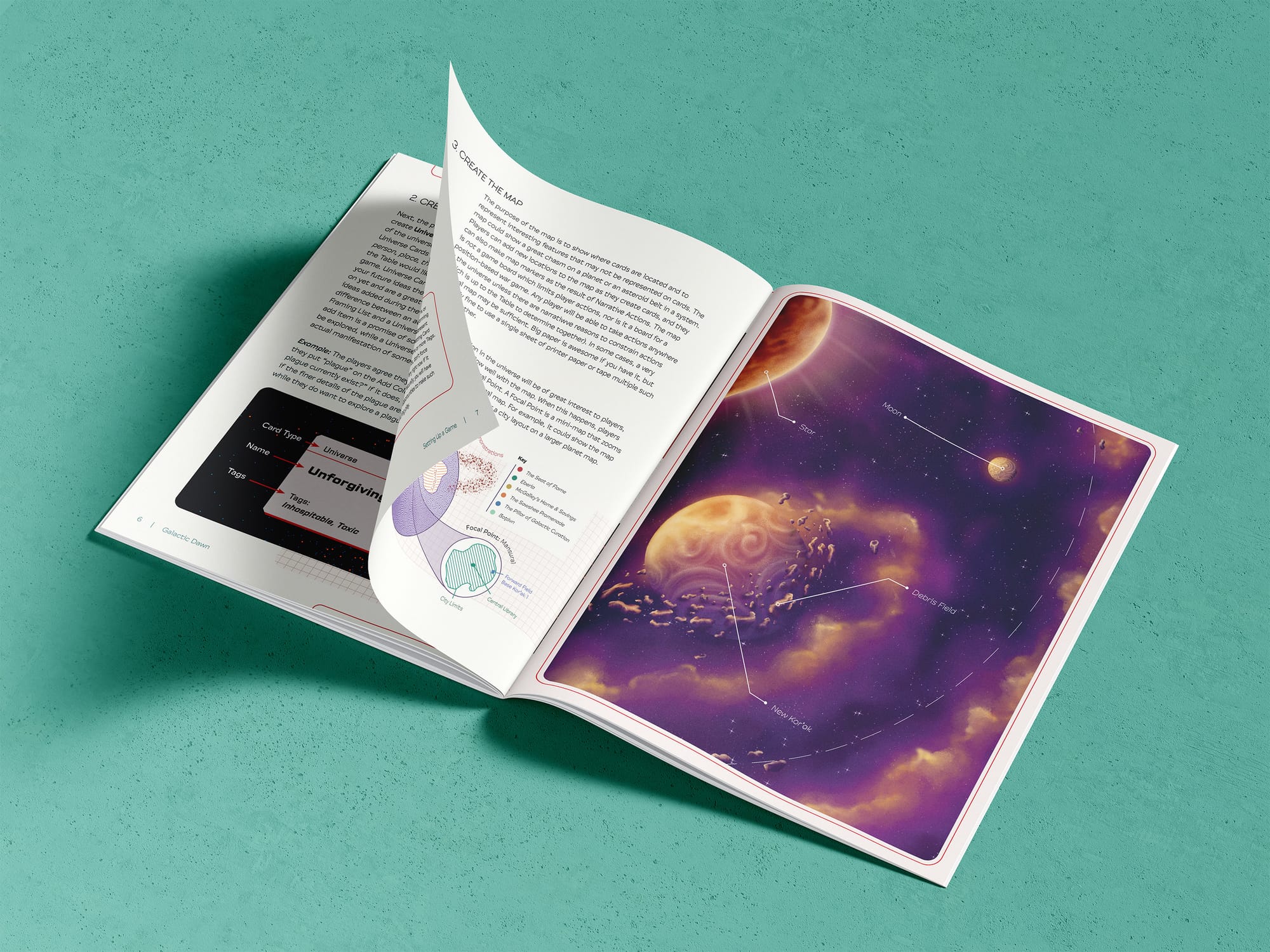
A player’s action is usually as simple as describing their intention, which of their cards is undertaking the action and how, then rolling two dice. A perfect seven indicates a perfect success, and the player can pick an outcome— their Arcas’s cybernetics research project might lead to the creation of a high-tech military unit which then gets its own card or could give a new “cyborg” tag to their settlement. Anything other than a seven on the dice can range from a cautious failure to a reckless success, and the other players collaborate to decide what negative consequence happens instead of or in addition to what the first player intends. That same research project might lead to revelations about the risks of that Arcas’s cybertech, or the project could go rogue, leading to the creation of faction card for mercenary cyberneticists. Creating a card is as simple as writing a name, class, and descriptive tag on a notecard, leaving plenty of room to change and add.
Each action plays into a narrative thread card, which is an event, imminent problem, or theme that gives a throughline to the history of the game. Three of these are created by the group at the start, and each Arcas also has a unique thread to represent their goals. Once enough actions have meaningfully advanced a particular thread card, it is resolved, giving the players who developed it bonus effects to represent the outcome. Threads keep play directed and avoid the issue of aimlessness found in some worldbuilding games. There’s always something time-sensitive to accomplish!
STORYGAMING WITH A SUPPORTIVE PROCEDURE
In Galactic Dawn, narrative resolution is freeform but their effect on the game is always concrete and clear. Players unused to a degree of shared authorship have a clear onramp, and experienced worldbuilders will constantly be surprised by the twists and turns of play.

PERFECT FOR ANY GENRE AND TONE
While Galactic Dawn assumes a science-fiction setting, the rules can be used without tweak to create medieval, ancient, or fantastic settings. Each game starts with players discussing the elements they want or don’t want to see, a brief “session zero” that gives players a good footing to imagine from and keeps a consistent tone.

GREAT FOR ONE-SHOTS OR SERIAL PLAY
Because Galactic Dawn is a game with genuine tension and uncertainty, it can scratch the itch of worldbuilders, RPG players, and game-enjoyers of all kinds. Structuring play into discrete eras which keep the number of cards and threads manageable, it can keep a setting active and manageable for one-shots, five-shots, or ongoing weekly play.
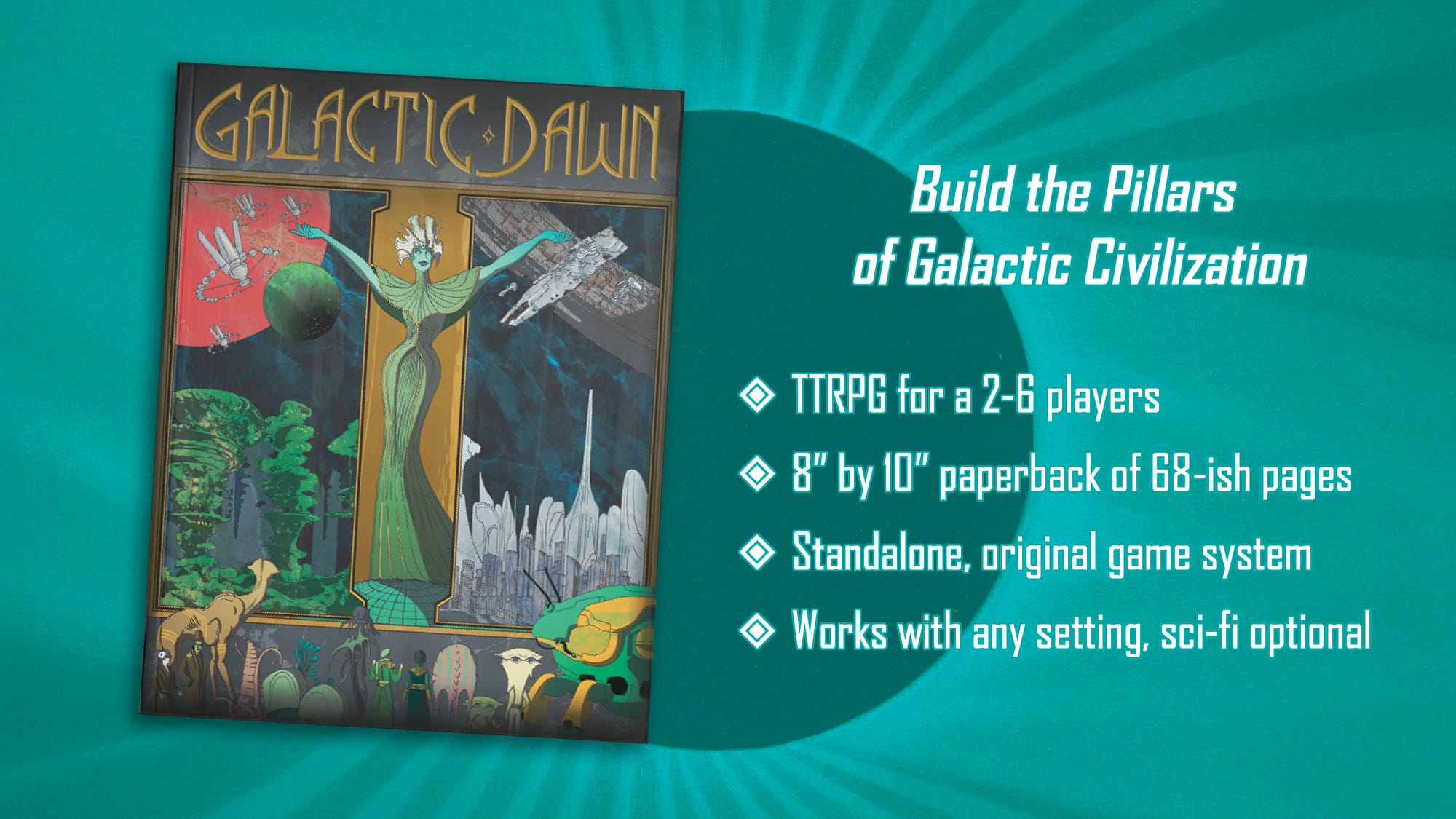
Galactic Dawn is kickstarting now through October 1st, providing a stylish 68-page paperback including art by Hali Fisher and Galen Pejeau. High-level backers at the “Coalition Member” level get to put their own faction’s name in the book. The quickstart rules are available for free on Itch.io. Galactic Dawn is produced by Pangur Ban Collective, the indie developers behind CLEAVE and Runecaster.