In The Pines is funny, scary, and a little bit fucked up
But maybe the real gender-horror is what happens outside the game.
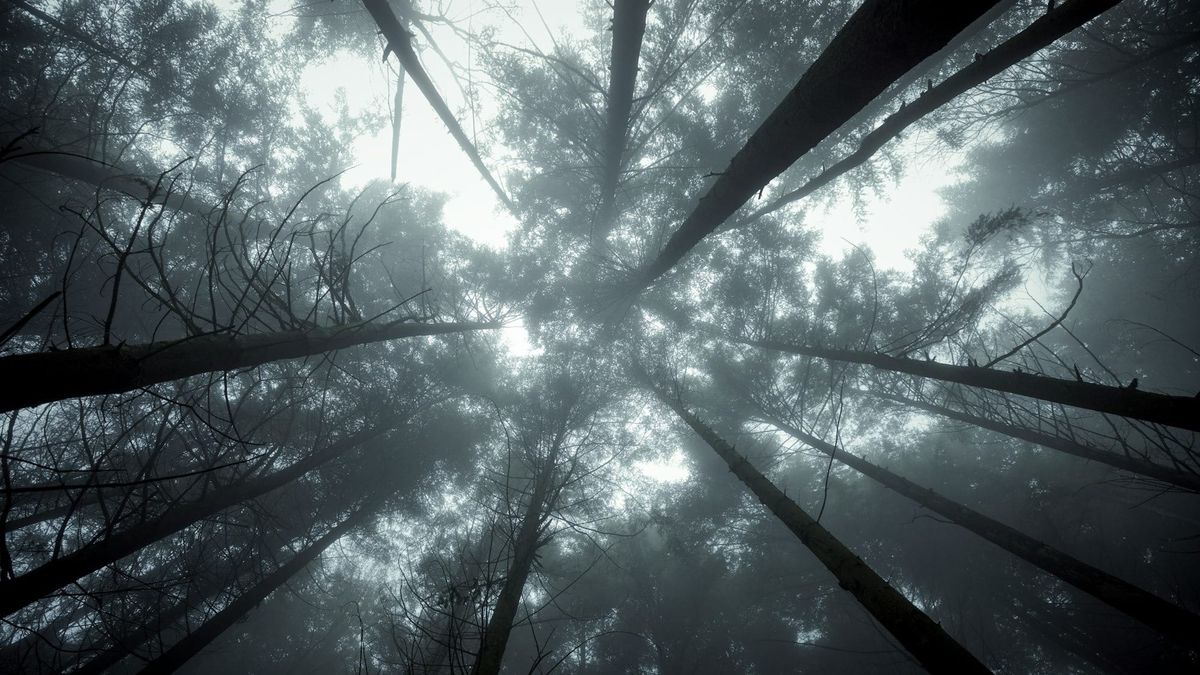
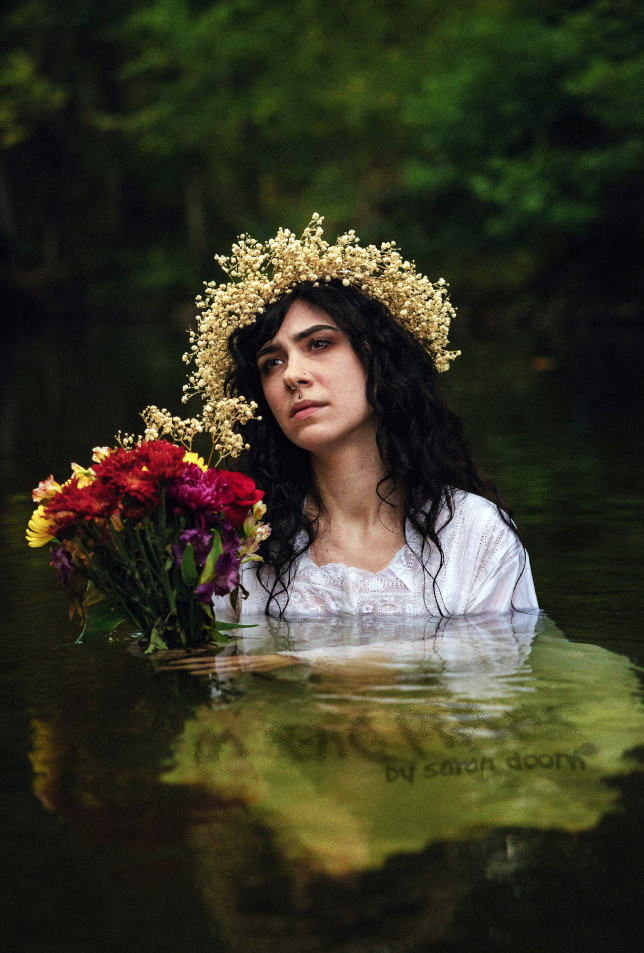
A group of women go on a fancy camping holiday, maybe slightly overextending their budgets to do so, and within the woods, away from the routine of ordinary life, their friendships take center stage as they reconnect and rediscover what brings them all together. But something lurks within the dark forest, something that sees the genteel manners of civilization as a facade to be stripped away. The forest asks the most philosophical of questions: Are you tired of being nice? Don’t you just want to go apeshitt?
This is the premise of In The Pines, the survival-horror game from designer Sarah Doom, recently released as an ashcan. Doom is probably best-known as the co-designer of Bluebeard’s Bride, the landmark feminine horror title published by Magpie Games. Alongside Velvet Glove, where the players are all members of a girl-gang in an alternate 1970s, her oeuvre is full of games that revolve around women in different ways.
“Bluebeard's Bride was one woman's mind working against herself,” Doom told Rascal News in an interview. “And then Velvet Glove was: we are teen girls, and we are in it together, and we love each other. And although there can be strife, and you can disagree on things, it was about the love and the strength that can come from female friendships. So, in this one, it's about what happens when those friendships go bad.”
In The Pines has a deep love for its subject matter: both the characters (who, spoiler alert, aren’t in for a good time) and the genre of horror. Doom lists a series of inspirations that range from the cerebral to the campy or comedic: The Descent, The VVitch, Annihilation, Yellow Jackets, and Teenage Sex and Death at Camp Miasma. The effect is visible in the game’s design as Doom uses both explicit mechanics and subtler tools to facilitate roleplay in that genre.
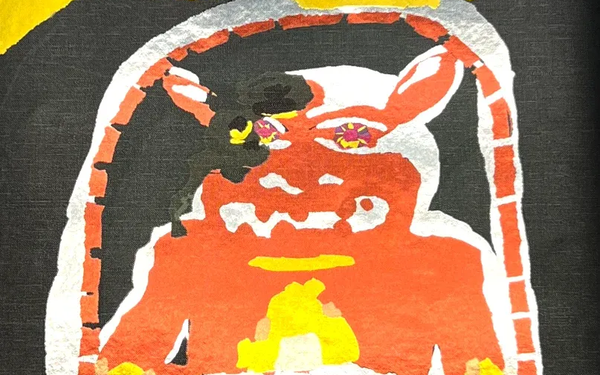
On the GM side, the design work is focused on “moons,” which are basically pre-written horrors that the characters might encounter. In the ashcan, there’s a “skeletal bear queen, honey for blood and rotting pomegranates for eyes.” Doom breaks down the horror into constituent symbols: pomegranates, black moths, honey, and bears. Incorporating and reincorporating these elements into the game over and over again gives them an ominous or portentous quality, even if what is actually happening is quite mundane. An opened jar of honey, a vandalized sign featuring Smokey the bear, moths circling a bathroom bulb. “There are pomegranate bushes, and one of the trail guides invites you to eat a pomegranate fresh from the bush. What do you do?” said Doom, as an example. Because it’s a horror game, these small moments become full of tension and possibility.
“The biggest thing that I wrote in the ashcan is that if you're afraid that you won't scare your friends, you should not be afraid of not scaring your friends,” said Doom. “You don't have to say everything. Let them fill in the blanks, and they scare themselves. You don't have to do all the work. Just let them see part of something, and they will tell you what they think it is. Then, you just take that and make it worse.” It’s the GM’s role to serve up these moments that are pregnant with possibilities, and then stand back and follow the players. As Doom captures so expertly in a section about the MC’s agenda, the fun comes from making the characters “see the outcomes they invite.”
On the player’s side, the flavor is in the playbook design and their constituent moves. “You can flee for your life, you can seduce, manipulate, or nurture people, you can figure out who they are, but there is not an explicit violence move,” said Doom. “One of the things that horror movies do is, women have to go through a life-changing, altering, violent event in order to be inducted into violence, and then have access to it.”
The playbooks bear names such as The Helper or The Lover, each of them built around a different engine of incentives and strengths. The Helper is built around being overlooked, which has the upside of letting them hear gossip that they can use to help or hurt their friends. The Believer harnesses prayer; the Lover, their sexuality; and The Butcher, their pain. The Butcher is the only playbook that comes with any affinity for violence in a “hurt people hurt people” sense.
Players will also decide the bodies of their characters. “There's a little bit of a trope in the horror genre that what you look like will showcase whether or not you survive,” said Doom. “You must be a skinny, white or white appearing, androgynous-type woman to be the final girl. It's never the curvy slut. It's never the tomboyish one that is not attractive. It's rarely a fat woman. And then because it's set in the ‘90s, you have to figure out your clothing, your makeup, and your hair. This is another way that women bond. It's how we tell our identities [and] what we look like. And that's not a thing you're going to find in a game that's about a more generalized or male experience.”

Such design decisions almost always end up working against designers like Doom when it comes to men, who still compose the majority of the RPG playing audience in the US. Men have asked her if they can hack her games to portray male characters, for example — a request that essentially calls for playing or designing a completely different game. In a post called “experting while female,” Doom mentions being constantly questioned about her experience or qualifications with games as well as being contradicted on the intent of mechanics within games she designed.
“I was asked at every session I ran, at every table I ran games at,” Doom said. “I was asked if I’ve ever played Dungeons & Dragons. I was asked if I’d ever run a game before at all. It took a bit of a mental toll, this being chipped away at, and I felt myself tense before every game as soon as someone opened their mouth.”
Despite that, she’s very clear that she will never try to make men comfortable running her games. This includes men who might feel nervous about running In The Pines since they’re put in the place of a horror that commits (fictional) violence to women. “I think it is good for people to be uncomfortable because that is how you get change, that is how you learn and grow,” she said. “So, if you're really that liberal, woke, cis man, go be uncomfortable. I'm sorry; I'm not nice.”
Doom’s work will continue to center women’s experiences. She has no plans to change that in the near future, but she is angry that these kinds of games aren’t as visible as they should be. “There are other people out there making games about women and about women's experiences, and I think it's really important that we talk about them, and we play them, and that those designers get recognition. [Because] they're not the names that come up in all the conversations online all the time. They're not the people who are getting the support, and I find that incredibly infuriating.”