HOPE DIES LAST: ENNIE-winning Daggerheart Designer Wants you to Stick it to the Man
Forge tales of defiant heroes fighting overwhelming odds across genre-spanning campaign frames.

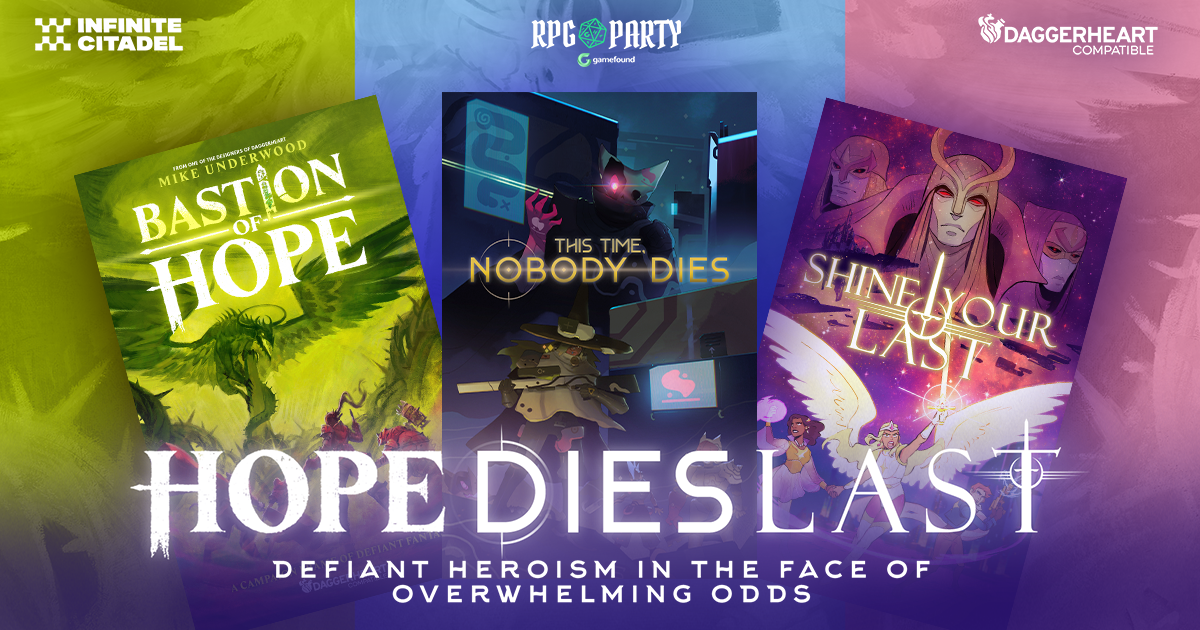
The shadow of tyranny looms large; your back is against the wall. But you’re not alone; you’re pissed, and you will keep fighting because…HOPE. DIES. LAST.
We probably don’t have to tell you that it’s a shit time right now. Three of the four of us come from states where it’s illegal to embody our gender and live as our full selves. Living with that reality carries a certain burden, particularly as game designers with voices and platforms. We’ve chosen to respond to these circumstances by making overtly anti-fascist art, with Hope Dies Last - a trio of overtly anti-fascist Daggerheart-compatible campaign frames - being the latest piece of art.
Each of us has to find our role in the struggle, and the one that suits us best is that of storyteller. With these frames, we want to give people the tools to craft tales of solidarity, resistance, and communal effort. We want players to come away from the table better able to participate in the other aspects of the struggle.
Before we dive in too deep, this is not an “is anti-fascist gaming possible” article. There are plenty of fantastic discussions on the (de)merits of using art & games as catharsis, community building, and educational tools for resistance. We’re going to posit that exploring antifascist movements through play enhances our ability to participate in daily resistance, which lets us focus on how HOPE DIES LAST (part of RPG Party 2026) explores those practical pieces through its narrative & mechanical frameworks.
While multiple anti-fascist threads are woven into each of the three campaign frames in Hope Dies Last, we’re going to highlight where they shine most brightly. These are all facets of the work we must do, in art and in life, to fight fascism.
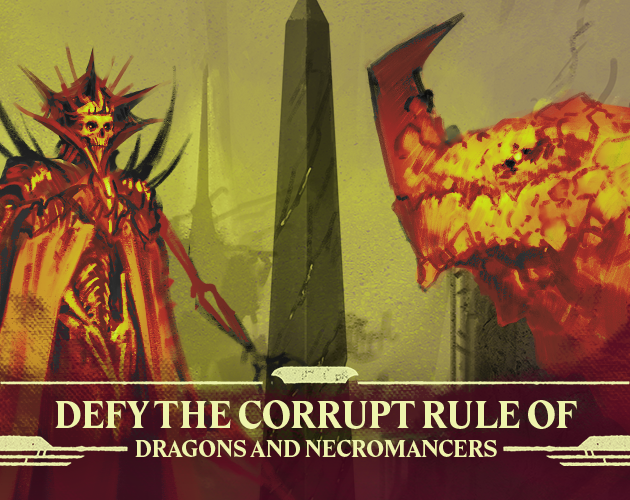
A Bastion of Hope campaign begins after the anti-fascist revolution has already claimed a major victory, liberating one nation out of six on the continent from tyranny. This victory required overcoming one of many tools of fascism - propaganda. In the Bastion setting, “everyone knows” that the massive obelisks that dot the landscape, made by the draconic and necromantic rulers of the various nations, are “there to protect us from evil magic”.
In reality, those obelisks siphon people’s innate magic, funneling it to the overlords. It took divine intervention for a small group to learn the truth about the obelisks, and now those divinely-empowered rebels spread the truth about what has been stolen from us across centuries. The propaganda around these obelisks is so insidious because it has become invisible and is only now being challenged as part of a larger anti-fascist movement.
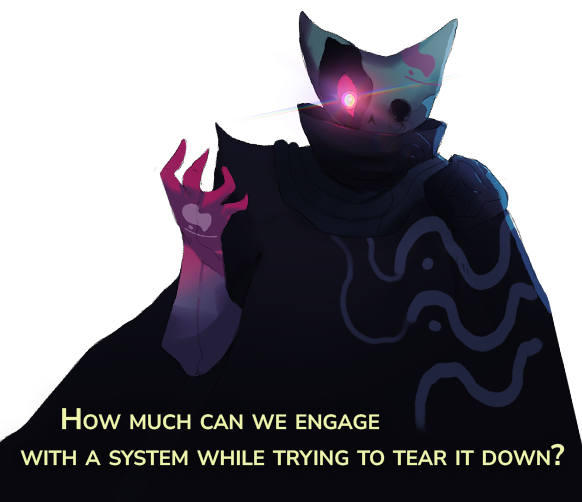
This Time, Nobody Dies – one of the new campaign frames being written as a collaboration between Infinite Citadel and Mike Underwood – brings Daggerheart into a cyberpunk mega-city where the only currency is CRED: how much you can buy (credits), and how much social capital you have (credibility). In this setting, each of Daggerheart’s domains is represented and controlled by a Mega Corporation, whose mostly-immortal cyber lich C-Suites ensure no one forgets from whom power flows.
Against this background, the constantly beleaguered but still hopeful, still heroic player characters must answer the question, “How much can we engage with a system while trying to tear it down?” These “freelancers” run jobs for anyone that can pay, trying to scratch out a living while hoping to – eventually – do the “right thing”. To tear it all down. Even the ones that paid them.
We want to make that as messy a premise in fiction as it is in real life. When a Twitch streamer tells Amazon to suck it, does it matter? Their cheers still go to that mega-corp. Rejoinders of “No ethical consumption under capitalism” can be as stifling as they are illuminating.
The answer This Time, Nobody Dies proposes is community. The freelancers can funnel their gains, ill-gotten or not, into horizontally-organized communities. There is no perfect, clean solution, so you need people who can call you out when you fuck up, give you the grace to correct, and who will accept the same from you later on. The characters will have to ask the corpos for help, and will be confronted with the consequences of doing so (when the GM gets enough Cred to spend). But if they’ve been investing in the places & peoples they surround themselves with during downtime, then they’ll have built up a resilient baseline to survive those inevitable failures.
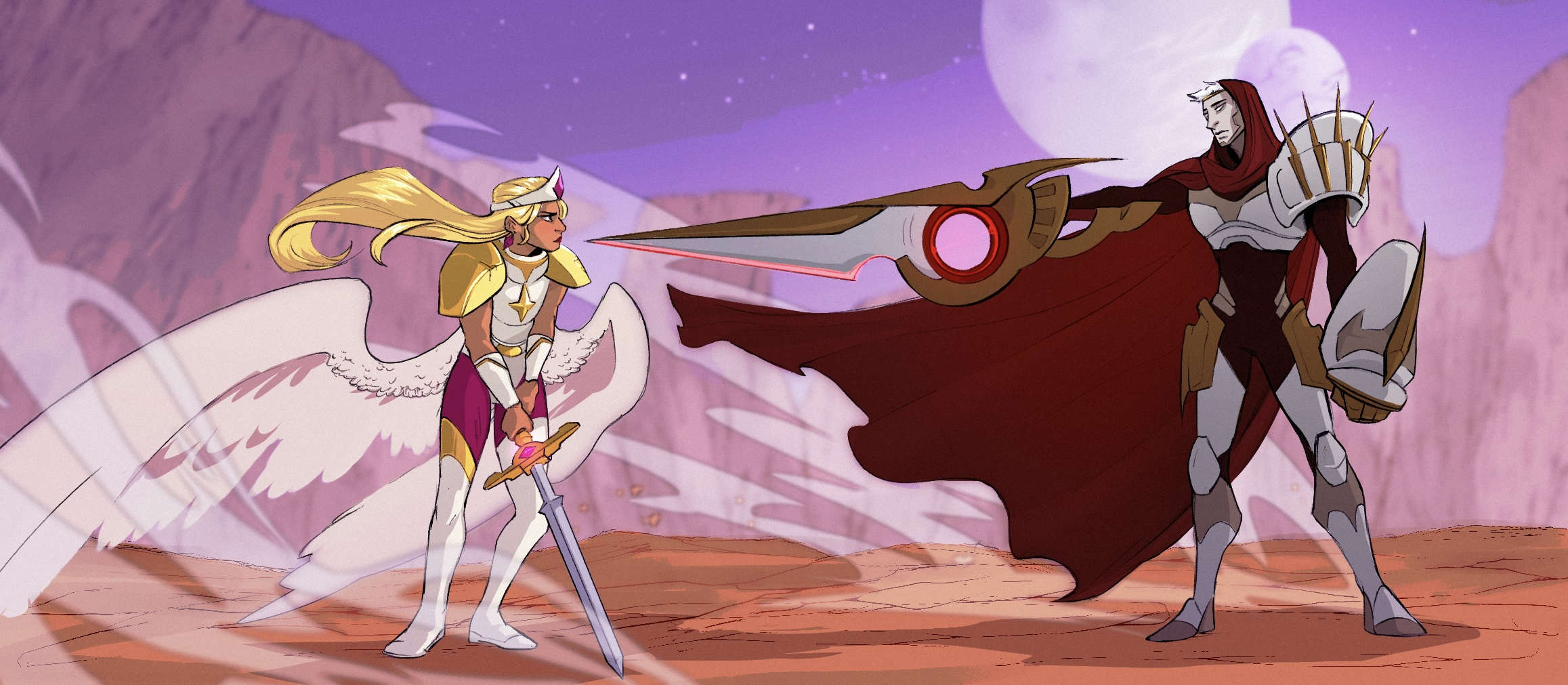
Shine Your Last is a campaign frame of broad-sweeping space opera in the tradition of the Netflix She-Ra series and the Star Wars original trilogy. The PCs play the leaders of a scrappy alliance of marginalized heroes traveling the galaxy as they build a coalition to fight the Church of Unity. The Church’s violent crusade seeks to eliminate all forms of difference – race, gender, nationality – and replace them with a doctrine that presents homogeneity as equality.
Because context matters: there’s an active pogrom against trans people in the US (and not just here), one that weaponizes religious queerphobia to demonize queer and trans people in order to terrorize the population and further consolidate power. As a group of queer (and trans) designers with a substantial helping of religious trauma in our backgrounds, this one hits especially close to home.
So in Shine Your Last, we’re telling stories of how our differences can be a source of strength while scapegoating is called out as a tool of the enemy. Stories where victory comes from connecting disparate groups instead of letting the oppressors turn us against one another. Stories where understanding one another – even or especially when we disagree – builds the coalition and the hope needed to fight overwhelming odds.
Over the course of the campaign, you’ll travel to new planets, each facing their own crisis, related to the Church’s influence or an internal conflict. Each community you help builds your constellation of planets and grants a special Galactic Hope Move, which you’ll need to even the odds in the epic confrontation at the campaign’s climax.
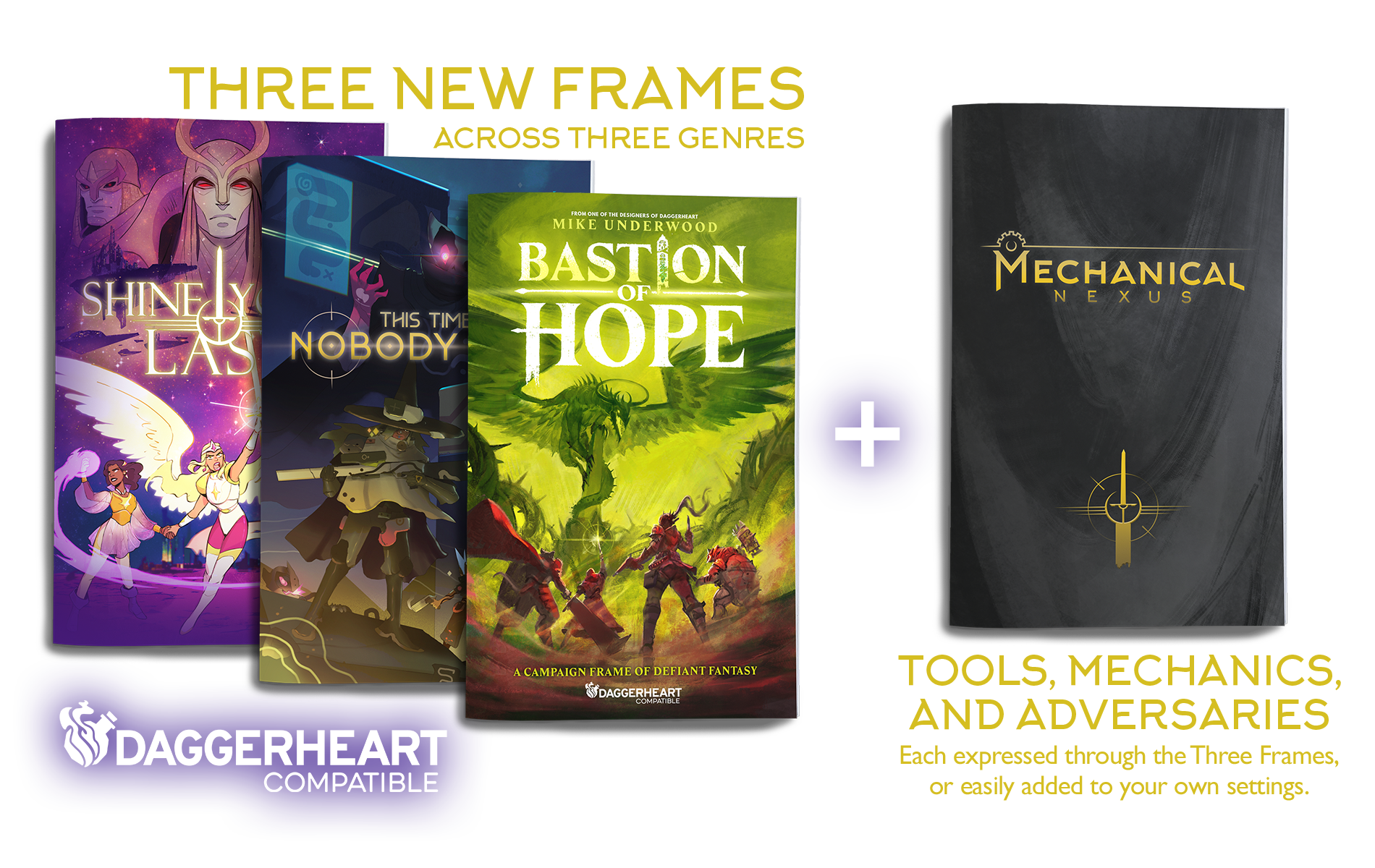
Antifascist ideals unite not only the frames, but also the design team. Infinite Citadel has always been extremely loud about our opposition to capitalism & authoritarianism. Similarly, Mike Underwood’s work on Bastion of Hope exemplifies “subtext is for cowards” in how clearly it draws parallels between its villains and their real life inspirations. We want to continue pushing ourselves to deliver fiction that guides & inspires.
Follow the campaign for Hope Dies Last on Gamefound to see more of how we’re doing that while expanding your table’s diversity of Daggerheart options.