In Guadalajara, kids who once photocopied game books now design RPGs and run conventions
Gaming across the US-Mexican border.

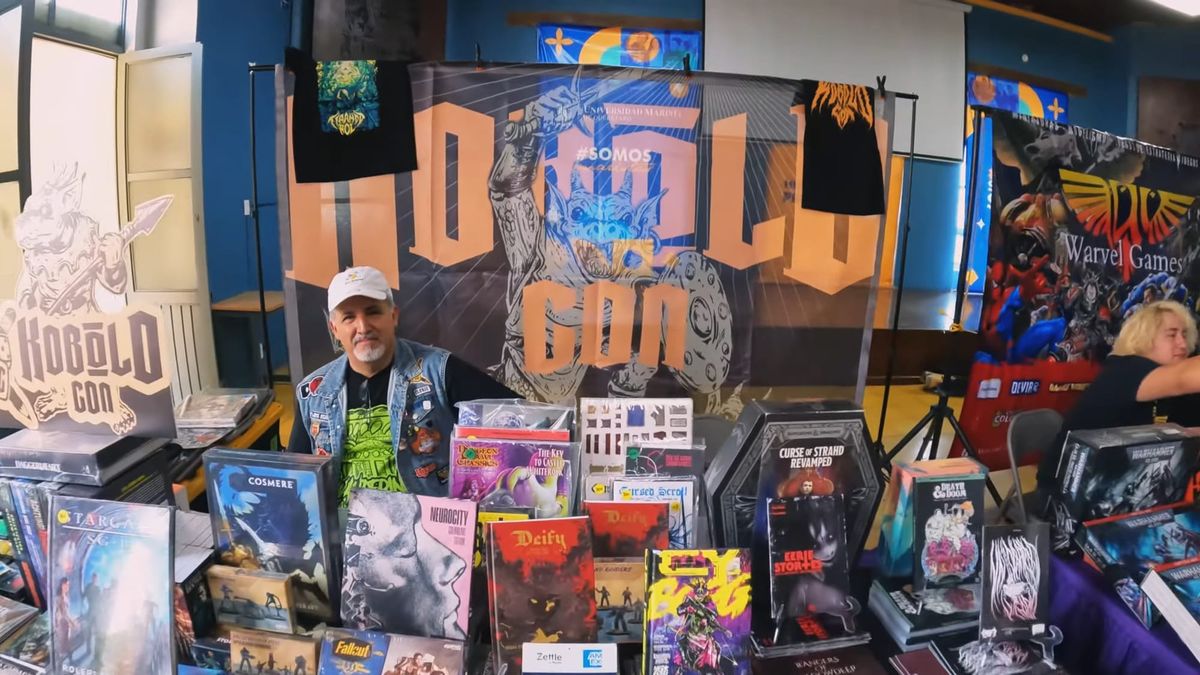
When he was 12 years old, Hugo Hernández traveled from Mexico to Disneyland via the United States. His father was in the country to buy scrap metal in San Diego, and such business trips always offered a little downtime. This was 1987, a big year in the history of Disney. Star Tours, the first Star Wars-themed attraction, had just opened and thousands of space tourists wandered past a babbling C3PO and beeping R2D2 before blasting off to the forest moon of Endor. Despite all these animatronic wonders, Hernández’s attention was drawn to a book: a shiny copy of the first edition of Star Wars: The Roleplaying Game published by West End Games. It would cost him $18, almost wiping out the $20 that his father had given him for the whole trip, but he bought it anyway.
Almost 40 years later, he still has the book. It’s survived multiple campaigns and remains one of his most played games. “[People] still make fun of me because I still put plastic covers on all of my books,” said Hernández to Rascal. "They're like, why do you cover them? Because when I was a kid, I wasn't sure if I was going to be able to buy another book. I don't want it to get dirty, I don't want it to get wet, I don't want it to get anything. I want it to survive.” That copy of the Star Wars RPG was precious because it was one of the few original games he owned.
As kids, Hernández and his friends would save up for months to buy a single book, not only because they were expensive but because they were just a pain to purchase. “We had to generate a paper order, and we had to have someone that had a U.S. account to write a check,” he said. “We put it in the mail, and we waited for two months for that mail just to get there. And then it would take like five months for that package to arrive.”
Mexico and the United States are on the same longitude and yet only one is considered “the West”. The history of both countries are so intertwined, but their shared border divides them in ways that are more than simply geographical. Over the 20th century, Mexico employed various policies to stem the flow of goods from the US to protect and develop its own domestic industries, but they never truly succeeded. Sophisticated systems emerged to smuggle huge quantities of in-demand products like clothes that were then sold in markets across the country.
Smuggling wasn’t necessary for tabletop RPGs. There was an easier way to distribute games to kids who couldn’t afford them: making photocopies. This low-tech bootlegging was central to how Hernández and his friends acquired games like AD&D. “Each one of us would save money all year to buy one book,” Hernández said. “Everyone purchased a different book, a different system. The only condition was you had to let us photocopy the book.” And it didn’t stop there. The nerd social network would ensure that these gifts spread further and further afield. “People would just photocopy photocopies,” he said. “I think there were like three original books in all of Mexico, the rest of them were photocopies.”
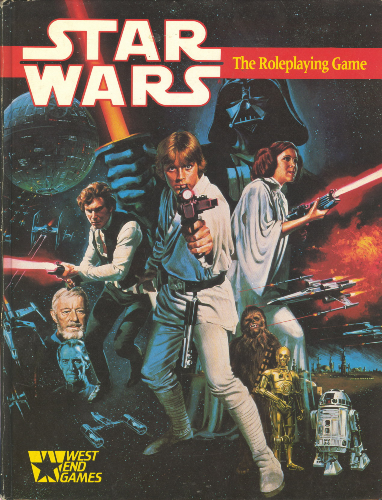
Today, the landscape has evolved. Like it did in many places around the world, roleplaying enjoyed a moment of sudden blossoming in Mexico around 2019 and 2020, at least partially related to the effects of COVID-19 lockdowns. It’s a high watermark in a long history. RPGs arrived in Mexico by the ‘80s at the latest and rode an upswell in popularity in the 2000s with both D&D 3E and 3.5E bringing in a new wave of players. But in those previous decades, playing was still mostly limited to English speakers, which almost always meant people of a certain class with access to the best schools. Today, it’s different.
Official Spanish editions of games help, but it’s not enough. It’s a broader acceptance that RPGs aren’t just an ‘English’ hobby — that playing them in Spanish isn’t just an option, it can be great. Actual play shows like Tirando Rol have done a lot in that regard. Similarly, domestic conventions have taken off. MegaXP, which is probably the biggest tabletop convention in Mexico, attracted around 19,000 attendees last year. Hernández and Irvin Morales, a game designer and graphic artist who publishes games under the label Role per Second, were part of a collective that organized a whole area for RPGs in Spanish called Rol en tu Idioma, or Play in your Language. They quickly realized that an annual event simply wasn’t enough. “One of the things we found is that when we were attracting new folks into the hobby, they would get real excited, and usually the question was, okay, this is great, what's next?” said Hernández. “It was like, oh, well, see you in a year.”
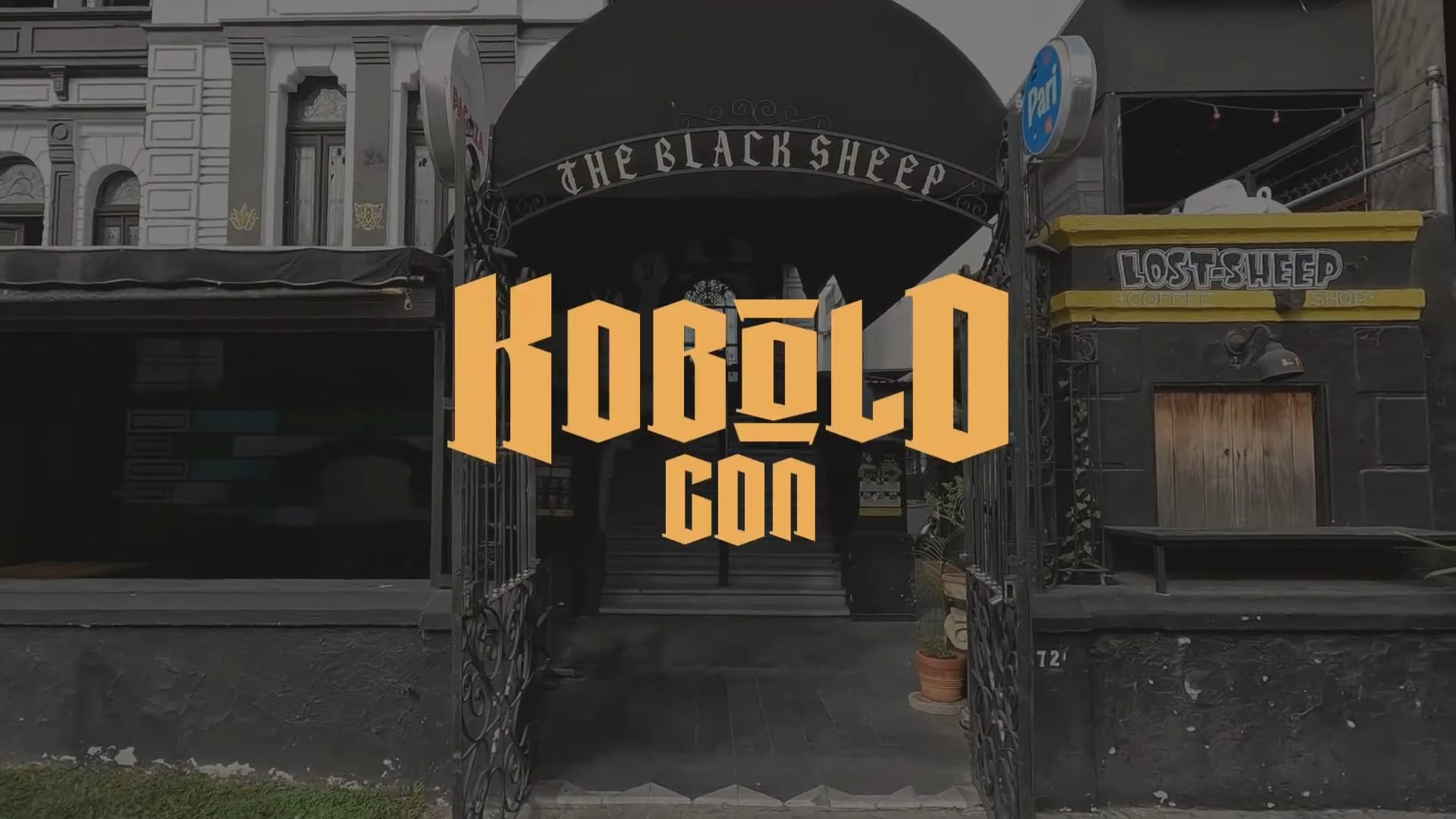
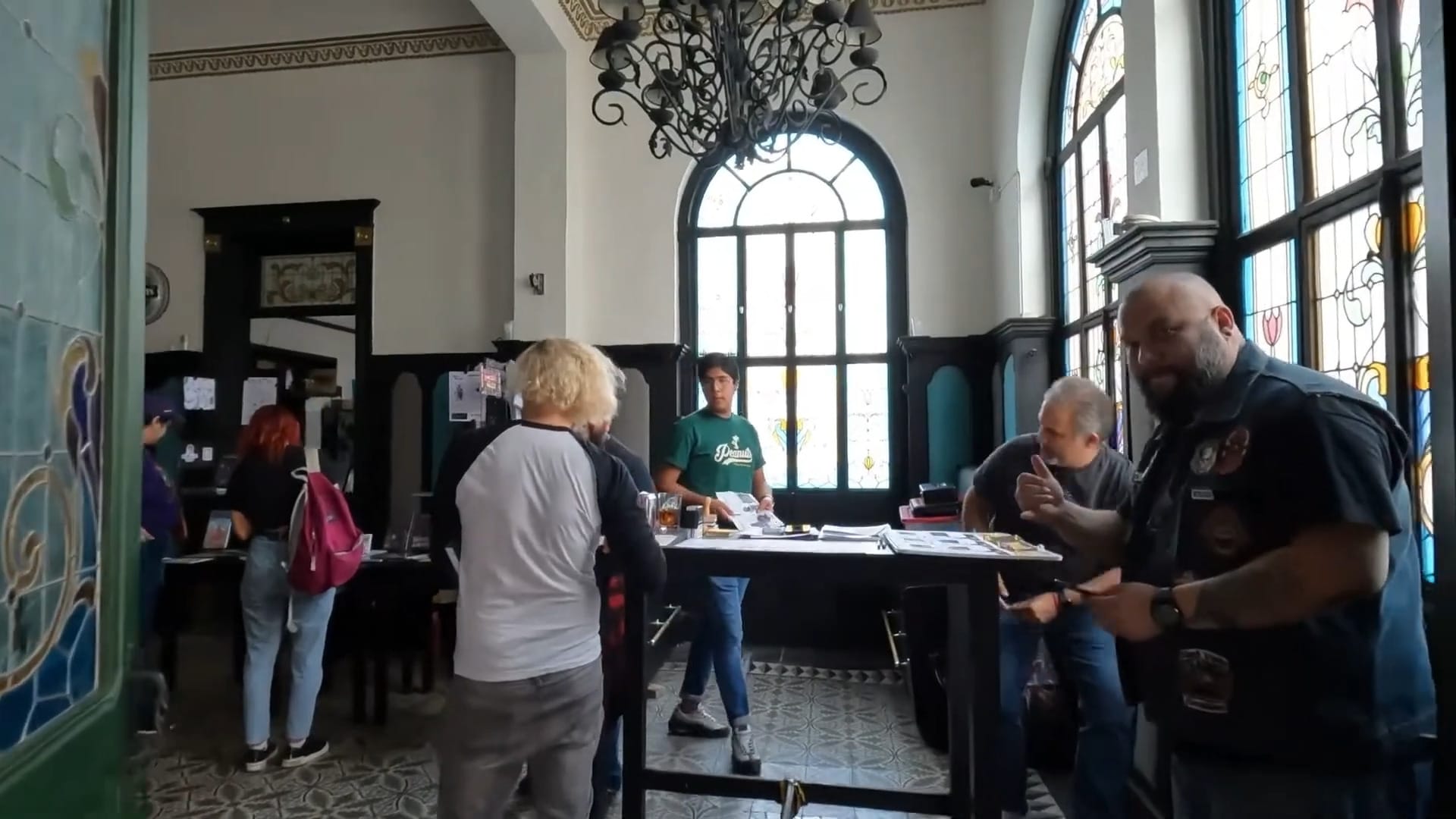
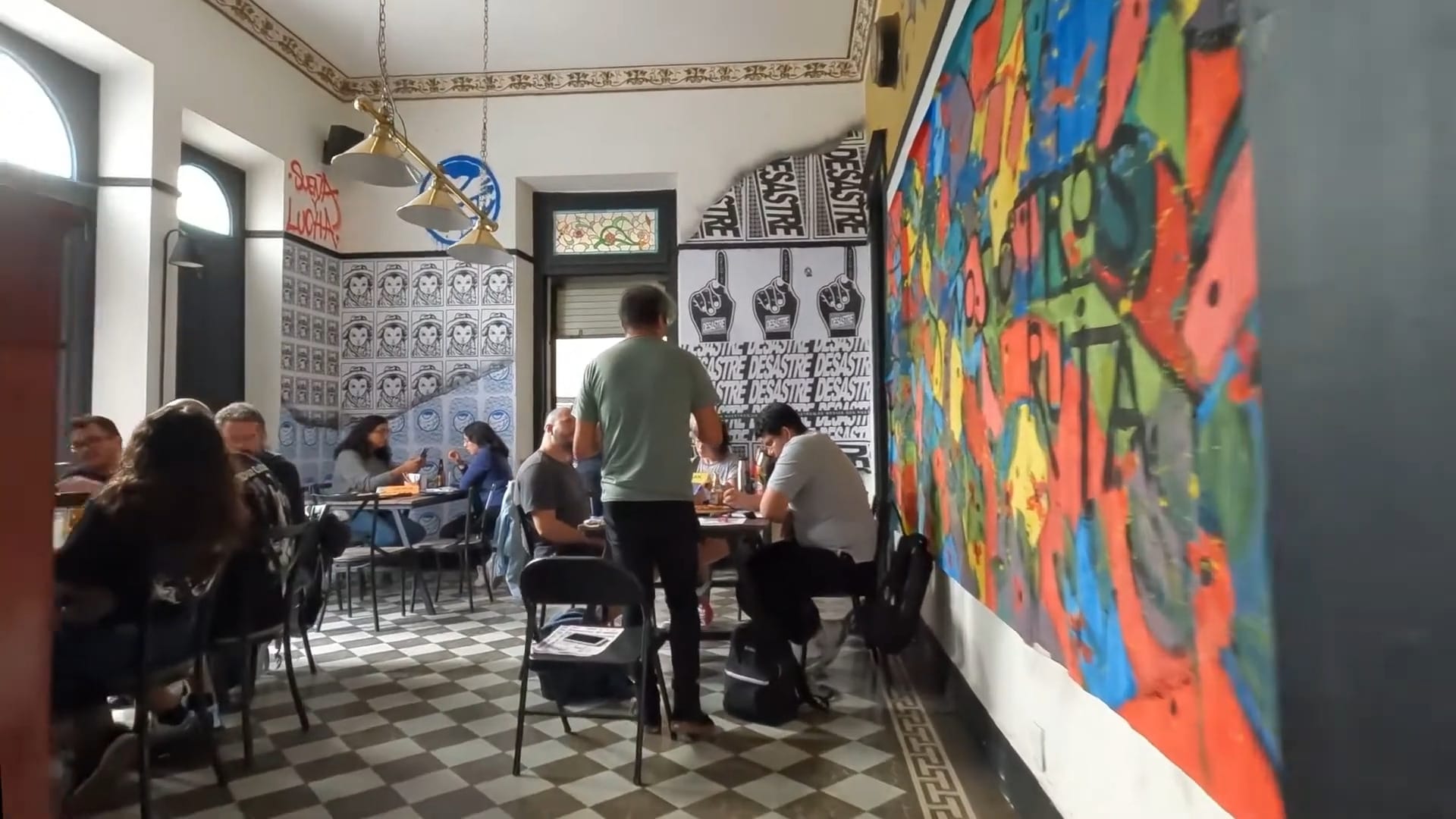
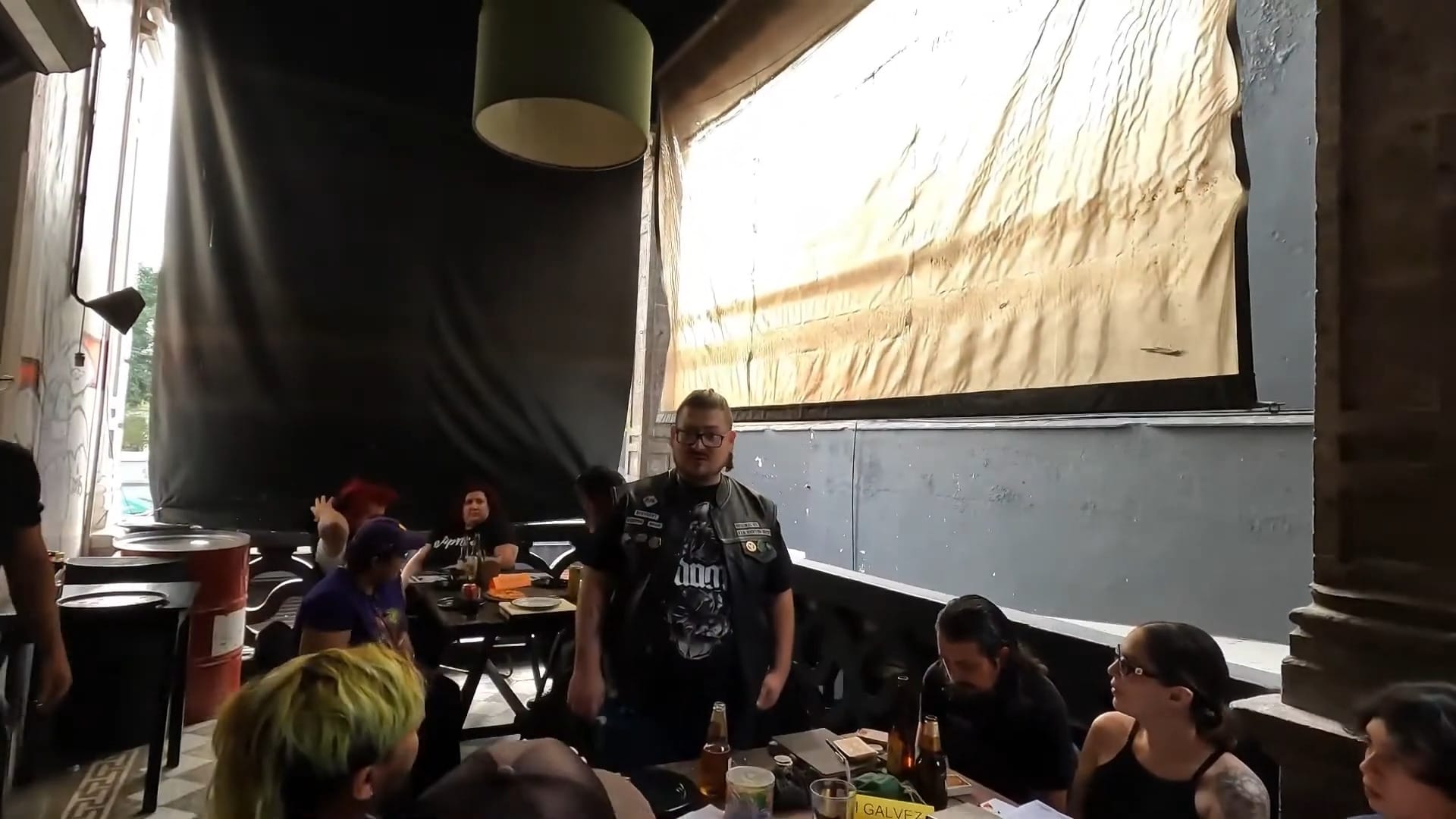
Images of KoboldCon's monthly hangouts (Stills from video by Irvin Morales/Role per Second)
Morales and Hernández decided that they wanted to do something more regular and in their home town, Guadalajara. Mexico City, as the capital, is undoubtedly the biggest city in the country, while Guadalajara and Monterrey jockey for second place. Monterrey might technically be bigger, but people from Guadalajara like to point out that they basically invented Mariachi, birria, and tequila, which means they're at least culturally superior. It’s a very Catholic city, home to an intimidating 16th century cathedral, one of the oldest in the Americas. It’s also not the easiest place to introduce new things — people say if your business can make it there, it can make it anywhere in Mexico.
So, Morales and Hernández had their work cut out for them. In 2022, they teamed up with actual play podcaster and writer Gerardo Marroquin to organize a monthly event called KoboldCon. Organized at The Black Sheep in Guadalajara, a trendy pub and music venue owned by Marroquin’s family, the event feels more rock’n’roll than you might assume. The vibe is laid-back. There’s food and drink. People bring their kids. The events never get too big — less than ten tables but seating up to nine people per table, depending on the GM and the game. They start at 3 pm and run until at least 8 pm, followed by a little after-party. People hang around and talk about nerd stuff, enjoying geeky conversations that they might normally struggle to have. There’s even cake that you get to cut if you celebrated a birthday that month.
KoboldCon focuses on smaller indie games. “It's usually hard in some venues to actually run anything that's not D&D. You go with anything that's not D&D, people won't play it,” said Hernández. “Okay, so what if we make an event that's focused on those games? And we promise folks only a three and a half, four-hour session. You come in here, we explain the game, we give you pre-generated characters, and test out the game. You don't like it? Fine. You don't have to play it ever again. But give it a shot.” And he thinks it's working. “[It’s] been driving a lot of folks to start writing their own games because they see that it doesn't have to be that complex and doesn't need to be a 400-page bible.” Given the vibe of the venue, it’s not a surprise that MÖRK BORG is very popular, but ARC by momatoes is another local hit.
Once a year, the crew hosts a bigger event that they call KoboldCon Anniversary. Last year, 380 people showed up from half a dozen different cities. They’re aiming for 500 when it happens in November this year during the Revolution Day long weekend. Morales commemorates these events with a fanzine that looks spectacular for something that’s just available for free. There’s also usually a place to exchange and trade games, but importantly, it’s also a place to buy new RPGs. There’s games from Mexican designers alongside games they’ve imported from around the world.
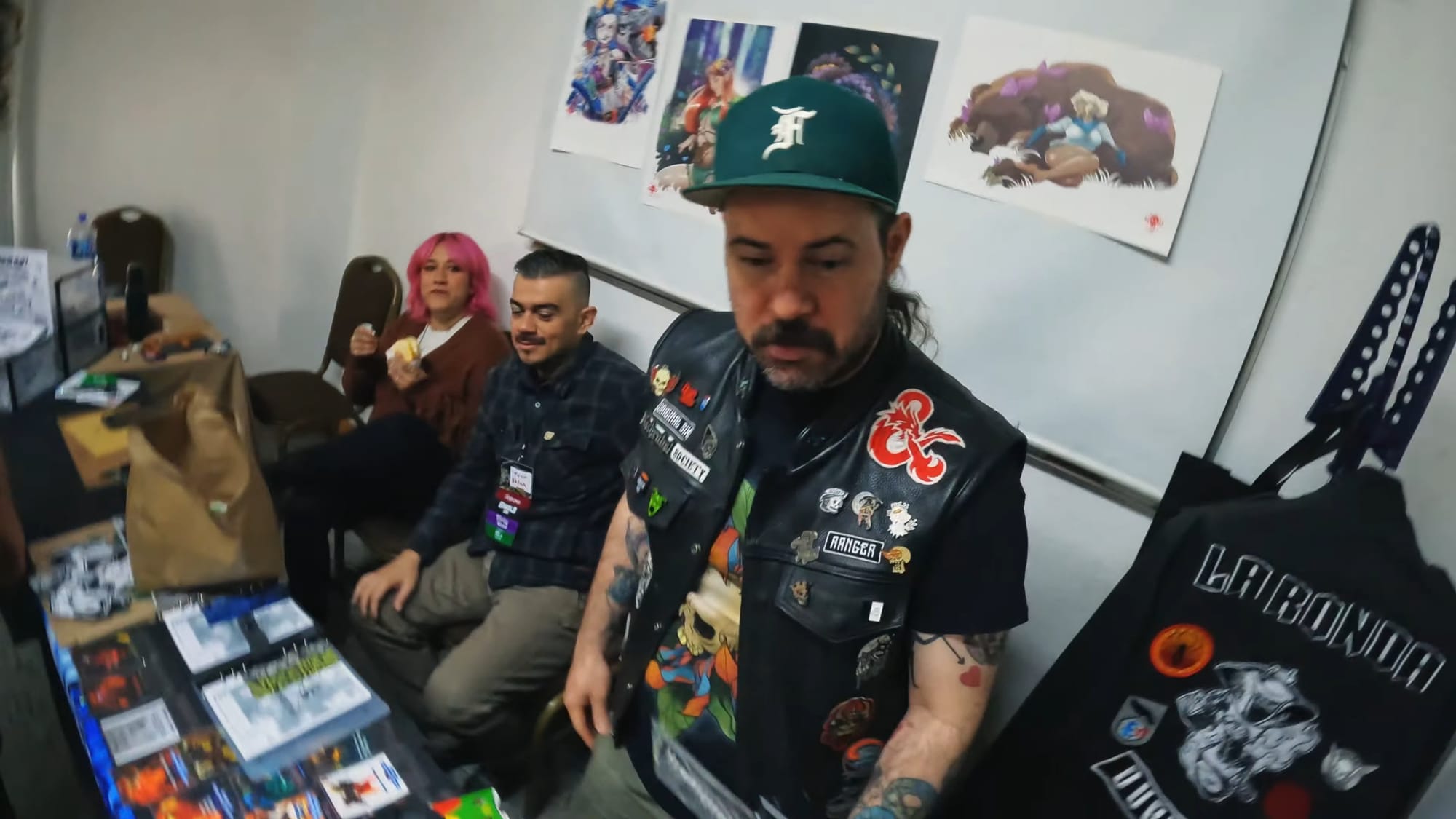
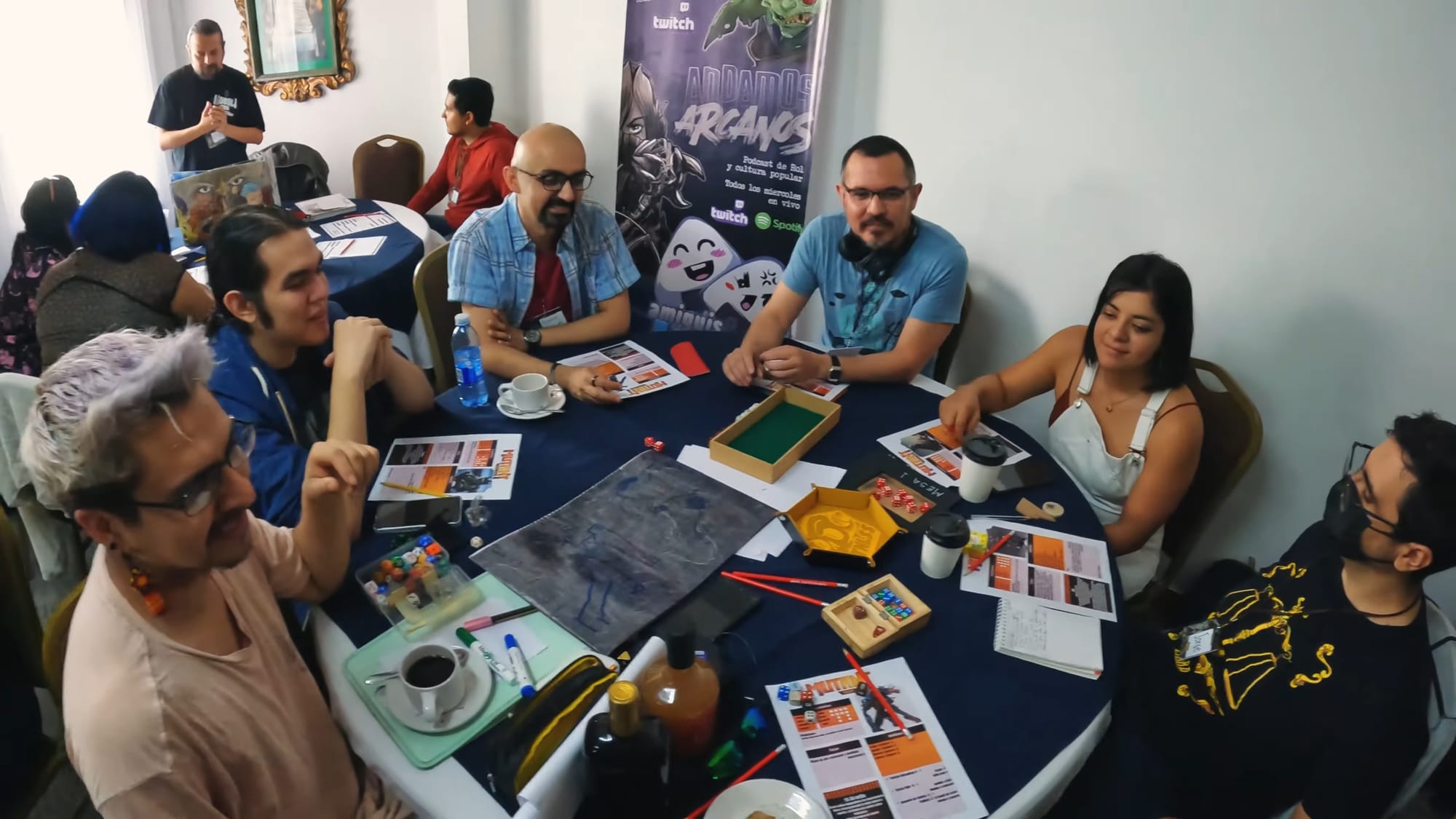
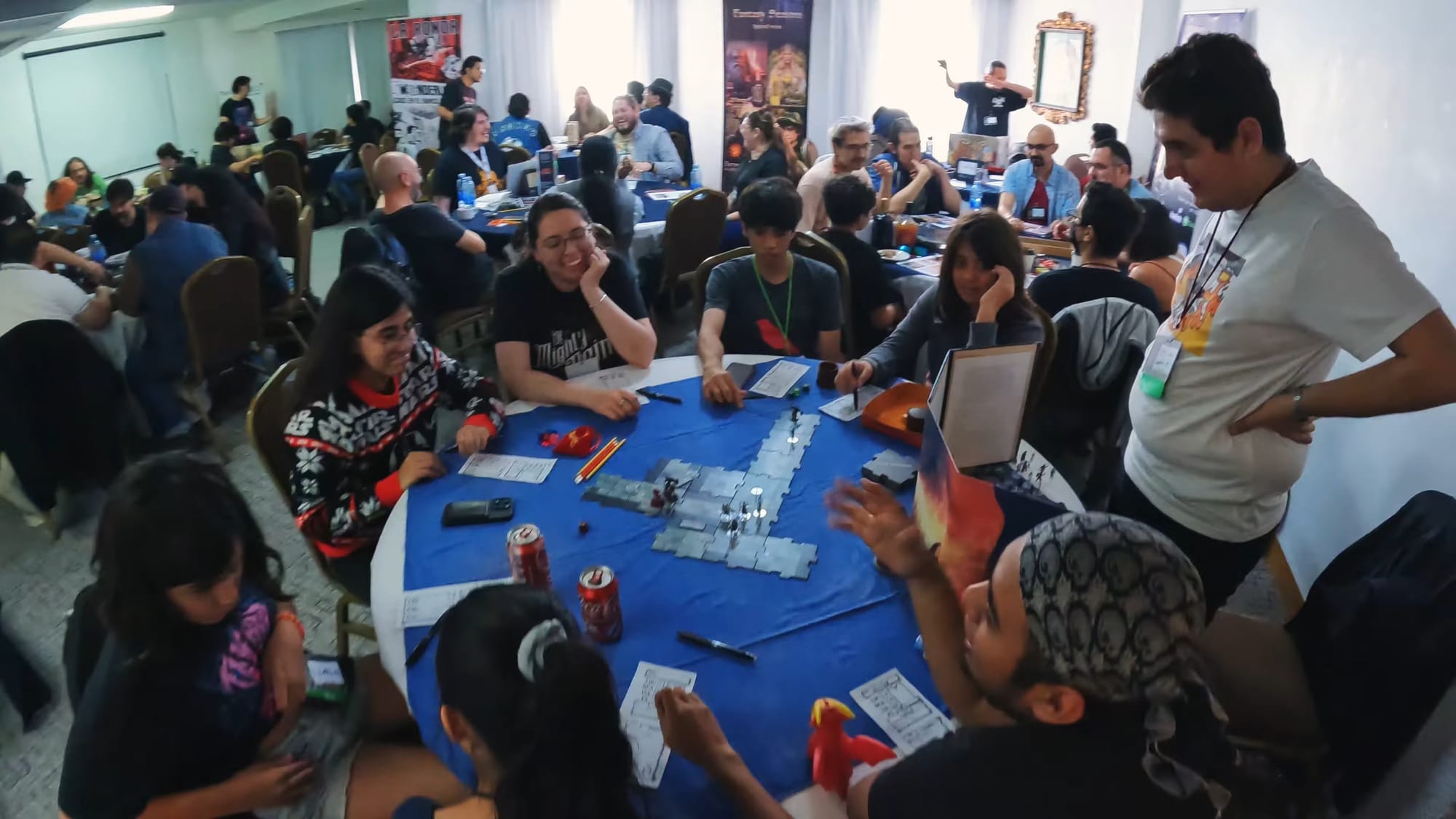
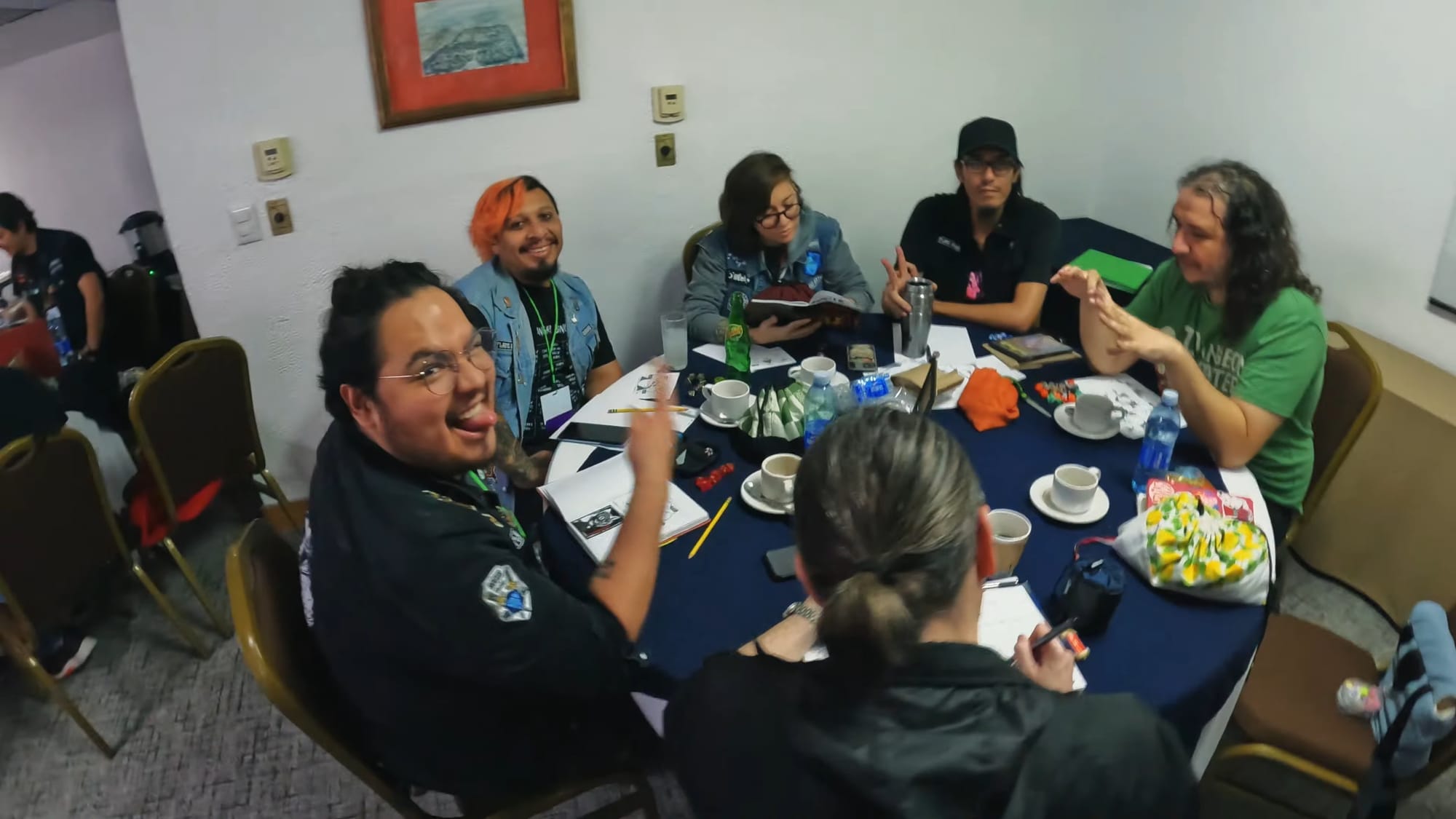
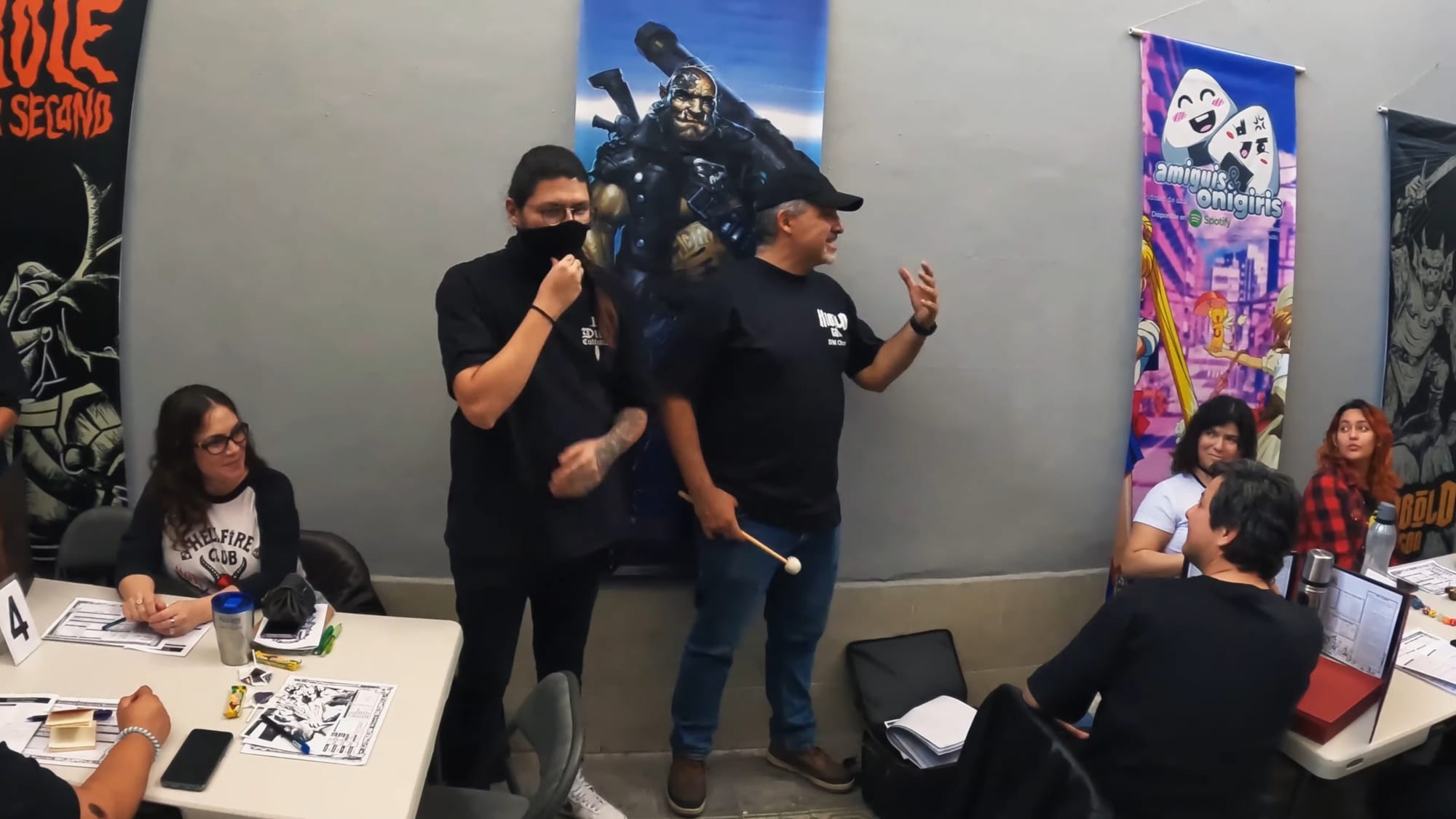
Images of KoboldCon's bigger annual event (Stills from video by Irvin Morales/Role per Second)
It’s never been easier to access RPGs for Mexican hobbyists, but that statement comes with caveats.
The photocopy era should have ended in 1994 when the North American Free Trade Agreement was signed between the US, Canada, and Mexico. But currency devaluations meant that RPGs remained artificially expensive for Mexican customers for years. It would take at least a decade for books to become more accessible, and Hernández estimated that the reliance on photocopying mostly ended around 2005. That doesn’t mean that things got easy, just easier.
The US-Mexican border remains disruptive. Corruption and incompetence (on both sides) mean that a package shipped in either direction can just disappear. A US-side carrier will take it to the border, but it might never reach the Mexican-side carrier. So most US companies just don’t ship anything at all — unless they deploy unique workarounds. A whole new kind of freight forwarder has emerged whose purview is shepherding goods through the chaos of border customs. “They charge a little bit more, but they basically take the package at a US address and then they get it across the border to a [Mexican] carrier that they are comfortable with,” said Hernández. “It is not cheap. We do have to pay a value-added tax, plus we need to pay for the freight, plus we need to pay for the service. But after four years, we managed to get [RPGs] at a price point where it's not that different from the US.”
The border has always played a central role in the history of gaming in Mexico, and that’s not likely to change. In the 1970s, an entrepreneurial engineer named Morris Behar Pérez built his own version of the Atari PONG console by importing flawed semiconductor chips as junk. Pérez essentially reverse-engineered Atari’s design, and, through his company NESA, distributed an affordable, domestic version of Pong not just in Mexico but across Latin America. These machines were so popular that when the original Atari devices made their way into the country, people still referred to them as NESA Pong. Across borders, people finds way to play.
Correction: This article previously stated that Morales and Hernandez organized and hosted Rol en tu Idioma. But they were only part of a much larger collective that created and organized the event in 2023 that included Destiny dice, Rerol, El Charco de Grinb, Latine Lounge, Tirando Rol, Abenquest, and RolerosMX. The event continues to happen at MegaXP and the current number of participating organizations is even longer. The space was hosted by Devir, the organizer of MegaXP. Rascal regrets the error.