Talkback: Stonetop
The end of the first season is one of our best episodes yet.

Listen to the latest episode in your podcast player of choice!
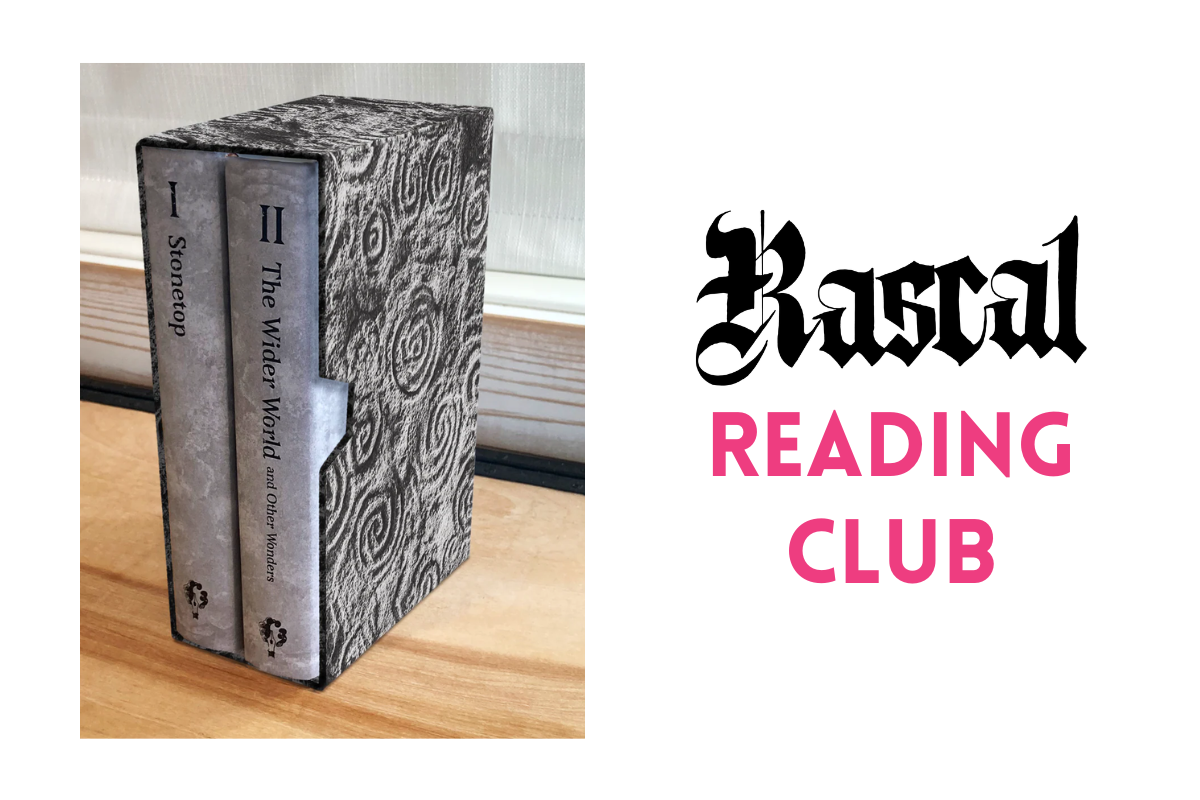
Welcome back to the Rascal Reading Club! This is the final episode of our first season all about GMing, which I called The Most Impossible Fun Thing. We end with the talkback episode on Jeremy Strandberg's Stonetop. My guest/co-host for the show is Sean Foer, professional GM and maker of videos. We discuss people's responses and end up with some great podcasting.
Excerpt:
Sean Foer: I do think that Stonetop is in many ways not just a textbook... it is a textbook for Stonetop, but it is also trying to inculcate a culture of play in a way that Mythic Bastionland assumed you came to Mythic Bastionland with the play culture that Mythic Bastionland expects. Whereas Stonetop is like, "Let me impart to you a sort of way of engaging with role-playing games that people have been doing for a while, but you might not be aware of."
Thomas Manuel: I think Mythic Bastionland is not expecting you to come in with a specific play culture, but it's sort of like come in with any play culture you want. It's like: I don't know what the best way to play this game is for you. (It sounds more humble but I don't think that's true.)
Foer: I think that actually is a part of Chris McDowell's culture of play.
Manuel: Yes, yes it is... There is a big difference — and I'm sure you've seen this — in the way people talk about opinionated games versus unopinionated games. You'll see people praise a game that is open to many cultures of play and they'll be praising it and then when you ask them about that game, it's a completely different game than somebody else who's played it and is praising it... And that's really cool and that's really awesome. But when you hear people play praise an opinionated game it's almost always for a thing in the game itself...
Foer: In both cases, it is praise for the voice of the designer at the table. In one case, it's the way that the designer's voice inspired me to create something in the oeuvre, in the genre of the game — genre not as like fictional genre, but more as like type, the possibility space, the zone of expectation created by the game. In an opinionated game, it's like the author was kind of an asynchronous collaborator with us. The book was there with us like guiding us and pushing us into this new place.
Manuel: I sometimes feel — and I guess this is part of the ethos of this show — that we don't have really good language for talking about what we bring to games. We know how to praise designers and to some extent maybe we praise designers too much... We don't really know how to talk about the fact that 'I did something cool here'.
Foer: I strongly agree. Usually the game as a sort of nebulous folk object in people's imaginations gets praise for what is actually the work of the GM and the players. Like, a little too often people will talk about an amazing experience they had playing a game, and then you hear what they did and it's like, I don't think you can point anywhere in the text of the game you're referring to and find what you did with it.
Manuel: Or you can but it's it's 20% of the thing that you did...
Foer: And you see the reverse as well, where people struggle with something that's in the text of the game and someone will very unhelpfully be like, "Oh, you're just supposed to change that. You're not supposed to use that part. It's not a problem. You're wrong to criticize the game actually. You can't criticize the game because the game says in it that you can change it, and therefore that criticism is invalid."
Manuel: It is a very weird outcome where we give credit to the game but we don't criticize the game and we criticize ourselves but we don't praise ourselves.