Making your mark: three games streamline play with dry-erase markers
The writing is on the wall. And the character sheets. And the item cards.

As a self-confessed hobby dilettante (a phrase that sounds better than AuDHD-riddled, squirrel-brained gremlin), I’ve always been surprised about how little cross-pollination there is between very similar disciplines. Take painting and modelling, for example. You’d think miniature painting, traditional scale modelling, and Gunpla building would have a big overlap, but up until recently, they’ve been almost completely siloed off. The joys of oil and enamel washes, brilliant techniques for painting lots of little guys quickly, have only become part of the mini mainstream in the past few years, largely due to a cycle where an influencer will “discover” the technique and expose others to the growing bandwagon. Gunpla modellers are still baffled by the suggestion that while Bandai produces amazing push-fit kits, some of them could be improved with a little glue.
It’s the same with different tabletop games. I play RPGs, wargames, card games, and even the occasional board game. They all have great ideas, even commonplace ones, that could easily benefit the others, but they rarely make the conceptual jump. One simple idea that has existed in board games for years is the humble dry-erase marker. Books, maps, sheets, cards — anything can be printed with a glossy finish that can be written on and later wiped away, cutting the number of tokens and other required implements way down. No more pads of record sheets that run out, huzzah!
Using dry-erase markers for RPGs isn’t a completely unknown concept. Mausritter’s inventory cards are dry-erase, as are CBR + PNK’s runner sheets, but these just dabble in the joys of markers. What I want to see are games that are all in, creators that have been huffing the metaphorical fumes. And wouldn’t you know? Three recently came along at once.
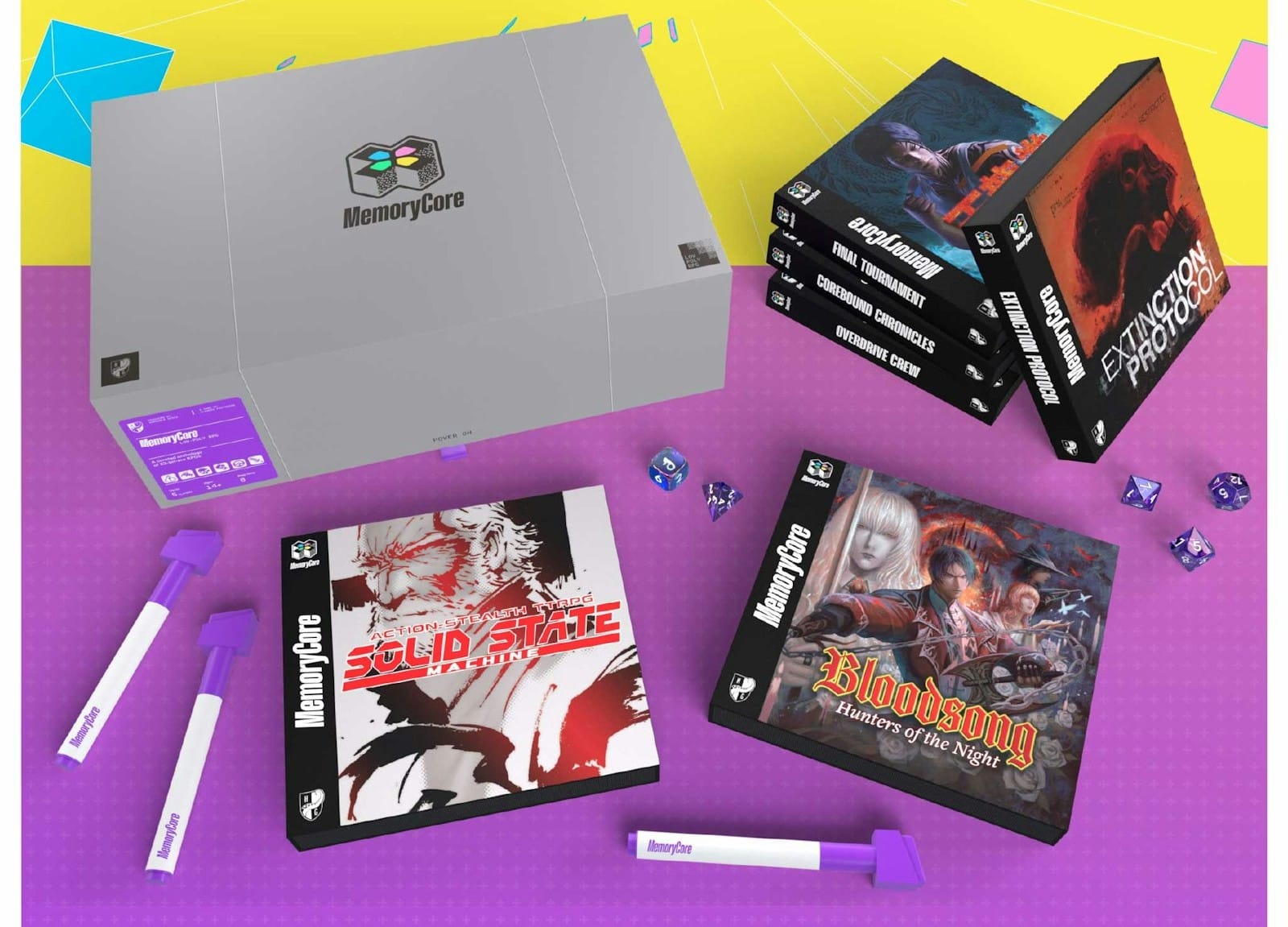
MemoryCore was the game that sent me heading down the marker trail. An anthology of six games using the same core rules, MemoryCore shamelessly steals from reverently homages iconic video games from the original PlayStation’s ‘90s heyday. Each title is designed to support up to five players including the GM, and advertises a replayable, zero prep, out of the box experience. In short, perfect dry-erase fodder.“The idea of using dry-erase markers comes directly from our experience as a board game company,” said Federico Corbetta Caci, Head of Narrative & RPG at Horrible Guild, in an email to Rascal. “Specifically from our previous work on Railroad Ink, our critically acclaimed puzzle game series where players roll dice and draw routes using those same markers. The concept of pre-generated character boards as rewritable cardboard sheets also originates from that project.”
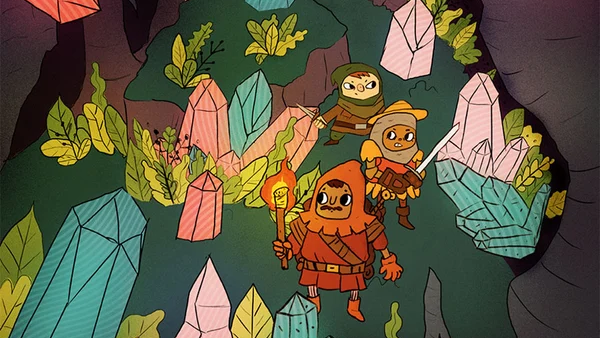
The designers of MemoryCore aren’t the only people taking inspiration from existing games, as Andre Novoa of Games Omnivorous told me. “It all started with Mausritter back in 2020. I remember printing the zine at home along with all the little item tokens, and it immediately made me think, ‘how cool would this be as a box set?’ Then, because of how usage works in Mausritter (you’re constantly marking and unmarking items during play), it kinda clicked: ‘what if these were dry-erase?!’ From there, I chased Isaac Williams around for a few months until we made Mausritter happen, and the rest is history. FLAIL follows that same path, especially in how it uses the Mausritter-style inventory system. My experience co-creating and developing Mausritter definitely shaped how FLAIL came together.”
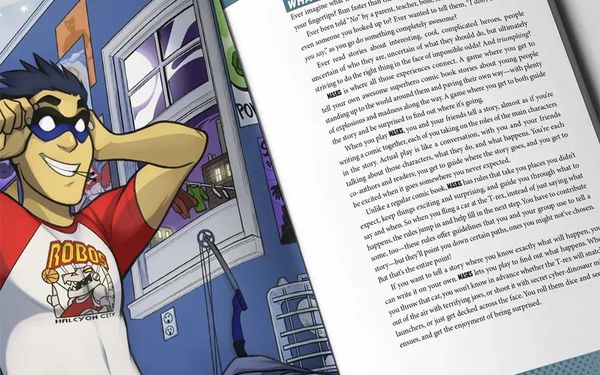
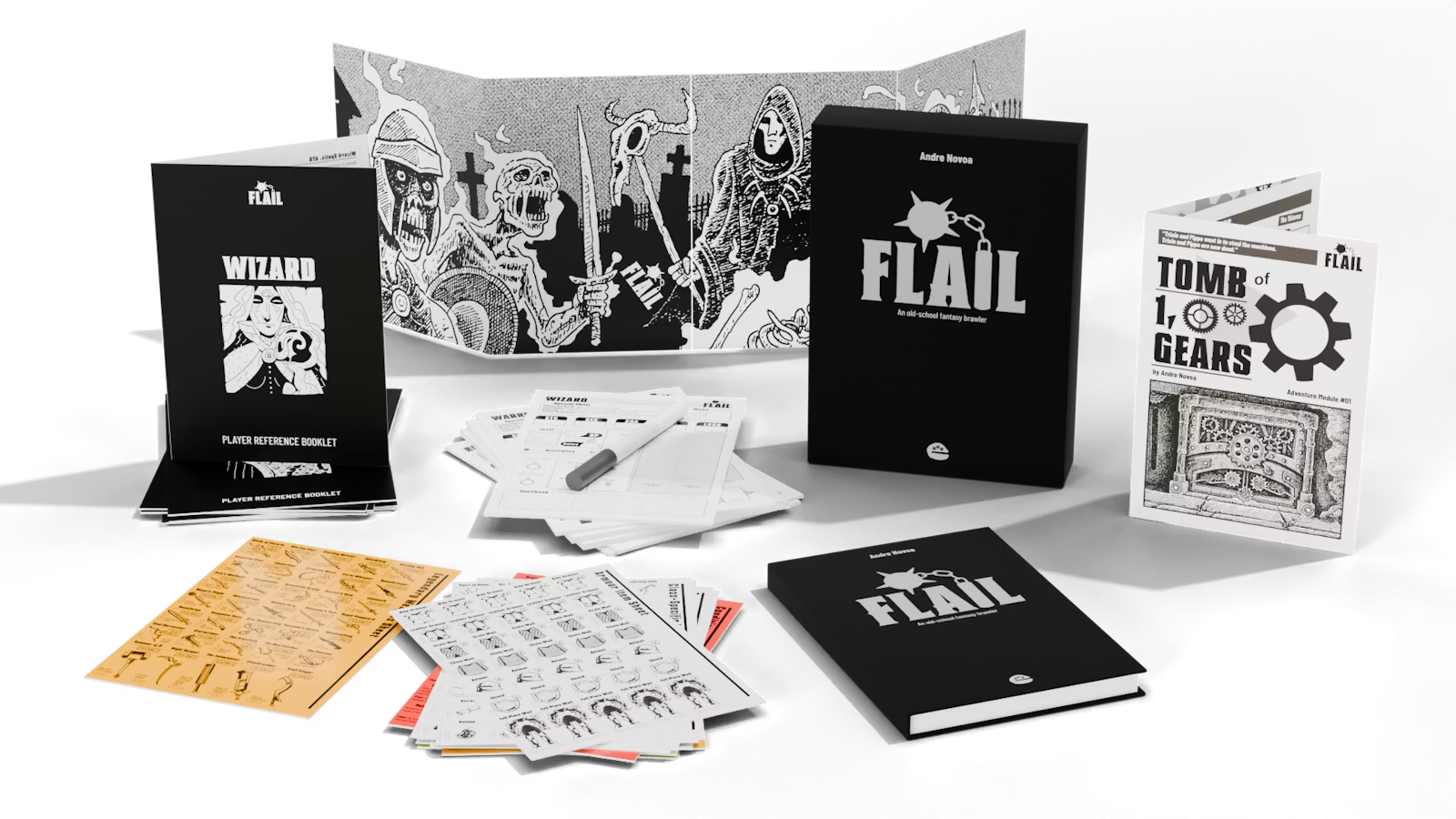
Novoa’s FLAIL is his take on OSR fantasy games and, much like Mausritter, has been designed as a simple, board game-esque, out of the box experience. Described as a “chaotic, slapstick, fantasy brawler”, it uses dry-erase item cards and character sheets. However, unlike MemoryCore, FLAIL’s characters aren’t pre-generated. Instead, it’s a class-based system that provides even more opportunity to scribble on things with markers. A game that comes with all the character sheets you’ll ever need, meaning no more becoming intimately acquainted with your school/workplace’s print room, or having to deal with the world’s most accursed item of consumer technology: the desktop printer.
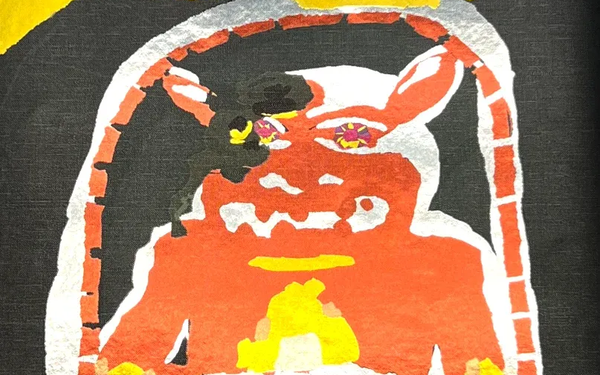
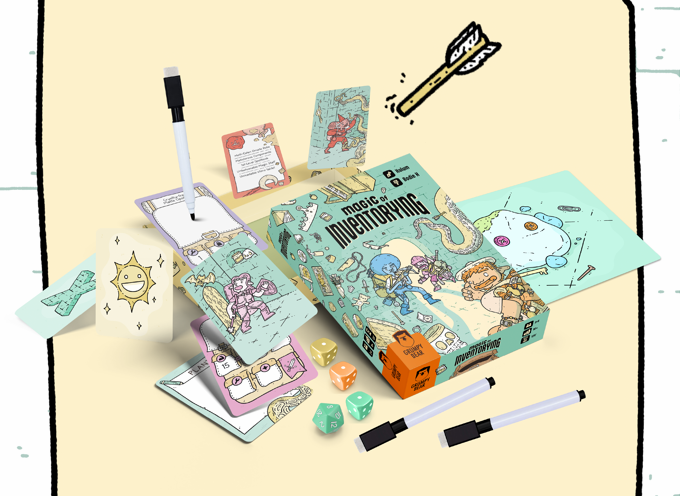
Magic of Inventorying is a very different beast to the two aforementioned RPGs. It’s a storytelling game that requires zero prep and no GM, which can be played in a couple of hours. A second edition of the more elaborately titled Paris Gondo - The Life-Saving Magic of Inventorying, it’s highly replayable and picks up where most adventures end; with the slaying of the boss and the distribution of loot. Players pick a character class from a selection of classic fantasy archetypes and collectively decide what kind of dungeon they just finished crawling, who they defeated, and what kind of adventurers they shared. I had the pleasure of playing Magic of Inventorying on a livestream, where we ended up reskinning the whole thing as a sci-fi adventure, with my barbarian character taking the shape of an axe-wielding space orc.
While we played using a virtual tabletop, it was clear that markers would be essential to the in-person version of Magic of Inventorying. We wrote on everything: the character cards, the dungeon cards, the item cards, all of it! It really highlighted the joy of dry-erase markers in a tabletop game; physical components that make a game easier to learn and play combined with the authorship and personalization that handwritten text and symbols allow.
Markers had been part of the plan from the very beginning, says designer Kalum. “From the earliest prototype, I moved from single use prints to laminating cards and writing on them with dry-erase markers.Then, for the game's first physical edition, I asked the printer to use a dry-erase finish (most glossy ones are) for those cards. It was the same price to have the same finish on all the cards. As a result, the adventurer cards, the board and the play-aids became dry erase as well.”
Credit: Help Action Needed
He went on to explain how the additional dry-erase components allowed him to remove the paper manual altogether:“Being able to write on Dungeon Cards (used as prompts for the dungeon generation) turned out to be a nice feature. As a result, the prompt table evolved into three dungeon generation decks (descriptor, place, ruler) each with enough space to write. The cards from the Adventurer decks (one per adventurer class) followed a similar evolution, enabling players to add details about their character and their starting inventory items.”
The decision to work with specific components can also feed back to the design of the game itself, with Novoa insisting that FLAIL is a better game because of it. “Dry-erase character sheets … had a big impact on the design because I had to keep the sheets really minimal (minimizing how much text needs to be written on them) so they wouldn’t become impractical to use. That constraint actually helped me streamline a lot of decisions around abilities, skills, and how information is presented to the players.”
For MemoryCore, designing around components was essential for the 32-bit console feel of the game. “From the beginning, we had two core creative pillars guiding the product: One was skeuomorphism: visually and physically evoking the PSX era—through elements like a magnetic box resembling a console, cardboard clamshell boxes mimicking jewel cases, items and gear as MemoryCards, and the CD as a game design component. The other was making the experience as close as possible to ‘press start and play’, minimizing bookkeeping for both players and GMs to recreate the feeling of inserting a disc and immediately jumping into the game.”
There is a downside to making component-heavy RPGs. The standard RPG rulebook is a convenient format for producing and distributing games as a single-item product. It’s just one object to be printed from a single supplier, and it can be converted to electronic formats without having to compromise on anything other than its corporeality. Choosing to make an RPG that comes in a box with multiple components sacrifices that simplicity, and in the current economic climate, that sacrifice isn’t easy to make. Experience helps, as Novoa accounts: “The confidence [to make a boxed game] mostly came from knowing who to work with and what they’re capable of, plus about six years of experience producing these kinds of games and products. That said, it’s still scary; there’s always a level of unpredictability. I try to manage that by not overpromising and keeping things tight, controlled, and based on what I know I can actually deliver.”
It’s a sentiment that Caci agrees with. “The global situation is unpredictable and freakin' concerning. That said, Horrible Guild is primarily a board game company. We only started working on RPGs about four years ago, while board games remain our core business. So, stopping box production isn’t really an option for us, even if we wanted to!”
I’m excited about all three of these games. My intro to Magic of Inventorying comfortably convinced me that I need it on my shelf. I already have a prototype of MemoryCore, which only contains one complete game and five more empty shells. Even so, it’s a thing of beauty, evoking the 32-bit era flawlessly and serving as perfect nostalgia-bait for gamers of my vintage. Chatter around FLAIL in the Rascal dumpster has already cemented it as one of those games that’s going to cause knife fights over who gets to write an impressions piece. I’m sold on marker games, but I’m all too aware of the production and logistics nightmares facing game designers at the moment, problems that show no signs of letting up soon. I hope that we see more RPGs experimenting with physical form factors, and that this flash of creativity won’t be smothered by material reality.