Interview: Agency, frustration, and secrets in Asa Donald's SPINE
Life after death of the author.

Caution: We explain some large structural spoilers for SPINE during this interview but stay away from particular details.
People and institutions have considered books dangerous for as long as we've been printing words on pages. The Catholic Church, conservative political parties, fascist governments, and anti-intellectuals of all stripes have banned, burned, or otherwise railed against printed knowledge and stories. Books can even be revolutionary (often mistaken for danger) in the right context and hands.
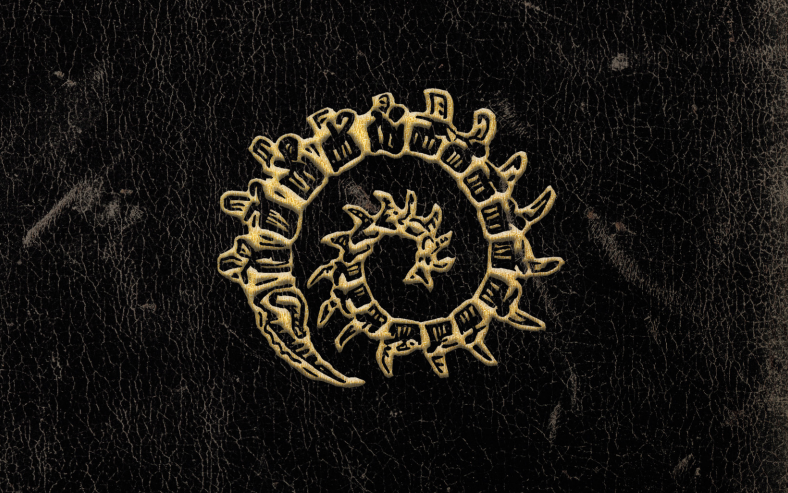
But the book created by designer and academic Asa Donald, a solo RPG called SPINE (or, Siderius Plug’s Immortality in Ninety-nine Endnotes), is dangerous for an entirely different reason. It might be haunted, or cursed. Something stalks its pages and yearns to draw the reader, the player, deeper into a labyrinth of poetry, memoir, and apocryphal research. SPINE accomplishes this using endnotes, an academic-inspired system of references that creates a complementary text to the anthology of fictional writing that composes the game's first half.
Flipping back and forth between SPINE's two parts is equal parts frustrating and alluring, like a puzzle that refuses an easy solve. Donald told me during our interview that's very much intentional. The rest of our discussion is a fascinating mixture of design challenges and philosphical positions on playing games that touches on the limits of player agency, ergodic texts, and letting go of play artifacts so they can continue cursing others, er... inspiring others to play with their books.
You can find Rascal Radio Hour on Apple, Spotify (for now), and all the other various podcatchers. Leaving a five-star review helps new listeners find our show and website. Since we eschew traditional advertising, these reviews and any word-of-mouth are genuinely a massive help. AND if you enjoyed the audio format of this interview, let me know! There is no end of intelligent and creative folks I could bring on in the future.
Here's an excerpt:
Chase: To a large extent, RPGs (and specifically solo RPGs) are ergodic texts in their bones. SPINE is so much endnotes, there is so much flipping back and forth. There are jokes [in the hobby] about how, if you have a physical book, you're gonna be spending half the session flipping back and forth referencing pages. And that's an ergodic relationship. Was that a strength that you wanted to take hold of in SPINE, that ergotic nature? Or is that something you need to keep sanded down so that it's not too frustrating for the player?
Asa: I would say that I picked endnotes in particular because they are frustrating. I'll back up a little bit. I started talking about endnotes and how they can be a mechanic. I think it's a way of engaging with the content in books, they could be fiction, could be nonfiction, and their purpose is to provide contextual information, both footnotes and endnotes. That's sort of their basic function. But more importantly to me is that they are drawing attention to our frame of reference. They're framing the content. They're not the text itself, they're paratext.
In games, people argue about this. If the goal of a game is immersion, to be immersed in the game — or if the goal of fiction is to achieve a state of transport, for the world around us to sort of fall away so that we can become lost in the story, footnotes and endnotes are emmersive. They draw us out of the content, they draw us out of the fiction, rather than into it. And to me, that's really interesting. In more complex works like Pale Fire, they aren't just pulling us out into reality where we are sitting with the book, but rather into another layer of fiction. And that's sort of what's happening with SPINE, as well.
I mentioned that I picked endnotes for a reason, and that is because they create more friction. I hate endnotes. Footnotes, that's where the notes show up at the bottom of the page, they're really convenient. Give me Chicago Style and all of its conveniences.
Chase: Yes!
Asa: Endnotes require you to flip all the way to the back of the book, as you were just describing. That, to me, is even more disruptive and more frustrating. I wanted that frustration to be in there because that page flipping also draws our attention to our frame of reference. It's not just the endnote itself, but the page flipping itself draws attention to the physical object in our hands as a reader. The other thing that's been implicit here is that there is a weird relationship between the reader and the author in this book, as well as between maybe the player and the designer. I'm not saying me, but the implied designer. There's an antagonistic relationship to some extent that's being played out in what the designer is trying to manipulate the player into doing.
Chase: I think that frustration, for me at least, was very successfully wrought through the endnote system. I was actually I was on holiday in Spain with some friends of my spouse, and I had brought a couple of nonfiction books; I was trying to get back into reading nonfiction. So, it was really interesting to have these books that were so full of endnotes and references, and when I was like, I'm done reading this; let's go play some SPINE, it's like, right, shit, they're still here. I'm still having to weed through endnotes. I was primed for that frustration already.
About halfway through playing, I looked back and noticed that the the mere fact of me having to flip back and forth was smoothing the edges of pages. I'm dogearing things whether I mean to or not. This book is becoming a play artifact. It's becoming unique through just the oils on my fingers or the way the spine bends because I've held it, with one hand, open to this page so I could flip back and forth. If we're talking about what the fiction of SPINE is trying to do, which is to transport the soul of the reader into the book, that all feels intentional. It feels like by even holding the book, you are transferring part of yourself into it.
Asa: that's right. People have pushed up against what parts of SPINE is a game, or whether it is a game. And I like to say that by simply by picking up the book, you have started to play the game to some extent. The game is about engaging with the with the book object. Before you open that first page, when you are looking at the cover, when you're looking at the spine, which says SPINE, you have started to play part of this game. You might not have gotten into the system yet and started reading the pages, but you've already started to engage with the game itself.