John Hight’s departure from Wizards of the Coast further dismantles digital dreams
The former president will stay on as an advisor as the tabletop publisher begins searching for its next leader.

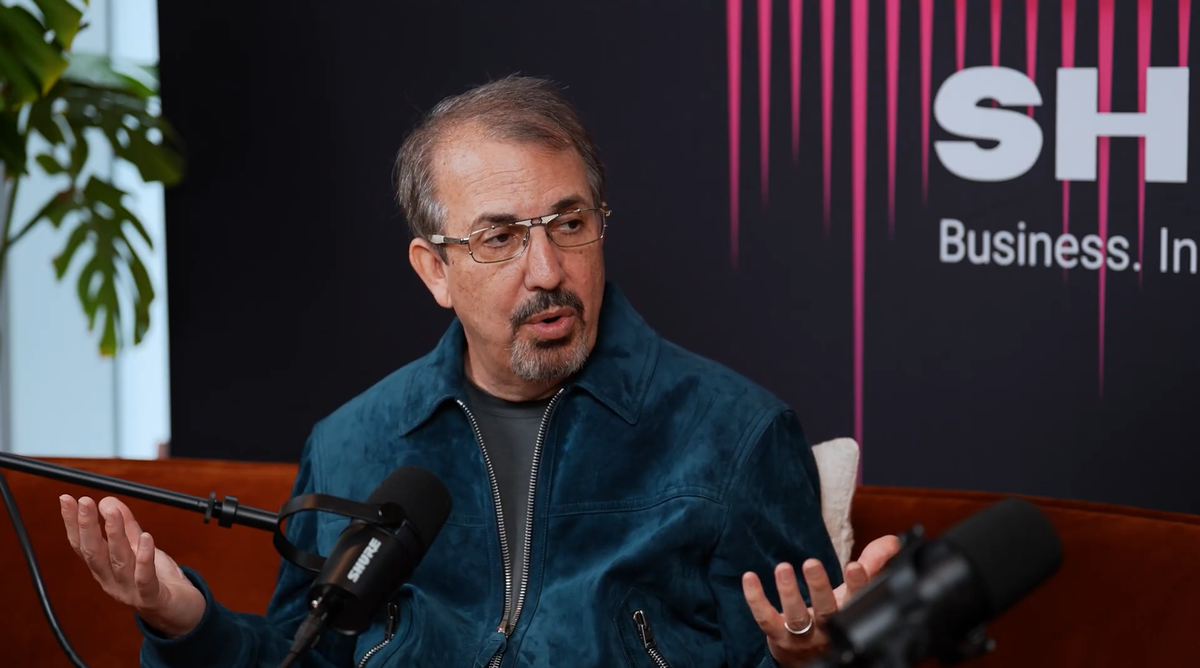
John Hight will step down as president of Wizards of the Coast starting September 1, according to a US Securities and Exchange Commission filing published on July 27. First reported by Gamesindustry.biz, the announcement marks the end of Hight’s two-year tenure at the head of the publisher and steward for both Magic: The Gathering and Dungeons & Dragons. It also digs the grave for Hasbro’s video game ambitions another foot deeper.
A Wizards of the Coast representative gave Gamesindustry.biz the following statement:
After two years as President of Wizards of the Coast, John Hight is transitioning from the role, effective September 1. We're deeply grateful for his leadership and the contributions he's made to our teams and our games during his tenure. John will continue to support Wizards in an advisory capacity while pursuing other creative and professional opportunities he's passionate about.
There is no change to the strength of the Wizards business. Magic: The Gathering and Dungeons & Dragons continue to perform incredibly well, consistent with our most recent earnings release, and our upcoming 2027 video game slate, including Exodus and Warlock remains on track.
We're launching an internal and external search for John's successor and will share updates as appropriate.
Hight succeeded Cynthia Williams in August 2024 after the latter resigned from the company’s presidency in April of that year (Williams originally replaced Chris Cocks once he was selected as Hasbro’s CEO in 2022, where he remains today). Before heading Wizards of the Coast, Hight worked for 13 years as the general manager overseeing Blizzard’s various Warcraft video games, chiefly the longrunning MMORPG World of Warcraft.
It was his perceived video game acumen that Hasbro likely wanted in their roster while the corporate toymaker launched a major pivot towards digital play in the back half of 2024. Leadership and shareholders were very eager to recreate the financial success of Baldur’s Gate 3, but Larian had already turned down cooperation on another project set in the Forgotten Realms. Instead, Hasbro would need to rely on its six video game studios and a professed $1 billion investment in digital projects, according to Dan Ayoub — the current head of the D&D franchise was speaking then to GI.biz as the company’s head of digital product.
Viewed in that framing, Hight’s tenure produced no real wins; at least, not yet. Hasbro reported a “$56 million non-cash impairment” during its second-quarter earnings report earlier this month, which likely stems from a string of canceled and imperiled projects. Stig Asmussen’s Giant Skull will no longer be developing a D&D-themed action RPG, even though Hight went to the PR mat several times over the partnership. A G.I. Joe video game, codenamed Snake Eyes, has not been officially shelved even though developer Atomic Arcade was shuttered in February this year. News about Skeleton Key’s horror-themed game has been non-existent since a laid off audio engineer claimed the project had been cancelled. The only two video games to survive long enough to receive official announcements have been Archetype Entertainment’s original sci-fi Exodus (sans hand-picked CEO James Ohlen) and Invoke Studios’ WARLOCK, both set to be released some time in 2027.
If that wasn’t enough, Hight also oversaw the slow, ignoble death of Sigil that followed a botched public unveiling of the virtual tabletop at Gen Con 2024 and an allegedly troubled, mismanaged internal development that culminated in 30 layoffs from the team. What should have been the soon-vacated president’s one win — voluntarily recognizing WotC’s first union — was marred by antagonism and combativeness towards the MTG Arena team. The developers of the TCG’s digital counterpart have since won their union vote and are actively bargaining with WotC over a contract.
Cocks recently told investors that Hasbro would be “taking lower conviction projects out of the portfolio, reducing our annual spend base, and concentrating investment behind the places where Hasbro has the best chance to build durable digital franchises: Magic, D&D, owned platforms, partner led economics and a concentrated number of high-conviction owned titles." He also said 2026 would be the “peak year” for the company’s investment in video games, which will drop by at least 25% by 2028.
In short, the digital dream is over. Hasbro wants to license future projects and outsource costly overhead — no word on what that means for the Montreal-based support studio it founded last year. Hight’s usefulness must also have run its course, though he will remain with WotC as an advisor. On what? He’s a fan of generative AI’s dubious potential and still holds many ties with Activision-Blizzard that will likely prove useful for that leaked World of Warcraft tabletop RPG, which WotC will probably announce at Gen Con this weekend.
I’m left frustrated by Hight’s two years behind the wheel, a period in which he barely mentioned the tabletop games WotC published and instead evangelized their licensing or adaptational potential for a product class that Hasbro cannot understand how to actually produce. D&D struggled to define an identity for its new edition (ish), and MTG’s burgeoning revenue has widened a divide between enfranchised players and an ever-increasing population of “activated fanbases.” This was a period during which the pillars of WotC’s creative purpose needed direction, but Hight sat on convention couches and tech panels to rave about what these games that millions of people love could be — evincing nothing for what they are.