Larping Cthulhu-style
How the HP Lovecraft Historical Society dressed up, solved mysteries, and lost their minds having fun


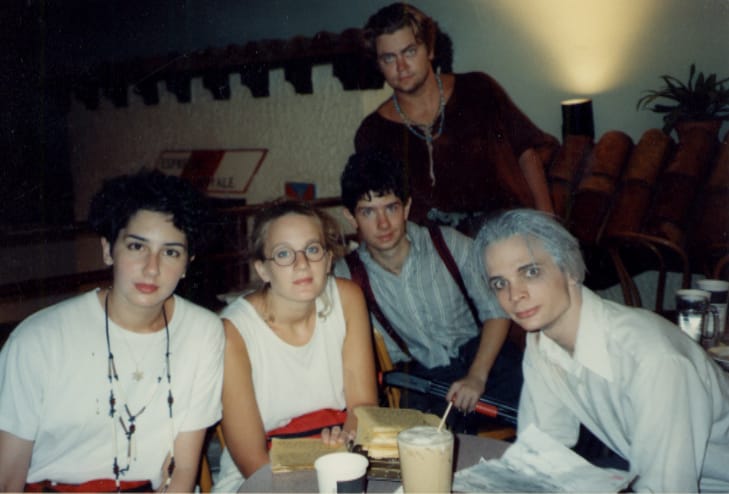
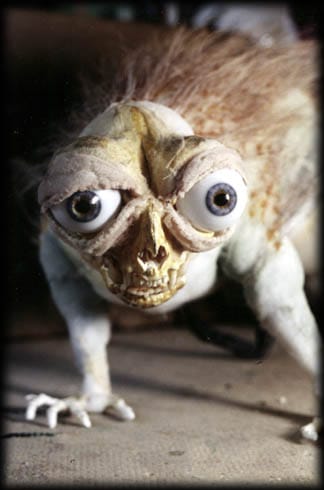
“As far as we knew, we invented live-action roleplaying.” This is Andrew Leman, talking about a moment in the mid-1980s when he, Sean Branney, and their friends created their own way of playing Call of Cthulhu. They were theater kids (emphasis on kids) and didn’t know what larping was then — this was pre-internet after all — but they recreated it from first principles. “It occurred to us pretty quickly to move beyond the scope of just Sean's dad's kitchen table, and to actually go out and play in real-world locations,” Leman told Rascal. “We went to Goodwill and the Salvation Army and kitted ourselves up with costumes and artifacts and props — because we were theater kids, props were just a natural part of how we did storytelling.”
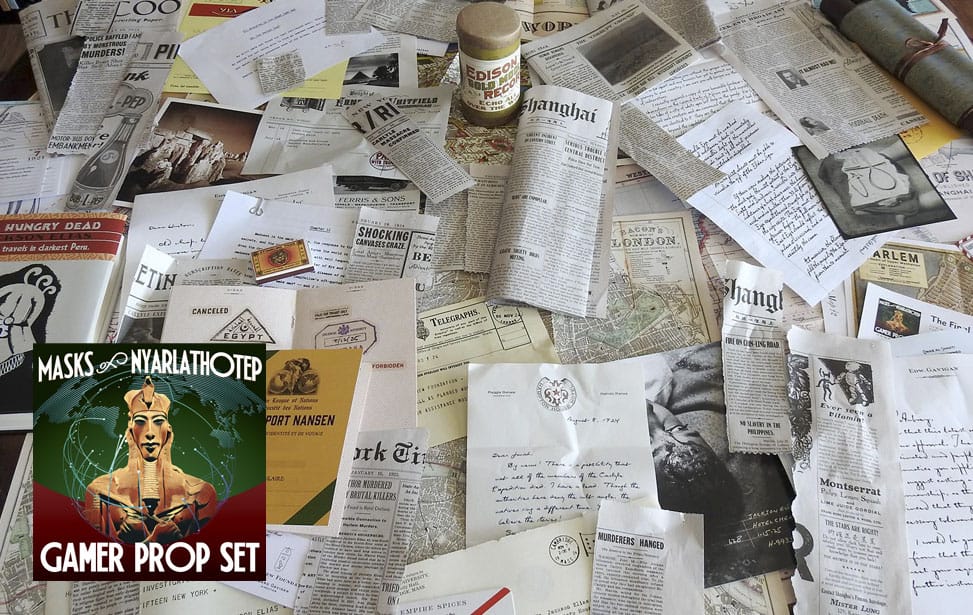
Props are how most people probably know Leman and Branney. They’re two of the driving forces behind the H. P. Lovecraft Historical Society (HPLHS), a fan organization that has created award-winning movies, music, audiobooks, and more. In the tabletop RPG space, they’re best known for constructing a set of props for the iconic adventure Masks of Nyarlathotep, a supplement that is so beloved that it’s possible you’ve been recommended it even if you have never run Call of Cthulhu. If you are a regular player, though, then you might recognize Branney’s name from his many other credits in the genre, including The Spark Devil, a mystery that HLPHS published last year that has been nominated for multiple Ennies in 2026, including best long-form adventure.
But this isn’t the story of a game you can buy. It’s about a series of more than 60 ostensible ‘home games’ played by Branney, Leman, and their friends and collaborators over two decades. These home games saw them crawling down real mine shafts, riding real helicopters over real deserts, and jumping off real roofs into slightly less-real magical portals. Their games were wildly creative, heart-stoppingly scary, a little goofy, but most importantly, full of the magic unique to the hobby of roleplaying.
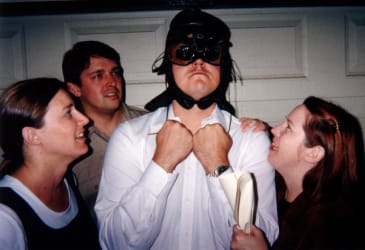
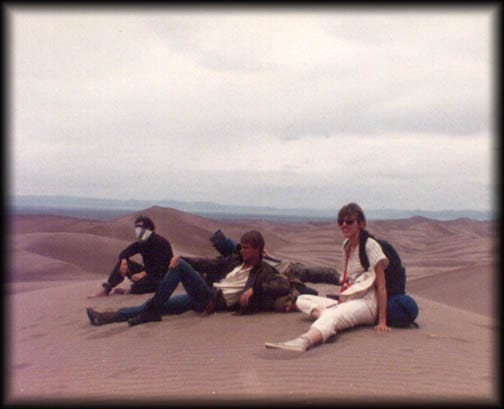
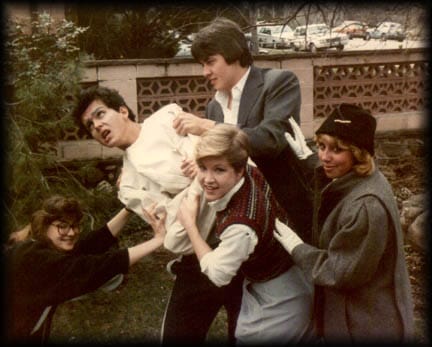
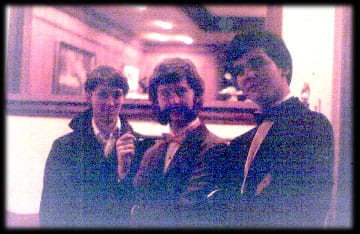
Credit: HP Lovecraft Historical Society
In 1981, Branney was a kid in Englewood, Colorado learning about H.P. Lovecraft for the first time, thanks to his friend, Darrell Tutchton. Later, on a fateful birthday, he received a gift: a boxed set of Call of Cthulhu. Leman and Branney didn’t go to the same school but had met when they were both cast in a play in downtown Denver. “We hit it off pretty well, and I invited him to come back to my dad's house and play this game with the weird name, and oh my god, has that invitation rippled through the decades,” said Branney. “One of those things where one offhand thing changes the course of several people's lives.” Leman had never even heard of Lovecraft before. Both he and Branney had tried tabletop games before — mostly Dungeons & Dragons — but this new game was different. The real world setting, the archness of the drama, the psychological exploration of the characters. “It was just the most fun game I had ever played,” said Leman. Up to that point, at least.
By 1984, the group decided to take their roleplay a step further. They wanted to play in real locations. Branney and Tutchton began to scout for places that felt like they belonged in that world of a 1920s Call of Cthulhu adventure. They identified four: an occult bookstore in Denver, an abandoned shed, the basement of Tutchton’s house (which was in the middle of being remodeled), and an empty patch of land near Castle Rock about 30-40 miles away. Apart from the bookstore, which was going to be the starting point, the locations were chosen according to some simple criteria: they looked creepy enough, and players could probably muck about in them without the cops being called. It also helped that it was a mixed-age play group, with at least one adult joining the teens.
The story itself would be simple: there was a cultist doing predictably bad, cultist things, and a group of investigators were hired to stop it. Leman and his fellow players received mysterious invitations to the bookstore’s team room. There, Branney met them dressed up in character as a professor. The experience was immediately completely different from their first brush with Call of Cthulhu. There was no GM, no dice, but there was a clear imperative to be completely in character. “It was happening in public. There were mundane, real people who had nothing to do with the game surrounding us, so we were having this imaginary interaction in a real, public place surrounded by real, actual people,” said Leman. “All of my spider senses were tingling because I thought something horrible could happen at any second… Is a monster gonna leap out from behind that bookshelf, or is the waitress who claims she's bringing me chamomile tea gonna draw a gun on me? What's gonna happen? There's an intrinsic level of paranoia.”
From there, they were sent to their next location: the basement where the cultist was last seen. To them, it was just an address. And when they got there, the sense of paranoia immediately returned. “We went there, and it's a house,” said Leman. “I'm like, what are we supposed to do? Just knock on the door of this house? I don't know who lives here. I don't know what's gonna be on the other side of that door. So, it was genuinely nerve-wracking.”
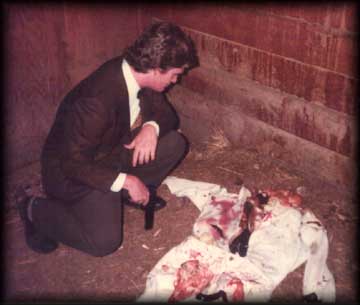
When they eventually worked up the courage to knock, they were met by Tutchton, in character as the owner of the house, and immediately breathed a sigh of relief. They were in the right place. Tutchton pointed them towards his half-finished basement, and, after descending the steps, they found all the evidence they could hope for. There were occult books and weird paraphernalia everywhere. They also found a large hole in the wall that had been blocked up with something like foam rubber, maybe a mattress. Leman pulled it aside and saw a dark crawlspace behind. As his eyes adjusted to the darkness, he saw a light bulb in the ceiling and a switch to turn it on. He reached into the crawlspace and flicked the switch, but the light didn't turn on.
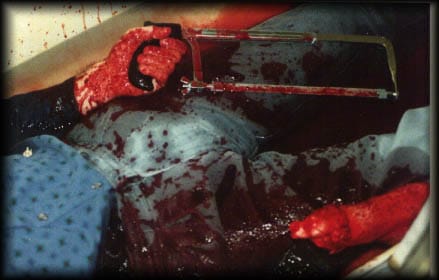
Leman described what happened next in a series of tense moments: “We push a chair over to the hole. I get on the chair. I crawl through the hole. I lower myself into this dirty, cobweb-filled crawl space. I reach up to swap out the light bulbs, and the second I touch that light bulb, it turns on just for a second, and I pull back my hand, startled. And when I pull back my hand, the light goes off again. So I realize, aha, this light bulb has just been unscrewed just enough that it doesn't turn on. So I reach up, and I screw it in. And as I screw it in, and the light stays on, I turn to my left, and there's a dead body.”
In the tabletop version of the game, you have to roll for sanity. I did not have to roll for sanity,” Leman continued. “I felt the sanity physically leaving my body when I turned and saw that corpse on the floor of that crawl space. I forget what [Branney and Tutchton] made it out of, but it was nasty…. utterly sensory, realistic, compelling, convincing, it was truly a sanity-blasting, horror-filled moment. And certainly hooked me forever on [believing] this is how you play Cthulhu, this is the most fun thing in the world.”
This was their first game in this new style.
Credit: HP Lovecraft Historical Society
As their style developed, the group evolved shared conventions and goals. At the core of it was chasing an immersive experience, not necessarily just in terms of the external environment of the game but also internally. As Branney puts it, they would “step into an artificial reality and play it for truth.” Just like they would on a stage during a play, they could let themselves “believe that scary things are scary.”
These games didn’t stop at Denver. As Branney and Leman left for college to Los Angeles and Illinois respectively, they took this mode of play with them. At University of Illinois at Urbana-Champaign, Leman introduced Call of Cthulhu to other people in the theatre department including a young Nick Offerman, of Parks and Rec fame. In a game called The Epic, Offerman was playing a college professor, and at one point, as Leman recalls it, “[the players] literally had to jump off a roof into a glowing portal to another dimension…They jumped not knowing what, if anything, they would be landing on.” Leman had an elaborate set up below them — a 6-foot diameter circle made of PVC, machines pumping fog, strobe lights for lightning, and of course, pole vaulting mats to break their fall. But in the dark, it was a leap of faith. In his newsletter, Offerman described these games as “some of the greatest gifts of my young life.”
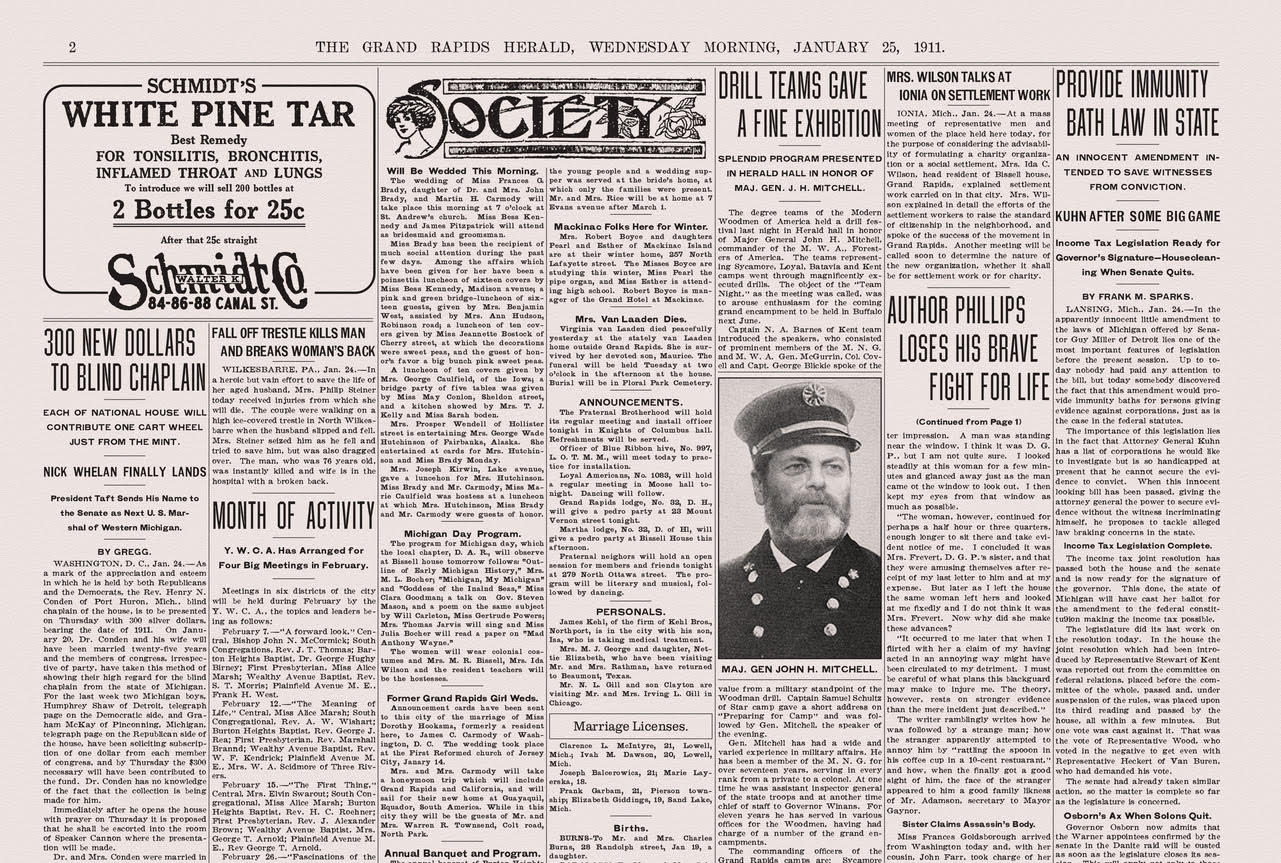
Eventually, this play style was christened Cthulhu Lives! (not to be confused with Cthulhu Live, a book about Cthulhu larping released by Chaosium in 1997 that is completely unrelated.) Their underlying model, as Branney puts it, was generally linear stories about a small group of protagonists. Unlike other kinds of larps that might be focused on relationships or emergent interactions between characters, Cthulhu Lives! experiences were always plot-driven. And, like tabletop sessions, the games weren’t necessarily limited to one day or session. They often took weeks. The group would break character and pause play at specific locations and then handle the logistics of when they would meet again.
But like all linear stories, things sometimes went off the rails, veering in a direction that the designer didn’t foresee — sometimes disastrously. It didn’t even take long. In the first game he wrote, Leman planned, as the bad guy, to get the drop on the players and hold them at gunpoint. He had planned for the investigators to have a way out when he would be distracted at a key moment. “My expectation was that while the bad guy's attention was diverted, the investigators would pounce and take advantage of that opportunity to subdue him,” he said. But they did not. He desperately tried to stretch out the moment of distraction but his players were frozen, believing that there was nothing to do. Eventually, he turned back to them and saw there was no way out for him.
“I shot one of them and thought, surely you two will now stop me, please stop me from killing you,” he said. “They didn't do it, so I shot another one, and then I shot the third one, and the whole fancy ending that I had planned never happened. I was so upset by how that went down, I said to Sean after: I'm never running one of these games again…” As an ending for a Cthulhu game, it was perfectly appropriate — the good guys often lose. But the immersive nature of larp cuts both ways: Leman found it so upsetting that his friends suggested that they redo the ending again so he could get the unpleasant taste out of his mouth. (Leman also learned not to put real ads in the local paper as a part of the game unless you wanted dozens of calls from curious strangers.)
In another similarly unexpected-but-appropriate ending, Branney remembers the investigators learning the horrible truth of a situation and, instead of plunging forth further, they turned tail and ran. “It was the ending you have always wanted to a horror movie and never gotten,” said Branney. “They’re like, holy shit, what happened here is so horrible, we should not be here, we're running away!” All of Branney’s special effects set up for the thrilling climax were wasted, but he still found it satisfying. The players had worked themselves into such an intense fright that their characters couldn't continue, so clearly he and his co-designer had done something right.
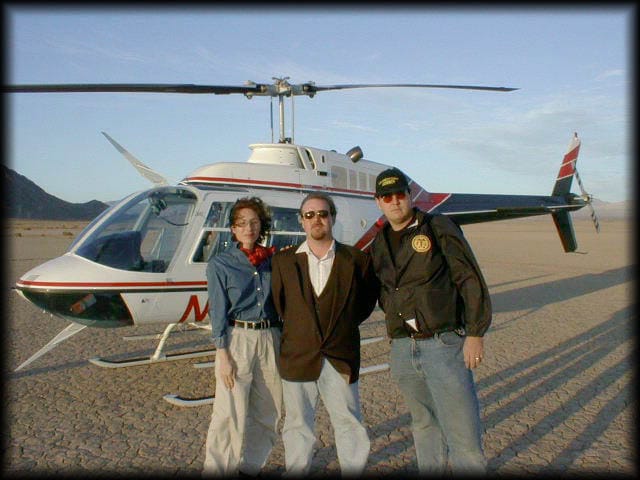
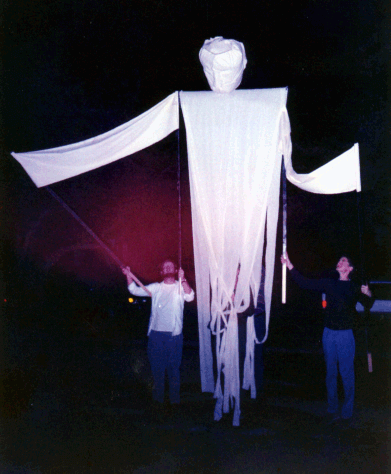
Leman and Branney say they’ve seen people do things in Cthulhu Lives! games that they couldn’t do in their ‘real life’. Like one player who, trying to outrun some pursuing vampires in the dark, leaped across a small river in a burst of adrenaline. When the player was shown the same river in the cold light of the next day, he insisted that he could never have done it. In another game, Branney and Leman were both players, being chased by a giant puppet (a ghostly apparition, in the fame) across a patch of desert littered with cacti.
“I didn't plan it,” said Leman. “It just literally spontaneously happened that one of my shoes flew off… I can't run through a field of cactus with no shoes on. This puppet didn't know what was happening, the puppet just kept coming towards us. So Sean literally threw me over his shoulder like a sack of potatoes and ran with me through the field to escape from the encroaching apparition. It's one thing to describe doing that while sitting at the kitchen table, but when you're literally, physically running from a 14-foot-high ghost, it's like, that's awesome.” Branney shook his head thinking about it and pointed out that Leman is not a small man.
These are always the most magical moments — when the game becomes more real than reality. Leman remembers one game set at Branney’s father’s fishing cabin by a lake in southern Colorado. “We were pretending it was an oasis in the Egyptian desert,” he said. “We were there overnight, and everybody was supposed to have a nightmare during the night. Sean and Phil [Bell, co-designer of the scenario] had written out all these nightmares and given them to us on index cards and said, okay, this is the scary dream that you have tonight.” Everyone read their cards and went to sleep, prepared to reveal it to their fellow players in the morning. But for one member of the group, it was more complicated. He woke up screaming in the middle of the night.
“He was on the couch in this living room, I was in his sleeping bag on the floor,” said Leman. “I was jolted awake by the screaming… I was literally paralyzed with fear. I had a gun under my pillow that I wanted to reach for, and I literally couldn't move to get the gun. I was so terrified of the screaming, because [he] was actually having the nightmare that they had planted in his brain.” There was no sign of any pretense. He had been told to have a nightmare and he actually had it.
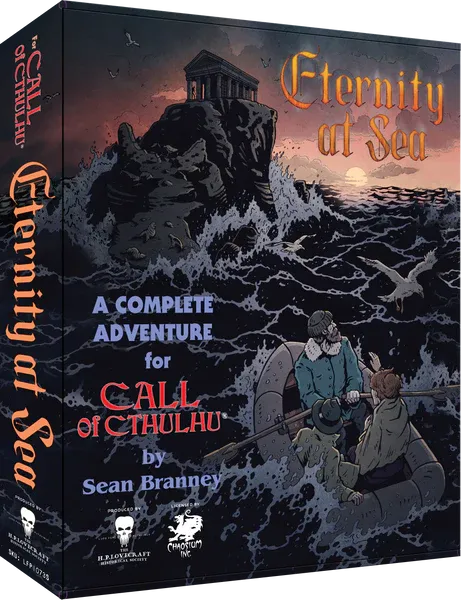
A parade of these moments couldn’t help but create “an arms race of sorts”, as Branney put it. During one game in the 2000s, Branney was playing an LA County coroner who received a call to come out to the Van Nuys Airport. “The out-of-game part of me is like, oh, okay, Leman's set up something at the airport, this will probably be pretty cool. I get there and Andrew's got a helicopter sitting on the pad, and I'm like, okay, I'll probably get in and shut the door or whatever, and I'll have been in a helicopter.” Branney expected the game to pause there and then to hop into a car and drive to the next location. “And the pilot's like, put the headphones on. Then the goddamn thing takes off!”
Leman is much more nonchalant: “The reason that we rented the helicopter was because the only way that you could see the 300-yard-long occult symbol that we had carved into the dry lake bed.” Obviously.
Credit: HP Lovecraft Historical Society
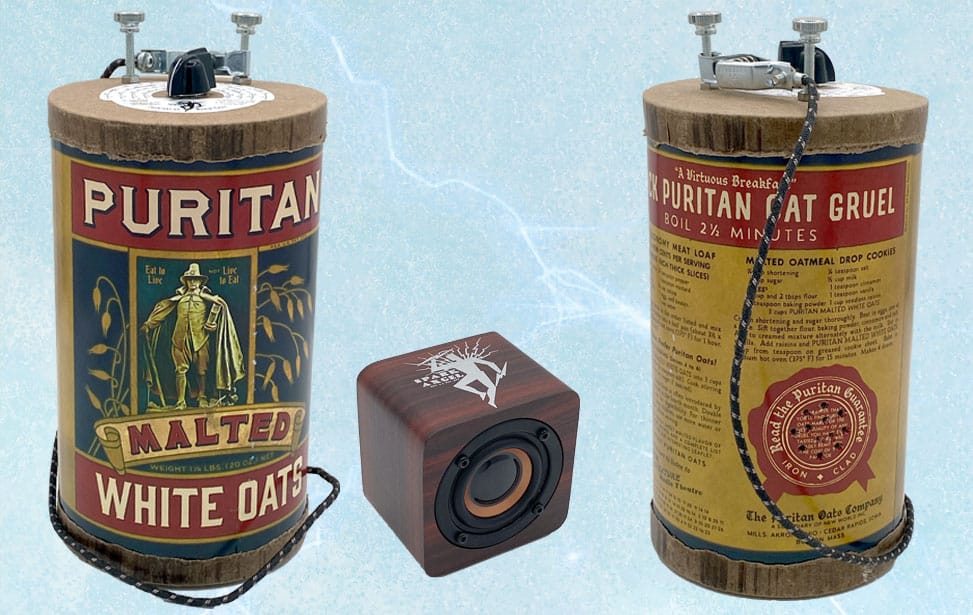
Today, the HP Lovecraft Historical Society is mostly a publisher of lush audio drama in the form of Dark Adventure Radio Theatre and original RPG adventures. Sometimes, the two even overlap, like in their interactive production of Purgatory Chasm, a branching narrative in audio form where you play a geologist delving into a cave (based on the real place which gives the production its name). Their latest tabletop production is called Eternity at Sea, wherein all the investigators are family members who descend on Astoria, Oregon to hear the contents of a deceased relative’s will. Turns out their family history is stranger than they suspected. Like all of HPLHS’ products, Eternity at Sea is also a feast of carefully designed props, including a 3-dimensional map alongside the usual suspects: newspaper clippings, old photographs, and so on.
Branney’s writing and Leman’s props are symbiotic. If one creates the fictional world, the other reifies and amplifies it. The props also open up the game — connecting your table to the wider world and its history, pulling you out and over to a new dimension, even as you’re sitting down. It’s not the same as crawling into an actual mine shaft, but it’s probably more accessible and safer. And as the pair grow older, more of Branney and Leman’s gaming happens at the table as well.
The larping hasn’t officially stopped. Like many of Lovecraft’s mythos beings, it slumbers, waiting to rise again. “I still have a box full of weird shit I've accumulated over the years to someday spring on Leman that I have not yet busted out,” said Branney. “I'm just waiting for the time to be right.” Cthulhu lives, indeed!