MIIRU's leaden horror doesn't weigh down satisfying sequel
Deicide, part deux.

Tabletop RPGs don’t really do sequels. Each system, from FATE to For the Queen, are engines used by groups to tell bespoke stories, and even most solo RPGs cede authorial power over to the player. Editions are recapitulation, plus errata and whatever wisdom the designers gained during the interim — they are definitionally repackaging the same ideas. Supplements are just that; supplemental. Their material, which completes the intended experience, often requires the core book to function.
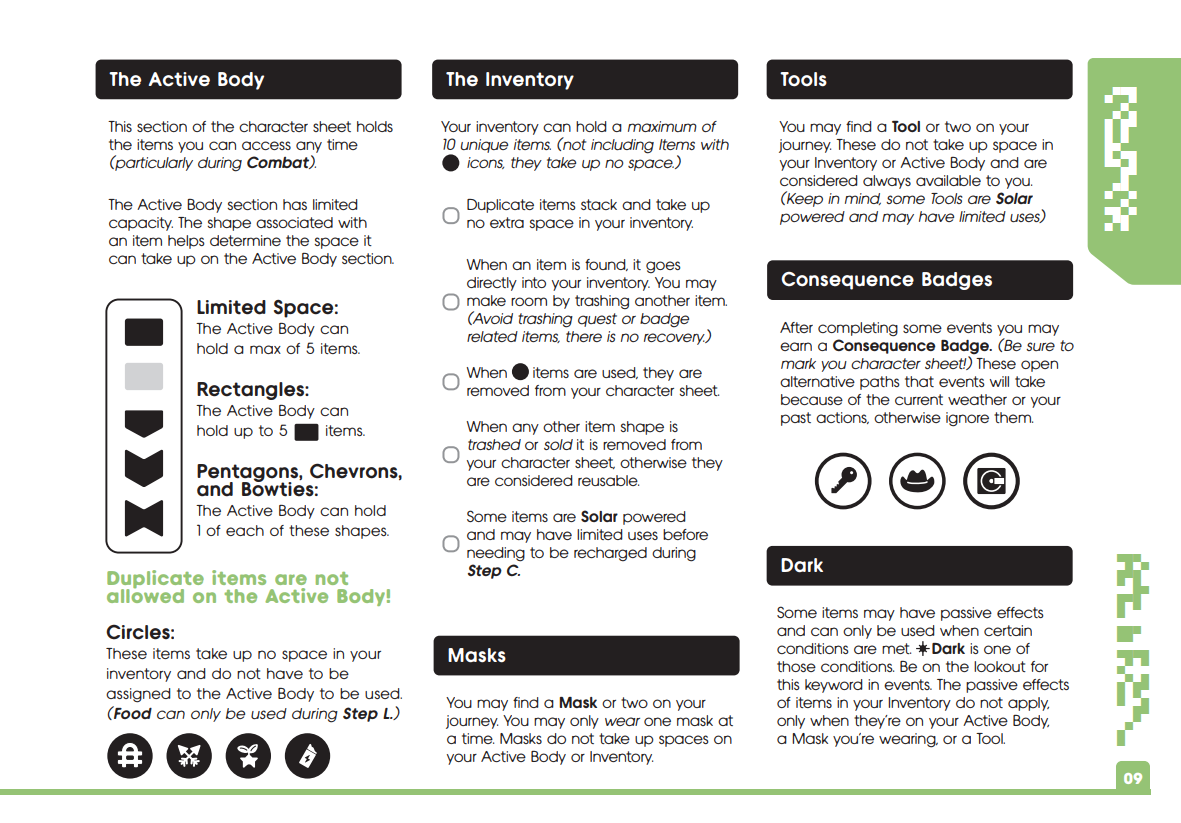
MIRU 2 (or MIIRU) is thus an anomaly. The vast majority of the rules are the same; tweaked and tightened, peppered with interesting additions, but still incontrovertibly MIRU-shaped. You can even port the gear and experience from the first game to the second. The storyline picks up one day after the events of the original solo hexcrawler and demands an identical performance — move, loot, defeat God. The devil is in the details: Hunter becomes prey, the known becomes foreign, and vengeance becomes survival. It’s about as authored as solo tabletop gets.
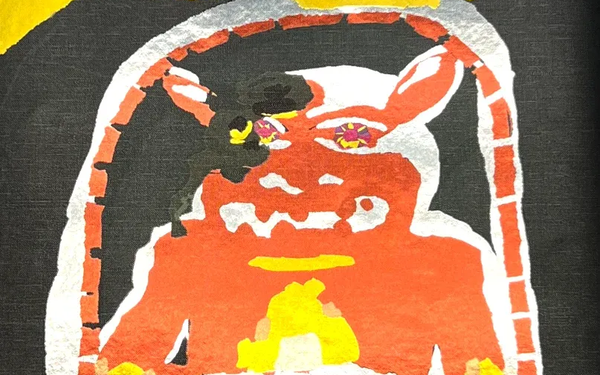
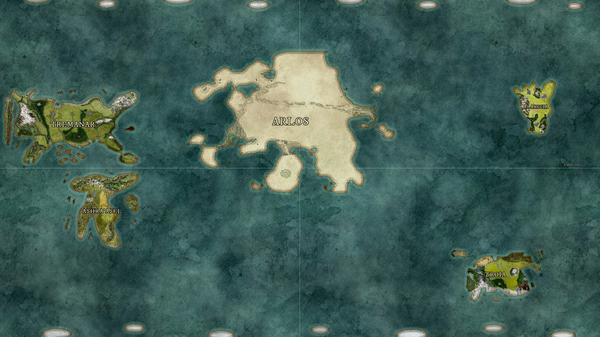
The whole exercise intrigued me. I enjoyed the mechanical loop of the original, which consisted of exploring a hexgrid map, rationing food and energy as you overcame encounters, and plumbed ruins of a dead past. Along the way, the unnamed protagonist accumulated weapons that might allow them to kill the mechanical god responsible for their brother’s death. Clever graphic design buoyed this satisfying repetition, even if the writing didn’t shine quite as bright. The sequel hasn’t changed much of that structural core. You’re still trawling across a map one hex at a time, collecting spare parts and meal bars, and watching the horizon for a four-eyed celestial mech with murder on its mind.
And yet, MIIRU manages to accomplish more and stumble harder than its predecessor precisely because it comes after. I can’t help but compare it to the antecedent, not only impressed by how designer Hinokodo of Mimic Publishing fine tuned the engine but also frustrated by how insubstantial the RPG’s “analog horror” tagline felt. Across the 49 in-game days it took to complete the story, only a handful wrung fear from me. Tension? Absolutely. Certainly stress and nail-biting as I roll the die that might drop God’s metallic fist on my too-soft body. There were flashes of such a game in the opening scenes, but it was quickly relegated to atmospheric description that even the most squeamish would only call ‘moody’.
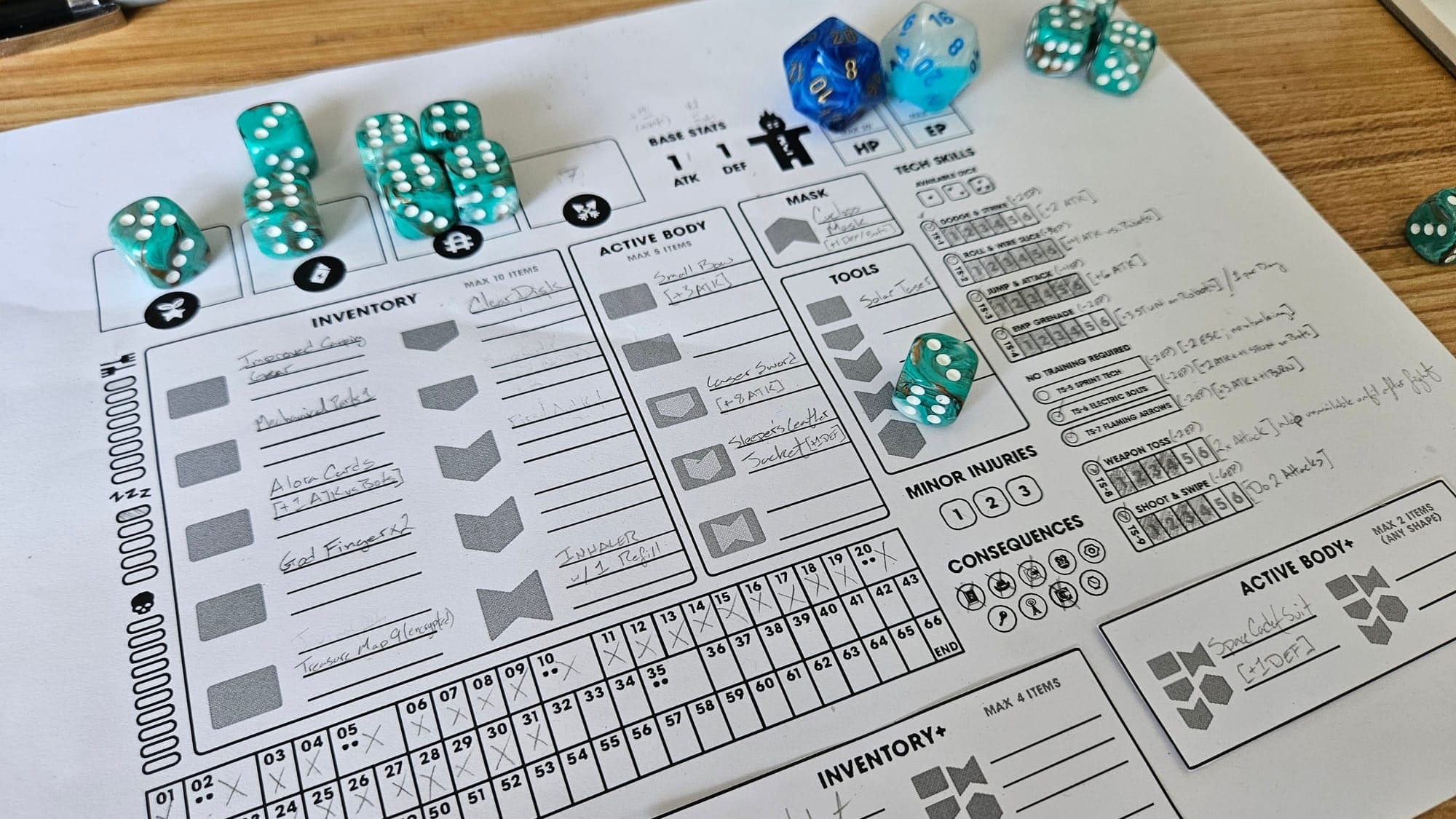
Let’s start with what MIIRU does better, which I’ll admit covers nearly every designed aspect of the solo experience. New systems for managing a noxious Rust disease contracted from decaying androids join the hunger and sleep tracks, and conveniently circumvent all armor. Inclement weather will interrupt sleep and deaden your sword arm, giving moment-to-moment decisions much more weight and changing how you tackle each new hexgrid environment. It is a more deadly game and more punishing of mistakes or overcommitment. Tweaks to the early and mid-game sections often left me dying of hunger and one hit away from death, desperate for an event where I might scavenge anything of value. I was in the shit, as they say, and loving it.
A lack of safe havens accentuate this isolation. Where pockets of civilizations were sparse but reliable in MIRU, the sequel gives you one — and if you discover it in the extreme corner of the map as I did, you will be forced to leave its security behind. Accept the certain danger of exploring in the other direction, or sink finite resources scouting around it in fits and spurts. The nature of random rolls means neither is the “better” choice. Potential upgrades make the gamble worth it, if an Abomination doesn’t kill you first. Hinokodo balances risk and reward with a finer grain, and the result is that vaunted one-more-day compulsion that’ll keep players bent over their sheets hours later than planned.
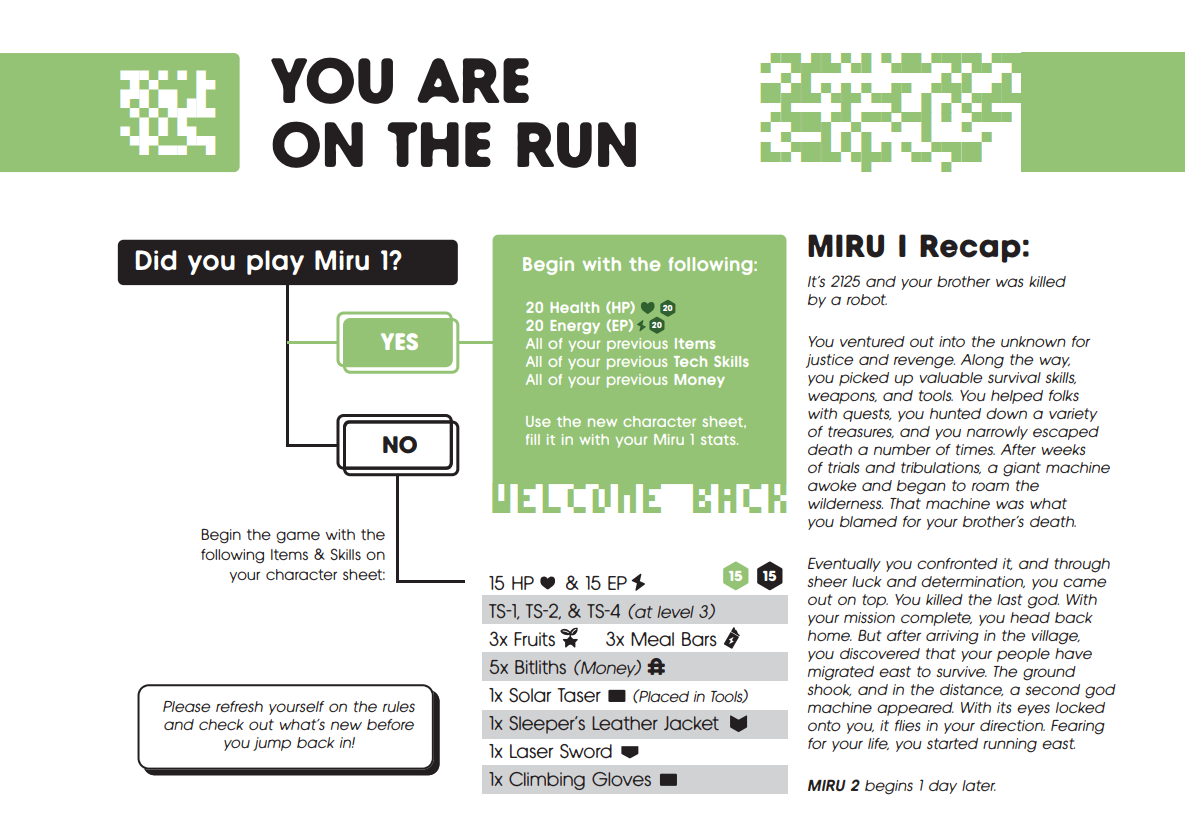
The one change to exploration adds Consequence Badges, narrative flags earned through certain events and choices that can affect your journey in various ways. The changing weather uses this system when the player moves into a new hex to shunt story prompts off the main stream and down an effluent — dense fog will hide creeping threats and secret stashes, both — but others include collecting key quest items and choosing to spare (or kill) notable characters. Badges close doors and open others in a way that is distinct from the improvisational nature of most RPGs, one that highlights the path not taken just as brightly. It’s borrowed from board games such as Earthborne Rangers and Sleeping Gods and is another of Hinokodo’s calling cards. My journey was singular as much by the paths locked to me as the one I cut across the hexes in search of a village in flight.
Horror is difficult to achieve. Maybe because people, generally, want to laugh but aren’t so keen to feel fear, stories must work double to invoke terror in our hearts. And without the aid of the moving image, a foreboding soundscape, or evocative syntax, analog games face a ponderous task. Call of Cthulhu leans on buy-in more than anything — players want to be spooked by cosmic horror’s corruption of the mundane. Kids on Bikes governs the players’ agency by casting them as children forced to solve adult problems. World Champ Game Co’s Campfire circumvents this problem by simply setting the stage for groups to scare themselves, arming them with all the tools they need.
MIIRU opts for the tried-and-true chase scene, at least initially. With your feet barely beneath you, God descends with all her screaming fury and sets your heels on fire. Understand how to explore, gather resources, and avoid environmental perils? Good, now do it with a colossal avatar of vengeance flattening the forest in search of you. Put it on the map and move it inexorably closer every single day. It would be a delicious source of butthole-puckering dread if MIIRU didn’t usher God offstage a moment later and never perform the trick again. I kept waiting for the prestige, a grand and terrible return as soon as my shot nerves cooled. It’s a well-worn tool in the kit of popular horror video games — hello, Mr. X, Nemesis, and the Xenomorph — that I wish got any more play here.
Little else is left to horrify players but aesthetics. The land you and your village fled into is home to androids cursed with a bugged patch that produced the cancer-like Rust. Their bodies are seized with fits of murderous intent, and the synthetic skin sloughs away to reveal inorganic musculature. Homes, villages, and amenities are literally haunted by the ghosts of civilization gone to some twisted seed. Unfortunately, MIIRU’s isn’t strong enough to carry this tone on its own. Most encounters are described with intriguing details that elicit not much more from me than, “neat!” At worst, the scenes fall prey to hackneyed imagery — one android in an amusement park has been welded to its workstation and uses an array of television screens to display weeping eyes as the protagonist gives them a wide berth. Such spectacle can’t achieve more than a theme park attraction might because it only sticks around long enough to briefly color the wider world.
MIIRU’s main story also suffers from writing that’s weaker than its playable design. I won’t spoil the main story, but the denouement takes a baffling left turn from the previous main cutscene. Granted, it only took me 4 more in-game days to sprint from one to the other, but nothing else happened to so radically change the stakes. Here, too, the RPG could have used the story to reinforce the hopelessness that so often accompanies horror media. We aren’t here to see the good guy win, even if we should always believe they could. Instead, it wraps up the story with a scene that casts the possibility of another sequel into the future — one that has already happened in the form of MIIIRU. This is the ugly side of sequelization. Leaving open the possibility of yet more story robs the current one of closure, or at least a definitive end. It’s media as a meal where anticipating the next course spoils the opportunity to savor the one in front of you.
Still, I respect MIIRU for its bravery. Why not turn iteration on the gameplay loop, on a theme, into a whole new chapter? Take what worked for MIRU and refine the process without having to wait a decade for the redux or revisit. Another team might have framed MIIRU as an adventure supplement so that the core text remained a foundation for creative offshoots. What if there was a sequel to Dungeons & Dragons? Would it also iterate on its own design, along with moving the entirety of Faerûn forward on a narrative timeline? What if it cared more about intentionally authored experiences than preserving the conceit of an endless sandbox? I don’t know if it would be good, but it would be interesting.
Maybe this is why tabletop publishers prefer editions to sequels. If you can’t prevent players from committing the sin of comparison, at least recreate the obligation to repurchase the core rulebooks. MIIRU stays interesting by bucking convention, even when its ambition outpaces its ability. I’ll take a brave swing for the fences any day, whiffs and all.