Years-late RPG adventure project embraces AI, is forced to refund angry backers
Somehow, World of Game Design returned.

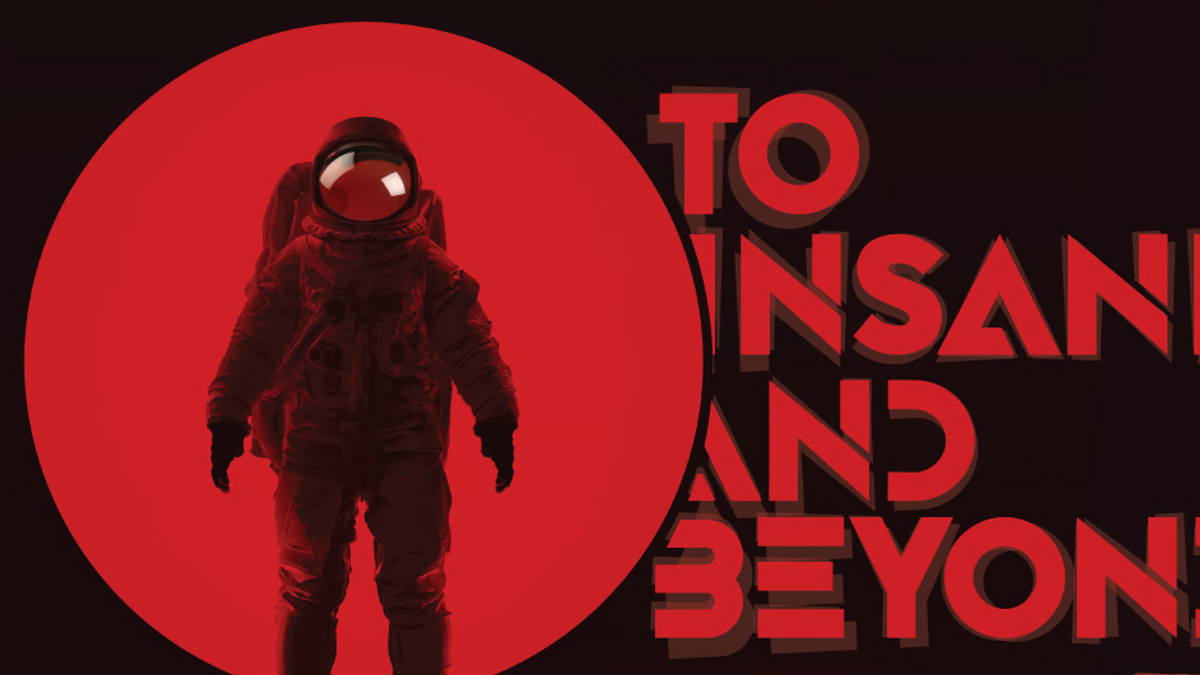
On September 21 2026, the Kickstarter project for a three-book adventure compilation called To Insanity and Beyond posted an update that dismayed and angered backers. An unnamed member of Bite-Sized Gaming explained that adventures would no longer carry the Mothership RPG third-party license or engine compatibility, nor its previous art direction — basically, everything would change but the name.
The originally promised game, first planned for a September 2024 release, would now use Bite-Sized Gaming’s The Rät System and be released under the Scrap Räts series, a dirty, science fiction world that at least rhymed with Mothership’s genre influences. The cruelest twist of the knife came from the publisher’s new and unrepentant embrace of generative AI to produce the reworked game.
“Time has swiftly passed under our feet and the industry is going to [sic] many changes... least of which is all of the million ways that AI can be used to develop creative projects… some great, some controversial,” a Bite-Sized Gaming representative wrote. “Yes, I know you have opinions on this. Yes we are compliance [sic] with Kickstarter policies on this. Yes, we embrace AI in important ways for our creative projects. No we won't be issuing refunds if you aren't cool with that. No, your friends left the project, you can chat with me, head Rät.”
Frustrated and disgusted supporters filled the post’s comment section with demands for refunds, accusations of scamming backers with “slop art” by a “clanker,” and calls for folks to report the project to Kickstarter for not delivering the promised item. Others bristled at the author’s dismissive tone with which they announced that nobody would receive a refund, instead pointing folks towards a fulfillment portal hosted on ATLAS, the “AI Tabletop Lifecycle Automation System” owned by GameCodex, LLC.
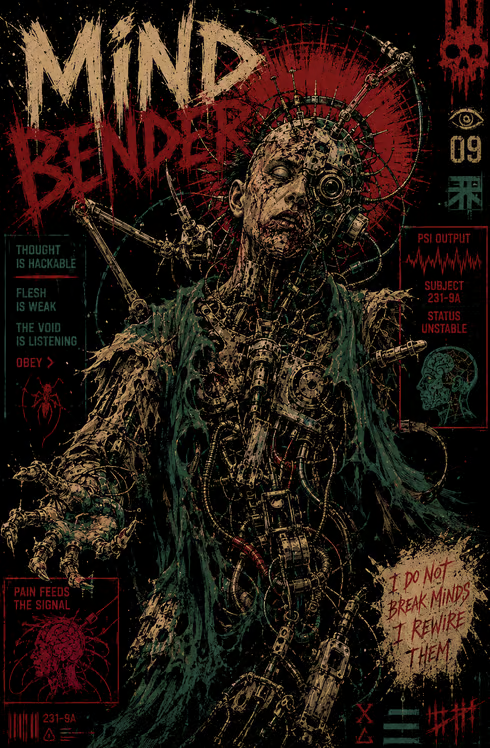
On September 24, Bite-Sized Gaming posted a response titled "Looks like we did misread the room" wherein the studio concedes to refunds for all backers who contact them on Kickstarter. The post characterized the vehement backlash as "candid feedback" that "has been pretty overwhelming."
Bite-Sized Gaming is a subsidiary of World of Game Design, a distribution and publishing company owned and operated by Jared Nielsen. ATLAS and GameCodex’s connection to World of Game Design is unclear (Rascal did not receive a response to inquiries), but WoGD’s new website restyles the business as an AI-powered studio with plans for RPGs in dozens of genres. Nielsen has been listed as To Insanity and Beyond’s producer since the campaign’s launch but seems to have taken over full responsibility of design and production after writer Zac Goins and several other members of the team cut ties with WoGD. An October 2024 update to the campaign simply described Goins and project lead Zack Allen’s quitting as “high profile departures.”
Nielsen (or whoever is currently penning project updates) blamed the extreme changes of To Insanity and Beyond’s original pitch on Mothership maker Tuesday Knight Games: “Let's cover the elephants in the room first,” begins the latest update, misquoting the phrase to address an obvious fact. “Mothership licensed and branded games aren't in our future at this point for a variety of reasons, but at their request, which is their privilege, we've agreed to move on to other game systems. That doesn't mean that you can't have a great rules-compatible game from this Kickstarter however so you will be able to get your compatible digital download for that.”
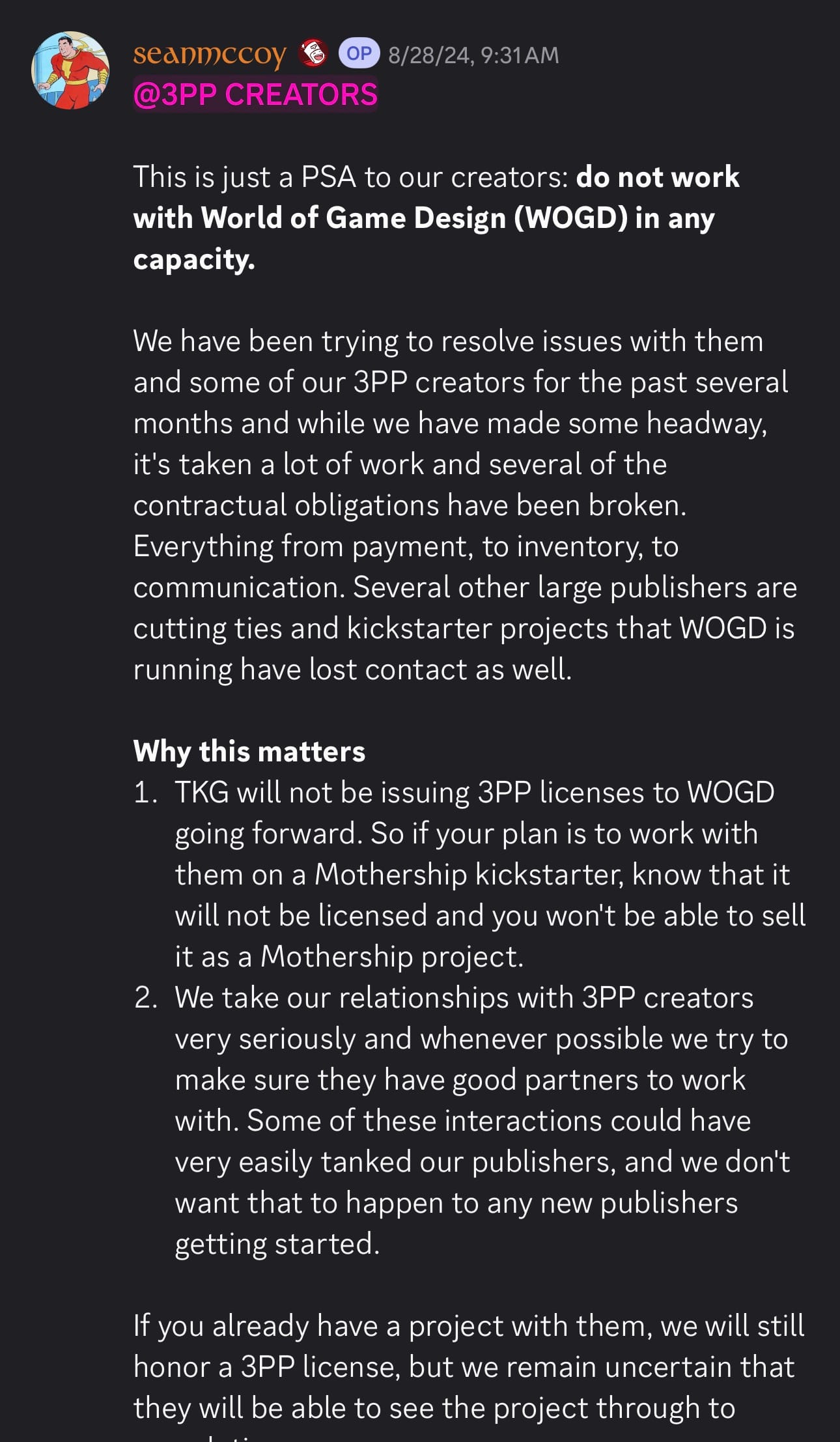
Rascal reached out to TKG for confirmation, and co-owner Sean McCoy told us that they stopped working with Nielsen in 2024 “because they were jerking our publishers around” and that To Insanity and Beyond was a holdover project from that period. A Discord server screenshot from August 28, 2024 shows MoCoy alerting all third-party designers to not work with WoGD “in any capacity” and that any future licenses to the Mothership system would not be issued.
“We did tell Jared back when all this was happening that products that had already been greenlit for Mothership 3pp before we severed our business relationship would be allowed to continue as Mothership 3pp.” McCoy said. “I don’t know the specifics of this project and whether it falls into this category (it seems like it might!). They might just be trying to cut ties as well and want to put the blame more on our side of the fence, that’s unclear to me.”
Ultimately, Bite-Sized Gaming (and WoGD) can unilaterally change the entire scope of the project because the publisher’s actions don’t contravene any part of Kickstarter’s Terms of Service.. They can use horribly greebled generative AI art and LLMs to develop the adventure. They can even ship the resulting product to backers and call it successful fulfillment. They can do all of this in compliance with Kickstarter’s AI Policy, though the spirit of the rules would demand a clear explanation on the project’s front page. Backers’ only recourse was to report the project to Kickstarter directly and rattle Bite-Sized Gaming's owner with their collective indignation.
To Insanity and Beyond’s pledged $15,228 pales when compared to the seven-figure campaigns that dominate tabletop games on Kickstarter, but it’s representative of the vast majority of projects launched on Kickstarter, BackerKit, and other crowdfunding platforms — modest, unassuming, and easily lost in the daily tumult of promotion and advertising. Without reliable methods of demanding accountability or more stringent AI policies governing the platforms this hobby relies upon, creators and backers of small projects like To Insanity and Beyond must rely on cowing each individual would-be designer who exchanges artistry for machine slop.
If Kickstarter won’t strengthen its policies, the public has shown they can strengthen their voices in response.