Adobe InDesign’s generative AI feature is a sneaky, unhelpful mess, says tabletop designers
“I won't ever trust Adobe to roll out new features without defaulting them to enabled.”

AI-generated works, like the acrid stench of melted plastic or cheap perfume, have an odious veneer that many players like myself find off-putting, due to how generic and gaudy they appear at first glance. And for Evil Hat Productions’ Fred Hicks, discovering the unwanted presence of AI-generated alt text in the digital version of Umdaar: Rebel Broadcast Edition was enough to, in his own words, make him “incandescent with rage.”
“Someone in the comments on the product page on DriveThruRPG pointed this out and was pretty upset as they believed it meant the artwork was generated by AI (which would be real difficult since a lot of it was created years before that became possible),” said Hicks, president of Evil Hat, in an email to Rascal. “Initially I had no idea [...] and had to blunder around a bit to sort out what exactly had happened.”
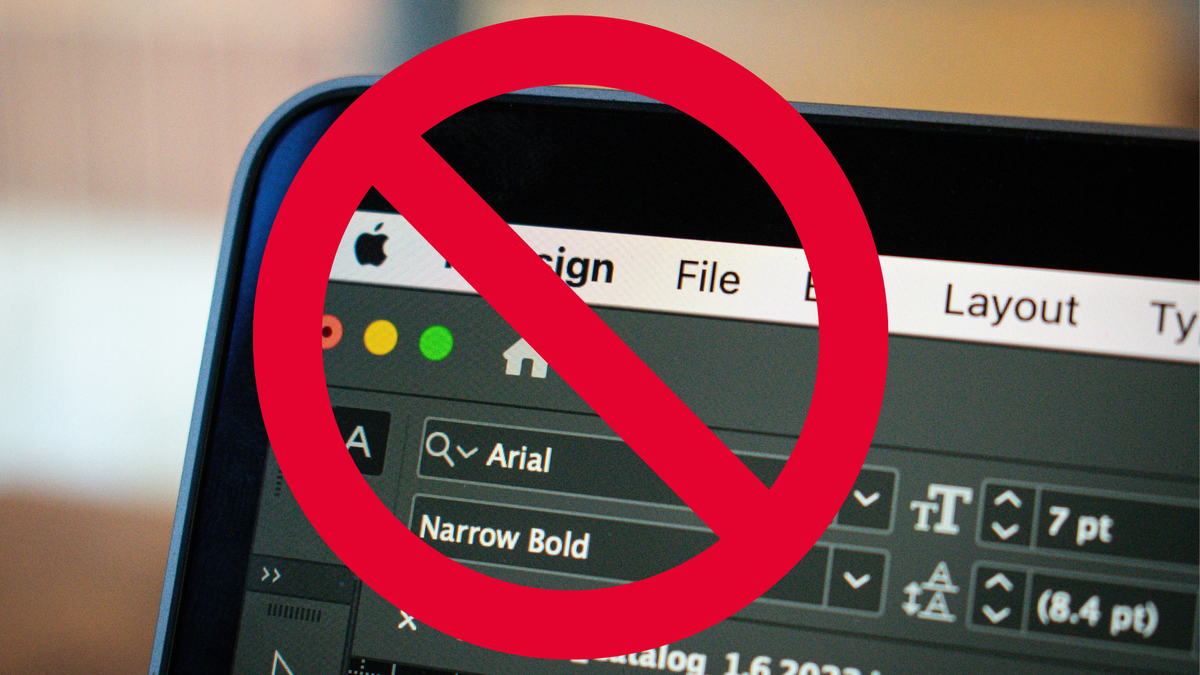
The cause of this Al-generated alt text was a new tool added to Adobe InDesign in January 2026. The setting had been turned on by default — an aggravating and common technology feature that many creators were not aware of. In these instances, InDesign would automatically generate an alt-text description whenever an image with no alt-text was imported into the software, alongside an additional “AI generated content” phrase. Hicks moved quickly to remove the offending text and reupload the document onto DriveThruRPG, telling Rascal that Umdaar was the only affected game. “It would have been more if someone hadn't made noise about what had happened with Umdaar on or near the day of its release,” he said.
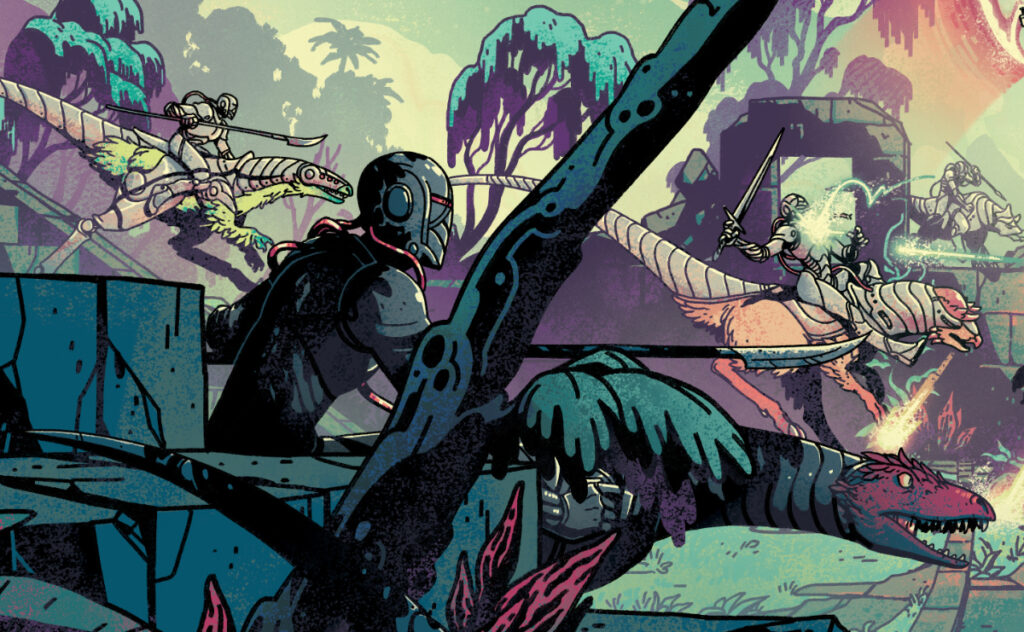
Evil Hat wasn’t the only studio whose works had been covertly amended by InDesign’s AI feature. A follower of Chaosium’s Time Without Tide Backerkit campaign asked the publisher why AI-generated content was included in the quickstart. “We found this question very strange, and after additional followers raised similar concerns, we discovered that the images in the quickstart contained AI-generated alt text,” said Brian Holland, executive producer of roleplaying games at Chaosium, to Rascal via email. Then there’s Rich Ranallo from Signal Interruption, who saw similar AI-generated alt texts in the studio’s Mothership module, Red Shift, while reviewing a layout draft from designer Alina Trang.
Another affected studio is Earl of Fife Games. Upon seeing Hick’s diatribe against Adobe on Bluesky, Jason Duff grew concerned that his works were similarly affected, as he had created PDFs based on errata and other fixes for several recent games using the InDesign software. Eventually, he unearthed several AI-generated alt-text in a book he is currently working on. “Luckily, I found that the alt-text is generated when the image is inserted, instead of when the PDF is created,” said Duff to Rascal in an email. “Therefore, none of my old PDFs created for minor updates were impacted (since none required inserting new images).” He implemented a script he found online, which allowed him to remove all the alt-text in the document — a process which he said took him a couple of hours to thoroughly resolve.
One common issue the designers have noted about these AI-generated alt-text is that the descriptions were partially or completely inaccurate; for instance, Hicks shared that InDesign referred to Evil Hat as “a company that produces hats” in photo descriptions. One of the most glaring mistakes is InDesign’s AI-generated description of Signal Interruption’s logo as “a close-up of a person holding a small, light brown dog with a white patch on its chest.” This mistake is particularly erroneous, as there are no dogs or human beings present in their logo.
Designers face potential reputational risks when AI-generated content is found in their documents. The four aforementioned studios have staunch anti-AI policies in place, and have publicly expressed that they do not use generative AI to produce their games. For Evil Hat and Chaosium, whose products have already been released, the presence of the AI-generated alt-text raised some concerns about undisclosed AI content that would ostensibly contradict their anti-AI stance. Holland, in particular, didn’t want any player’s first impression of Time Without Tide, the studio’s newest game, to be soured by the discovery of AI-generated text.
Fortunately, these discoveries did not amount to significant backlash. “We were very concerned about this revelation having negative backlash on a project which, for some members of the team, has been in the works for nearly a decade,” he said. “We are very glad that people have accepted that this was an honest mistake on our part, and hear it when we say that Chaosium has been and always will be a company that champions human creativity.”
What’s most frustrating for these creators is that there isn’t more room in this industry for recourse. Hicks’ approach is to disable these settings as they are discovered. Even though he believed that this wouldn’t impact Evil Hat’s workflow significantly, he’s wary about Adobe switching these settings on again whenever the company releases a new update for InDesign. The other studios, however, felt that they had to devote significant time scouring their content for stealthy additions. “It is hard to say how much it will disrupt our workflow, given we would, in this case, need to look for something without knowing it was there,” said Holland. “Once we discovered it, the team had to disable the self-enabling feature, re-export the quickstart, and update the live version. We have heard (but not confirmed) that if and when Adobe updates for any reason, that these features may reset and need to be turned off again.”
Unfortunately, the bullish attitude towards AI among tech giants like Adobe can be detrimental to many creators. The flagrant use of generative AI to quickly produce content is becoming more prevalent, and this can have an outsized influence on niche industries like the tabletop industry. Designers such as Ranallo and Duff said that they already have to actively screen out collaborators who use generative AI. The need to also look out for unwanted AI content in their own works, injected by the very software they are using, adds another layer of tedium to this problem. “Unfortunately, AI is much more advanced today, making it difficult to pick out AI-generated text,” said Duff. ”Any time a freelancer sends me written work, and I see non-standard punctuation such as dashes, colons, etc., I am quite concerned about the work I am getting. This has caused me to largely rewrite and edit huge amounts of text I might otherwise feel satisfied with and place directly in a book for publication. This has obviously negatively impacted the speed at which I can create products and gives me a sense of disquiet as I can never be 100% sure of what I initially receive.”
On the other hand, the studios recognize that switching to an alternative product can be untenable, given the prevalence of the Adobe suite in the tabletop scene. “While I'm aware there are other alternative layout programs out there that folks think highly of, we have a deep level of ‘locked in’ with the Adobe product suite, as do a large number of other RPG companies,” said Hicks. “Ditch Adobe and you ditch a lot of ability to work seamlessly with other collaborators both within and outside of Evil Hat. So if Adobe does something awful that affects PDF file outputs, it will affect us. Vigilance and swift anti-AI responses are the only tools we have against that.”
There’s also another crucial consideration: the impact of AI-generated alt text on accessibility. As the text that helps visually impaired readers understand the meaning of online images, context is vital to imparting these images’ meaning. And like most forms of writing, it’s a task that generative AI is atrocious at; the stark inaccuracy of InDesign’s AI-generated alt text in the aforementioned games is one obvious example. Good alt-text should be concise, convey meaning, and describe important details, according to Perkins School for the Blind, and poorly produced alt-text generated by AI, instead of written by humans, can only diminish accessible design.
“Unfortunately, AI is much more advanced today, making it difficult to pick out AI-generated text,” said Duff. ”Any time a freelancer sends me written work, and I see non-standard punctuation such as dashes, colons, etc., I am quite concerned about the work I am getting.
Beyond the tabletop industry, InDesign’s new AI feature has also proven to be deeply unpopular. Adobe users have been sharing how the feature has led to noticable dips in performance, as well as the inability to turn the setting off (one user even commented, “Please release me from this torture”). There are also multiple requests to turn this feature off by default, although Adobe’s response to this has been largely lackluster, instead opting to look into options that would allow users to remove all AI-generated texts within a single action. Given Adobe’s vision of “leaning heavily into generative AI,” it’s likely that this setting will continue to plague users for the foreseeable future.
Ranallo does see a silver lining in this messy affair. He believes that the AI bubble will burst soon, and creators won’t have to be overwhelmed by the discourse surrounding the technology. “Unlike most unsustainable industries, generative AI is also financially unsustainable,” he said. “No generative AI provider has found a way to make a profit off of it, and long term investment in it has been pulling away for a few months already. Once users need to pay a fraction of the real cost, they drop AI like it's slurp juice. It's already dawning on the amphetamine-mad Ivy League dropouts; now they're just fighting for who gets to be at the front of the human centipede.”