Blurring the lines between larp and tabletop, Nine Space Games is Jason Morningstar’s best work yet
Creating space for the curious and the experienced to play together.

Larp isn’t something that many tabletop roleplayers have seriously considered engaging with. Freeform play can feel more intimidating than character sheets, rulebooks, dice, and minis. The shared image of larpers running around in the woods with foam swords and padded arrows is… well, I’m not going to say it doesn’t happen — it does, and it fucks incredibly hard — but more larps happen in living rooms and around dinner tables than in parks and summer camps.
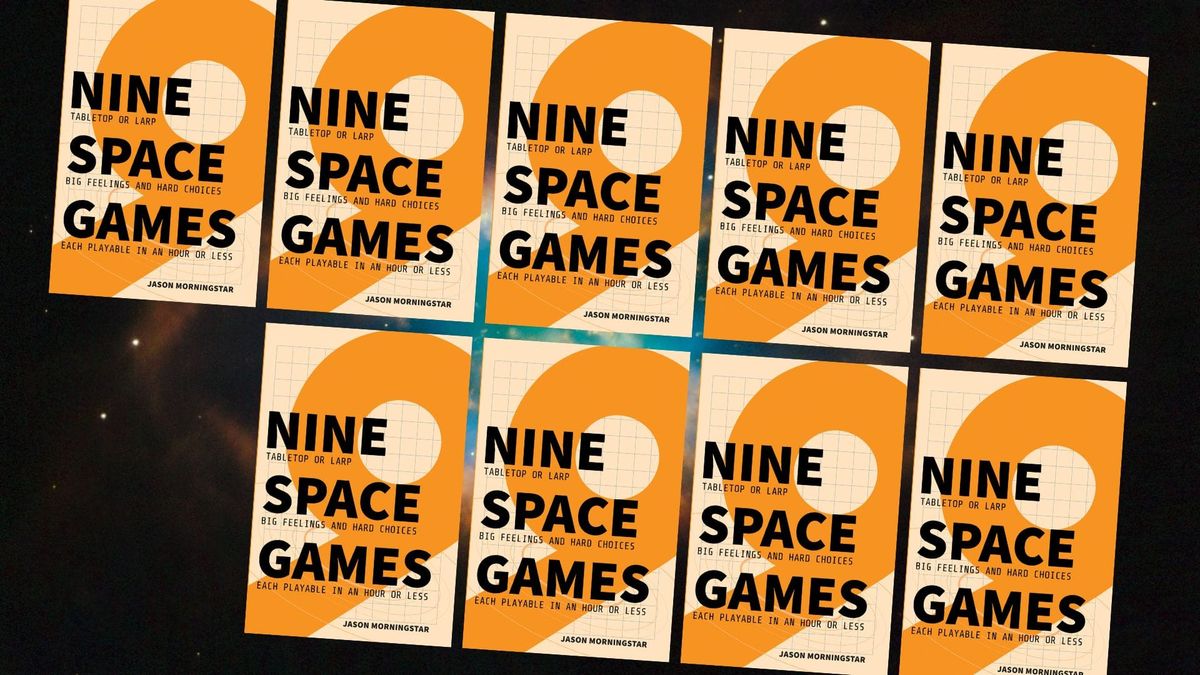
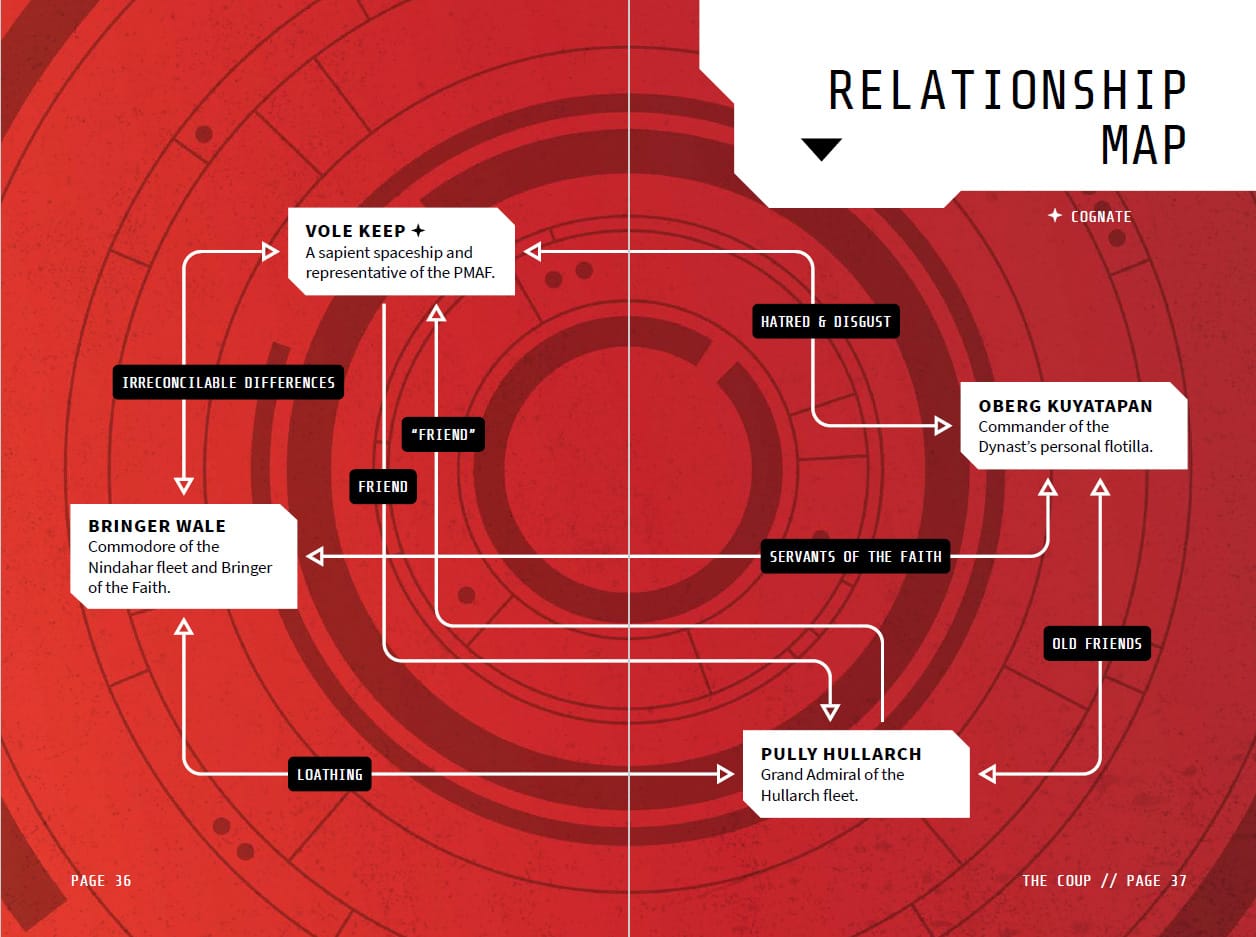
Nine Space Games, by Jason Morningstar (of Fiasco, Desperation, and Zhenya's Wonder Tales fame) is a small book of one-hour games that blur the line between live and tabletop roleplay, and it’s a fantastic read for both the more experienced larpers and the larp-curious. Each scenario in Nine Space Games occurs in the same sci-fi space opera world, which is full of sentient military ships, a ruling class, and various dramatic diplomatic entanglements. They include an overview of the scenario, a relationship map for the players to reference, character sheets that give players a sense of their intertwined relationships, and, finally, another page or two that sums up the mechanical resolution to the hour-long larp scenario. Each game is a condensed, clever, and exceptionally approachable vision of larp that allows people to dip into part of the genre without feeling intimidated by larger, longer freeform-ish larps — the kind that might occur in a ballroom where the Kindred meet and goth fashion abounds.
Each modular game plays roughly the same way. Players pick a game to play, for example, 02: The Coup, and, after looking over the relationship map, players choose characters to play. Each player takes the one-page character sheet that tells you about your character, their desires and motivations, and outlines your character’s relationships to the other characters. Each game has a timer — at the end of an hour all the characters playing The Coup must vote on whether or not they attempt to overthrow the new Dynast or not. Play is freeform. During that hour you walk around, talk to the other players, make deals, come to decisions, and re-establish your values, beliefs, and connections. There’s no resolution mechanic except the final decision, only occasionally props, and no set order of events. You create space for yourself to be the character, you have fun with the other characters your friends are playing, and you learn how to play as you go. For me the more you embody your character, the easier it is to play the game, and the stakes at the end of the hour feel existential to each player. You’ve just spent an hour talking to your friends, lovers, enemies. And now you’ve got to make a decision that will change everyone’s future.
The separation between larp and tabletop has always been blurry, and as more portable, parlor-style larps gain popularity, the distinctions become even more difficult to clarify. (As far as I understand it, parlor larp is similar to a theater larp, which is when a larp takes place in a single room, typically with pre-defined characters and scenarios. Specifics must be left to the experts.) Is Jubensha a larp? What about a Muder Mystery game-in-a-box? Yes. No. Maybe? You’ll find someone willing to argue any of the above. Every year, the Golden Cobra Challenge fields dozens of four-page larp submissions, showing that freeform larp (which the challenge itself doesn’t define, wanting to be as inclusive as possible when it comes to soliciting submissions and encouraging work development) and larp-like games capture a growing share of designers’ attention.
However, larp expects embodiment to some degree. For example, you’re likely to say “My character hops the fence” or “My character asks, ‘who’s there?’” while playing conventional tabletop games. In larp, you’re typically expected to either hop that fence yourself or simply say “who’s there?” out loud, without the attributive details. Unlike many tabletop games, where “you can always just read what the move says,” (a Vincent and Meguey Baker quote, commonly replicated in Powered by the Apocalypse-style games) many larps — and Nine Space Games, specifically — ask you to participate in game-making directly. Additionally, larp tends to dispense with micro-level resolution mechanics. While some adjudication still happens (for example, what constitutes a “deadly” hit versus an “incapacitating” hit when doing combat larp), the extant resolution tasks of rolling dice, drawing cards, or exchanging tokens is commonly absent.
Nine Space Games is likewise designed for an embodiment-first playstyle. Each game is designed for people to easily pick up and, and although you could play while sitting at a table, it wouldn’t really have the same energy. You need to be able to walk around and have a series of discrete, quiet conversations so that you can fully explore your character while also working the room in an attempt to leverage your position for the final game-ending decision. The mechanics of the collected games hinge primarily on conversation, on letting yourself feel connections, on wanting to be convinced, on your willingness to assert, defend, or renege your own decisions based on active interpersonal discussion. While I love this game style, especially in strict hour-long intervals with a clearly defined ending, it can feel intimidating if you’ve never been asked to just… go with a character. Still, for the larp-curious among tabletop roleplayers, it’s an incredibly easy transition. It’s just another game, but moment-to-moment, you decide how to play
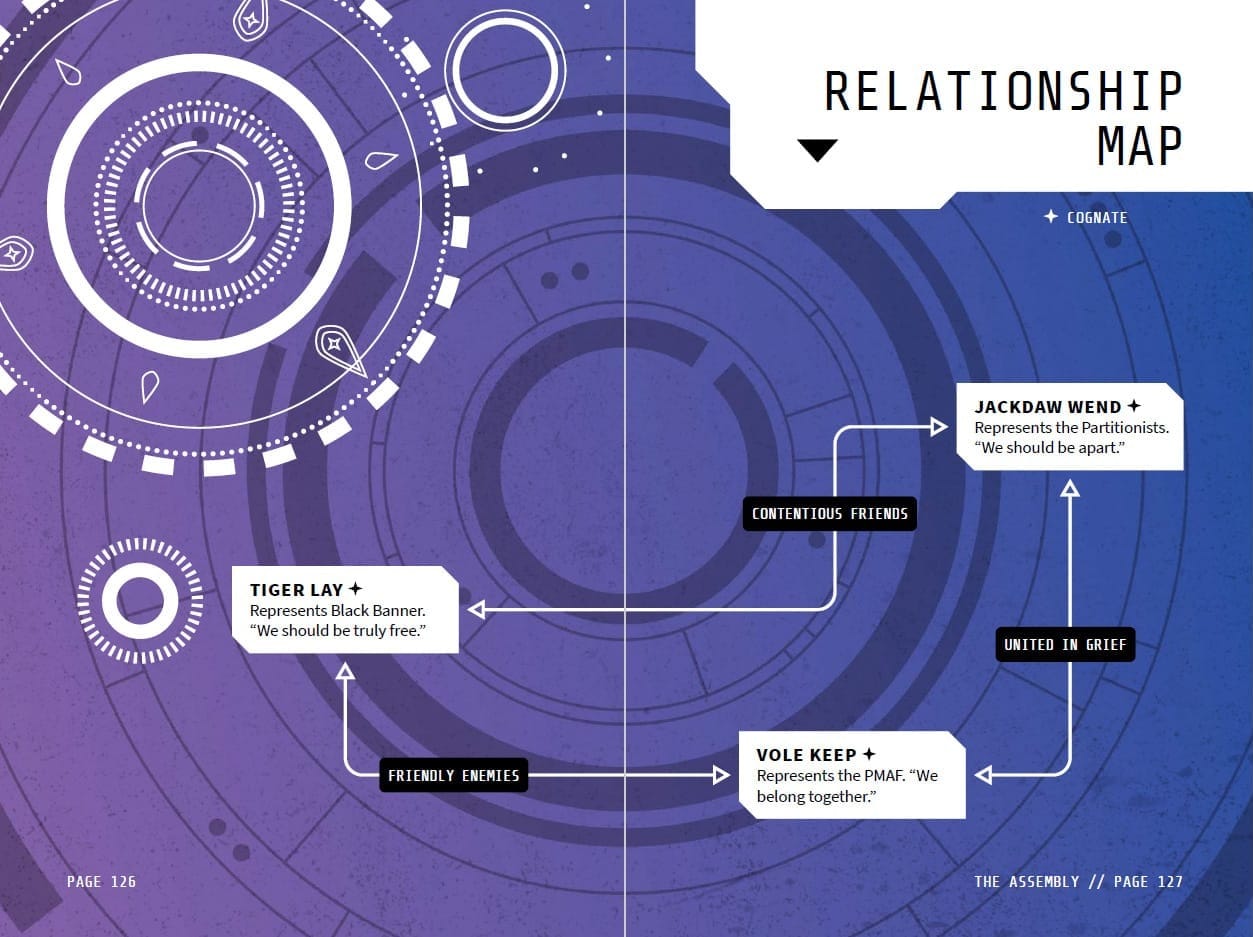
One of the really impressive parts of the book is in Getting Ready§Before the Game, where Morningstar breaks down some fundamental larp gameplay tips alongside best practices for Nine Space Games. It’s easy stuff: don’t be afraid to walk around, be excited about your character, and make sure to establish a meet-and-greet before the scenario starts. It sounds simple, but giving players permission to break apart and reconfigure throughout the hour is really a game changer when many tabletop players are used to doing everything at a shared, communal table. Likewise, the note that it’s okay to separate from the group and be alone with your thoughts for part of the game creates space for a more intense embodiment experience, where you can not only check in with yourself but re-strategize around new information. It’s a deceptively simple piece of advice that reinforces the larp aspects while also emphasizing the kind of strategy that a lot of traditional tabletop RPG players understand.
When games become smaller and more agile, and as rules become more flexible and inclusive rather than definitive, we see tabletop games replicate traditional larp movements and designs. For example, The Time We Have, by Elliot Davis, which asks the players to sit on opposite sides of a door and uses a deck of cards for discussion and plot prompts, takes a lot of inspiration from ideas of larp embodiment. We can even look at games like Dialect (by Kathryn Hymes and Hakan Seyalıoğlu, publishing as Thorny Games), which offers a framework for storytelling rather than a framework for strategy as being very larpish. Other games, like Ghost Court (another one of Morningstar’s recent publications) sets up a scenario and asks different people to embody defendants, accusers, and judges — again, establishing a game where conversation is the most extant mechanic of gameplay.
Morningstar has received his fair share of writing accolades, and I’m here to add to the pile. Each game in the book is distinct, creating unique scenarios that are easy to understand and allow the opportunity for a lot of depth. By establishing a variety of hooks, including political differences, military decisions, and emotional hangups, the exact scenarios provide compelling avenues into the world and encourage a full play through of the entire book, even though it’s clear that you can play any one without connecting it to the others. While there are a couple of games that influence the others, these are small narrative tweaks meant to make the world feel lived in and personal if desired. The Coup deals with loyalty and duty, an intense game about ambition and inheritance. The Accident explores what happens when everyone believes they are too important to die. The Arrangement is a sitcom, where the ruling family must marry well or risk throwing the galaxy into chaos. Easy to understand scenarios that nevertheless allow opportunities to create depth and allow for interesting character decisions.
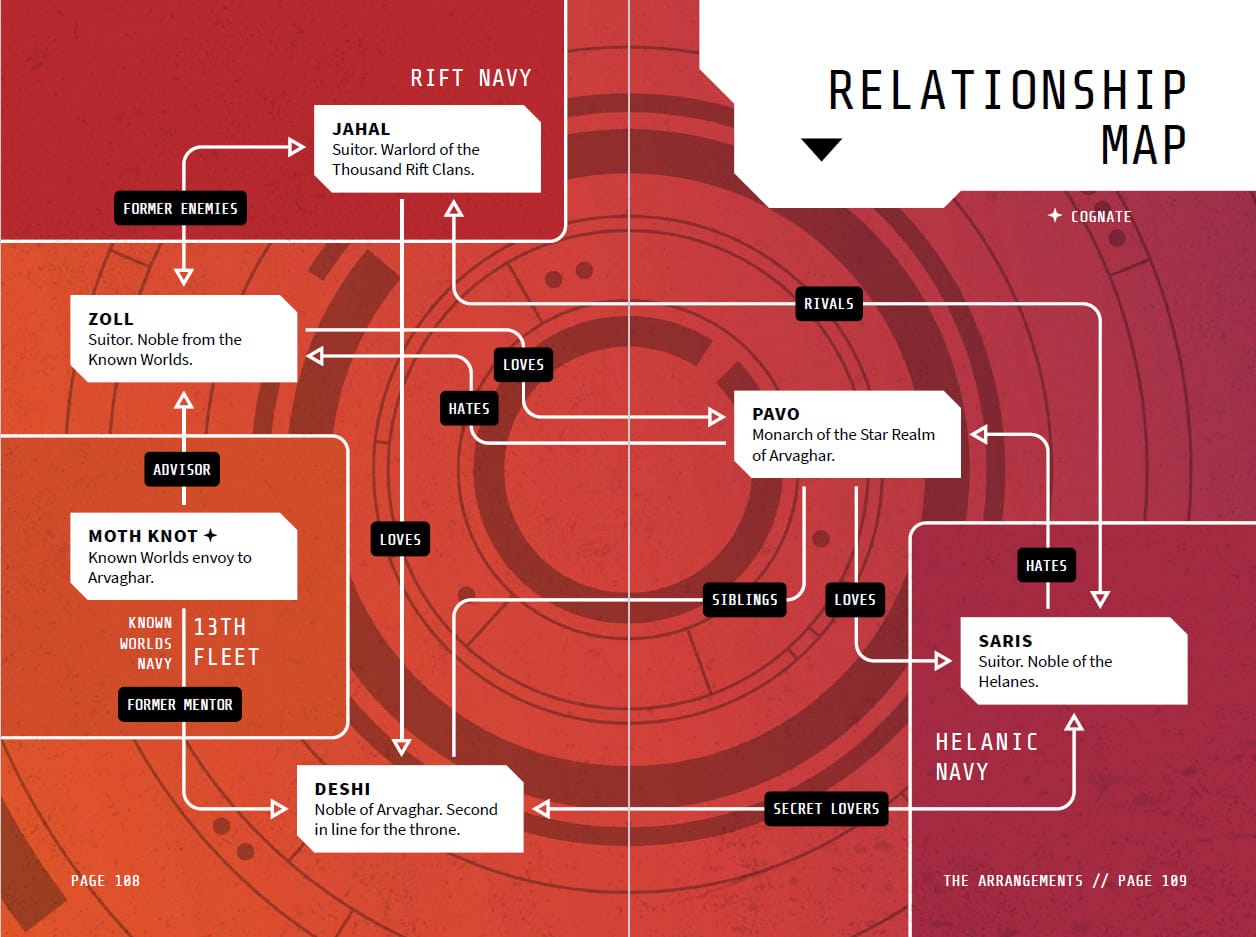
The engine that makes any parlor larp — and by extension, any one-shot game with pregenerated characters — run hot is how invested any player is in their character. Games are put together and pulled apart by player investment, and without time to generate your own ideas, what’s developed within the scenario has to be sticky enough to drag a player into the deep end as fast as possible. Additionally, with a condensed period of time and a focused scenario, the drama has to be open-ended and obvious — and the characters have to be driving it. You need easy ways in and out of any conversation, especially when you might be having a dozen different talks with four different characters within that hour. Morningstar’s characters are grounded and epic, drawing from archetypes that allow players to grip their character’s motivations tight and shake them until something breaks.
Nine Space Games by Jason Morningstar might be his best work yet. I know that’s a tough claim; he has written the much-lauded Fiasco and the much-hacked Desperation, and he’s earned at least one Diana Jones Award for his work. But Nine Space Games, as a series of condensed, hyper-narrative, larp-like tabletop games, shows just how much Morningstar has learned in the decade and a half since Fiasco first hit shelves. The whole book is clever and genre-pushing, and it creates a play environment that encourages embodiment by making the whole exercise easy. It feels like he’s evolving his writing for a contemporary audience and moving forward in a way that combines freeform larp with other aspects of traditional tabletop games, and, while Nine Space Games’ collected works are all individually very good, when read and played together the book feels like the kind of standard that other designers will aspire to for years.