Dungeon Crawler Carl loots the litRPG room
New Achievement! Five million dollars doesn’t spend itself.

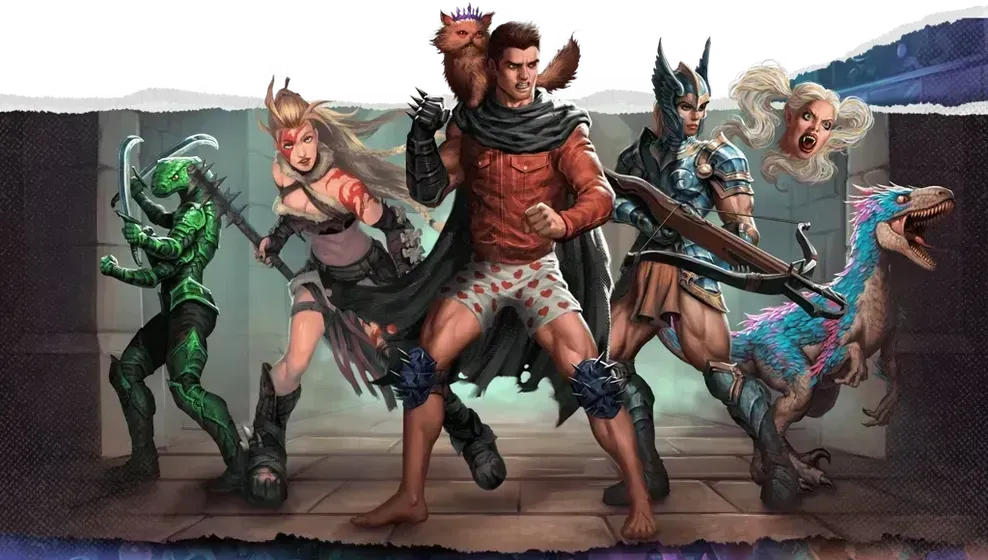
When I checked in on the Backerkit for the Dungeon Crawler Carl RPG a few weeks ago I saw that it had around 60,000 people following the campaign before its expected launch on April 14. I nodded my head, murmured “sounds right” to myself, and immediately texted an RPG buddy to let fly a prediction: five million on day one. And wouldn’t you know it. Here we are. As of writing, the backerkit has 5.5 million secured. A huge number, and one that puts DCC deep in the mix with other massive RPG crowdfunding successes over the past few years: the Cosmere RPG at 15m, the Discworld RPG at 3m, MCDM’s Draw Steel at 2.5m. (Worth noting: the Cosmere RPG cracked 5m in the first 24 hours. No telling if the pattern will hold for DCC, but it might. It’s best not to bet against Carl.)
I had been following the saga of this RPG for months; almost a year, since I heard at a bar that there had been a bidding war between a few different companies for the license. When Renegade announced that they had secured the IP rights to produce a tabletop roleplaying game and a board game, it was only a matter of time before their gamble would become an investment.
Or, maybe it hadn’t ever been a gamble. Dungeon Crawler Carl is an ultra-popular series of litRPG books that began as self-published online serial, where most litRPG books start. The genre is, put in simple terms, any story where the main characters interact with their world as if it were a video game. Oftentimes this means there’s some combination of a game system, a HUD, or an AI that makes announcements and shares your levels with you via a digital interface. It is, essentially, like reading a video game through the main PC’s point of view. LitRPG has been around for at least fifteen years, and serialized books have always been popular in the space, drawing huge audiences globally. It’s only been the past five years or so that it’s gotten traditional publisher attention. With the dedicated audience comes a lot of conventions of the genre that are very rarely crossed: romance is rarely a focus and typically isn’t even a subplot, first person is preferred, the main character is traditionally “self aware” and either knows they’re in a game-like world or is comfortable with the world-as-video game, and the system is almost always the enemy.
Dungeon Crawler Carl stuck to the strictures, but with a twist on almost every single one (except romance, that was one line that Matt Dinniman, the author, hasn’t yet crossed) and has found incredible success both as a self- and traditionally-published author, selling millions of copies of the book since he began publishing the series in late 2020. Dinniman is widely beloved in both the litRPG world and in the limelight he has found himself unwittingly thrust into. All his interviews and interactions with fans show him being humble, supportive, and grateful; exactly the kind of author we want to see hit mainstream success!
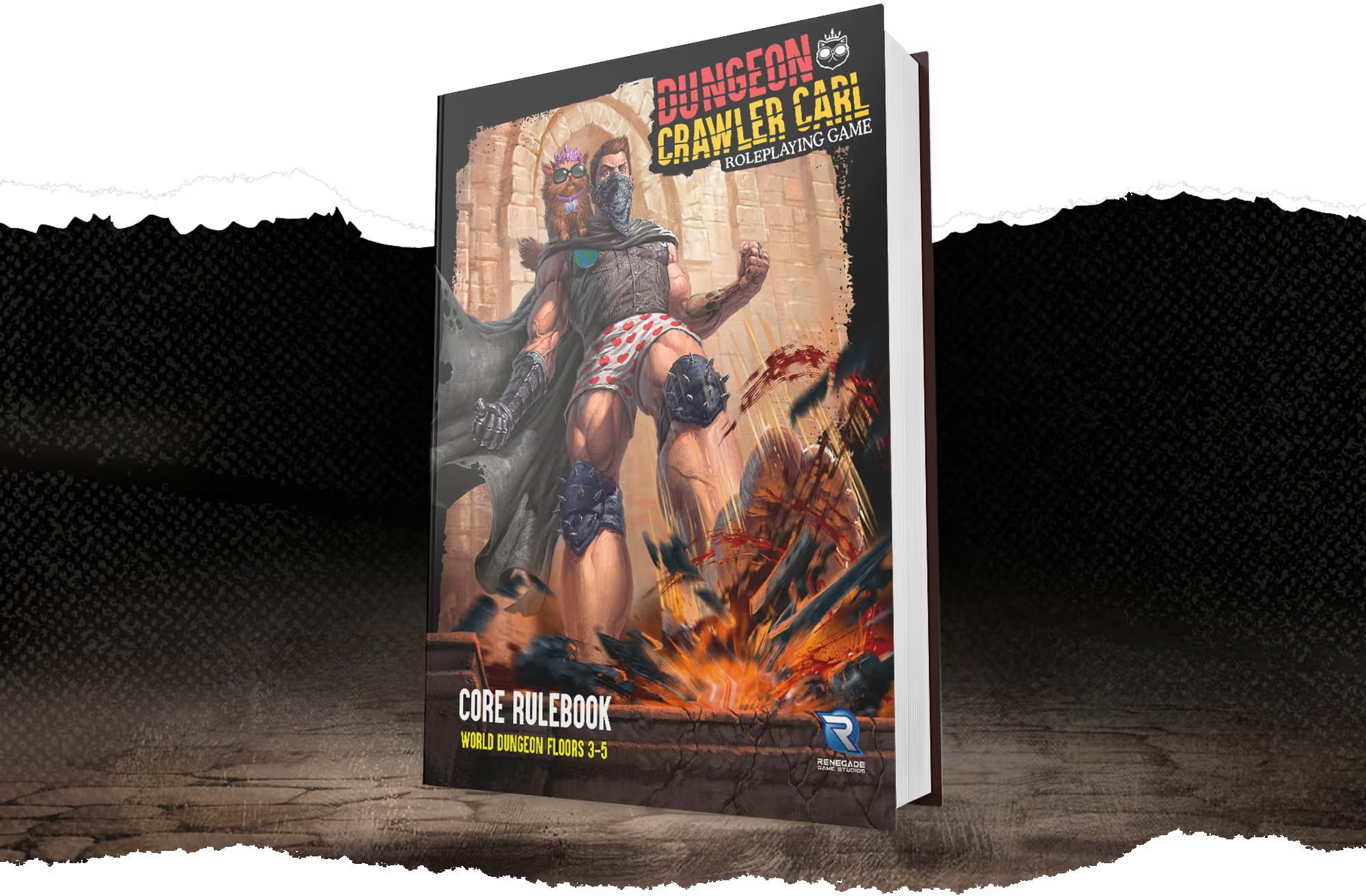
It’s no surprise to me, at least, that the crowdfunding campaign has brought in nearly five million in pledges on its first day. Millions of people have bought these books! The library has a waiting list on every book published so far! (Seven, in case you were wondering.) But what is a surprise is that there is so little revealed about the system. I guess I should expect this from massive IP crowdfunders: the Neopets RPG wasn’t selling a system either.
There is a “learn to play” video on YouTube which gives us a couple hints, but still doesn’t show much. It’s not the Essence 20 system that Renegade has used for nearly all of their games before (especially for their IP-games: Transformers, Power Rangers, etc.), but it’s still a D20 system that uses stats, skill checks, and difficulty. Success is tiered, with thresholds for “big,” “bigger,” and, if you roll a natural 20, “biggest” success. It’s got combat order, modifiers, mob rules, experience points, and… yeah, it’s got everything you expect a D20 game to have. You can listen to Becca Scott explain this crunch with much more enthusiasm than I can muster.
When I poked Renegade for more information I wasn’t able to shake much out, but I did get the name of the lead designer: Matt Hyra, a board game designer whose latest credit was Axis & Allies: North Africa. Hyra’s a Renegade regular, and while I did a little bit of digging, I couldn’t find any tabletop RPGs that list his name in the credits. I’m sure he’s got a passion for the property (him and millions), but I’m skeptical about how a record of board and card game design translates to tabletop roleplaying game design. Judging from the bits and pieces we’ve seen so far, I’m sure that he’ll be able to pull off a dungeon crawler. He has a lot of material to reference. And fifty years of work to draw from.
While there is nothing in this explainer, or even, frankly, in the Backerkit campaign, that gives me any real enthusiasm for the RPG, I am still interested in this game, and this property. I enjoyed the first few Dungeon Crawler Carl books! The humor was irreverent, gonzo, and, yeah, a little puerile, but still fun. I was never bored while I reading, and in the tradpub version I read kept the plot going along pretty fast. The big twist on the litRPG conventions was that the dungeon Carl was crawling was actually an artificial level-based TPK deathmatch created by aliens in a twisted Hunger Games-style entertainment for the galactic masses. This means fans, sponsorship, the late night interview circuit, and, of course, cheating. A whole lot of cheating.
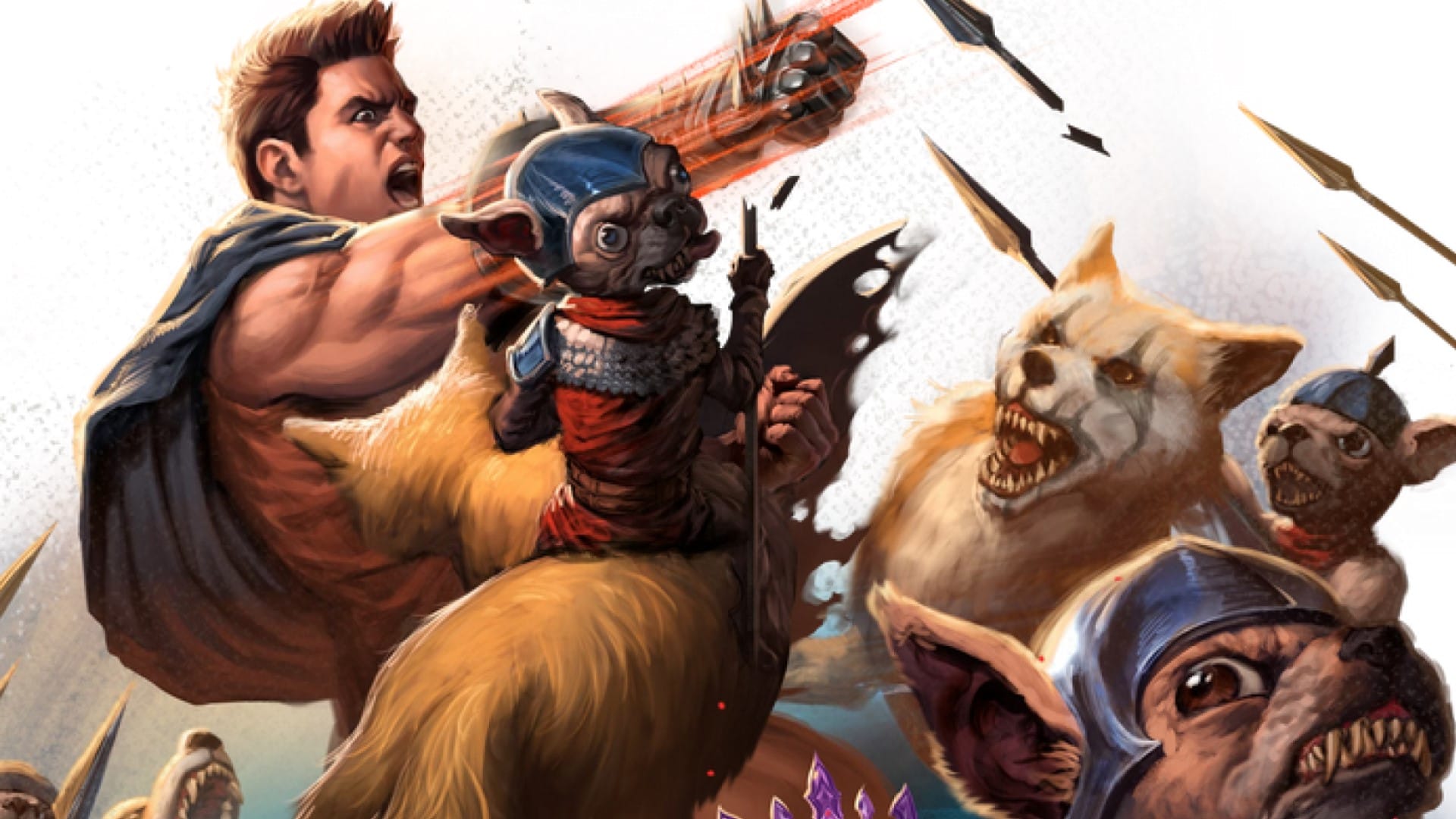
For me, the best parts of the books were the moments where Dinniman had Carl take a step back and really think about what he was doing, why he was doing it, and what he was doing it for. Who put these mobs of kobolds here? What made them fight back? What did it say about him, about the system, that he was willing to kill them just because they showed up on his HUD as red-dot mobs? It felt like the kind of game design discussions I see happening all the time in the larger RPG ecosystem, and I enjoyed Carl engaging with a deliberate interrogation of the structures that made up dungeons and dungeon crawler systems.
I drew analogies to the work of Greg Costikyan’s Violence and Vincent Baker’s kill puppies for satan, the kind of early-aughts games that were a deliberate, heavy-handed satire for the chucklefucks breaking down doors just because they were locked. Contemporary satirical games of the dungeon crawler format include MÖRK BORG, DIE, and Deathmatch Island; much more playable than those early 2000s design experiments, built for enjoyment rather than expressing outright disgust at the player.
I hope that the Dungeon Crawler Carl RPG retains this edge. The kind of anti-establishment fuckery that made the first two books enjoyably breezy reads. Carl was a character who knew he was being manipulated and deliberately worked to undermine the system he was trapped within. Most of his adventures involved him cheesing the system, finding loopholes, and then kicking his way through walls that were absolutely not supposed to be kicked. We don’t have nearly enough material available to make assumptions about what the RPG will or won’t do, and honestly, I’ve been surprised by IP game design before. (The Walking Dead RPG from Free League is, in my opinion, one of the most well designed and horrifically effective zombie games out there, and I will stand by that.) Considering all we have is character and skill sheets, as well as some blithe descriptions about crafting, system AIs, and intergalactic talk shows, there’s still a lot of room for DCC to surprise me.
But I keep thinking about the way that Scott mentioned, jokingly, in her video that the Charisma stat was something you didn’t have to worry about. (A reference to one of the book’s main characters, Princess Donut, who had a massively overpowered Charisma score of 25, allowing her to charm, delight, and sweet talk her way out of many a situation in the first couple dungeons.) I worry that this off-handed, clearly-a-joke dismissal might actually be a part of the larger design structures. If the majority of the game design focuses on dungeon crawling and relegates the larger themes of the book to a stat that you don’t have to worry about, I fear that the RPG won’t live up to the hype that five million dollars in twenty-four hours has espoused.
But man. It’s hard to argue with that kind of barnstorming. New Achievement, indeed.