€6 million in 8 years: Larp for social good receives serious funding in Europe
Finding the “fun” in public funding.

The view from inside the roleplaying hobby is that it’s always on the cusp of breaking into the mainstream. It’s Zeno’s paradox — always inching closer, never quite there yet. When people wrangle data points to support the argument, they usually cite how many Hollywood celebrities roll a d20 or Dimension 20 selling out Madison Square Garden, but there’s another completely different metric to consider — one that’s probably distant from the reality of most American readers: public funding.
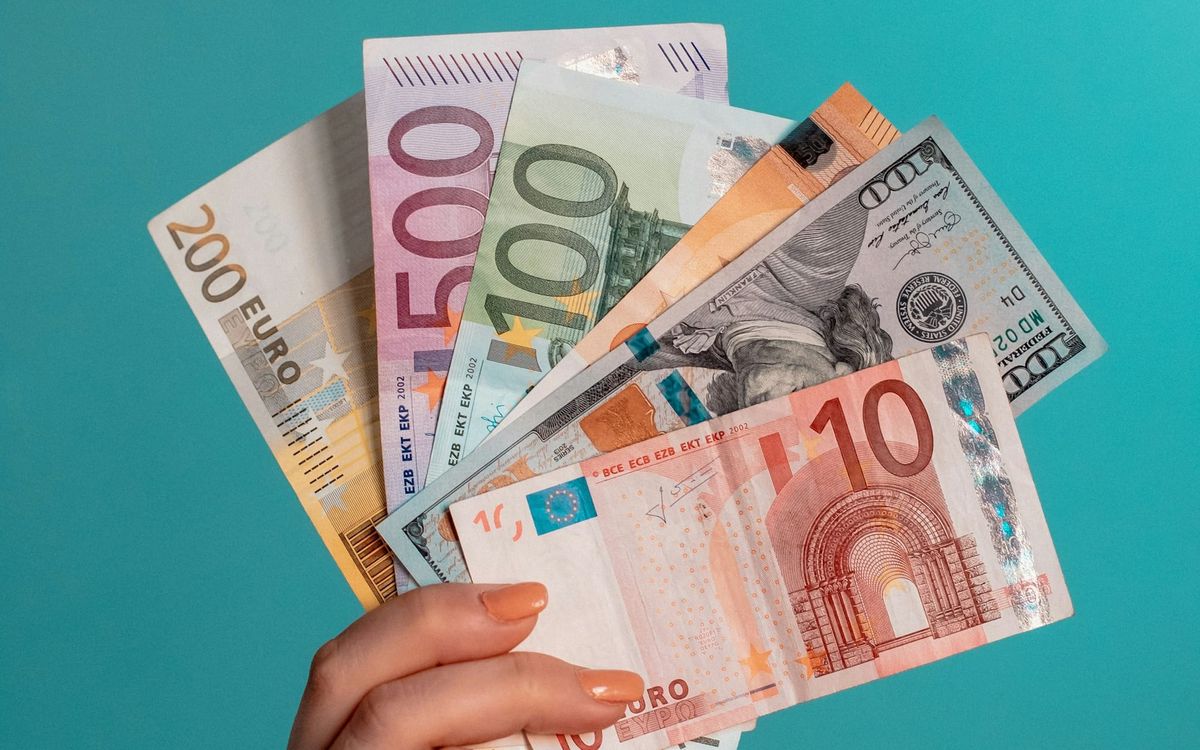
Karin Johansson of Uppsala University and Mafalda Morganti of larp studio Chaos League have recently published a survey of public funding by the European Union. According to Johansson and Morganti, 111 larp or larp-adjacent projects were funded through this one program during the period of 2014 to 2022. The total funding reached 5,770,000 euros — a sum of money suggesting that, at least in Europe, larp is pretty mainstream. “For the larp community, the sum I would say is quite staggering for a sub-culture where a lot is built on voluntary work,” said Johannson to Rascal in an email.
And this is just from one specific initiative: the Erasmus+ program, a huge multi-national project with a budget of more than €25 billion and a broad remit including promoting democracy, social inclusion, and young people’s participation in civic life. The Erasmus+ program doesn’t really fund larps as purely acts of culture, though some of that did happen during the period surveyed. The vast majority of these projects were built around social impact. According to Johansson and Morganti, the larp projects mainly positioned themselves as tackling issues of “tolerance, migration, democracy, and employability.” For example, one of the projects, a 60-person larp in Lithuania called The Settling of Rohan, used Middle-earth and Roman history to explore the tensions inherent in immigration and assimilation.
“I have been a larper since the late 1990s and have also worked as a larp designer, and the impression is that larp has moved from being seen as very niche, and even as potentially dangerous, to being much more accepted,” said Johansson. “Now, it is more viewed, I would say, as a non-screen-based, community-forming activity with social, civic, pedagogical, and even therapeutic potential… [Y]ou seldom get negative reactions.”
Most of the biggest projects were education-related, with two involving teacher training around environmental issues each receiving more than €200,000. These projects leverage ‘edu-larps’, which are basically what they sound like: bringing larp into classrooms to facilitate learning. Again, depending on your context, it’s either mainstream, maybe even old hat, or some avant-garde idea that’s surfacing for the first time. In a paper titled “Playing a Role in Democracy: Political Live Action Role‐Playing Games, Activism, and Deliberation”, the authors argue that there’s at least a century of history behind educational roleplaying, including examples such as Sweden’s Fogelstad Women’s Citizenship School where embodied scenarios were used as far back as the 1920s.
A project that makes all of these look small in comparison is the €3 million Larpocracy initiative, which is funded by another, even larger research directive called Horizon Europe. A two year project that started in 2025, Larpocracy is a collaboration between partners across multiple countries: Sweden, Finland, Poland, Italy, England, and Greece. It is officially about “developing spaces for deliberation and democratic skills.”
The project explicitly positions larp as a kind of antidote — or a “social technology” that might model the antidote — to the toxic discourse of online social media. As one of the members, Annika Waern, wrote in a blogpost, the goal of the project is “[t]o find playful ways to train people in such fundamental democratic skills as to articulate themselves and to listen to others' arguments and emotions.” By focusing on the act of thinking through multiple viewpoints and sources of information — what they refer to as deliberation — rather than debating, the project tries to understand whether larp can, for example, decrease political polarization.
The bottom line is that the European Union is at least interested in exploring larp as an educational or social intervention, perhaps partly due to its larger cultural awareness compared to the US and UK. As Johannson pointed out over email, politicians like Sweden’s former Minister of Culture have direct experience with roleplaying games. Whether it’s beneficial for larp designers and players to have their artform wielded as a tool for cultural policy is a completely different question, but €6 million public funding suggests plenty of people are already interested in the answer.