AITA because I (fairy prince, 1573yo) can't stop wiping people's memories?
Moves in Under Hollow Hills are a double-edged sword, creating passive geasa that encourage fundamental, magical truths about characters.

One of the things I’ve been enjoying about Under Hollow Hills, Meguey and Vincent Baker’s game about a wandering fairy circus, is the way that it continually asks players to think about the different parts of their characters that are immutable versus changeable. Without experience or any kind of material advancements available to characters, the game wants players to learn how to play their character to their fullest potential, creating a refining structure that allows players to explore the game while their characters remain ever-so-slightly precious.
While playing my character, the Lantern Jack, John Stamper, I’ve realized that I often lean on the move when you greet someone with honest pleasure to propel my character through much of the game. I initially treated this move, which I can choose to roll whenever John enters a conversation, as a considered choice. But as I’ve continued playing I’ve started treating it like a passive ability that just… happens to John whenever he approaches someone new with genuine curiosity and, perhaps, a sense of indulgence. When I allow this move to be a constant, rather than a trick I opt into, I inadvertently create a kind of fairy magic to the character, where his very presence initiates moves. At this point in the game, greeting someone with honest pleasure isn’t just a move that I choose whether or not to trigger, it’s something that John does.
It’s worth knowing how the move works so you can see the kind of power we’re working with. Greet someone with honest pleasure is a familiar Powered by the Apocalypse move, where when an action happens that triggers the move, the player rolls 2d6 to determine the outcome. The text reads:
On a 10+ hit, any grudge, grievance, or unfinished business between you vanishes, for real. On a 7–9 hit, they choose: let unfinished business vanish, as for a 10+ hit, or hold onto it. If they hold onto it, though, and bring it up again, they’re insulting you. On a miss, you’re insulting them by pretending there’s no unfinished business between you.
This, as one might imagine, is exceedingly helpful in many situations. John has had a long and storied life as the behind-the-scenes force driving the fairy circus across the worlds, and that means that every NPC could be an old friend or a storied rival. When it comes to greeting someone with honest pleasure, I’ll fully admit that I’d rolled very well throughout the entire game. Perhaps better than John deserved in some cases.
One of these moments happened in an earlier session; we were in the human world, in some small town that was having a puppet parade through town, led by a pair of sisters, Heidi and Patricia. These women had, at one point, been a part of the fairy circus. They spent 10 years with John and the rest of the fairies, and it was always a little ambiguous whether or not they wanted to be there that long, or had even chosen to stay. A drag queen named Tanya Bricks (the lone human in our player party) was talking to Heidi, who had been hospitalized. This woman told Tanya that her experience in the fairy world was full of tricks and danger and untrustworthy characters. Just as Tanya was about to ask her for more details, John popped in.
John had previously vanished and appeared in the hospital room. He immediately smiled at Heidi, took her hand, and demurred that he was so happy to see her again, that it was such a shame that it had been so long, but that her eyes were just the same — greeting her with honest pleasure. I rolled well, and as soon as John smiled at Heidi, she forgot all about her fear and resentment. Her grudge was gone, for real. She forgot about how fairyworld left her traumatized, how it haunted her, how she was building puppets every year to try to imitate the wonders and horrors of fairyworld. John didn’t even know she had been upset with him at all.
But Tanya, who had been there the whole time, watched this play out. To John, it seemed like a normal interaction. He showed up and smiled at an old friend who was delighted to see him again. To Tanya, an arthritic, sick, old woman who had been scarred by the world that John had kept her in, had encouraged and perhaps been a cause of an incredibly cruel time in her life, had taken one look at John and… forgive him. The unfinished business between them dissolved into the tender back and forth of two old acquaintances catching up. It was a moment of horror for Tanya. A fairy trick, a deception, and Heidi was happy for it. John had just become one of the scariest fairies Tanya knew, and it was because he made other people crave the kind of elysian absence that his smile inspired.
Caleb (Tanya’s player) was very quick to point this out above the table. That John had just become a threat because he made people forget their own goals, grudges, resentments… and Tanya was a character who had to hold onto those things in order to keep looking for her lost son. This was when it clicked for me, that this move shouldn't be something I decide to use, but I should treat it almost like a geas — a fairy binding all on its own. That John, whenever he greeted someone with honest pleasure, must trigger this move. Framing the move as a passive effect rather than my response to a situation added another layer to John’s personality.
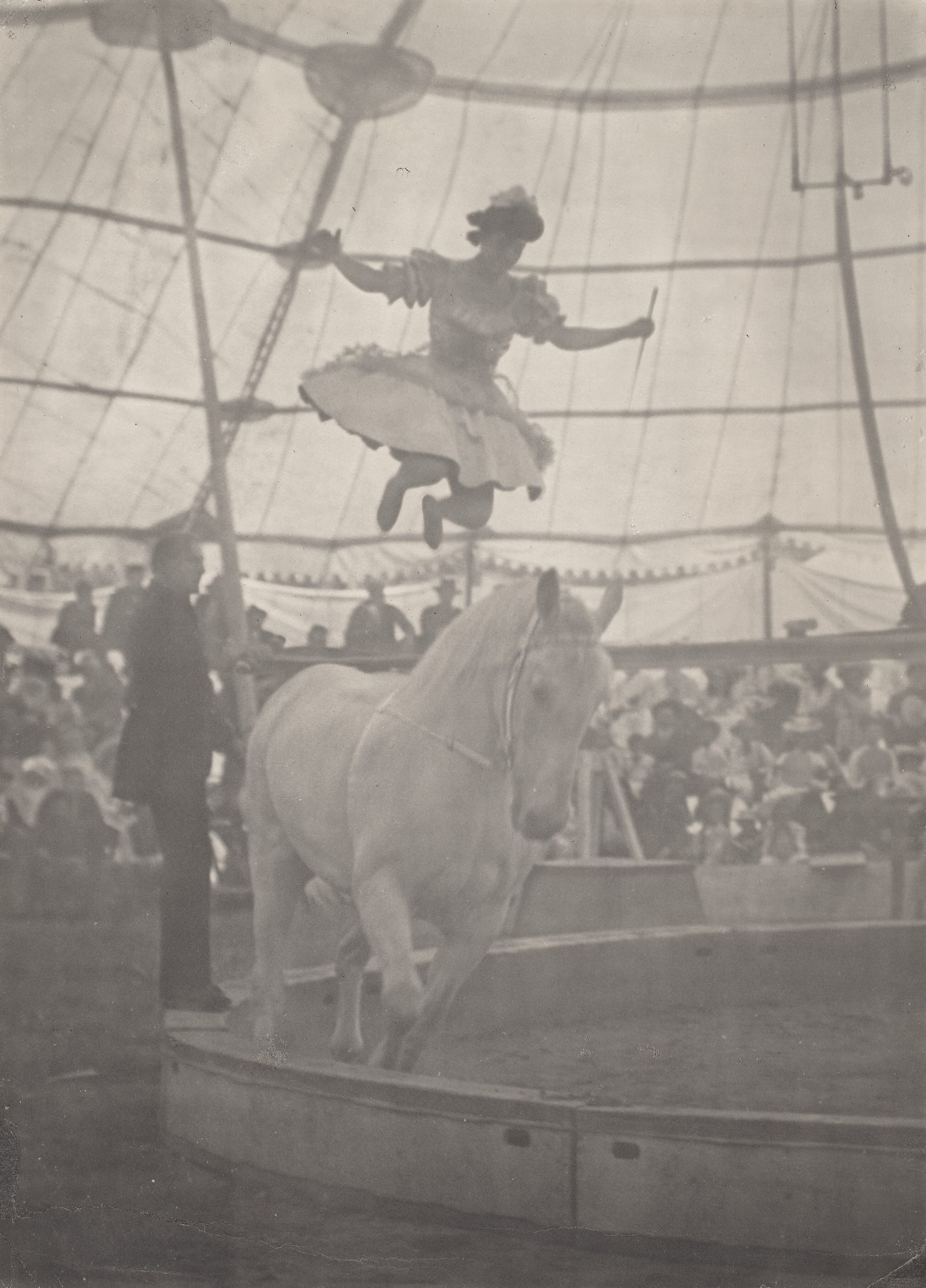
Earlier in the session he had absconded with two puppet parade organizers and used his own fairy magic to turn them (temporarily) into puppets of his own. Neither of these things were born from cruelty or spite, but a kind of inherent capriciousness that happens when a fairy (like John) who had been alive for hundreds, maybe even thousands of years, has never truly faced severe interpersonal consequences. No matter how bad a shape he might have left someone in, when he saw them again — An old friend! How lovely! — all their unfinished business vanished, for real. John had no problem turning humans into puppets for a day or two, just like he had no problem taking children to fairy world and keeping them there for a decade. And if nobody — not even those children — seemed to hold it against him, John would never be able to understand that his actions hurt people or even comprehend that his thoughtless or impulsive decisions had long lasting effects on the people around him. He became a foolish archetype that everyone forgave because… well, it’s John; He didn’t mean it. And even if he did, it wasn’t that bad, right?
Looking through the playbooks of Under Hollow Hills, there are a lot of moves that could be read and played like a kind of literal, imperative geas. The phrasing of all of the moves in the game could, further, imply that many of the consequences of using them just happen to the characters, like they are stuck in a kind of cycle of unintentional actions and outcomes. The Chieftain Mouse’s move when you address someone courteously, the Crowned Stag’s when you step into the woods, or the Troll’s when you tower over someone could all easily be read as literal curses laid on these characters, rather than moves that players choose or attempt to trigger.
There is a certain kind of poetry to it. That it does not matter whether or not the Stag intended to lead their fellow characters to the court of their father, it just keeps happening whenever they step into the woods. Fairies are afforded a lot of power through metaphorical changes and through the assumed magical abilities of their kind. (There is no move to turn someone into a living puppet. I just told the Game Master what I wanted to do and then John did it.) Giving their mundane interactions with the world the potential for severe narrative consequence feels like a balance to their unwieldy and undefined magic. They can reshape reality, but they can’t escape their own nature; or, in this case, they can’t change who they inherently are and how they move through the world.
Under Hollow Hills seems like a game that wants to prioritize conversation as a high level mechanic that forces, rather than encourages, moves to be made. While almost every tabletop game seeks to encourage conversation at the table — and some games, like Dialect and Alice is Missing, play with those assumptions — many of the moves in Under Hollow Hills feel like they are a part of the conversation rather than a part of the game that is added onto conversation, or specifically asked-for in the appropriate context. Even the moves in a game like Apocalypse World are given titles, and the conditional that allows you to trigger the move is explained afterwards. Framing the moves as the absolute When you greet someone with honest pleasure rather than something like Meeting With Delight encourages a glossiness in between conversation and game mechanics. Familiarity and repeated use has made me, and John, fluent in the language of the game. And, now that we’re a dozen sessions in, the brilliance of it.
It is incredibly interesting to me that narrative moves, which so much of the indie scene is currently based on, could develop to be such an inherent part of gameplay that they don’t even become triggered, but instead are just revealed as you play. It is thematically resonant that this happens in a fairy game, where promises made, oaths sworn, and gifts given can become irrevocable bindings that force a destiny on an unsuspecting character.
To be fair, this kind of stepping into moves does happen a lot in games. A player will be working an angle and the GM might say, “it sounds like you want to sniff the wind,” and the move becomes a derivative of the larger conversation. Although it’s just as likely that a player will be kind of stumped about what to do and will simply announce they’re sniffing the wind, asking for the move to trigger independently of what the character is actually doing. For me, the difference between a move like sniff the wind and a more inherent, geas-like move is context. Greet someone with honest pleasure has a very specific moment wherein it applies. Additionally, if John greeted someone dishonestly, or wasn’t happy to see someone and made that known, I wouldn’t roll. Having a clear boundary around the move helps establish it as rooted in the world, and in John, allowing me to treat this glamor as a constant, inadvertent, immutable part of who he is.
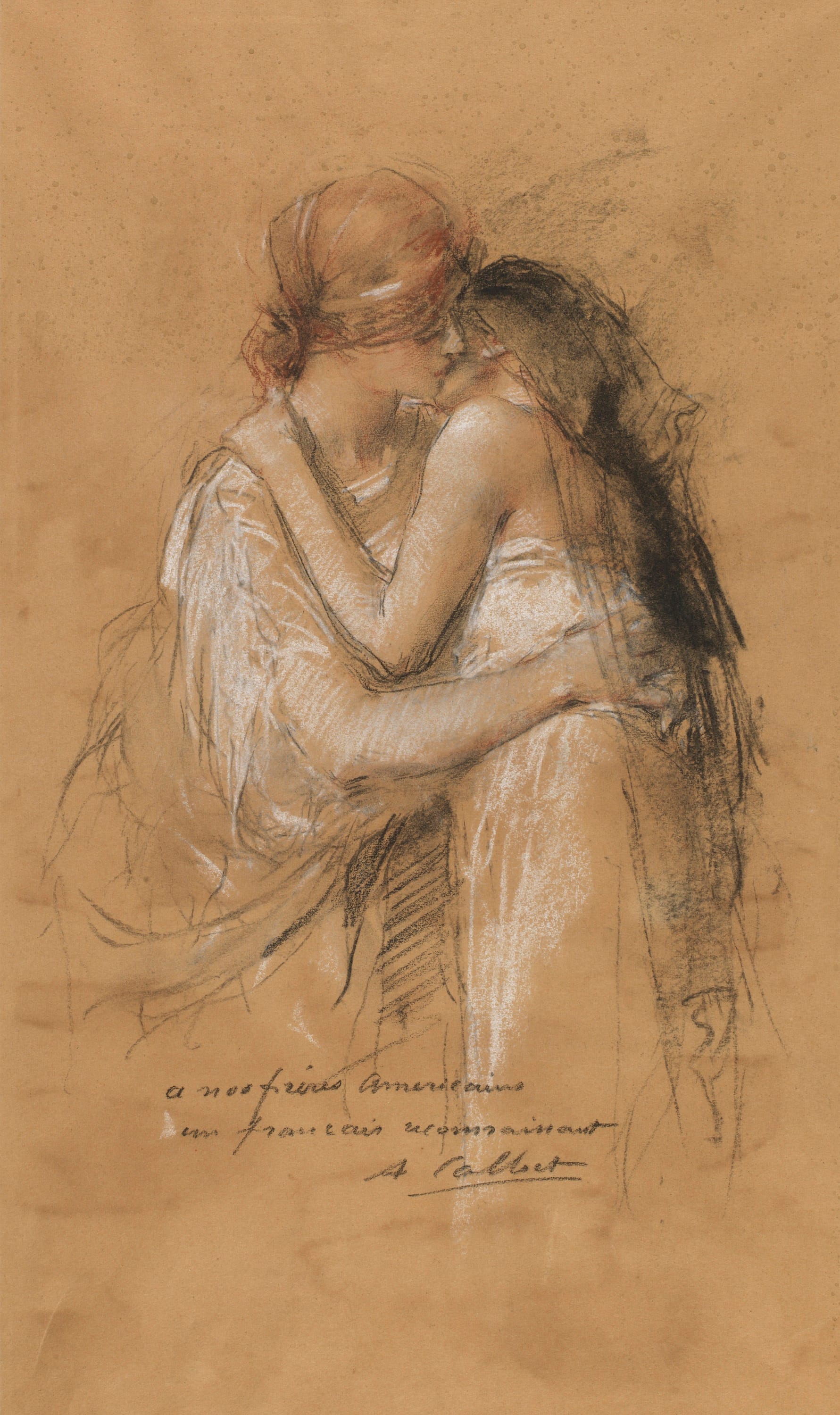
During our last session, after a small funeral, resurrection, and wake (in that order), John was at a bartop — the kind that gets set up at the side of a party — when Roan (a recurring NPC) walked up. A couple hundred years ago, when John hid out in his father’s court, they had been lovers. John left when Oberon’s whole thing got too much, literally running away in the middle of the night, and never said goodbye to Roan. Not so much as a letter tucked under the pillow. Or a Post-it Note on the copper-polished mirror.
And, for the past three-to-four sessions, Roan had been forced to deal with a murder where John and his compatriots were the primary suspects. On top of that, John had lied about his true identity for the decade or so while the two of them had been in a relationship, which was revealed in a very dramatic fashion that caused a huge headache for Roan and the rest of Oberon’s Court. There had not been an ideal time to reconnect. But here was Roan, ordering a delicate drink, and John leans in and flirtily greets him with honest pleasure. This was the first time in the game where I thought, I don’t want to do this. I don’t want Roan to forget what John did to him. I don’t want Roan to think that what John did was okay.
I rolled a full success.
Roan immediately moved closer, smiled kindly, and said it was so nice to see John, despite everything. John was off put — he knew that he had hurt Roan. He knew it. He pushed back, asking if that was it, if Roan was mad, or upset, or held some kind of resentment for how John had treated him and Roan brushed it off. All in the past, wasn’t it?
John tried one more time. He left. He had lied. He had ignored and avoided Roan for hundreds of years. Roan shrugged, not reticent at all, and said that it didn’t matter. They’re here now.
John lost all interest immediately. He smiled a little, pulled his arm away from Roan’s hand and left the party alone. He didn’t want to be magically forgiven; he wanted to stay up and fight.
It was one of the great moments that solidified John’s character. His geas is often helpful, but just as often it keeps him distant from others. Everyone loves him. Nobody hates him. He fades into the background on purpose, and few ever truly care because after a conversation, he leaves no impression. He’s an old friend, and you are happy to catch up. Every single time.