Fighting for yourself
Emergent stakes, creating the character at the table, and finding risk in Under Hollow Hills.

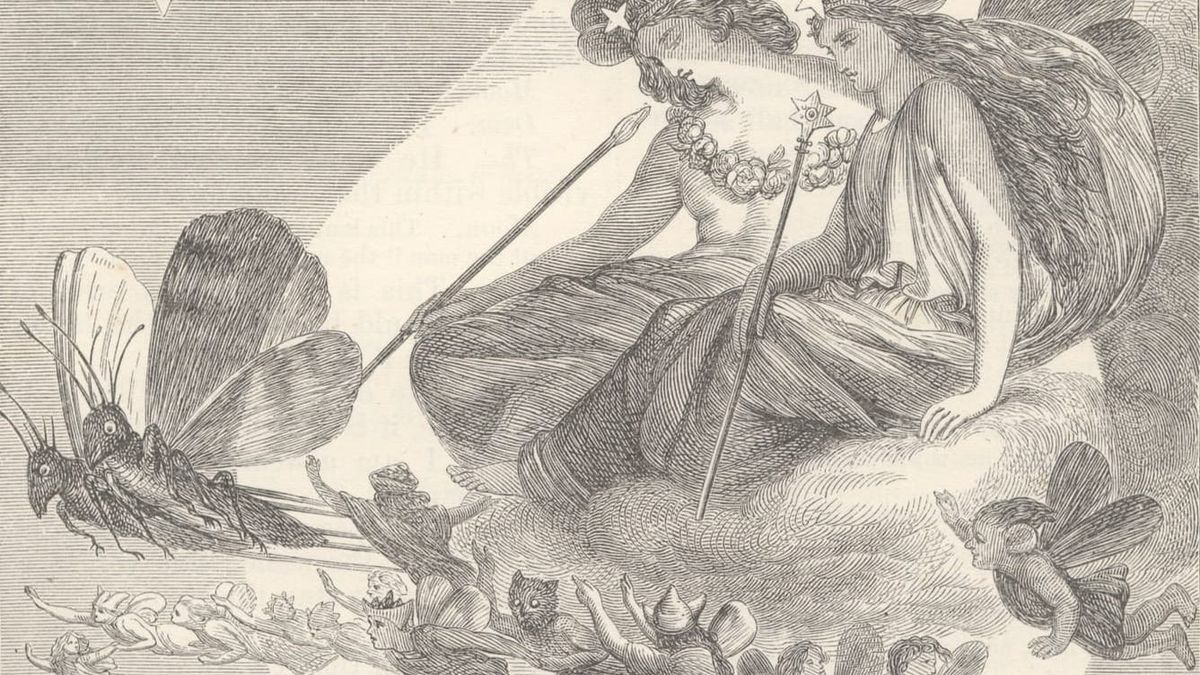
When I first wrote about Under Hollow Hills (the tabletop roleplaying game by Vincent and Meguey Baker about a fairy circus that travels between the fairy and human worlds), I mentioned that I was struggling to give my character stakes. My problem, which I articulated before, is that the game is not interested in creating a formalized, resource-driven experience path for characters. Without an explicit improvement-based reward system, Under Hollow Hills assumes the players will find their own directive, which can leave them feeling (or at least left me feeling) a little lost.
Then, in one single session, my character was completely recontextualized; he became a lived-in part of the world, not just an itinerant oddity. Immediately, the one thing that was a constant in the game — the circus itself — was in danger. I realized that in order to be true to my character, to play the game in a way that felt honest to the narrative we had established, I would be threatening the conceit of the game, alongside the rest of the party — and I didn’t know if that’s what we wanted. What would be the cost of a good story versus a story that does right by the table?
I’ve played my character, John Stamper, as the fairy who’s been in the circus for as long as there’s been a circus. He dresses in a boiler suit and roughly used shirt, he’s not fancy, or overly beautiful, or a performer. He’s the fairy you rely on to make sure the tears in the canvas are stitched up, or the wheels on the caravan are tight, or that the instruments for the Dandyseed Brass Band are polished and ready. More like a brownie than a pixie. He does the small, minute, blue-collar work that a circus needs to keep going, and he does it all while appearing to do nothing at all.
When we reached session seven we knew that we were going back to fairyland for a wedding that would unite the fairy courts of Oberon and Titania (traditionally married in folklore, they were the King and Queen of their own courts in our game and gave off Very Divorced Energy). I had joked with my MC (Sam Dunnewold) above the table that it would be hilarious to me if John (down to earth, hands dirty, out-of-the-spotlight) was actually a prince. Dunnewold, unfortunately, thought this was great, and John became a prince of both courts — the secret love child of Queen Titania and King Oberon, who were marrying two of their sons (now John’s half-brothers) in a political marriage.
I’m a play-to-find out player; I don’t know everything about my character when I begin playing. So in a single session, not only was John confronted with the life he had left behind, but also blindsided by the appearance of both his parents — his mother, whom he doesn’t speak to, and his father, who doesn’t speak at all — and I was forced to reinterpret John through the lens of his family and upbringing. He became a different character, and yet the exact same character he had always been.
For example, I had played John as reluctant to return to fairy world, much more interested in travelling across the midwest than Arcadia. I knew instinctively that John was oppositional to hierarchy and palace intrigue. When we found characters that exhibited this energy, he avoided them.
But now, I realized why John was like that. Immediately, the expectations of what it means to be doubly royal and politically nothing, began to pressurize when they entered court. Tanya and Cap (the other two members of my party, a drag queen and a nightmare horse) immediately went off to flirt and find danger, and John stayed with the circus, attempting to remain out of the way for as long as possible. It became obvious that he hated court because it would turn him mean, cold, and indifferent — the exact kind of person he had been trying to avoid becoming his entire life. The exact kind of character that I didn’t want to play, but the type of character the narrative seemed to demand.
After nearly three months, I had finally become invested in my character. The story I was trying to find only revealed itself when who John was at his core was threatened. And because John was threatened, so was the circus that he — and the rest of the party — relied on, not just to move through the world, but to play the game itself. Playing Under Hollow Hills with a character in opposition to the circus, or directly trying to undermine it, would fight against the conceit of the game itself and would, in mind, make the game torturously unplayable.
As the session went on it became apparent: if John really wanted to draw on the weight of his lineage, he could be heir apparent. It would throw the marriage into turmoil, it would destroy the intricate one-upsmanship that Titania and Oberon were performing for each other, but it would also be a release valve, a cathartic discharge of all the bullshit John has stuffed down for a thousand years. He could be someone important. Not a circus vagabond, not a helping hand, not a friend who would sit on top of your caravan throughout the night to keep watch and never tell you about it, but someone brutal, powerful; a player in a game that he never wanted to be a part of. Someone you’d be willing to kill off so you could make a better move in two decades.
All of this potential has the chance to create something vicious out of John. Something he doesn’t want to be and something I — as the player — don’t want for him either. I have a tendency to create characters who are aware of their shortcomings and strive to move past them. I like the fantasy of self-improvement, not just character-sheet improvement. I enjoy playing through the challenges of becoming a better person, and the threat of never quite getting the chance to achieve it. And, judging by my rolls, which had been consistent failures since John realized he was in the presence of his parents, the threats were a clear and present menace.
Dunnewold didn’t create Titania and Oberon to be foils to John, but when faced with these characters, I couldn’t help but draw direct parallels between them and John. Queen Titania, a woman who is everything to everyone, is not much of a mother to speak of. But she collects wayward fairies to populate her court and she is caring and loyal. John, in his own life, looks out for even the smallest member of the circus, tries to fix things before they’re broken, even when they don’t need, or want, to be fixed at all. He’s everything to the circus, but keeps himself at a distance when it comes to Cap, the man who is desperately in love with him.
King Oberon is a big, beastly man, a silent master of the hunt who doesn’t talk but speaks with actions and gestures. There’s an overwhelming grandiosity to Oberon, a revel and celebration that is never-ending and raucous and dionysian. Then, I realized that John does get this pageantry in specific, controlled doses. The circus in Under Hollow Hills is made up of a series of distinct, flamboyant performances that appear chaotic but are precisely modulated to enact the exact kind of fervor as a hunter’s riot. Excitement, thrills, danger, all of it real and recognizable, and all of it packaged for entertainment. The maenads brought down from the mountain, play acting safely where Thebes can politely applaud.
So now, as I was playing through interactions with Titania and Oberon, I was able to find who John was and, importantly, how he ended up this way. To get this kind of lightning-strike of retrospective clarity is both a gift and frustrating as a player. I finally realized the stakes for John and the entire circus seemed about to fall apart because of it. The character suddenly became a threat, not only to the story, but to the table as well. If John was cruel or if he thought little of the circus, and we were true to the way we had established the circus’ operations, what kind of narrative backbends would Tanya and Cap have to do in order to keep playing? Would my pursuit of this character arc ruin the game? Or worse, make it tedious?
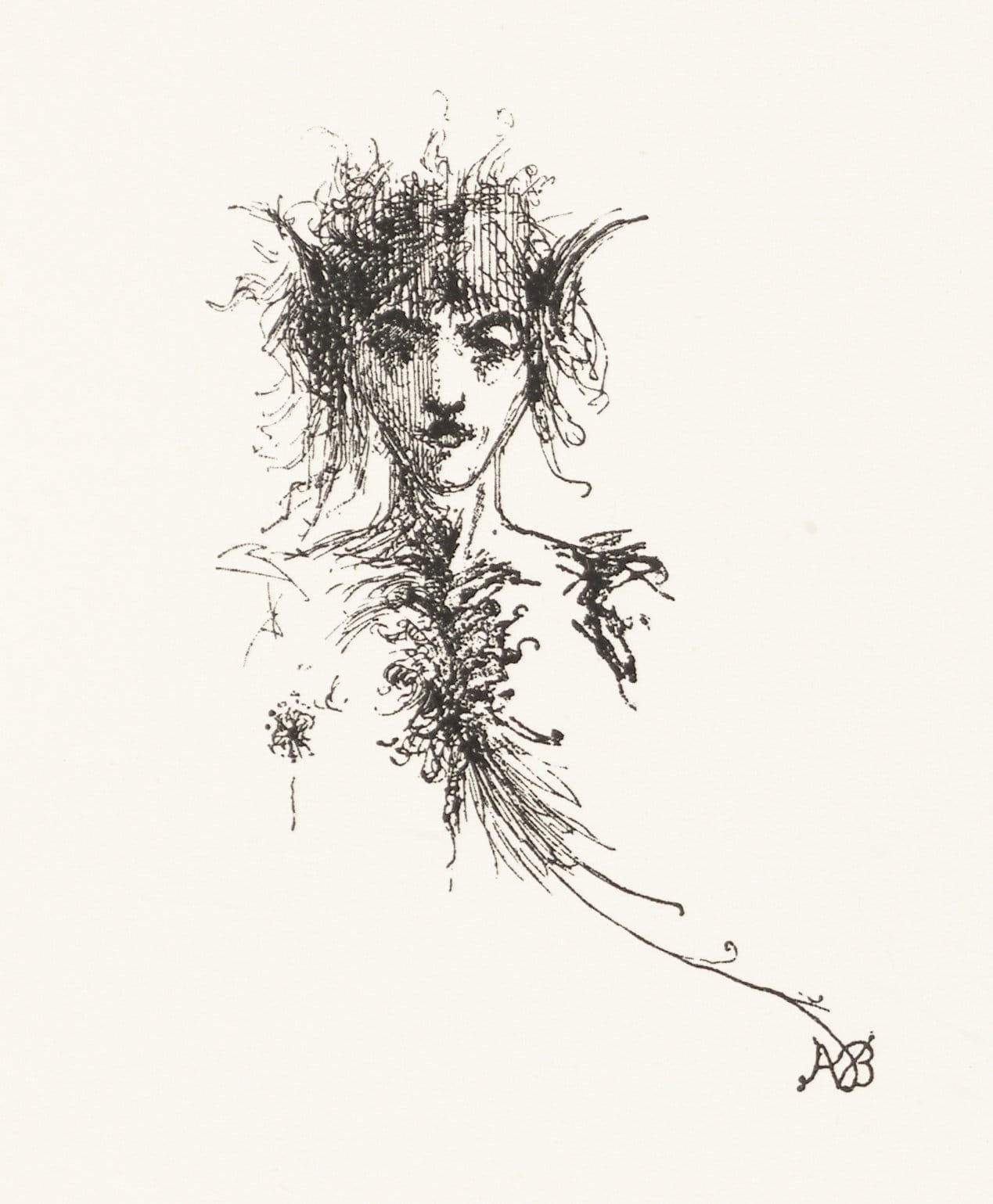
There’s a part of me that doesn’t want to confront my character like this. Prince John Stamper was supposed to be a fun joke at the table, not institute a crisis of self. John has other problems; Cap’s in love with him, Tanya’s kid was missing, an anthropomorphic ant colony is trying to take control of the circus, there’s another human child here, somehow. This realization came alongside a deeply uncomfortable thought that John will have to fight to stay true to who he is, possibly at the expense of the circus.
More than observing who John is because of his parents, I was also able to see what John isn’t. He had run away from two fairy courts because fairies are mean and capricious and gossipy. You could play chess with the knives sticking out of your back. Marriage is as weighty as an oak tree and as flimsy as the paper made from it. And family is an inscrutable labyrinth, because they are everywhere and nowhere, and John, more than he wanted to escape, wanted to build a community where people felt important and valued because they were contributing to something bigger, happier, better. And now that was in danger of falling apart because of a few bad rolls and a combined set of mommy and daddy issues.
None of this would have been clear at session two, or even session five. It’s only after seven sessions with John, and the surprise of seeing himself so fully reflected in two NPCs, that I finally understood what was at stake with him. I was able to analyze my own decisions in retrospect and give them new weight. It took time to ease into John and, by extension, Under Hollow Hills itself. The power of this game is in finding your character and a way to fight for them.
Towards the end of the session, Cap seeks out a clearly unhappy John in his caravan, and attempts to connect with him, saying… so… a prince? John shuts down. He doesn’t want to talk about this. He hates this. And Cap doesn’t get it, really. He asks why, if John’s mom can help us with the circus, he doesn't want that? And here’s another part of John’s character, taken for granted, now exposed; he likes the work. He thinks the work makes the circus worth it. That the whole reason he loves the circus is because he had to fight for it, spent time organizing and fixing and planning it. That’s worth something, and sure, he has plenty of fairy power, if he wanted to change the circus it would be as easy as breathing. But the work makes it worth it. And now that work is coming undone.
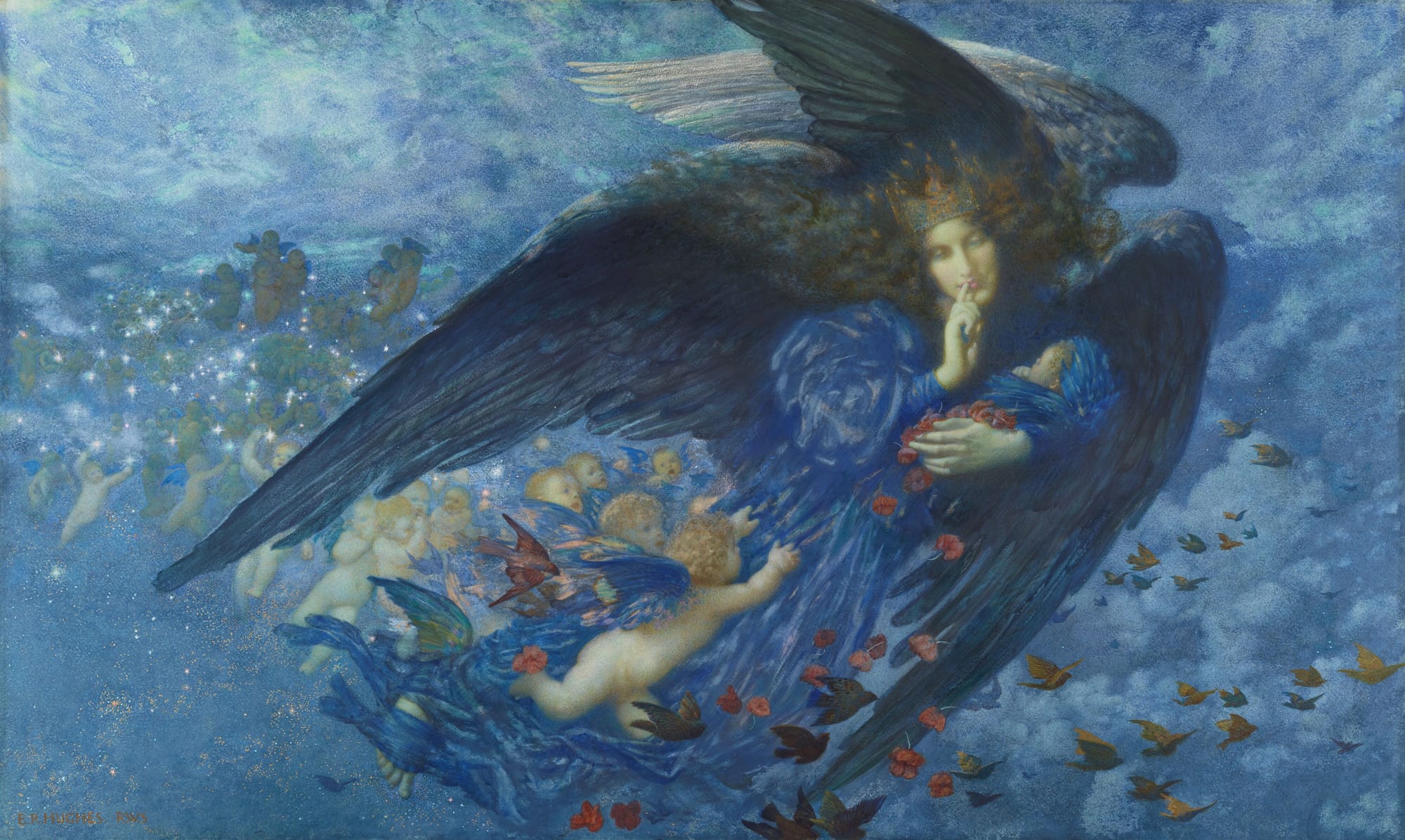
We ended the session with Titania barging into John’s caravan, intruding on his space. When John failed to Weather The Storm she completely took over all of John’s attention, and the care he would have given the circus disappeared. Overnight, streamers were lost, a popcorn machine broke, and a section of the big top tent ripped in two and stayed unmended. This was one evening of John being turned away from what he had spent centuries building, what he considered precious, and it was already falling apart.
But I can’t hide John in the circus forever. That’s not a good story. That’s not a good game. And when we’re throwing iron spikes into the fairy court and trying to get involved in Seelie politics — which all of us agreed, above the table, was something we all wanted — having one character pout in a corner for three-to-four sessions, quite frankly, no fun at all.
We’re going into another session soon, and while I know that the idea of the game being at risk isn’t quite true — that the game will only end if all of us decide that’s what’s going to happen — it still feels like the circus is in danger. For me, Under Hollow Hills is primarily concerned with preservation of character. Is losing John — who I have only just begun to understand — worth it if the other characters are able to easily maintain the core conceit of the game? What if, in pursuit of a character arc that feels right, I undermine the rest of the table? John’s potential cruelty feels existential. But maybe now that both he and I know what’s at risk, we’ll be able to have some fun before it all falls apart.